Jawline Losing Its Edge in Your 30s? What to Fix First
A softening jawline is rarely one problem. It is usually two or three layers changing at once, and the layer doing the most damage decides whether lifting is your answer or the wrong tool entirely.


What you'll learn

  · The jawline is held by several layers at once: skin and dermis, the fat that sits on top of them, and the fibrous support structure underneath.
  · Which layer is losing ground decides the approach, which is why two people the same age can need almost opposite plans.
  · Sagging tissue and a hollow that has emptied out are different problems and are not solved by the same treatment.
  · Starting earlier is not automatically better, and starting later is not too late. It usually just means a staged plan.
If your jawline has started to look softer in photographs than it does in the mirror, the useful question is not whether you are old enough for a lifting treatment. It is which layer under that jawline is giving way. A jaw contour is held up by more than one thing at once, and the layer that has changed most decides whether tightening will help you, whether volume is the real issue, or whether nothing needs doing yet.
This is also why age alone is a poor guide. People in their 30s often notice the first blurring along the jaw while their skin still has good elasticity, and people in their 40s and 50s frequently have sagging and volume loss arriving together. Below is how to sort your own jawline into layers, what a lifting treatment can and cannot do for each, and how the timing question actually resolves. This is general information rather than a diagnosis, and it does not replace a provider who has examined your face.
A Softening Jawline Is Not One Problem: The Layers Underneath
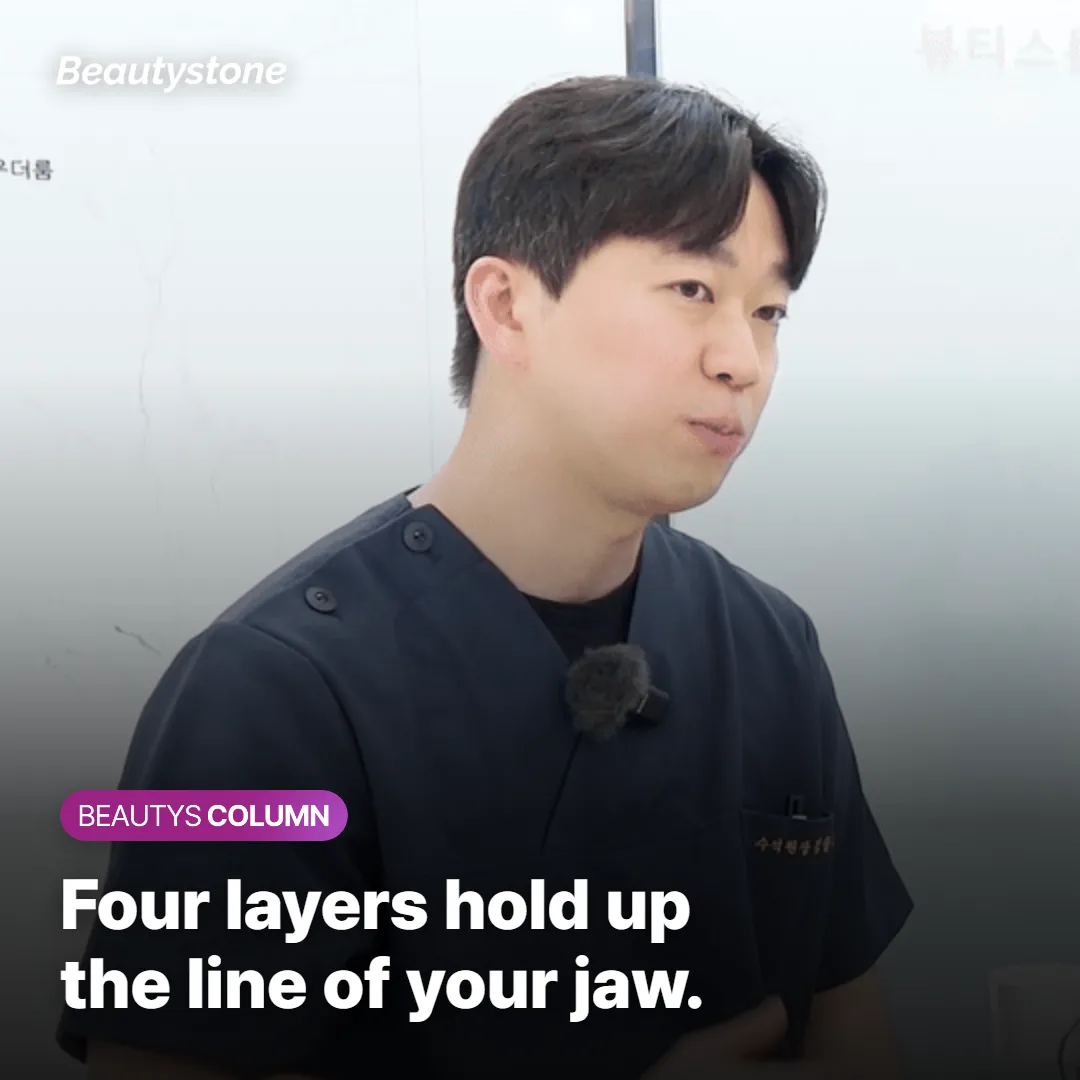
Skin is generally described in three layers, the epidermis on the surface, the dermis beneath it, and the subcutaneous fat under that, all of it sitting on a fibrous support structure often called the SMAS layer. A jaw contour depends on all of them behaving. When the line blurs, at least one has changed, and usually not the one people assume.
- Skin and dermis: this is where firmness and bounce live, in a mesh of collagen and elastin fibers. Research on skin aging has found that collagen production slows over time and that supportive network gradually loses density, so the skin has less to lean on.
- The fat above the support layer: this is volume. When it thins or shifts downward, the jaw looks less defined even though the skin itself has not loosened much.
- The fibrous support structure underneath: when this loosens, the whole set of tissues above it settles lower, and no amount of surface care changes that.
The practical consequence is that a blurred jawline is a question with several possible answers, not one. A person whose skin has loosened needs support restored; a person whose cheek and jaw have hollowed needs volume returned so the line has something to sit on. Those are different treatments, and the reason the same treatment can delight one person and underwhelm another at the same age.
It also explains why treatments generally work better when a change is caught while it is still early. There is more structural support left to build on, and the goal is slowing a slope rather than reversing years of change in a single visit.
Which Layer Is Yours? A Mirror Test You Can Do Today
You cannot diagnose your own layers, but you can arrive at a consultation with far better information than "my face looks tired." A few signals come up repeatedly, and each points in a different direction.
| What you notice | What it usually points toward |
|---|---|
| Expression lines that stay after your face relaxes | Elasticity starting to dip in the skin and dermis |
| A jaw or cheek contour that reads softer than it used to | Sagging that is already in motion |
| Makeup settling into nasolabial or marionette lines by midday | Deeper creases forming, so the surface alone is not the whole story |
| A clear difference between how you look from below and straight on | Gravity-related settling of the deeper tissues |
Try the last one deliberately. Photograph yourself straight on, then from slightly below, then lying back with your head tipped. If the jawline sharpens noticeably when gravity is removed, the issue is more likely tissue that has settled than skin texture on the surface. If it looks much the same in every position but the area under the cheek looks flat, volume is a larger part of the story than laxity.
None of these signals mean you must act now. They are simply worth naming at a consultation so the conversation starts from your face rather than from a decade.
What Lifting Can and Cannot Do for a Jaw Contour
Once you know which layer is moving, the choice narrows quickly, and it stops being a ranking of treatments and becomes a matter of matching.
- If tissue has settled and the jaw contour is softer than it used to be, the goal is to hold and support that tissue. This is what lifting approaches are for, and holding it earlier tends to be easier than recovering it later.
- If the area above the jaw has emptied out and looks flat or hollow, tightening does not refill it. Volume belongs where something has sunk, not where something has descended.
- If both are happening, which is common from the 40s onward, the sensible move is a staged plan that addresses one thing at a time rather than everything in a single visit.
That distinction is the one worth carrying into a consultation. Sagging and hollowing feel similar in the mirror and look similar in a bad photograph, but treating one as the other is the most common reason people describe a result as underwhelming rather than wrong. Nothing about a treatment failed; it was simply pointed at a layer that was not the problem.
Expect a range rather than a promise. Results depend on how much support is still there, and they soften over time regardless of the approach, so any plan worth having includes what happens after the first result settles.
Timing: From 20s Maintenance to a Staged Plan in Your 40s
With the layers sorted, timing becomes much less mysterious. What follows is a reference point rather than a rulebook, since your own timeline depends on your skin and not on a calendar.
| Decade | What people often notice | What tends to be considered |
|---|---|---|
| 20s | Minimal sagging, elasticity still solid | Sun protection and basic care, light maintenance if anything |
| 30s | Faint lines near the eyes, a slightly softer jaw edge | Earlier, lighter approaches aimed at slowing progression |
| 40s | Sagging plus a jawline that has lost definition | Support paired with volume, depending on which layer leads |
| 50s | Sagging, volume loss, and deeper lines overlapping | A staged plan that takes concerns one at a time |

Two myths deserve retiring here. Starting earlier is not automatically better, because beginning something in your 20s does not stop aging at that point. Starting later is not a missed window either. More advanced sagging in the 50s can still respond; it usually just calls for sequencing rather than a single fix.
The honest version of the timing question is not "what age should I start" but "is anything in my jawline changing fast enough to be worth acting on now, and if so, which layer." That question has an answer. The age one does not.
Before You Book: Safety, Cost, and the Questions to Bring
Most lifting approaches share a broadly similar safety picture: some redness, mild swelling, or tenderness in the treated area for a day or two, which is a normal response and usually settles on its own. Less commonly there can be bruising, temporary numbness, or an uneven result when a treatment has not been matched to the person's anatomy.
Contact your provider promptly rather than waiting if you notice spreading redness, worsening swelling, or a fever. These treatments are generally not recommended during pregnancy or breastfeeding, with an active skin infection or inflammation in the treatment area, or with certain implants nearby, so share your full medical history before anything is scheduled.
- Ask which layer the provider thinks is leading your jawline change, and what they saw that made them think so.
- Ask what the plan would look like if you did nothing for another year, so you can judge urgency honestly.
- Ask how results are expected to soften over time and what maintenance would involve.
- Ask what the total plan costs, not only the first session, since staged plans are priced across visits.
Cost varies with which approach fits your skin, how many areas are involved, and how many sessions are recommended, which is why a single number rarely applies to anyone in particular. Beautystone is a dermatology clinic in the Hapjeong area, and a jawline consultation there starts by separating what has settled from what has emptied rather than by starting from your age. Current offers are listed at /en/promotion.
Frequently Asked Questions
I am 25 and my jawline already looks softer. Should I start lifting now?
Not necessarily. In the 20s elasticity is usually still solid, and what reads as a softer jaw at that age is often bone structure, weight change, or posture in photographs rather than sagging. The useful step is having someone look at whether anything is genuinely changing, not booking a treatment because a photograph disappointed you. If nothing is moving yet, sun protection and consistent basic care are doing more than any procedure would.
How do I tell whether my jawline problem is sagging or lost volume?
The rough home version is to compare positions. If the contour sharpens clearly when you lie back or tip your head, the tissue has settled and support is the issue. If the line looks similar in every position but the area above the jaw looks flat or shadowed, volume has thinned. Most people over 40 have some of both, and a provider who has examined you can say which one is leading, which is the part that decides the plan.
Is a double chin the same problem as a jawline that has lost definition?
They overlap but they are not identical. A blurred jawline is usually about tissue that has settled or emptied above the jaw, while fullness under the chin is about what sits below it. Treating one does not automatically improve the other, so it is worth pointing at exactly what bothers you at a consultation instead of naming a treatment. The answer can be quite different depending on which of the two is actually driving the look you dislike.
Will one session be enough, or is this something I keep repeating?
Results from lifting approaches soften over time, so plan for maintenance rather than a single fix. That does not mean everything has to happen at once. When sagging, volume loss, and lines overlap, spacing treatments out according to your recovery time and your priorities is usually more comfortable and makes it far easier to tell what each step actually contributed.