Shurink Downtime: What's Normal Over 3-4 Days
Decide on next-day plans after Shurink by checking redness and swelling that morning. Here's the day-by-day picture, when makeup and workouts fit back in, and the signs that shouldn't wait.

Wi Young-jin
Chief Director, Myeongdong
If the redness has faded and your face doesn't look puffy the next morning, you can usually keep your plans after Shurink. In a study of the Shurink Universe device, mild redness, swelling, and soreness went away on their own within 3 to 4 days.
The short recovery comes with a trade-off: results build slowly rather than showing up overnight. In this guide, we'll walk through what each day tends to look like, when makeup and workouts fit back in, and which changes mean you shouldn't wait.
Quick answer
- Decide on next-day work or plans by checking redness and swelling that morning. If an event where photos matter is close, it's easier to book Shurink after it.
- Redness, swelling, and mild soreness settled within 3 to 4 days in the Shurink Universe study.
- A bruise lasts longer. With a different HIFU device, swelling and bruising cleared within 2 weeks.
- Contact the clinic right away for blisters, raw skin, lasting numbness, or a mouth corner that moves less on one side.
Can You Go Back to Work the Day After Shurink?
Most people can, because noninvasive skin tightening has little or no downtime, and the usual side effects are redness and swelling.*
*Based on American Academy of Dermatology (AAD) patient guidance.
The day of treatment is a different story. Your skin may look flushed, and pressing on your cheeks or jawline can feel sore and tender. If you have a face-to-face meeting that afternoon, it's easier to book Shurink later in the day or move the meeting.
Shurink (Ultraformer MPT) is a HIFU device, which stands for high-intensity focused ultrasound. It sends ultrasound heat to tiny points beneath the surface, in the deeper dermis and the fascia layer, while the outer skin stays intact. That's why there's no scabbing or peeling stage to plan around. You're mainly waiting for redness and puffiness to fade.
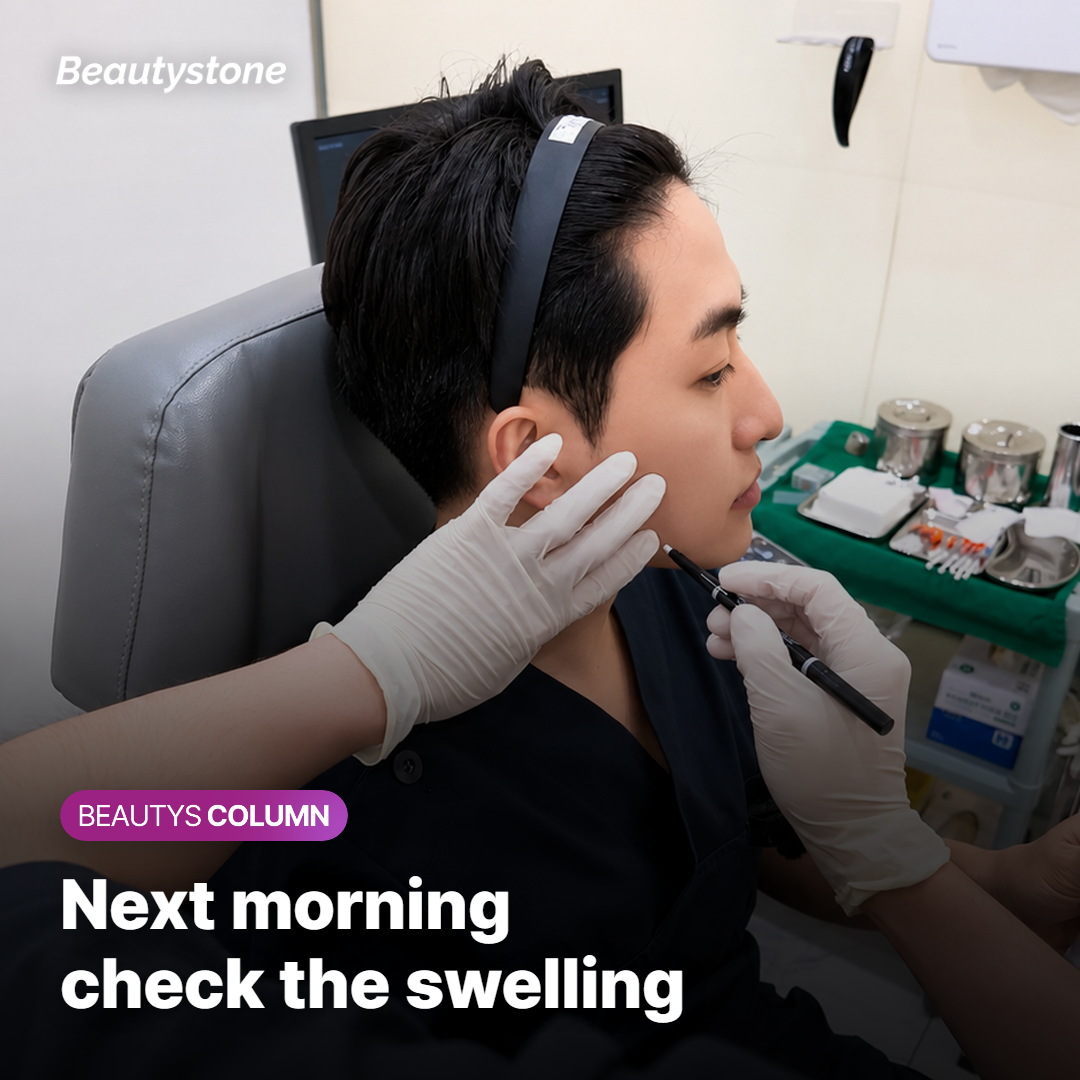
So the most useful check is a simple one. Look in the mirror in daylight the morning after. If the redness is faint and your jawline and cheeks look like your usual shape, there isn't much reason to call in. If swelling still stands out, give it another day before a meeting that matters to you.
Shurink Downtime Day by Day: What's Normal?
It helps to split Shurink downtime into two windows: the few days it takes redness and swelling to settle, and the longer stretch a bruise needs if one forms. Results run on their own, slower clock.
| When | What you may notice | What to do |
|---|---|---|
| Treatment day | Redness, mild swelling, tenderness when touched | Don't rub or massage your face hard |
| Days 1 to 4 | Redness, swelling, and soreness settling | Check the mirror each morning before deciding on plans |
| Up to 2 weeks | A bruise, if one formed, slowly fading | Expect it to outlast the redness |
| 2 to 6 months | Gradual, modest lifting and tightening | Compare photos taken at the same angle |
The bruising window comes from a different HIFU device, Ultherapy. In a study of 20 Korean patients, 6 had redness or swelling and 2 had bruising, and everything cleared within 2 weeks. Because it's a different device, those numbers won't map exactly onto Shurink. They do show that a bruise, not redness, is what stretches recovery.
Results come later. With one ultrasound treatment, most people see modest lifting and tightening over 2 to 6 months.* How much you see depends on your skin, so the mirror the next day won't tell you much about the final result.
*Based on AAD patient guidance on firming sagging skin.

When Can You Wear Makeup or Work Out After Shurink?
Go by how your skin feels rather than a set number of days. Once the redness has faded and the skin doesn't sting when you touch it, start with gentle cleansing and light makeup. Don't scrub or press hard on spots that still feel sore. There isn't a study that times makeup or face washing after Shurink specifically, so we won't pin a number on it.
For workouts, the question is whether heat and sweat are adding to the swelling. If your face still looks puffy, keep the first session light and see how it looks the next morning. If the puffiness hasn't grown, you can build back up from there.
A tight sensation or tenderness when you press on the area isn't a reason to stop washing your face or wearing sunscreen. Just treat the area gently until it feels normal again.

Shurink Side Effects and Risks: What Fades and What Needs a Call
Redness, tenderness, and slight swelling are the typical reactions after this kind of ultrasound treatment. If they're a little smaller each day, they're passing. Serious problems are rare, but published case reports describe blistering, raw or ulcerated skin, and tissue damage after this type of treatment, and those take longer to heal.
Contact the clinic right away, without waiting for your next visit, if you notice any of these:
- Blisters, peeling, or raw, oozing skin where you were treated
- Raised lines (welts) that are still there after several days
- Numbness or tingling in the cheek or jaw that keeps going
- One corner of your mouth moving less than the other when you smile
- A dent in the skin after the swelling goes down
- Pain that gets worse instead of better
Changes in sensation or mouth movement are rare and usually temporary.* Even so, write down the date you first noticed the change and take a photo. That makes it much easier to track how it's improving.
*Based on a published safety review of microfocused ultrasound.
Planning Shurink Around a Trip to Korea
Unless you had sedation that day, there's no need to postpone your flight home because of Shurink. The same morning check applies to the next day's sightseeing: faint redness and normal-looking contours mean you can go ahead with your plans.
Some treatments, like filler, change your shape the same day. Shurink works differently. Most changes come gradually over months rather than all at once, so you'll likely notice them after you're home, and how much you see varies.
Once you're home, you can contact the clinic with photos if something worries you. If the signs are severe, such as spreading blisters or pain that keeps getting worse, see a local doctor first.
The Bottom Line: Let the Next Morning Decide
Shurink rarely needs days off, but the mirror on the morning after is a better guide than any fixed rule. Faint redness means you can keep your plans. A bruise means giving it more time. Results differ from person to person and build over months, not days.
Before you book, ask which areas the shots will go to: the jawline, the cheeks, or around the eyes. That one answer tells you where any swelling is most likely to show the next morning.
For international patients, consultation and doctor's fees apply, but they're waived if you have treatment and pay on the same day. Beautystone is a clinic in Seoul's Hapjeong area. If an important event is on your calendar, ask how far ahead of it Shurink makes sense for you.
Sources
- Downtime, common side effects, and when ultrasound results appear after noninvasive skin tightening — American Academy of Dermatology (AAD)
- Shurink Universe (Ultraformer MPT) around the eyes in 34 Korean women, including how long redness, swelling, and pain lasted — JPRAS Open, 2025
- Swelling and bruising after facial HIFU with Ultherapy in 20 Korean patients — Ann Dermatol, 2015
- Rare blistering, skin breakdown, and tissue damage after microfocused ultrasound: case series and review — Lasers Surg Med, 2018
- Common reactions and rare welts or nerve effects after microfocused ultrasound — J Cosmet Dermatol, 2014
Frequently Asked Questions
Q. Is Shurink painful?
A. Shurink usually leaves only mild soreness afterward, and in a Shurink Universe study that pain went away within 3 to 4 days. To ease discomfort during the session, the options are numbing cream, injected local anesthetic, and sedation, and which one fits is decided at your visit based on the area and how sensitive you are.
Q. Is it normal for my face to feel sore when I press it a few days after Shurink?
A. Yes, tenderness when you press the treated area is a common reaction after Shurink, and if it eases a little each day, it's passing. If the soreness grows instead of fading, contact the clinic rather than waiting it out.
Q. Can I go straight back to the office on the day of Shurink?
A. You usually can go back to the office on the day of Shurink. Right after treatment there may be some redness and mild swelling, though, so if you have a face-to-face meeting, an afternoon appointment or moving the meeting to the next day is easier.
Q. How long does a bruise from Shurink last?
A. A bruise after Shurink lasts longer than redness or swelling, so plan on 1 to 2 weeks. In a study of a different HIFU device, swelling and bruising cleared within 2 weeks. If a bruise keeps spreading or turns into firm swelling, contact the clinic right away.
Q. Does Shurink have less downtime than Ultherapy?
A. There isn't a study comparing Shurink and Ultherapy downtime head to head. Both are HIFU treatments that leave the outer skin intact. In separate studies, redness, swelling, and soreness after Shurink Universe went away within 3 to 4 days, while swelling and bruising after Ultherapy cleared within 2 weeks, but the people and areas treated differed, so the numbers can't be compared directly.
Q. Is Shurink Universe the same device as Ultraformer?
A. Shurink Universe is the name used in Korea for the device sold as Ultraformer MPT. The study on swelling and soreness around the eyes cited here used Ultraformer MPT, which is why it applies to Shurink Universe.
Q. Will I see Shurink results right away?
A. Shurink results don't show up right away. With one ultrasound treatment, most people see modest lifting and tightening over 2 to 6 months, so compare photos taken from the same angle a few months later instead of judging the next day.
Q. Is it a problem if swelling looks bigger the day after Shurink?
A. Swelling that's still there the day after Shurink is usually part of normal recovery if the redness and soreness are easing at the same time. If blisters appear, or raised lines stay the same for several days, contact the clinic right away.