Skin Booster Types: Rejuran, Juvelook, or HA?
Skin boosters aren't one treatment. HA, PN (Rejuran), and PDLLA (Juvelook) target different concerns and show change at different speeds. Here's how to tell which type to look at first, how sessions are planned, and what side effects to watch for.

Wi Young-jin
Chief Director, Myeongdong
If dryness that makes your makeup flake is your main concern, look at a hyaluronic acid (HA) skin booster first. If fine lines bother you most, start with Juvelook's skin booster type, and if rough texture or visible pores are part of the picture, consider Rejuran alongside it. The difference between skin booster types comes down to what's inside the syringe, and that's why each one suits a different concern and shows change at a different pace.
In this article, we'll cover how to match a type to your main concern, how the three compare, how long results take, which reactions need a call, and how a trip to Seoul fits in.
Quick summary
- Dryness first: HA booster. Fine lines first: Juvelook. Rough texture and pores: add Rejuran to the list.
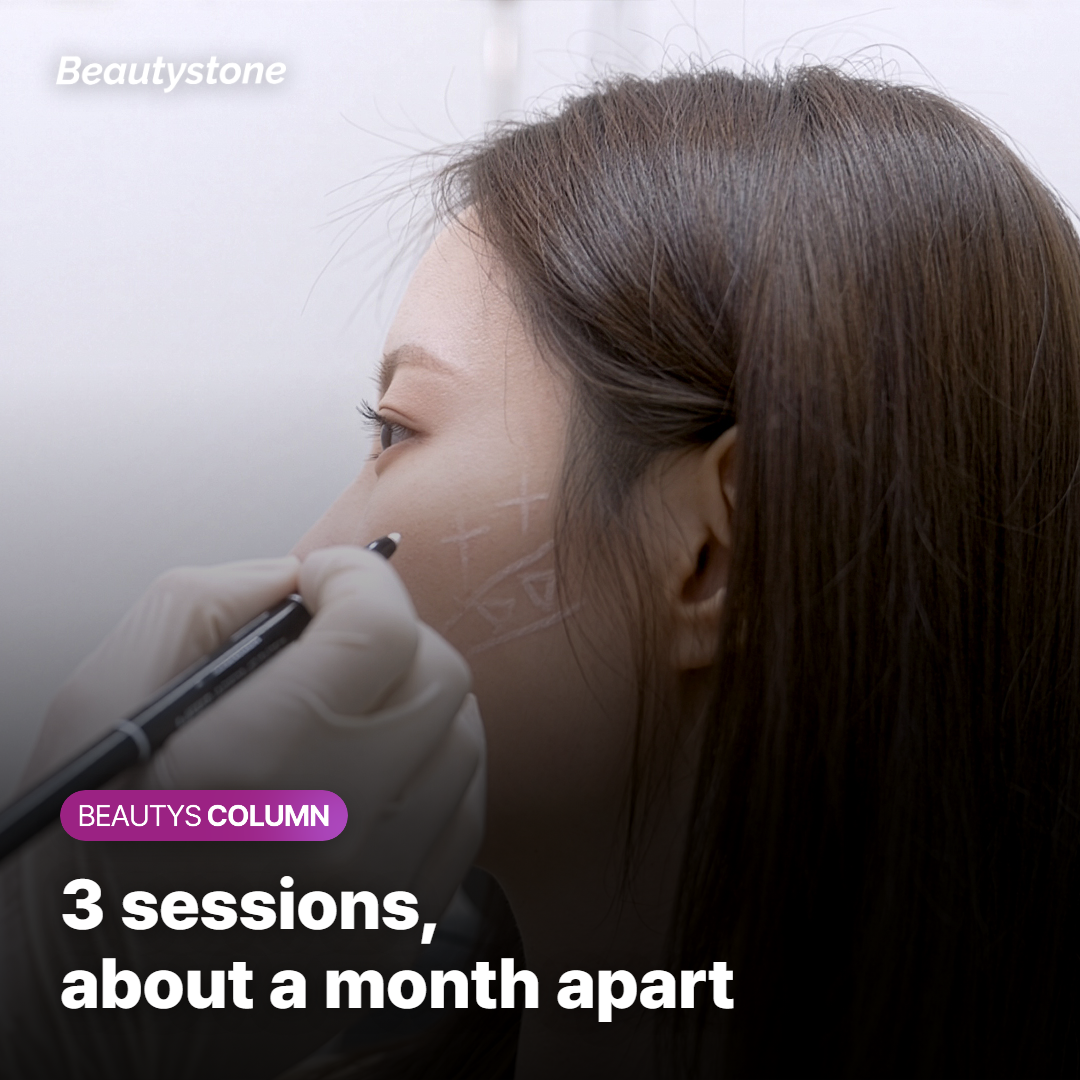
- Sessions: for PN boosters like Rejuran, 3 sessions spaced 4 weeks apart is the plan Korean doctors recommend most often.
- Juvelook builds up gradually across sessions, so don't expect a big change on the day of your injection.
- Rejuran and Juvelook aren't FDA-approved or FDA-cleared in the US; in Korea, both are authorized by the MFDS as medical devices for facial wrinkles.
Which Skin Booster Should You Start With for Your Main Concern?
Start with the one thing you notice first in the mirror. If your cheeks feel tight soon after washing and your makeup lifts or flakes, that points to dryness, and an HA booster that holds water in the skin is the first one to look at.
If your skin feels bumpy and your pores look wide, Rejuran is worth weighing alongside it. If fine lines around your eyes or on your cheeks stand out most, Juvelook's skin booster type comes first. Results differ from person to person, so treat this as a starting point rather than a verdict.
Two concerns sit outside the skin booster group. If hollow cheeks that cast a shadow are what bother you, Juvelook has a separate volume type for that. And if you want a sunken area to look filled on the same day, filler is the option to look at before Rejuran, because skin boosters don't change shape right away.
Skin Booster Types Compared: HA vs. Rejuran vs. Juvelook
The same label, "skin booster," covers products with very different ingredients. Here's how the three most common types line up on the points that matter when you're choosing.
| What to compare | HA booster | Rejuran | Juvelook skin booster |
|---|---|---|---|
| Main ingredient | Hyaluronic acid | PN (polynucleotides) | PDLLA + hyaluronic acid |
| Concern it's matched to first | Dryness, flaking makeup | Rough texture, pores | Fine lines |
| Sessions in studies or surveys | 3, spaced 3 to 4 weeks apart | 3, spaced 4 weeks apart | 3, spaced 1 month apart |
| Changes reported | Hydration, firmness, texture | Fine lines, texture, elasticity | Gradual change across sessions |
None of the three was planned as a one-and-done shot. That's why comparing the cost of a full 3-session plan, rather than a single visit, gives you a fairer picture.
*PN: purified fragments of DNA, used as an injectable ingredient. PDLLA: tiny particles that break down slowly in the body.
Juvelook vs. Rejuran: How Do PDLLA and PN Differ?
Juvelook and Rejuran are often compared because both are Korean injectables for skin quality, yet they work from different ingredients. Rejuran's standard product (often called Rejuran Healer) contains PN only. Juvelook combines PDLLA particles with hyaluronic acid, and the PDLLA is what gives it a slow, build-up effect.
Each brand also comes in several types. Rejuran HB, for example, adds hyaluronic acid and the numbing agent lidocaine to PN, and Juvelook Volume carries a larger amount of PDLLA for hollow areas. So when a price or plan mentions "Rejuran" or "Juvelook," it's worth confirming exactly which type it means.
In practice, the choice between the two usually follows your main concern. Texture and pores lean toward Rejuran, while fine lines lean toward Juvelook's skin booster type. Keep in mind that no study has compared the two side by side in people.
How Long Do Skin Boosters Take to Show Results?
All three types tend to show change across a series of sessions rather than in one visit. For HA boosters, hydration, firmness, and texture measures improved more clearly when injections were repeated a few weeks apart.
For PN boosters like Rejuran, a survey of 235 Korean dermatologists found that 3 sessions spaced 4 weeks apart was the plan they recommended most. That's a picture of common practice, not a measured result. Studies on PN injections have reported smoother texture and fewer fine lines, though they looked at several PN products, not Rejuran alone, and the evidence was of low to moderate quality.
Juvelook is the slow builder. In a study of 20 people who had Juvelook injected into the smile lines 3 times, a month apart, the lines improved little by little with each session.
Three months after the last session, 85% were rated as improved and 90% reported high satisfaction. There was no comparison group, and only the smile-line area was studied, so the result doesn't translate directly to whole-face skin texture. Individual results vary.
Skin Booster Side Effects: What's Normal and When to Get Help
Bruising, swelling, and tenderness can happen with any of the three types. After HA injections, these reactions usually settled within 2 weeks, and the PN and Juvelook studies also described mostly mild, short-lived reactions. If they worsen or spread, contact your provider right away.
Because Juvelook contains particles that stay in the skin for a while, lumps (nodules) or granulomas have been reported, though rarely. If a firm bump is still there after several weeks, or the area turns red and painful, get it checked.
Injection into a blood vessel is rare, but the changes below need medical attention right away, no matter how many days it's been since your treatment*.
*Based on US FDA guidance on dermal fillers in general.
- Skin near the injection turning white, gray, or blue, or unusual pain: see a doctor right away
- Vision changes, sudden difficulty speaking, numbness or weakness in the face, arms, or legs, difficulty walking, face drooping, severe headache, dizziness, or confusion: go to the nearest emergency room
When filler blocks a blood vessel, tissue death, blindness, and stroke have been reported. Before any injection, tell your provider if your skin is inflamed or infected, you have a bleeding disorder, you've had severe allergies or anaphylaxis, or you're allergic to local anesthetics such as lidocaine.

Skin Boosters on a Trip to Seoul: Flights, One Visit, Home
Apart from a day when you've had sedation, there's no reason to delay your flight because of a skin booster injection. Plan for small bumps and possible bruising at the injection points in the days that follow.
Be realistic about what one visit can do. Some treatments, like filler, change shape the same day, but skin boosters are planned as a series, so a single visit on a short trip is one step rather than the full course. Change tends to come gradually.
Once you're home, you can send photos through the consultation button on this page if something worries you. If a reaction looks severe, see a local doctor first rather than waiting for a reply.
The Bottom Line: Ask About Type, Amount, and Spacing
If dryness and fine lines are both bothering you, decide which one you notice more and start there. Before you compare two clinics, check that the product type, the amount per session, and the spacing between sessions are the same, because those three set the real cost of a 3-session plan.
A good first question is simple: which ingredient would you use for my skin, and how many weeks apart? Beautystone is a clinic in Seoul's Hapjeong area.
References
- How injectable hyaluronic acid affected facial skin hydration and firmness across 13 studies, Clin Cosmet Investig Dermatol, 2023
- What 9 studies found about PN injections for fine lines and texture, J Cosmet Dermatol, 2025
- A survey of 235 Korean dermatologists on PN injection sessions and spacing, J Cosmet Dermatol, 2024
- Juvelook injected 3 times for smile lines in 20 people, J Craniofac Surg, 2026
- A review of PDLLA in dermatology, including nodules and granulomas, Polymers, 2024
- Signs a filler has entered a blood vessel, and what to mention before injections, US FDA
Frequently Asked Questions
Q. What's the difference between Rejuran Healer and Rejuran HB?
A. Rejuran HB adds hyaluronic acid and the numbing agent lidocaine to PN, while standard Rejuran (often called Rejuran Healer) contains PN only, in a 2 mL syringe. In Korea, Rejuran HB is also authorized for a narrower use: fine lines at the outer corners of the eyes.
Q. Which skin booster is best for dry, dehydrated skin?
A. For dryness severe enough to make your makeup flake, injectables come first: an HA skin booster or Rejuran. If you'd rather avoid needles, non-injection options such as XERF or Thermage are the alternatives to look at. Mentioning how you feel about injections at your consultation narrows the choice quickly.
Q. Do skin booster injections hurt?
A. Skin boosters involve many small needle pricks, so expect a stinging feeling. If pain is your biggest worry, ask whether the product contains a numbing agent, as Rejuran HB does. Numbing cream and other options are decided at your consultation based on the area and how sensitive your skin is.
Q. Can I get Rejuran and Juvelook if I have both fine lines and dryness?
A. With both fine lines and dryness, start with whichever bothers you more: an HA booster if dryness comes first, Juvelook's skin booster type if fine lines do. Whether to have two types in the same period or space them out is decided at your visit after checking your skin that day.
Q. Are the small bumps after Juvelook normal?
A. Small bumps after Juvelook can come with swelling and settle on their own, but lumps from clumped particles (nodules) or granulomas have been reported, though rarely. If a bump stays firm after several weeks, turns red and painful, or keeps growing, get it checked by a doctor.
Q. Can I get a skin booster if I have active acne?
A. If acne is active where you'd be injected, treat the acne first rather than the skin booster. Inflamed or infected skin at the injection site is something to tell your provider about beforehand. Once the breakouts calm down, choose a type based on whether dryness or fine lines remain.