Oligio Price: 600 Shots Once or 300 Twice?
Two rounds of 300 Oligio shots add up to 600, but each session gets fewer passes and results take about 6 months to show. Here's when a split makes sense and what to match before comparing prices.
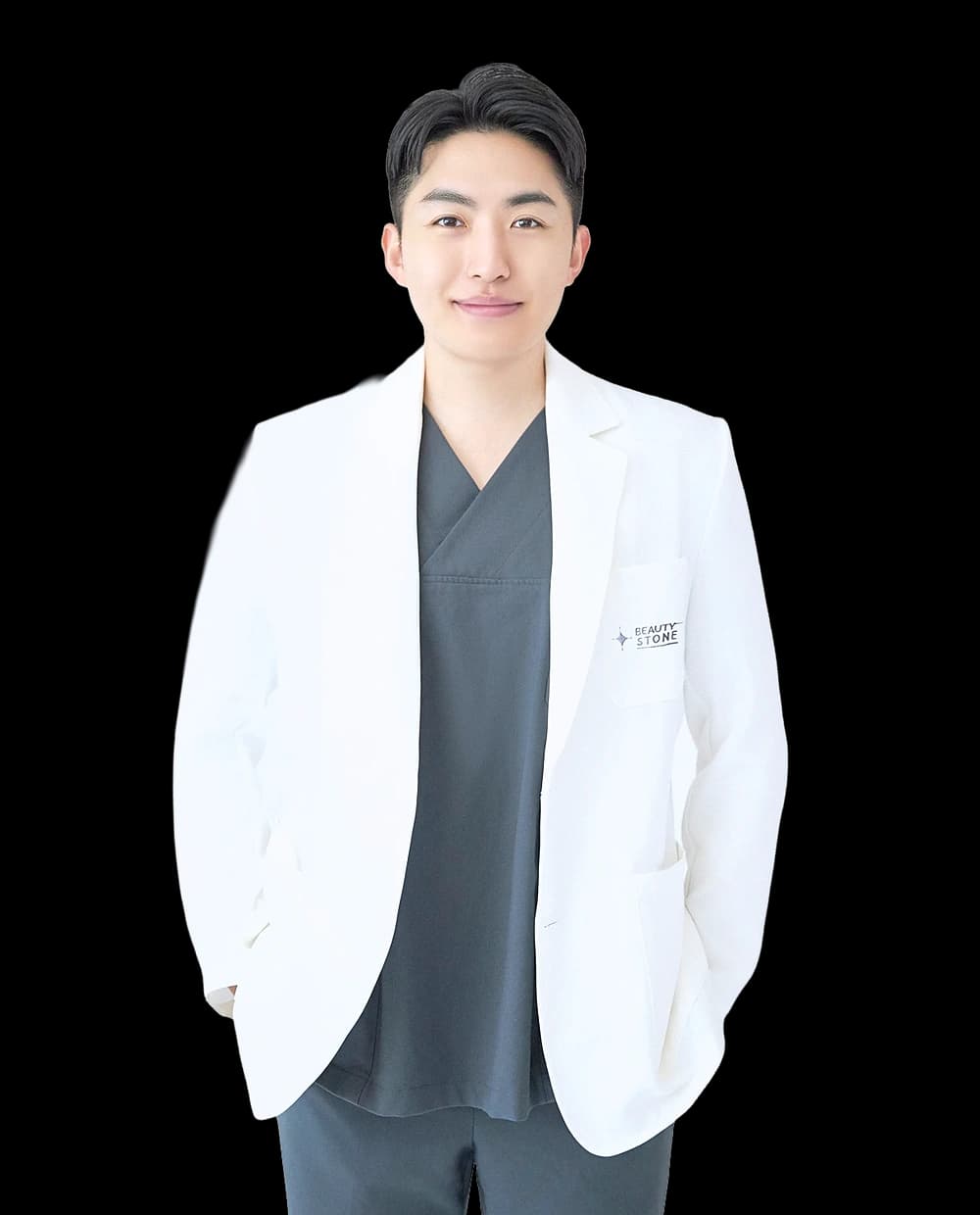
Wi Young-jin
Chief Director, Myeongdong
If the looseness is spread evenly across your whole face, look at one full Oligio session before splitting it into two. Radiofrequency skin tightening (heat delivered into the skin to firm it) is usually done as a single session, and the best results tend to show at about 6 months. So if you split 300 shots into two visits a month or two apart, you'd get the second one before you can even see what the first one did.
That's why the price question isn't really about one session. In this article, we'll walk through what changes between 600 shots at once and two rounds of 300, when a second session makes sense, and what to line up before comparing Oligio prices.
Quick summary
- Looseness across the whole face: look at one full session before splitting it.
- Second session: new collagen keeps forming for up to 6 months, so decide after you've seen the first result.
- Mild sagging with fine lines around the eyes: a smaller shot count is a reasonable place to start.
- Comparing prices: line up the total shots within 6 months, the tip size, and the treatment area, not the one-session price.
Oligio Price: How Do 600 Shots Once and 300 Twice Differ?
One 600-shot Oligio session leaves room to pass over the same area several times and build heat gradually. A shot isn't a measure of strength. It's one press of the treatment tip against your skin.
Cover the same area with 300 shots and each spot gets fewer passes. Split the plan into two visits, and each session has fewer passes while only the combined total matches.
There's a survey of 5,700 treatments with a device that works the same way (Thermage, another monopolar radiofrequency device). The approach using lower energy with multiple passes was linked to more people seeing tightening at 6 months: 92%, compared with 54% for a single high-energy pass.
Keep in mind that it was a survey of doctors, not a controlled comparison, so those figures can't be carried straight over to Oligio. Still, it's a useful reference when you're choosing between enough passes in one session and fewer passes spread out. Individual results vary.
If You Split Oligio Sessions, When Should the Second One Be?
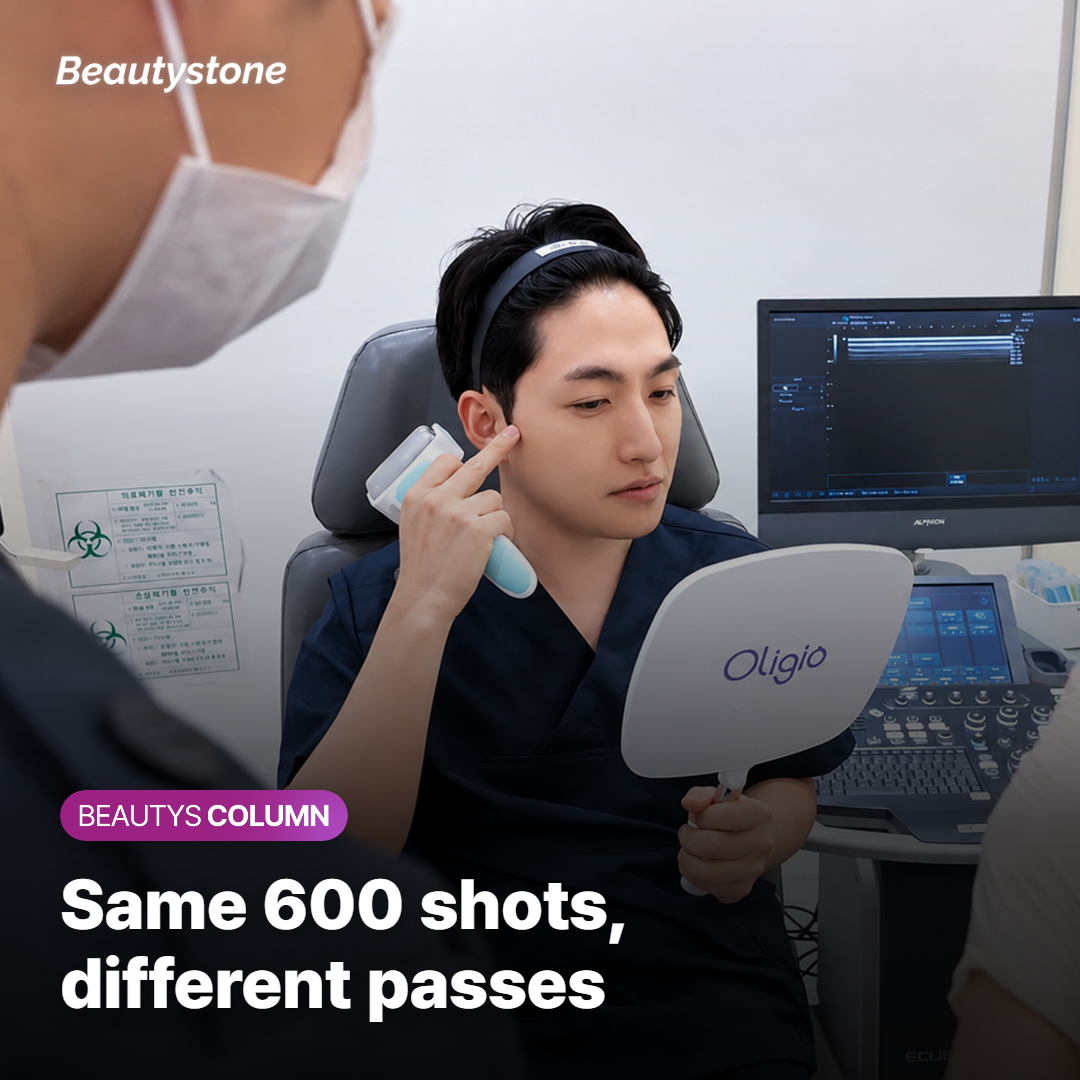
If you do split your Oligio sessions, schedule the second one after the first result has fully shown. New collagen keeps forming for up to 6 months after treatment, and some people don't notice a difference until 2 to 3 months have passed.
In a study that followed 23 people for 24 weeks after one session with a device that works the same way, different changes showed up at different points. Get the second session only a month or two later, and its changes blend into the first, so it's hard to tell which session did what.
| Time point | What showed up | What to do |
|---|---|---|
| Right after | A tightening feeling | Check that redness and swelling settle |
| 4 weeks | Wrinkles start to decrease | Take one photo in the same lighting |
| 12 weeks | Fewer visible pores, satisfaction at its highest | Retake it from the same angle |
| 24 weeks | Firmness clearly improved | Decide whether to get a second session |
How much you see depends on your skin, so the photo at 24 weeks is a better guide than the mirror at week 4.
With Mild Sagging, Do You Need 600 Oligio Shots?
If your sagging is mild and your main concern is fine lines around the eyes or skin texture, starting with a smaller shot count and deciding after the 6-month result is a reasonable plan. For a narrow area like the skin around the eyes, look at the tip size before the shot count.
In a study of 31 people where each half of the face was treated with a different tip size, the side treated with the smaller tip (3 cm²) showed a clear drop in wrinkles around the eyes. Differences on the forehead, between the brows, and along the smile lines weren't clear.
On the other hand, if your jawline or cheeks have dropped downward, look at Ultherapy before adding more Oligio shots. When sagging is advanced, skin tightening alone may not help much, so other approaches, including surgery, are worth weighing too. Results differ from person to person.
Oligio Side Effects: What Passes and What Needs a Call?
Redness and swelling after Oligio usually fade within 1 to 2 hours, sometimes lasting a few days, and makeup can cover them. For a few days you may feel tingling or a burning sensation, and your jawline can feel tender.
Side effects from radiofrequency tightening are reported in fewer than 1% of cases, so they're uncommon. If you notice any of these, contact the clinic right away instead of waiting:
- Blisters on the treated skin
- A burn-like red, raw patch that's still there after several days
- A spot of skin that looks sunken or dented
A dent can come from fat being overheated, which is a rare complication, so it's better to have it checked than to wait for it to fade.
It's better to postpone treatment in these situations:
- You're pregnant
- There's a skin infection where you'd be treated
- You take a medication that doesn't go well with skin tightening (tell your provider what you take before treatment)

Comparing Oligio Prices: What Should Match Besides One Session?
Compare Oligio prices by the total number of shots you'll get within 6 months, not by one session's price. Two sessions of 300 shots add up to the same number as one 600-shot session, but they mean two visits and a different number of passes each time, so they aren't really the same treatment.
The phrase "600 shots" alone isn't enough to compare. Before putting two prices side by side, check whether these match:
- Total shots: how many shots, split over how many visits, within 6 months
- Tip size: whether a smaller tip is used separately around the eyes
- Area: the full face, or one zone like the jawline or the eyes
Once those three line up, the one-session price starts to mean something. The shot count you need depends on your face, so the doctor looks at the balance of your whole face and any difference between the left and right sides before suggesting a plan.
Fitting Oligio Into Your Travel Itinerary
If you're planning Oligio around a trip to Korea, three things are worth sorting out before you arrive.
First, your flight. Apart from a day when you've had sedation, there's no need to postpone your flight because of Oligio.
Second, what one visit means. Some treatments, like filler, change shape the same day. With most, the change comes gradually, bringing you a little closer to how you used to look instead of transforming you in one sitting. With Oligio, the 6-month result you'd use to decide on a second session will show after you're home.
Third, after you're home. If something worries you, you can send photos through the consultation button on this page. If you see blisters, a raw burn-like patch, or a dent, see a local doctor first and don't wait for a reply.
The Bottom Line: Plan Oligio Shots by Passes, Not Price
If your looseness is spread across your whole face, one full session comes first. If it's mild and centered on fine lines around the eyes, a smaller start is fine. The variable to carry into your consultation is the number of passes per area in one session, since that's what differs between 600 shots at once and 300 twice.
If you've already had a first session, decide on the second using a photo taken in the same lighting at 6 months.
A good first question when you ask about pricing: for my degree of looseness, how many shots and how many passes would you plan in one session? If you're considering Oligio, a consultation is where you can find out what fits you. Beautystone is a clinic in Seoul's Hapjeong area.
References
- A survey of 5,700 radiofrequency tightening treatments comparing multiple low-energy passes, Dermatol Surg, 2007
- One radiofrequency session followed in 23 people for 24 weeks, Lasers Med Sci, 2025
- A split-face study of 31 people comparing radiofrequency tip sizes, J Clin Aesthet Dermatol, 2024
- How many sessions, when results show, and who's a good fit for radiofrequency tightening, AAD
- Recovery, side effects, and photo timing after radiofrequency tightening (Thermage), DermNet
Frequently Asked Questions
Q. Does Oligio hurt?
A. In a study of a device that works the same way, pain averaged about 0.3 out of 10. In a doctor survey, the share of people who found treatment too painful fell from 45% to 5% with the lower-energy, multiple-pass approach. Whether to use numbing cream or another option is decided at the visit, based on the area and how sensitive you are.
Q. How long do Oligio results last?
A. Results from radiofrequency skin tightening can last 2 to 3 years with good skin care. That figure covers radiofrequency tightening in general, not Oligio measured on its own. Sun protection and a stable weight help the result hold.
Q. Is Oligio the same as Thermage?
A. Oligio and Thermage both heat the skin with radiofrequency energy to tighten it, and several of the studies behind this article used Thermage or a device that works the same way. That's why those figures are given as a reference, not as Oligio's own results. Which device fits is judged by how much looseness you have and where it sits, not by the brand name alone.
Q. How far apart should Oligio before and after photos be taken?
A. Take one photo before Oligio, then compare photos taken every 1 to 2 months afterward. Use the same lighting, angle, and expression so small changes show up. Those photos become your reference when you decide on a second session.
Q. Can Oligio fail to work for some people?
A. Results from radiofrequency tightening are hard to predict, and some people notice little or no change. Some see a difference right away, while others only notice it after a few months. So instead of rushing a second session at one month, compare photos.
Q. What helps Oligio results?
A. Skin tightening tends to work better in people who keep a stable weight, don't smoke, and drink little alcohol. Protecting your skin from the sun and skipping indoor tanning are on the same list. People with less sagging also tend to see better results.
Q. If I get 300 Oligio shots now and more after 6 months, does it add up?
A. Adding more Oligio after seeing your 6-month result from 300 shots can help some people. Radiofrequency tightening is usually a single session, but some people do benefit from more than one. If your 6-month photo still shows looseness in certain areas, that's the time to decide whether to add more.
Q. Should I put up with the heat during Oligio?
A. Don't just put up with heat during Oligio; say so as it happens. In a doctor survey on a device that works the same way, setting the energy level from the heat the patient reports was considered the appropriate approach. If you say a spot is too hot, the energy there can be lowered and adjusted.