Cheekbones: Is It Bone, Fat, or Sagging?
Not all prominent cheekbones come from bone structure — soft tissue and age-related sagging play a role too. Here's how to tell which one is behind yours, and what non-surgical treatment can and can't change.

If you've ever turned your head slightly in the mirror and noticed your cheekbones suddenly look wider or more prominent, you're not imagining it. A straight-on view and a three-quarter angle can genuinely look like two different faces.
Search around for ways to make cheekbones look less prominent and the advice is all over the place — some sources point straight to bone shaving, others swear a lifting treatment softened theirs in a few sessions. Both can be true, because "prominent cheekbones" isn't one single thing. It's usually a mix of three layers: the zygoma bone itself, the soft tissue sitting on top of it, and, as you get older, how much that soft tissue has started to sag.
In this article, we'll cover how to tell which layer is actually driving your case, what non-surgical treatments can and can't realistically change, and what the timeline and risks look like if you decide to try one.
What's Really Making Your Cheekbones Stand Out?
Start with the bone. The zygoma forms the widest, most projected part of your midface, right below the outer corner of your eyes. It's a fixed structure — its width and shape are set by genetics, and no injectable, laser, or ultrasound device changes the shape of bone. If your cheekbones have looked essentially the same since your teens and you can feel a hard, defined ridge under your fingers, bone is probably doing most of the work.
Layered over that bone is soft tissue — mostly fat and a connective layer called the SMAS. If the upper part of your cheek feels soft and a bit padded rather than hard-edged, and it's changed along with weight fluctuations over the years, soft tissue volume is likely a bigger factor than the bone underneath it.
Then there's sagging. As we age, the fat pads sitting over the midface gradually descend and lose volume in some areas while settling into others, which can make the cheekbone area look more prominent even though the bone hasn't changed at all. Research on facial aging backs this up — midface fat compartments shift downward and lose volume over time, which changes the whole contour of the cheek and jawline, not just one spot.
Bone, Fat, or Sagging? How to Tell Them Apart
None of this needs to stay a mystery. A few rough self-checks can point you in the right direction before you ever talk to a provider.
- Hard and unchanged: A defined ridge you can feel under your fingers, present since your teens or twenties — mostly bone.
- Soft and padded: The upper cheek feels padded rather than hard-edged, and it's shifted with your weight over the years — mostly soft tissue.
- New hollowing below, more prominence above: The area under your cheekbone has started sinking in while the bone itself looks more pronounced — sagging has entered the picture.
These are starting points, not a diagnosis. Most people are some combination of all three, and it's easy to misjudge by touch alone. An in-person evaluation, usually with ultrasound imaging, is the only reliable way to separate the layers with any confidence.

How Does Non-Surgical Cheek Contouring Actually Work?
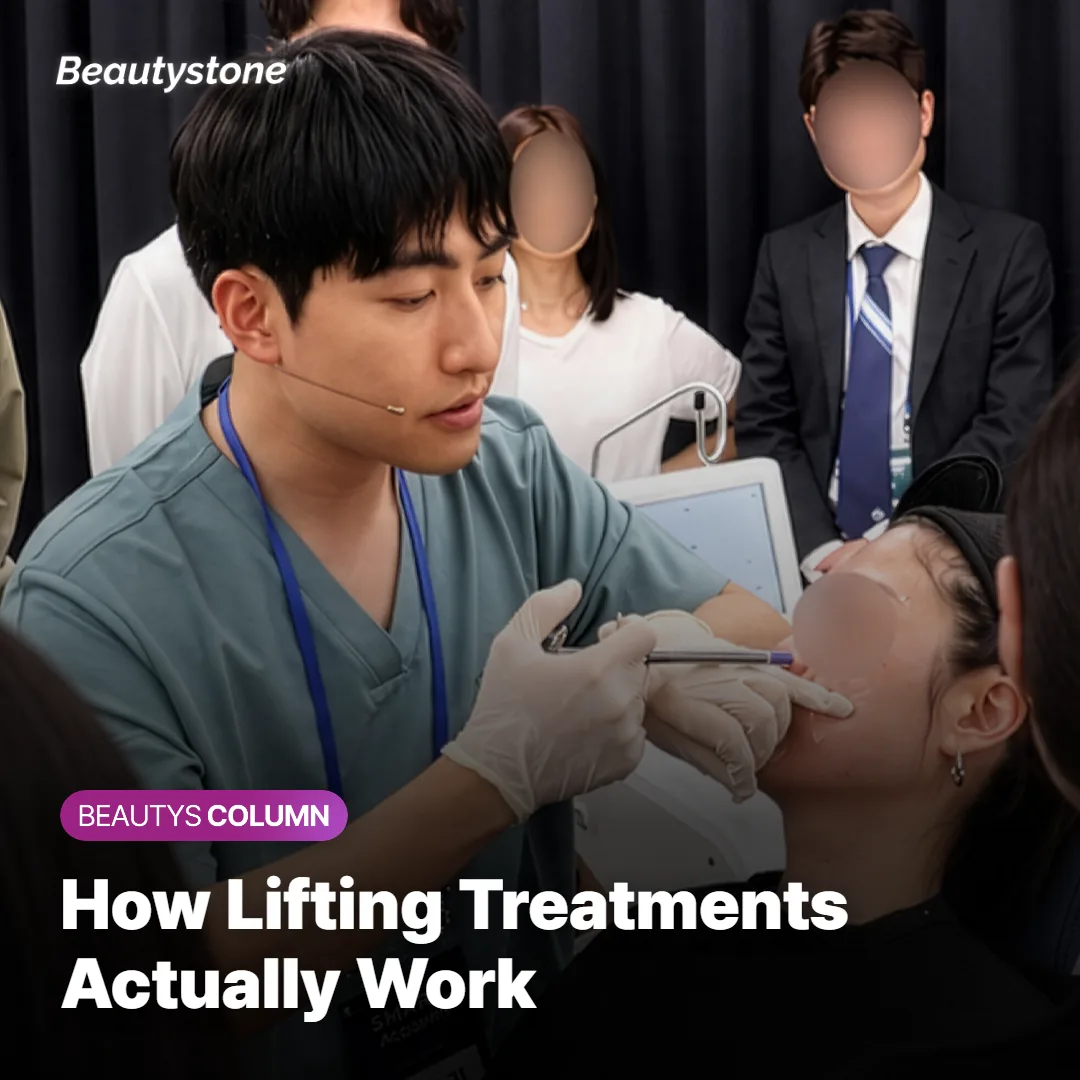
Here's the part that trips a lot of people up: non-surgical treatments like Ultherapy and Shurink don't touch bone at all. They're HIFU (high-intensity focused ultrasound) devices that deliver focused energy to a specific depth in the skin and underlying soft tissue, triggering a controlled heat response that prompts new collagen production and, over time, a lifting effect on sagging tissue.
Put another way: if your cheekbones look wide because of bone structure, these treatments won't meaningfully change your profile. If sagging or excess soft tissue is the bigger driver, lifting that tissue back into place can visibly soften the contour. That's why sorting out which layer is responsible matters so much before you book anything.
| Treatment | What It Targets | Best Fit |
|---|---|---|
| Ultherapy | Deeper tissue layers, for a stronger lift on visible sagging | Noticeable hollowing below the cheekbone with clear sag |
| Shurink | Broader coverage across the midface, for overall firmness | General looseness spread across the cheek area, not one isolated spot |
A review on ultrasound-based skin tightening found that HIFU treatment improved laxity in areas like the cheeks and jawline, which lines up with how providers actually use it — targeting the sagging soft tissue layer, not the bone underneath it.
What to Expect: The Timeline After Treatment
Don't expect an overnight transformation. HIFU works by triggering collagen remodeling, which is a gradual biological process, not an instant tightening switch.
- Right after treatment: Mild tightness or tenderness in the treated area, sometimes light redness that settles within a few hours.
- First 2 to 4 weeks: Subtle changes may start to show, though most people don't notice a dramatic difference yet.
- 8 to 12 weeks: This is typically when the lift becomes more visible as new collagen builds up.
- 3 to 6 months: Results settle in fully, and many providers recommend a follow-up session around this point depending on how much sagging was present to begin with.
Individual results vary quite a bit depending on how much soft tissue and sagging you're starting with versus how much of your cheek volume is bone. Your provider should be upfront about what's realistic for your specific anatomy rather than promising a set outcome.
Side Effects and Risks to Know About
HIFU treatments for the cheek area are generally well tolerated, but they're not risk-free. Redness and mild swelling right after treatment are common and usually settle within a few days. Some people notice temporary tenderness or a tight sensation when smiling or chewing, which typically fades within a week or two.
One risk that's specific to this area is over-treatment. Because the region just below the cheekbone can already have some natural hollowing, going too aggressive with energy levels can make that hollow look deeper rather than lifting sagging tissue — which is the opposite of what most people are going for. This is one of the reasons a provider should map out exactly where sagging is present versus where the area is already naturally sunken before starting.
Rare but more serious risks include temporary numbness, small burns, or nerve-related weakness in the treated area. If you notice worsening redness, fever, or swelling that spreads rather than settles, contact your provider right away instead of waiting it out.
This treatment isn't recommended, or should be discussed carefully with a provider first, if you're pregnant or breastfeeding, have an active skin infection in the treatment area, or have metal implants near the treatment site.

How Much Does It Cost?
Pricing for HIFU cheek contouring varies by clinic, how many areas are treated, and how many sessions your provider recommends based on how much sagging is present. There's no single number that applies across the board, so it's hard to give a meaningful figure without knowing your specific case.
A consultation is really the most reliable way to get an accurate number, since your provider can map out how much sagging versus soft tissue is involved and give you a realistic session count. If you're curious about current offers, a consultation is the best way to find out — see current offers at /en/promotion.
Who's a Good Candidate for This?
You're likely a reasonable candidate if a self-check, and ideally a clinical evaluation, points to soft tissue and sagging as the main driver behind how your cheekbones look, rather than bone structure alone. People in their late 30s through 50s who are starting to notice midface volume settling downward tend to see the most visible change, simply because there's more sagging for the treatment to address.
If your cheekbones have looked essentially unchanged since adolescence and feel hard and well-defined under light pressure, it's worth having an honest conversation with a provider about whether HIFU is likely to move the needle at all. Surgical options exist for bone-driven cases, but that's a completely different consultation with a different set of trade-offs.
It's also worth being cautious if you already have visible hollowing under your cheekbones. In that case, some providers recommend pairing a lifting treatment with volume restoration rather than lifting alone, so the area doesn't end up looking more sunken than before.
The Bottom Line
- Prominent cheekbones usually come from a mix of bone structure, soft tissue volume, and age-related sagging — not just one factor.
- Bone shape doesn't change with HIFU treatments like Ultherapy or Shurink; they work on the soft tissue layer above it, not the bone itself.
- Results build gradually over 2 to 3 months as new collagen forms, not immediately after treatment.
- Over-treating an already-hollow area can make sagging look worse, so mapping out your specific anatomy first matters.
Like any procedure, it comes with trade-offs, and it won't turn a bone-driven profile into a narrower one no matter how many sessions you do. Ultimately, the choice depends on your anatomy, your goals, and your budget.
If you're considering treatment for cheek sagging or soft tissue volume, a consultation is the best way to find out what fits you. Beautystone is a dermatology clinic in Seoul's Hapjeong area — see current offers at /en/promotion.
Frequently Asked Questions
Q1. Why do my cheekbones look different depending on the angle?
Cheekbone prominence is usually a mix of bone structure, soft tissue on top of it, and how much that tissue has sagged with age. Angle and lighting reveal each of those layers differently, which is why a straight-on view and a three-quarter view can genuinely look like different faces.
Q2. How do I know if my cheekbones are prominent because of bone, fat, or sagging?
If you feel a hard, defined ridge that's looked the same since your teens, bone is likely the main factor. If the area feels soft and padded and has shifted with weight changes, soft tissue plays a bigger role, and if the prominence developed gradually with age, descending fat pads are probably contributing.
Q3. Can non-surgical treatments change the shape of my cheekbones?
No injectable, laser, or ultrasound device changes the shape of the bone itself — the zygoma's width and shape are fixed by genetics. Non-surgical options can only address the soft tissue and sagging layered on top of it.
Q4. Am I a good candidate for non-surgical cheek contouring?
It depends on which layer is driving your case — treatments aimed at soft tissue and sagging tend to help more than they would for a purely bone-driven look. A consultation can help identify which layer is behind your specific concern before deciding on a treatment.