Ultherapy in Hongdae: 5 Questions to Ask First
Five questions for an Ultherapy consultation in Hongdae: depth and line counts per area, thin cheeks, and which changes after treatment mean you should call.

Wi Young-jin
Chief Director, Myeongdong
Before booking Ultherapy in Hongdae, ask how deep the energy will sit in each area and how many lines each area will get. If that answer comes while your own skin layers are up on the screen, you can tell the plan was drawn for your face. The reply tells you more than the machine's brand or the headline number on a quote.
Below, we've lined up five questions to bring to the consultation, with notes on what a planned answer sounds like and when to get in touch after treatment.
Question 1: What Depth Will You Use on Each Area?
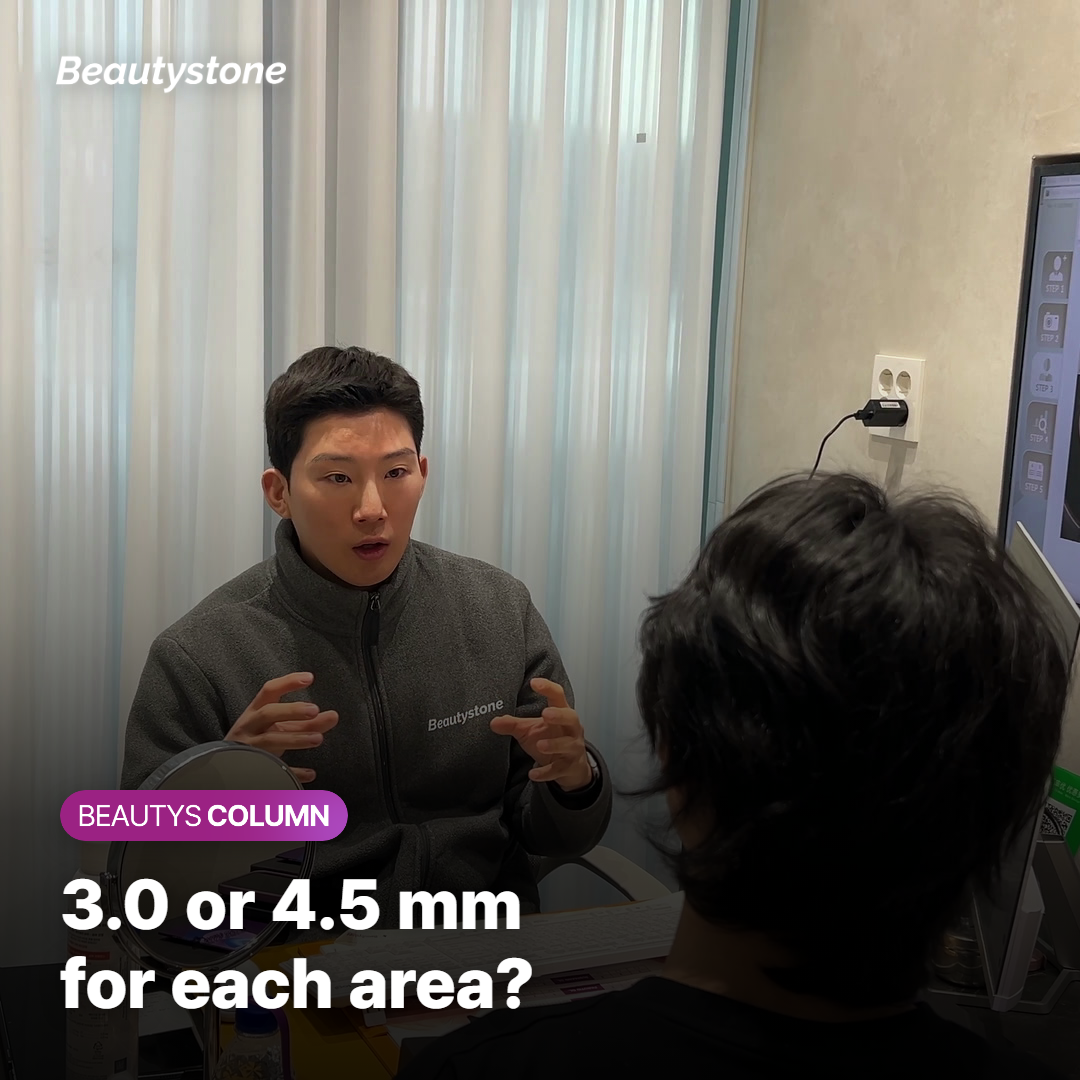
Open with this: "For my jawline, are you planning 3.0 mm, 4.5 mm, or both?" Ultherapy gathers ultrasound energy at one point beneath the surface and leaves a tiny heat mark there. Two settings shape every plan: how far down that point sits, and how many lines are drawn across each part of the face. Even on the same machine, both get decided again for every face.
The two depths reach different layers. At 4.5 mm, the focus lands in the SMAS (a thin sheet of fascia that covers the facial muscles and supports the fat and skin above it). At 3.0 mm, it aims at the deep part of the dermis, and where skin is thin, that point sits close to the border with the fat underneath. Neither depth breaks the skin, since the energy is gathered from the surface.
How the two are mixed depends on which layer the sagging started in. So a useful follow-up is "With my skin thickness, would you use 3.0 mm at all?" Some people also have one jawline sitting a bit lower than the other. Asking "Will the left and right sides get the same number of lines?" shows whether the balance of the whole face was looked at first.
Question 2: Will You Read My Layers on the Screen?
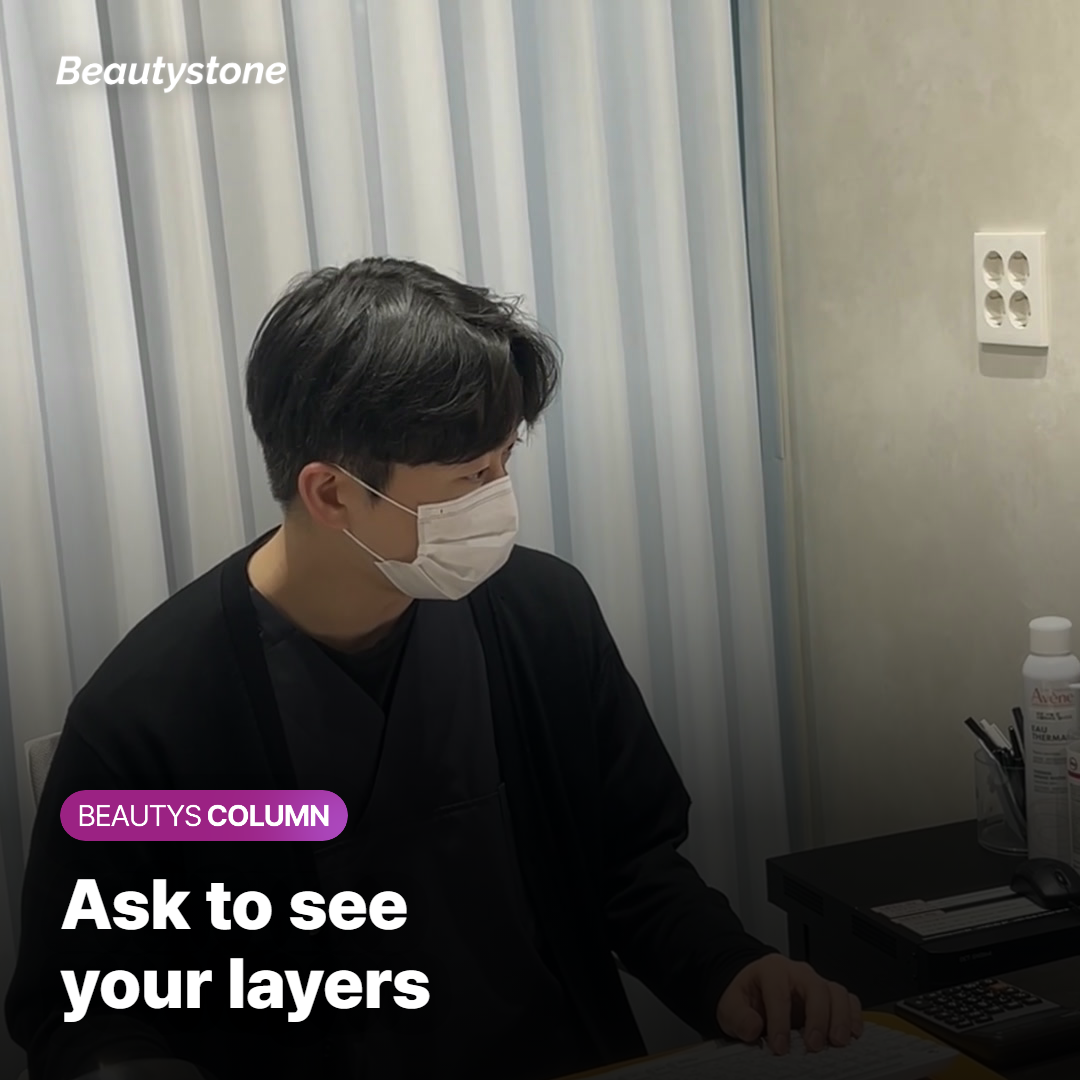
Ultherapy Prime was built to show the layers under your skin on an ultrasound image while the treatment is being done. That makes "Will you choose my depths from what's on the screen?" a fair thing to ask, because the reply tells you how the plan gets made.
A planned answer points to things you can picture: where your skin ends, where the fat sits, and where the supporting layer begins along your jaw. It may also explain why one side of your face is getting more lines than the other. Those details are what turn 3.0 mm and 4.5 mm from numbers into a reason.
A reply that only names the device, or only repeats a shot total, leaves the method unexplained. That's not a reason to walk out. Ask the question again with your jawline as the example, and see whether the answer gets more specific.
Question 3: How Many Lines Go on My Jawline and Neck?
Ask for a number per area, since one total can't show you how two plans differ. In a 2025 case series of 30 Asian patients, the lower face and neck were treated at two depths, with at least 650 lines divided up according to each person's facial structure. The lines actually delivered averaged 792.3, and results were scored by how much the jawline and neck sagged. The study didn't set different line counts against each other, though, so it can't show that more lines work better.
The same total can be piled onto the jawline or spread evenly across the face. When a quote arrives, try these questions and listen for the shape of the reply:
- "How many shots in total?" A planned reply breaks the total into area numbers, so many lines for the jawline and so many for the neck.
- "How are the depths split?" A planned reply says whether each area gets 3.0 mm, 4.5 mm, or both.
- "Are my cheeks included?" A planned reply explains whether the thickness of your cheek fat puts them in or leaves them out.
If one quote lists the neck and another leaves it out, the two plans cover different ground, whatever their totals say.
Question 4: What If My Cheeks Are Already Thin?
Say "My cheeks have always been on the thin side" at the very start of the consultation. Reports to the US medical device adverse event database include cases where the fat layer thinned and the cheeks looked sunken afterward. Most of those reports were never verified, and cases written up in published papers are rare. Still, with naturally slim cheeks, whether lines go there at all deserves its own discussion.
If hollowness bothers you more than sagging, lifting won't fill the empty space. In that case, ask about volume treatments at the same visit. Marking the spots you're worried about on a photo of your face also keeps the conversation specific.
Question 5: Which Side Effects Mean I Should Call?
Redness, swelling, and soreness at the treated spots are common and usually settle soon. A pooled analysis of 19 papers covering 506 patients found these three came up often. How long they stay varies between people.
The changes below aren't common, and they're different from a passing reaction. If one appears, take a photo first and let the clinic know right away:
- Blistering or weeping fluid over the heat marks
- Peeling that turns into an open wound, or skin that darkens
- A spot that sinks in after the swelling has gone
- Tingling or a dull, numb feeling that doesn't fade
- Stiffness on one side of the face when you make expressions
Getting a wound treated early helps reduce the marks inflammation can leave behind. A photo sent by message can't replace an exam, so if symptoms are severe, book an in-person visit first.
Fitting an Ultherapy Consultation Into Your Trip
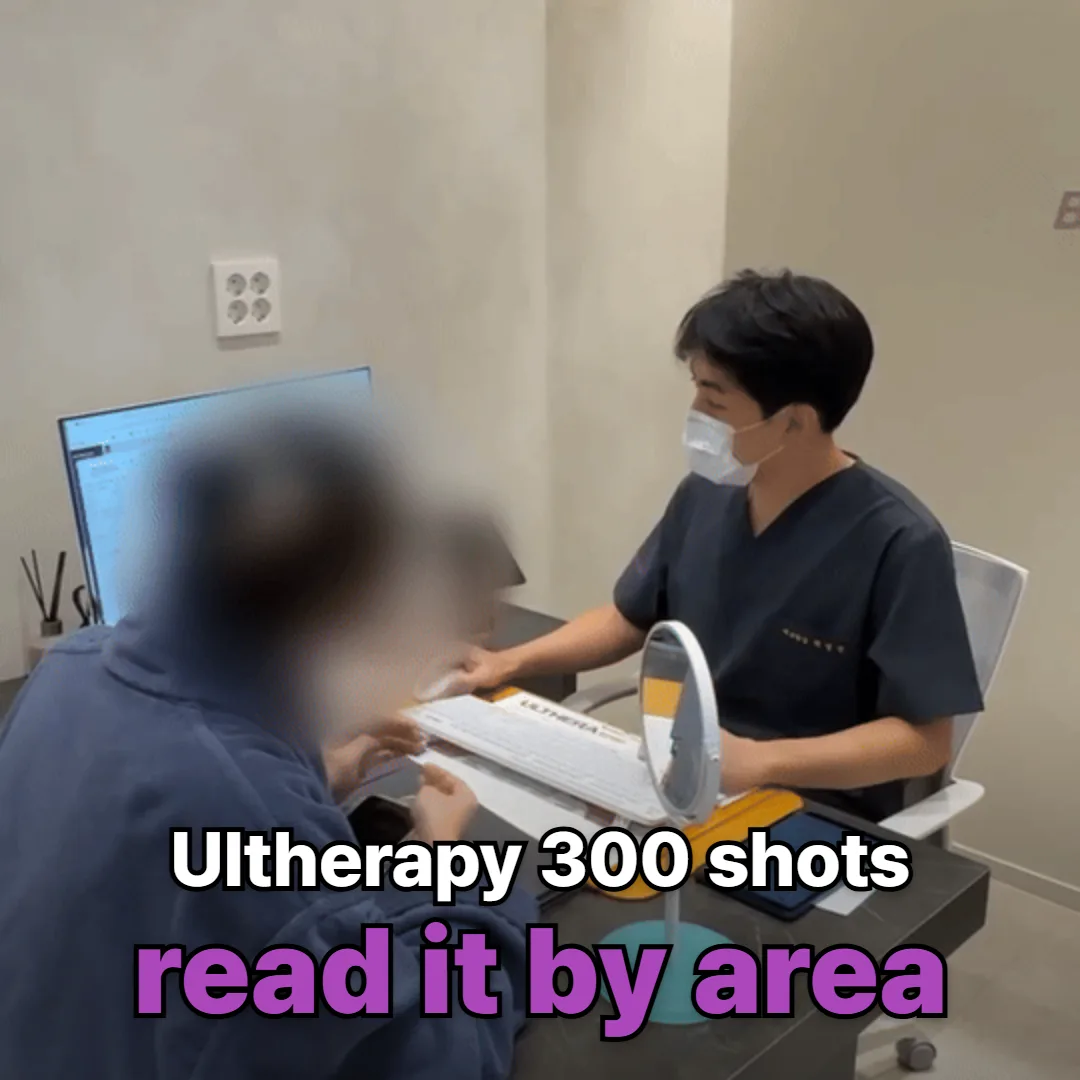
Unless you had sedation that day, Ultherapy itself is no reason to postpone your flight. If your plan is around 300 shots or smaller, swelling barely shows in photos. For a larger plan, tell the clinic which days you'll be out taking pictures, so treatment can be booked ahead of them.
A single visit is worth understanding, too. Filler can change a contour the day it's placed. Ultherapy runs on a slower clock: change tends to come bit by bit, edging the face toward how it looked earlier. That's why the comparison that counts happens months later.
If something looks off after you're home, photos can still reach the clinic through its consultation channel. For a reaction that's strong or getting worse, see a doctor near you first.
The Bottom Line: Bring Two Photos and Five Questions
Depth is the one setting to keep asking about, because it decides which layer each area is treated in. Plan to compare photos about 3 months later, too. In an early face and neck study, photos taken 90 days after one session showed the brows had risen in 30 of 35 people, by 1.7 mm on average. Results vary, and a shift that small only reads clearly when the before and after photos match.
For the consultation itself, bring one front photo and one side profile taken in your usual makeup and lighting. Add the area that catches your eye first, and roughly when you had any earlier lifting, filler, or thread treatment. At the 3-month mark, retake the photos in the same light and at the same angle, then ask, "How many lines went on my jawline at 4.5 mm?" That answer gives the next plan a starting point.
If you're still unsure whether your cheeks belong in the plan, put that question in your first message along with the two photos. Beautystone is a clinic in Seoul's Hapjeong area, one stop from Hongik University Station on Line 2.
References
- One-session face and neck ultrasound lift judged from day-90 photos in 35 people — J Am Acad Dermatol, 2010
- Ultherapy Prime on the lower face and neck of 30 Asian adults — Plast Reconstr Surg Glob Open, 2025
- Pooled adverse effects of ultrasound lifting with real-time imaging — Dermatol Surg, 2025
- Severe reactions after ultrasound lifting, a case series — Lasers Surg Med, 2018
- Patient survey on pain, redness, and swelling with Ultherapy Prime and the earlier device — J Cosmet Dermatol, 2025
Frequently Asked Questions
Q. Is Ultherapy Prime a different treatment from the original Ultherapy?
A. Ultherapy Prime works on the same principle as the original Ultherapy, with an updated processor and imaging. Ultrasound is still gathered at a point under the skin to leave a small heat mark. In a survey at one clinic in Bangkok, patients who had Prime said they felt less pain and saw less redness and swelling. Those answers came from a single clinic without blinding, so treat them as a hint.
Q. What shows up on the Ultherapy Prime screen?
A. The Ultherapy Prime screen shows the layers inside your face on an ultrasound image, such as skin, fat, and the fascia beneath. In the 2025 series of 30 Asian patients, lines were placed in a See, Plan, Treat sequence: looking at the image, planning, then treating. Looking at that screen with the doctor and asking about the layers under your jawline makes the depth explanation far more concrete.
Q. Does Ultherapy hurt, and how is the pain handled?
A. Ultherapy pain differs from person to person, and soreness at the treated spots is common afterward. For pain control, the choice is among numbing cream, an injected local anesthetic, and sedation, picked at your visit based on how large the area is and how sensitive you are. The 2010 face and neck study also applied a numbing agent before starting. Sedation is kept for treating a wide area in one go and isn't the default.
Q. I have a budget in mind. How do I bring it up at an Ultherapy consultation?
A. Share your budget range early, and the Ultherapy plan can be divided by area within that number. With a tighter range, the lines tend to be gathered on the one or two spots where sagging shows first; with more room, the plan can reach the neck or cheeks. Asking for the numbers per area in writing makes plans easier to compare.
Q. Should I mention past thread lifts, filler, or Ultherapy?
A. Yes, tell the doctor which thread lifts, filler, or Ultherapy you've had, when, and on which area. That history helps decide whether lines go over the same spot and how long to wait this time. If the exact date escapes you, the rough month and the area will do.
Q. What if I don't see much change after one Ultherapy session?
A. Little visible change after one Ultherapy session can happen. In the 2010 study of a single face and neck session, the brow change in 5 of 35 people wasn't judged clear. Taking photos before treatment and repeating them about 3 months later under the same conditions gives you something to judge by, and the next plan is set from those photos.
Q. What should I do if a reaction is severe and the clinic is far away?
A. With a severe reaction, get seen at a medical facility near you first. Blisters and open wounds are easier to manage with fewer marks when they're treated early. Afterward, share the treatment you received and your photos through the clinic's consultation channel so they can be reviewed at your next visit.