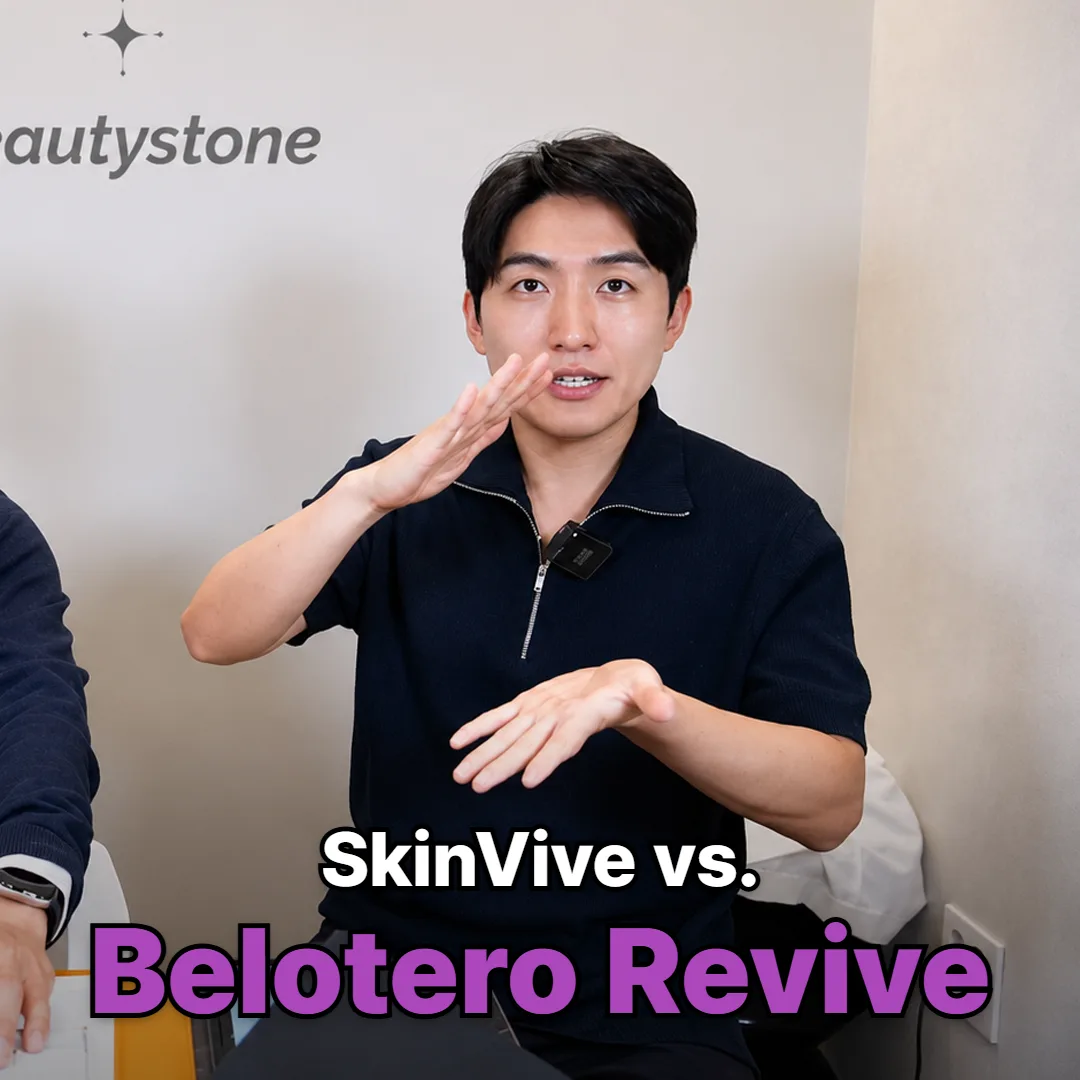
SkinVive vs. Belotero Revive: Rough or Dry?
SkinVive and Belotero Revive are both fine hyaluronic acid injections, but they differ in their added ingredient, hyaluronic acid amount, and session schedule. Here's how to tell which study looks more like your skin.
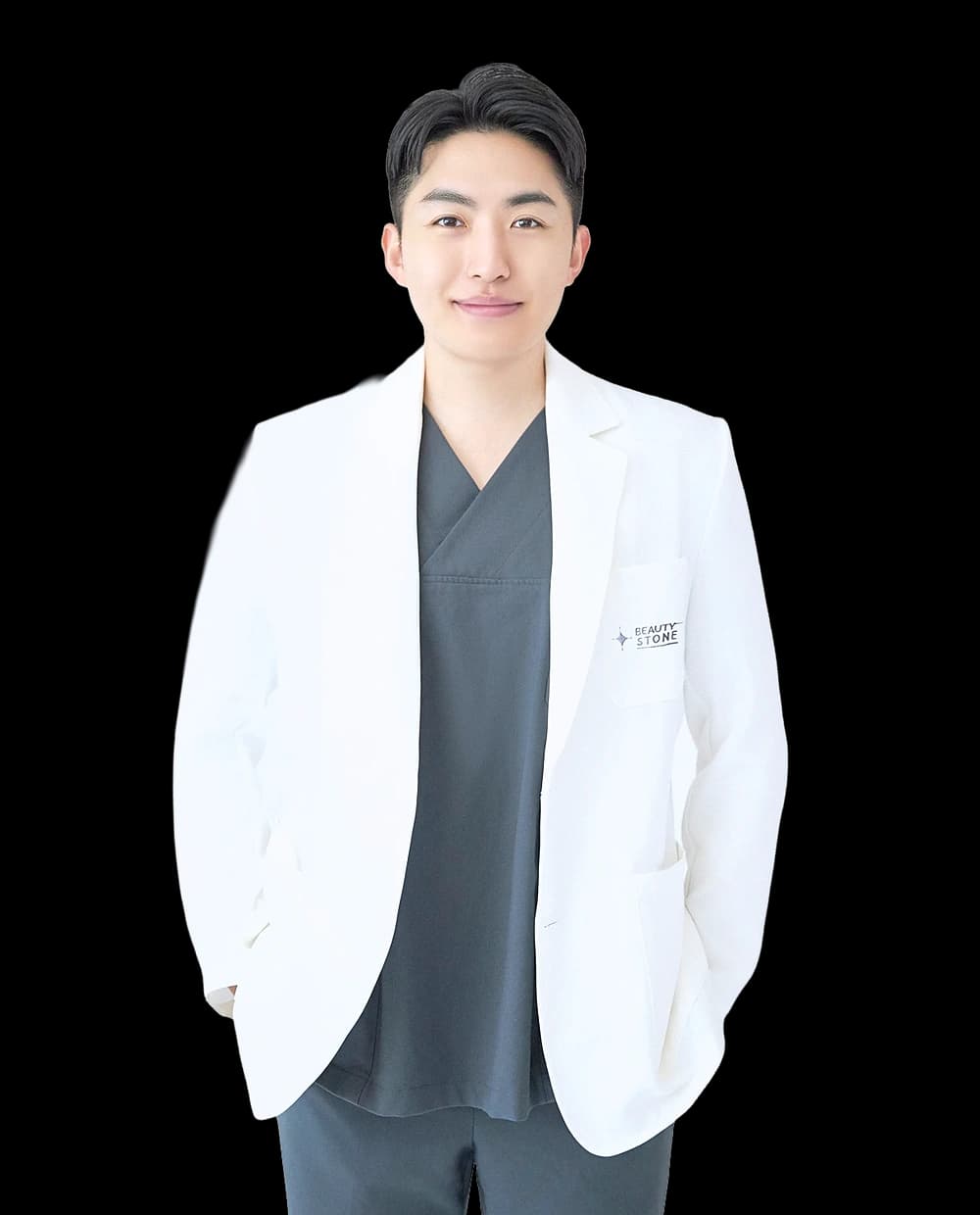
Wi Young-jin
Chief Director, Myeongdong
SkinVive contains the numbing agent lidocaine, while Belotero Revive contains glycerol, an ingredient that holds on to water. The amount of hyaluronic acid differs too: 12 mg per mL in SkinVive and 20 mg per mL in Belotero Revive.
The two products were also tested on different skin and on different schedules. SkinVive was studied on rough cheeks with one treatment and an optional touch-up a month later. Belotero Revive was studied on skin that was just starting to age, with three sessions spaced 4 weeks apart.
So the useful question isn't which one is stronger. It's which study looks more like your skin right now. Below, we'll walk through the ingredients, the study results, and the warning signs that need a doctor.
Quick summary
- If your cheeks look rough and fine lines show first, compare SkinVive first; if tightness and dryness come first, start with Belotero Revive.
- Sessions used in the studies: SkinVive once, with a touch-up after 1 month if needed; Belotero Revive 3 times, 4 weeks apart.
- In a 209-person study, 57.9% of SkinVive-treated cheeks were smoother at 1 month, and more than 55% stayed improved through 6 months.
- If you're allergic to lidocaine, SkinVive isn't an option for you.
SkinVive vs. Belotero Revive: Which One Should You Compare First?
Start with the mirror. Do your cheeks look bumpy and uneven, or do they mostly feel tight and dry? That split matters because each product's results come from a different group of people.
SkinVive's main study enrolled 209 adults with moderate or worse cheek roughness, and their average age was 57. Belotero Revive's study enrolled 159 people aged 25 to 45 whose skin was showing early signs of aging. Here's how the two compare on the points people actually ask about at a consultation.
| Point to compare | SkinVive | Belotero Revive |
|---|---|---|
| Added ingredient | Lidocaine 0.3% (numbing) | Glycerol 17.5 mg per mL (holds water) |
| Hyaluronic acid | 12 mg per mL | 20 mg per mL |
| Sessions in the study | 1, plus a touch-up at 1 month if needed | 3, spaced 4 weeks apart (compared with 1) |
| Skin that was studied | Rough cheeks, average age 57 | Early aging, ages 25 to 45 |
| Authorization | US FDA, cheeks, adults 21 and older | European CE mark |
If roughness and fine lines bother you more, SkinVive's results sit closer to your situation. If your skin mostly feels tight and parched, Belotero Revive's results are the better match to read first.
Both are placed the same basic way: hyaluronic acid goes into the dermis (the thick middle layer of skin) as many tiny droplets, not as one larger deposit.
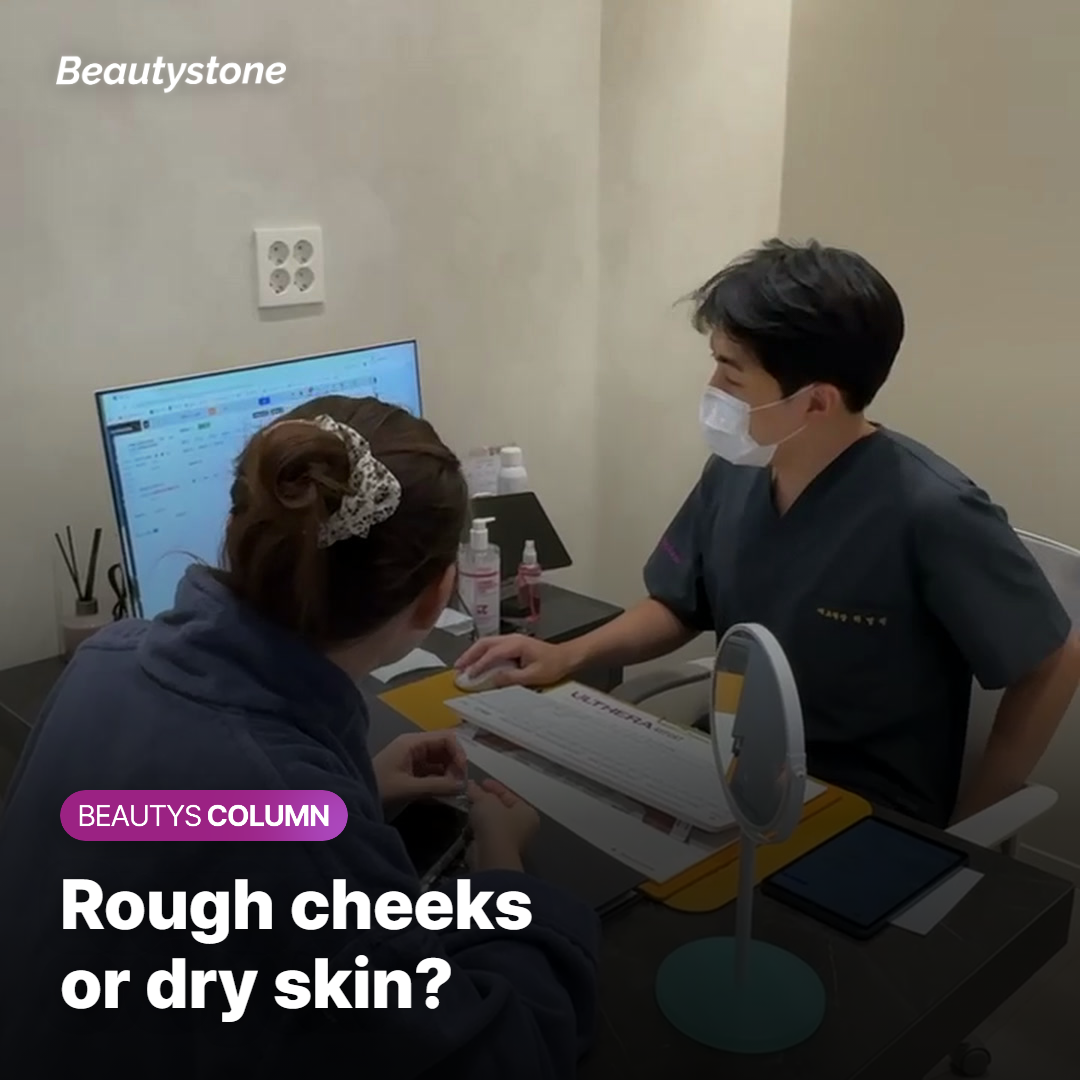
Is a Skin Booster the Same Thing as SkinVive or Belotero Revive?
No. "Skin booster" isn't a product name. It's a broad label for injections that spread small amounts of hyaluronic acid through the shallow layers of the skin, and both SkinVive and Belotero Revive are given this way.
In Korea you may also hear the phrase "water-glow injection" used for the same idea. Because the label covers many products, a price list that only says "skin booster" tells you very little. Asking which product will be used and how many sessions are planned is more precise.
That detail matters because the products aren't interchangeable. They carry different amounts of hyaluronic acid, and the extra ingredient (lidocaine in one, glycerol in the other) changes what each one is aiming at. Keep in mind that the same word on a menu can mean a different product from one clinic to the next.
How Much Does SkinVive Change Rough Cheek Texture?
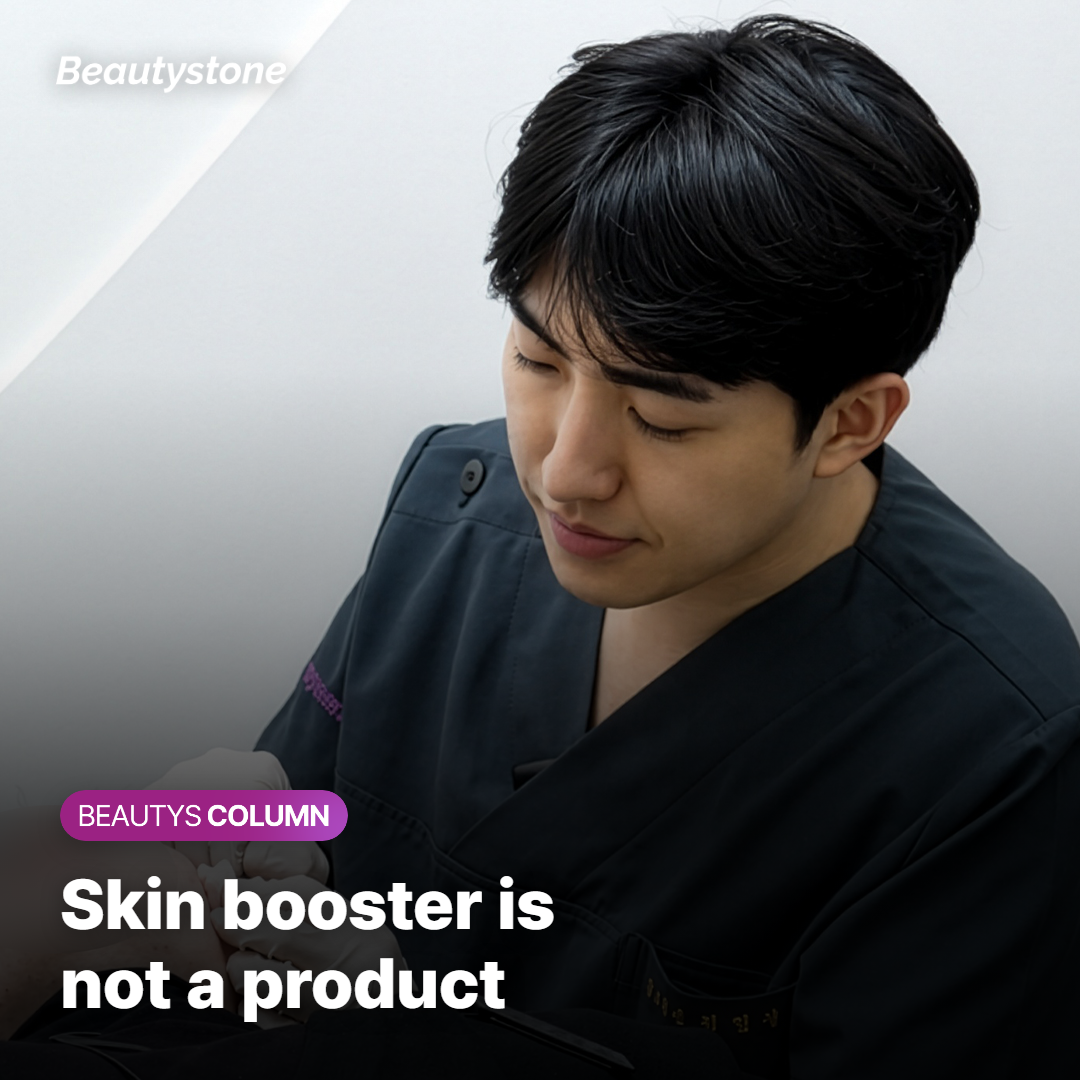
At 1 month, 57.9% of treated cheeks improved by at least one grade on a roughness scale. That figure comes from a 209-person study that compared a treated group with a group that wasn't treated. More than 55% were still improved at 6 months, and skin hydration stayed above starting levels through 6 months as well.
The treatment itself uses a very fine needle to place tiny droplets into the cheek's dermis. People got one treatment, then a touch-up 1 month later only if it was needed. It's approved in the US to smooth cheek skin in adults 21 and older.*
*Based on the US FDA approval for SkinVive
Keep in mind that these results describe cheeks, not the whole face, and that a little over half of treated cheeks reached that one-grade change. How much you see depends on your skin. That's also why the starting condition of your cheeks is worth checking before you pick a product.
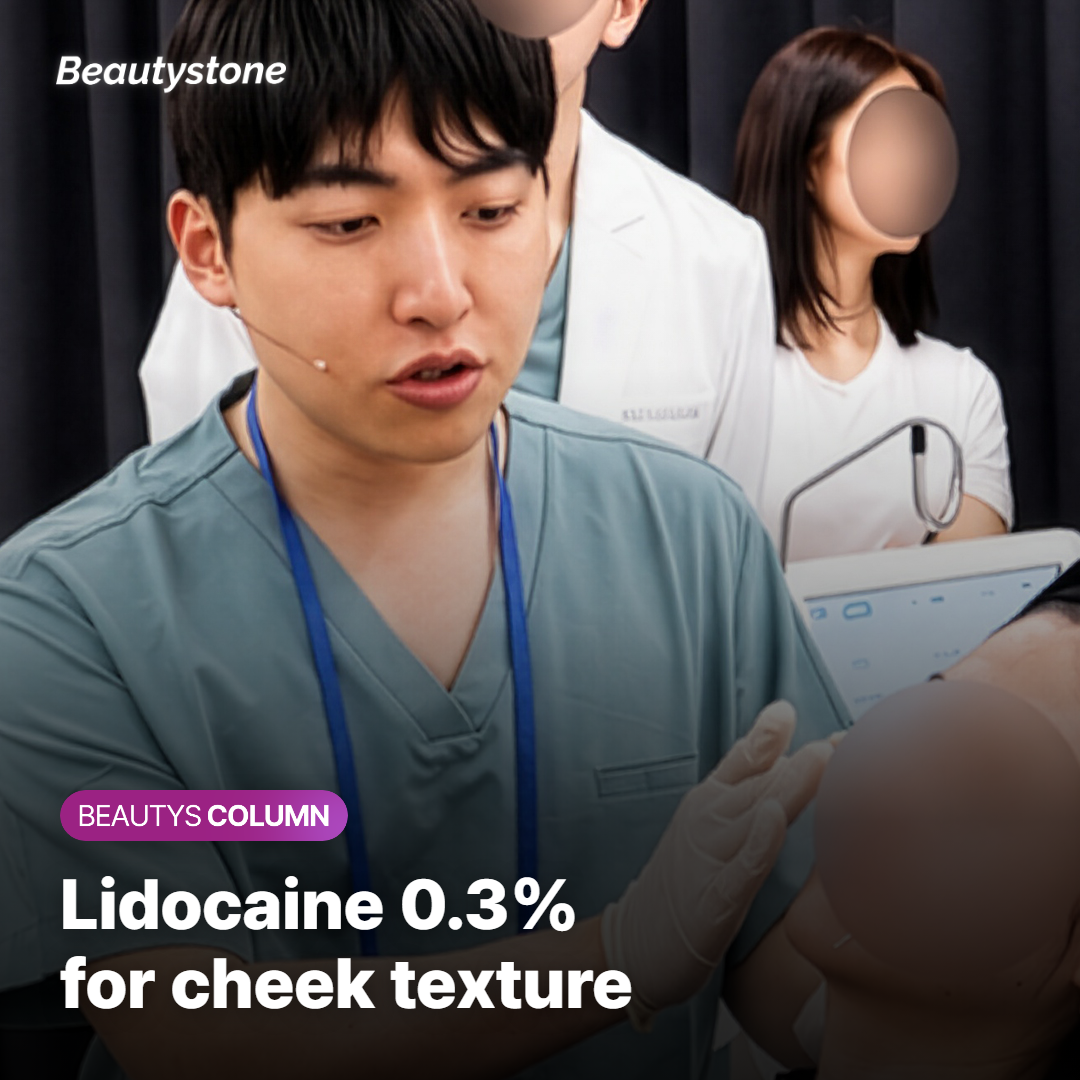
What Does the Glycerol in Belotero Revive Do for Dry Skin?
The clearest hydration gain with Belotero Revive showed up in people whose skin was already dry. Glycerol pulls water toward itself. In the study, 159 people were split into a group that got 3 sessions 4 weeks apart and a group that got 1 session; there was no untreated comparison group.
Among the 19 participants with dry or very dry skin, hydration went up in both groups. In the 3-session group, it stayed above the starting level through week 44, about 9 months after the last injection. That said, across all participants the change in hydration wasn't meaningful.
Smoother texture, measured as a drop in surface roughness, appeared only in the 3-session group. When the investigators rated overall improvement, 90.7% of the 3-session group had improved at week 12, and 74.6% of the single-session group had improved at week 4. Results differ from person to person, so these numbers describe the study group rather than a promise for any one face.
For dry skin, then, the schedule matters as much as the product. If you can only fit in one visit, it helps to know that the texture change was seen only with the full three-session plan.
SkinVive and Belotero Revive Side Effects: What's Normal, What's Urgent?
Redness, swelling, small bumps and bruising are expected with both injections, and they usually pass. With SkinVive, 81.5% of treated people reported reactions like these, and most cleared within 7 days. With Belotero Revive, bruising was the most common reaction at 47.2%, swelling followed at 6.3%, and most reactions cleared within 15 days.
The two studies recorded reactions in different ways, so it isn't fair to compare those numbers side by side. What doesn't change is how to act on warning signs. Don't wait to see if these improve; get medical care right away:
- Skin near an injection site turns white, gray, or blue
- Pain that feels unusual or different from normal soreness
If you notice changes in your vision, sudden trouble speaking, numbness or weakness in your face, arms, or legs, difficulty walking, face drooping, a severe headache, dizziness, or confusion, go to the nearest emergency room. When a blood vessel is blocked, rare cases can lead to blindness or stroke, and side effects can appear weeks to years after treatment.*
*Based on US FDA guidance for dermal fillers in general
It's better to postpone treatment if any of these apply to you:
- An allergy to lidocaine or other local anesthetics (SkinVive)
- A history of severe allergies or anaphylaxis
- Inflammation or infection where the injections would go
- A condition that makes it hard for bleeding to stop
- You're pregnant or breastfeeding

Fitting SkinVive or Belotero Revive Into a Trip to Korea
Unless you had sedation that day, there's no need to postpone your flight home because of these injections. Redness or bruising may still be there when you fly home, so it helps to plan for that.
A single visit won't change your look all at once. With injections like these, skin tends to shift gradually rather than overnight. If Belotero Revive's three-session schedule is what you're after, keep in mind that the sessions were 4 weeks apart, so one short trip covers only the first one. With SkinVive, the optional touch-up came 1 month after the first treatment.
After you're back home, you can message the clinic with photos if something worries you. If a warning sign is strong, though, see a local medical facility first rather than waiting for a reply.
The Bottom Line: What to Ask Before You Choose
Before you decide, check that your plan names three things: the product, how many mL go in per session, and how many sessions are planned and how many weeks apart. If it only says "skin booster," ask which product it is first. The question to bring is simple: do your cheeks read as rough or as dry, and whose study matches that? Beautystone is a clinic in Seoul's Hapjeong area near Hongdae, and you can reach out through the consultation button on this page. In your first message, include whether roughness or dryness bothers you more, any past reaction to local anesthetics, and the dates you're in Seoul.
Sources
- Study comparing SkinVive (VYC-12L) with no treatment in adults with rough cheeks — Aesthetic Surgery Journal, 2023
- Study giving Belotero Revive once or three times to 159 people with early skin aging — Plastic and Reconstructive Surgery Global Open, 2021
- SkinVive approved use and who shouldn't receive it — US FDA, 2023
- Warning signs of a blocked blood vessel after fillers and what to tell your provider — US FDA
Frequently Asked Questions
Q. Does SkinVive hurt?
A. SkinVive pain right after injection averaged 3.0 out of 10 in its main study, which is on the low side. The gel itself contains 0.3% lidocaine, a numbing agent. Whether numbing cream or another method is used is decided at the visit based on the area and how sensitive you are.
Q. Is Belotero Revive more painful since it has no lidocaine?
A. Belotero Revive has no lidocaine, but injection-site pain made up only 2.4% of the treatment-related reactions in its study. No study has compared the pain of the two products on the same scale. If pain worries you, the numbing method can be chosen together at the visit.
Q. Does one session of Belotero Revive do anything?
A. One session of Belotero Revive did show results: 74.6% of the single-session group were rated improved by investigators at week 4. The 3-session group reached 90.7% at week 12. Smoother surface texture, however, was seen only in the 3-session group.
Q. How long do SkinVive and Belotero Revive results last?
A. SkinVive's cheek smoothness held for at least 6 months. Belotero Revive kept hydration above the starting level for up to 9 months after the last injection in people with very dry skin. The two studies measured different things over different periods, so the numbers can't be compared directly.
Q. Can SkinVive be used on the forehead or neck?
A. SkinVive's US approved use is improving cheek skin smoothness in adults 21 and older, and its 209-person study looked only at cheeks. For the forehead, neck, or another area, it's worth first confirming at the visit whether the product suits that area.
Q. Can I get SkinVive or Belotero Revive while pregnant or breastfeeding?
A. If you're pregnant or breastfeeding, it's better to postpone both SkinVive and Belotero Revive. The safety of filler-type products hasn't been established during pregnancy, while breastfeeding, or in people under 22. Timing can be revisited after breastfeeding ends.
Q. Can lumps appear months after SkinVive?
A. Late lumps (nodules) weren't reported in SkinVive's 209-person study. Even so, side effects of filler-type injections can appear weeks to years later. If a lump shows up later and it's red, painful, or growing, take a photo and get it checked by a doctor.