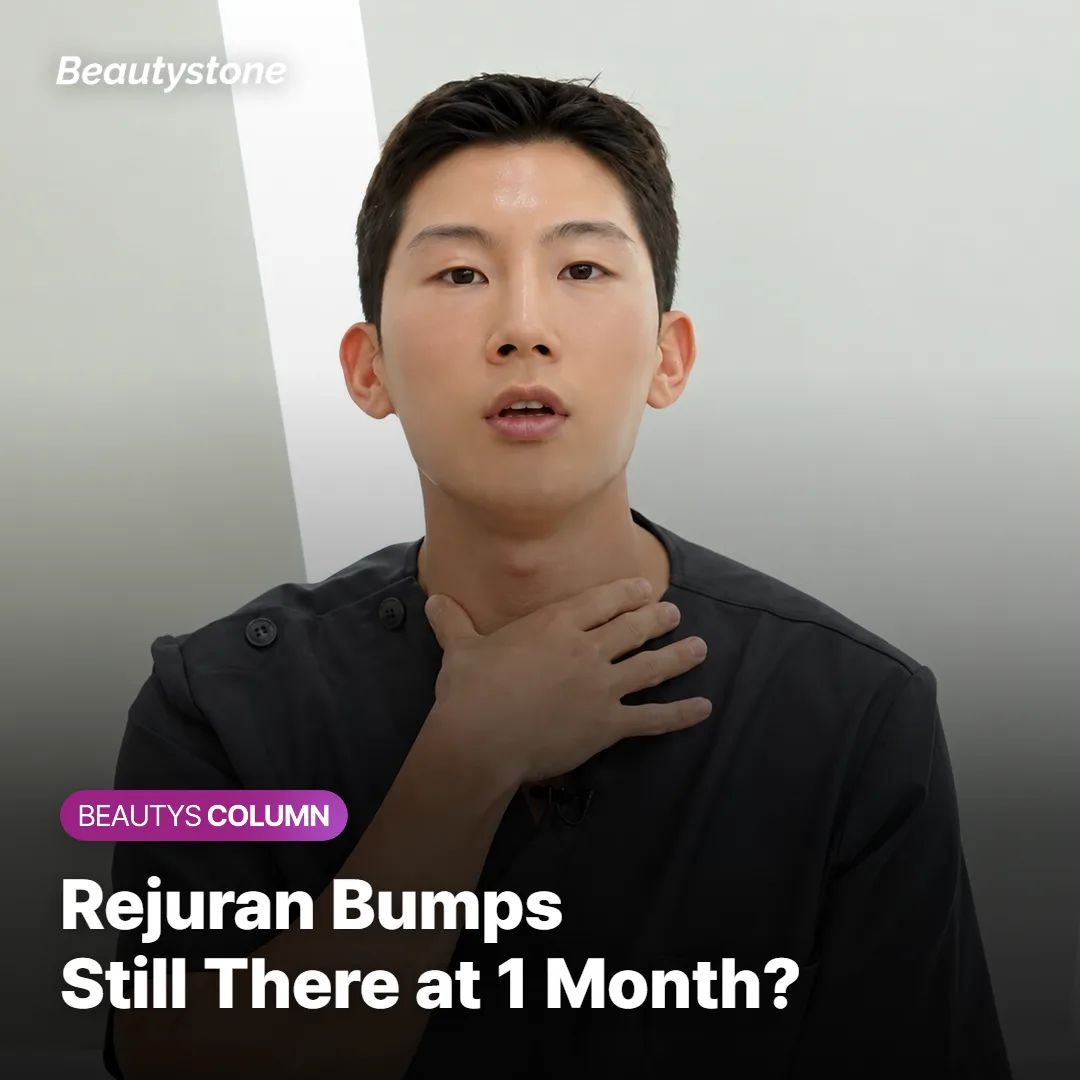
Rejuran Bumps Still There After 1 Month?
Swelling, bruising and redness after Rejuran usually settle within about a week. A bump that's still there after a month deserves a closer look: whether it's non-tender and shrinking or red, sore and growing changes what happens next. Here's how to tell, what a follow-up visit checks and which signs need care right away.

A Rejuran bump that's still there after 1 month is worth having examined rather than waited out. Swelling, bruising and redness at the injection points usually settle within about a week. Past that point, the first thing to sort out is whether the lump is non-tender and slowly shrinking, or red, sore and getting bigger.
Below, we'll go through how to tell those two apart, what gets checked at a follow-up visit, how lingering lumps are treated and which signs can't wait.
Quick summary
- A bump that has lasted over a month should be checked in person, not just watched.
- Normal range: swelling, bruising and redness typically fade within 1 week.
- Firm lumps that don't hurt have been linked to product placed too shallow or in too large an amount.
- Redness with pain, or any oozing, means contacting a doctor right away, whatever the date.
Are Rejuran Bumps Still Normal After 1 Month?
Not really. By the 1-month mark, a lump has moved past the window for ordinary injection reactions. In a review that pooled 9 studies covering 219 people, reactions to polynucleotide (PN) injections, the same family of ingredient as Rejuran, were mild and typically resolved within a week. That review looked at several PN products, not Rejuran alone.
*Polynucleotide (PN): the DNA-fragment ingredient that Rejuran is made from.
So far, there are no published reports of granulomas or blocked blood vessels with Rejuran. That said, the evidence base is still small, so it's hard to say how often rare problems happen. That's why I don't treat a bump that has lasted more than a month as part of the normal course. I look for the cause instead.

Lump That Doesn't Hurt or Red, Sore Lump: Which Is Yours?
A lump that's firm but doesn't hurt when you press it, and matches the skin around it, has been linked to injected product collecting in one spot. In one case report, a hyaluronic acid skin booster in the neck left a lump that lasted 6 months. It was firm, didn't hurt and sat in the upper layer of the skin, and the author put it down to an injection that was too shallow or too large in volume. That was a single patient and a different product, so read it as an example of how a clump forms rather than a Rejuran statistic.
A lump that turns red or reddish-brown is a different story. A foreign body granuloma, where the body walls off injected material, shows up as red or reddish-brown bumps. It can appear months or even years after the injection. If the lump hurts when pressed or starts to ooze, infection needs to be checked as well.
Here's how the two usually compare when you look and touch:
Leaning toward a clump of product:
- Firm, but not painful to the touch
- Same color as the surrounding skin
- Stays the same or shrinks little by little
- Rarely comes with anything else
Leaning toward inflammation, a granuloma or infection:
- Tender, sore or warm when pressed
- Red or reddish-brown
- Gets bigger, or new lumps appear
- Oozing or an open wound
Everyone's skin is different, and a lump can show features from both lists. That mix is one more reason to have it examined.
Healer or HB Plus? Why the Product Name Comes First
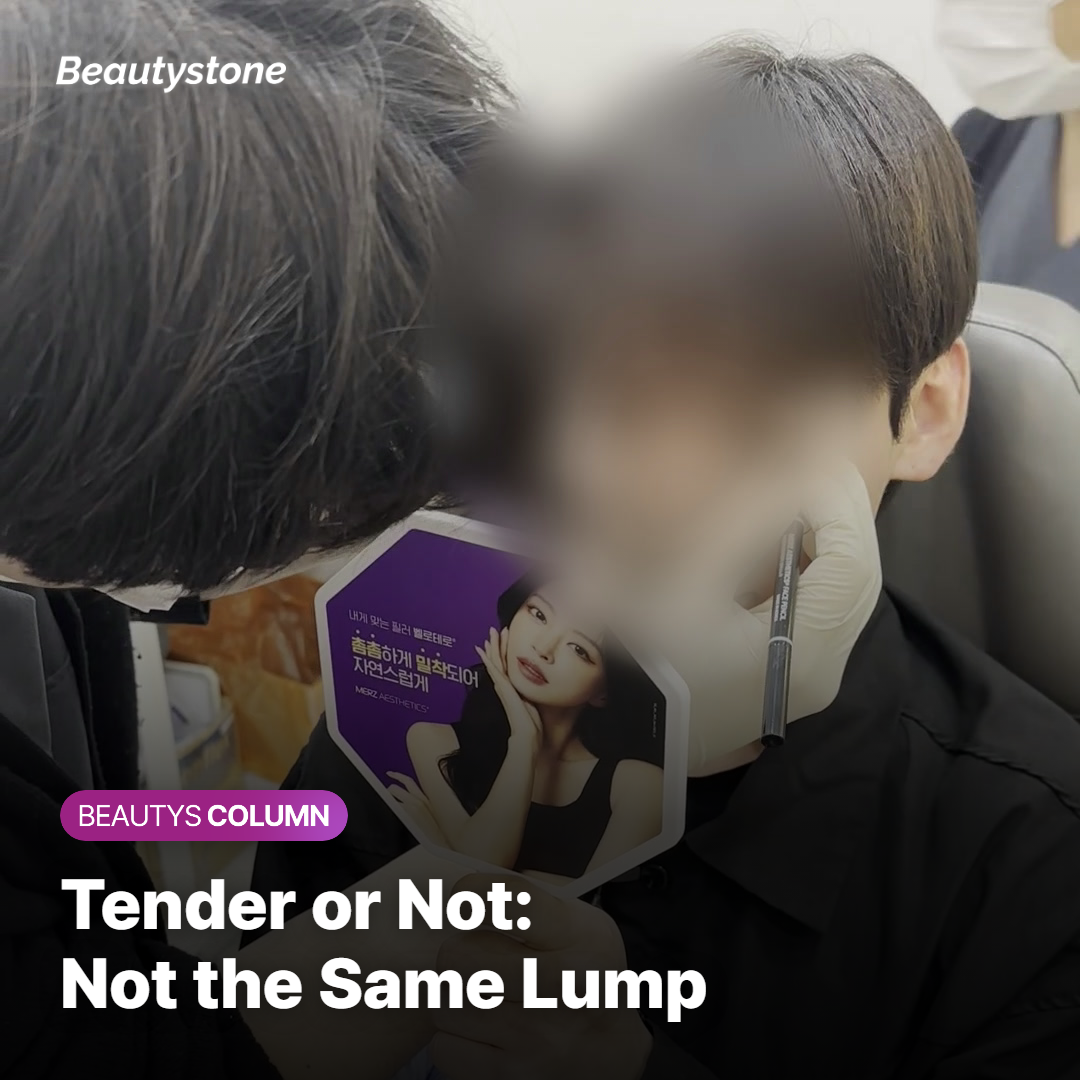
At a follow-up visit, my first questions are when you had the injection, which product it was and where it went. Knowing the product and how the lump has changed is what lets me choose a treatment that fits. In a study of 26 people who had a biopsy for facial lumps appearing more than 3 months after filler, 65.4% didn't know what they'd been injected with. That study covered fillers in general, not Rejuran.
Rejuran also comes in types with different ingredients. Rejuran Healer (sold simply as Rejuran) contains PN only, while Rejuran HB Plus also contains hyaluronic acid. So the product name narrows down which treatments are on the table. If you're not sure which one you had, your receipt or the treatment record from that visit usually lists it.
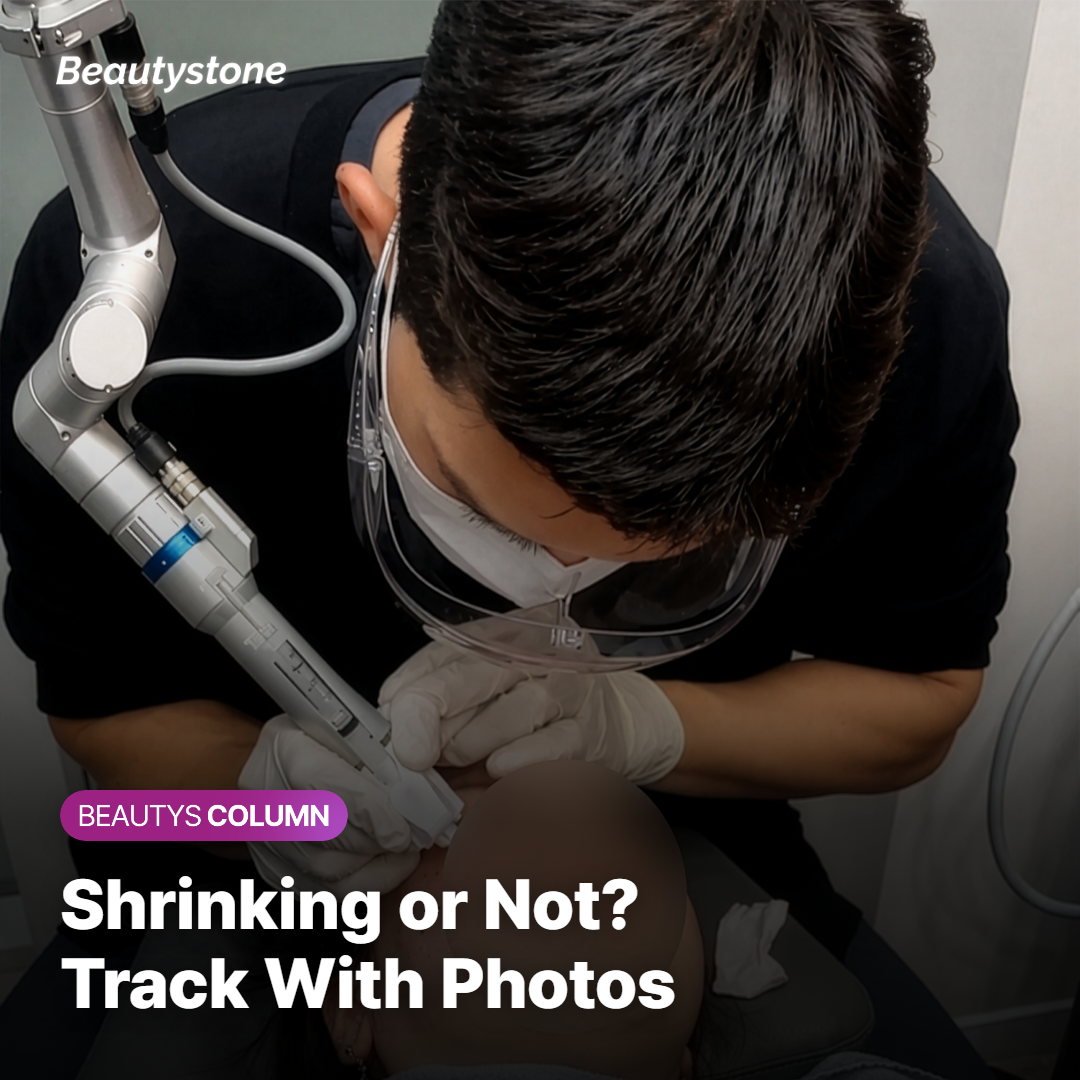
I also compare how the lump feels, how big it is and what color it is against your earlier photos, side by side. A lump that looks unchanged in the mirror can turn out to be shrinking, or growing, once the photos are lined up.
How Are Lingering Rejuran Lumps Treated?
A lump that doesn't hurt and is slowly getting smaller can be watched. Photos taken under the same conditions let you compare its size over time. If it doesn't shrink, or it grows, the next step is treatment matched to the cause.
Inflammatory lumps and granulomas are treated with antibiotics, oral steroids or steroid injections given directly into the lump*. Some lumps after filler need to be removed surgically. How well each option works depends on the cause and on the person.
*Based on DermNet's guide to foreign body granulomas.
Never try to pop a lump with a needle or squeeze it hard at home. An open wound raises the risk of infection.
Rejuran Side Effects: Which Can Wait, and Which Need Care Now?
Mild swelling, bruising, redness or itching at the injection points in the first days is expected. Within that early window, it's fine to keep an eye on it.
The signs below are different. Get medical care right away, whatever the date, if you notice any of these:
- The lump turns red, feels warm and hurts when pressed
- Oozing, or the skin over the lump breaks open
- The lump gets noticeably bigger over a few weeks
- Skin at the injection site turns white, or you feel unusual pain
Go to the nearest emergency room if your vision changes. The same applies to trouble speaking, or numbness or weakness in your face, arms or legs. Difficulty walking, a drooping face, a severe headache, dizziness or confusion also mean the emergency room*. No blocked blood vessels have been reported with Rejuran so far, but it's injected into the face, so these signs are worth knowing. A message to the clinic doesn't replace that care.
*Based on US FDA guidance on dermal fillers in general, not on Rejuran specifically.

Planning Your Travel Itinerary Around a Rejuran Lump
Unless you had sleep sedation that day, there's no reason to postpone your flight because of a Rejuran injection or a follow-up check.
It also helps to know what one visit can do. Some treatments, such as fillers, change your shape the same day. Most others, Rejuran included, bring your skin gradually closer to how it used to look rather than changing it all at once, and a single visit doesn't replace a planned series of sessions.
Once you're home, you can send photos through the consultation button on this page if you have questions about how a lump is changing. If a sign is serious, such as a red, warm and painful lump, oozing or any change in your vision, see a local doctor first.
The Bottom Line: Ask About Depth and Amount Before Your Next Rejuran
If you're planning more Rejuran, start the consultation with one question: "How deep did it go last time, and how much was injected?" Whether to treat the same area again is decided only after the lump's nature has been checked.
Beautystone is a clinic in Seoul's Hapjeong area. When you reach out, include the injection date, the product name and a photo from the day you first noticed the lump.
Sources
- Benefits and side effects of PN injections across 9 studies (J Cosmet Dermatol, 2025)
- How Rejuran is used and what has been reported about granulomas and blocked vessels (Clin Cosmet Investig Dermatol, 2026)
- Biopsies of facial lumps appearing more than 3 months after filler in 26 people (J Plast Reconstr Aesthet Surg, 2020)
- A neck lump lasting 6 months after a hyaluronic acid skin booster, a case report (J Cosmet Dermatol, 2025)
- What foreign body granulomas look like and how they're treated (DermNet)
- Lump and infection risks of dermal fillers and warning signs of a blocked blood vessel (US FDA)
Frequently Asked Questions
Q. Can hyaluronidase dissolve a Rejuran HB Plus bump?
A. Hyaluronidase, an enzyme injection that breaks down hyaluronic acid, can be considered for a Rejuran HB Plus bump because HB Plus contains hyaluronic acid. In one case, a neck lump that had lasted 6 months after a hyaluronic acid skin booster shrank considerably 1 week after this enzyme injection. That was a single patient with a hyaluronic acid product, and we haven't found data showing the same effect on PN.
Q. Are Rejuran nodules common?
A. Rejuran nodules aren't common. In a review of 9 studies covering 219 people who had PN injections, reactions were mild and typically cleared within a week. No granulomas have been reported with Rejuran so far either, but research is limited, so it's hard to judge how often rare problems occur.
Q. Can a lump that appears months later still be from Rejuran?
A. A lump that appears months after Rejuran can still be related to the injection, so it's worth having examined. Side effects of injectables such as fillers can show up weeks, months or even years later. If you've had other treatments in the meantime, mention them too, since that makes the cause easier to pin down.
Q. Is it a nodule if my skin still feels bumpy 1 week after Rejuran?
A. Skin that still feels bumpy 1 week after Rejuran doesn't automatically mean a nodule. Mild reactions to PN injections usually settle within about a week, though, so a firm spot beyond that is past the range to simply wait out. From this point, take photos and get in touch with the clinic.
Q. How should I photograph a Rejuran bump to track it?
A. Photograph a Rejuran bump in the same lighting, at the same angle and from the same distance each time, so size changes can be compared. Take one front view and one side view and note the date. A shot with the area relaxed and another with light pressure shows how much the bump stands out.
Q. Can I wash my face and wear makeup with a Rejuran lump?
A. With a Rejuran lump, you can wash your face and wear makeup as usual as long as there's no open wound or oozing. Avoid rubbing hard over the lump or pressing on it with massage tools. If it oozes or the skin opens, stop wearing makeup and get it examined first.