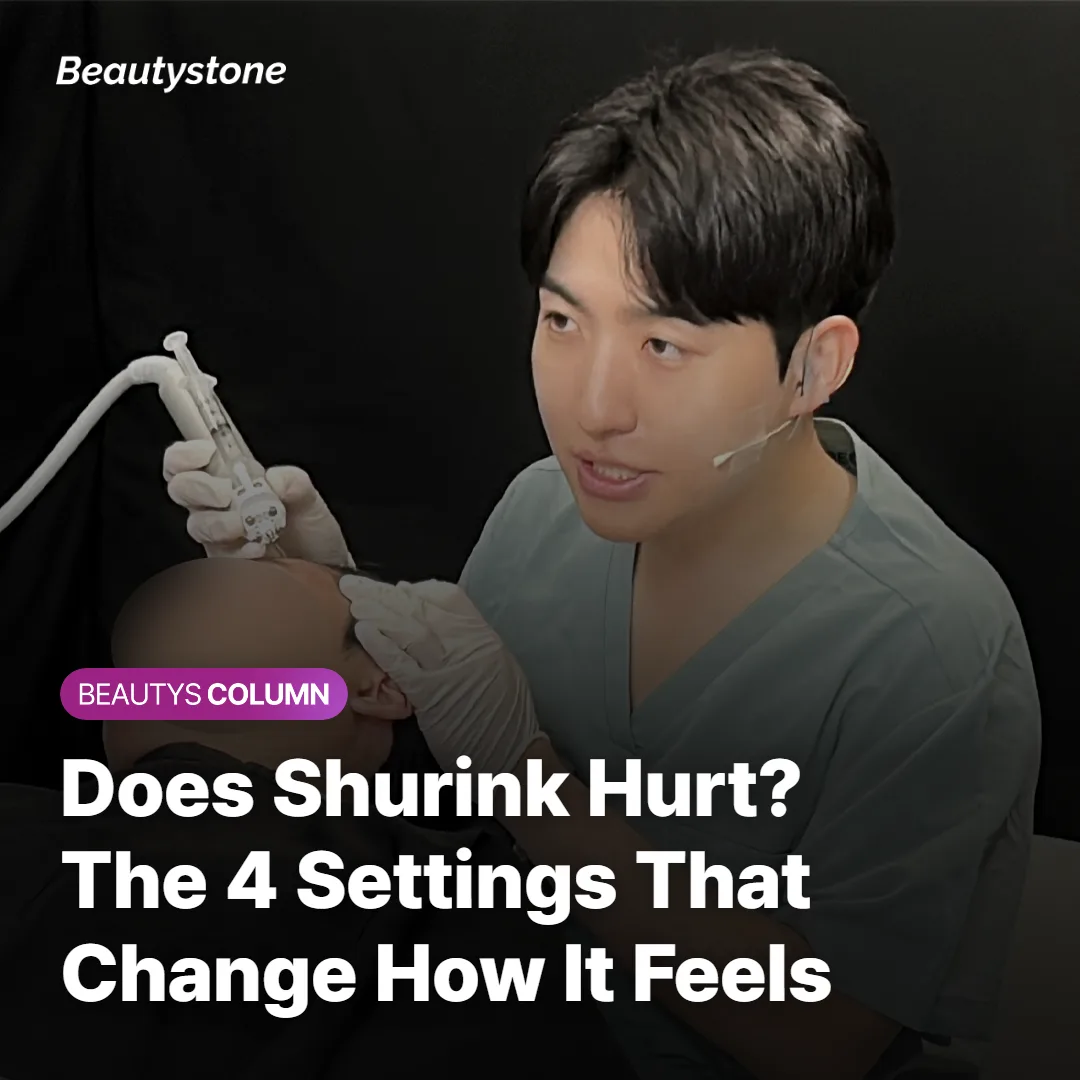
Does Shurink Hurt? The 4 Settings That Change How It Feels
Shurink Universe and Classic run the same focused ultrasound at the same depths, so the difference you feel comes from delivery. Here are the four things a provider adjusts, and what each one does to the sensation.

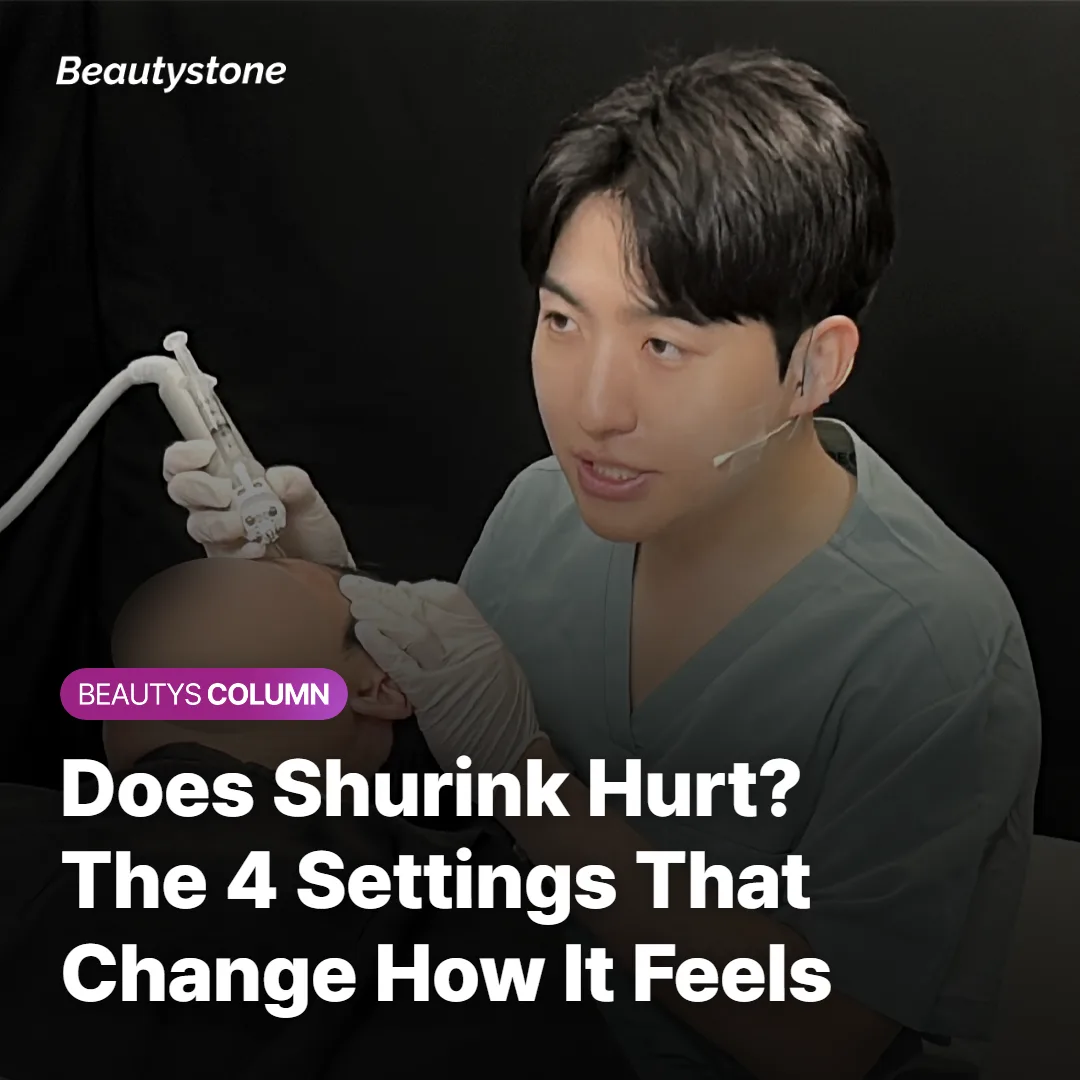
What you'll learn

  · The sting comes from brief, deep heating at a set depth, not from the surface of your skin.
  · Setting 1 is delivery mode: point shots feel sharper, a continuous sweep spreads the same energy out.
  · Setting 2 is the cartridge depth, and it drives your result more than the handpiece name does.
  · Settings 3 and 4 are shot count with treated area, and numbing, which is where most comfort planning happens.
Short answer first: Shurink is uncomfortable rather than unbearable for most people, and how uncomfortable is not fixed. Universe and Classic use the same focused ultrasound and the same cartridge depths, so what changes the feeling is how the energy is delivered and how the session is planned, not which machine name is on the handpiece.
That is good news if you have been putting off booking because of the pain question. Four things are adjustable, and they are worth understanding before your consultation so you can describe what you want rather than just bracing for it. We will also cover what is a normal reaction afterward and what should send you back to the clinic.
Why Shurink stings at all: heat at a set depth
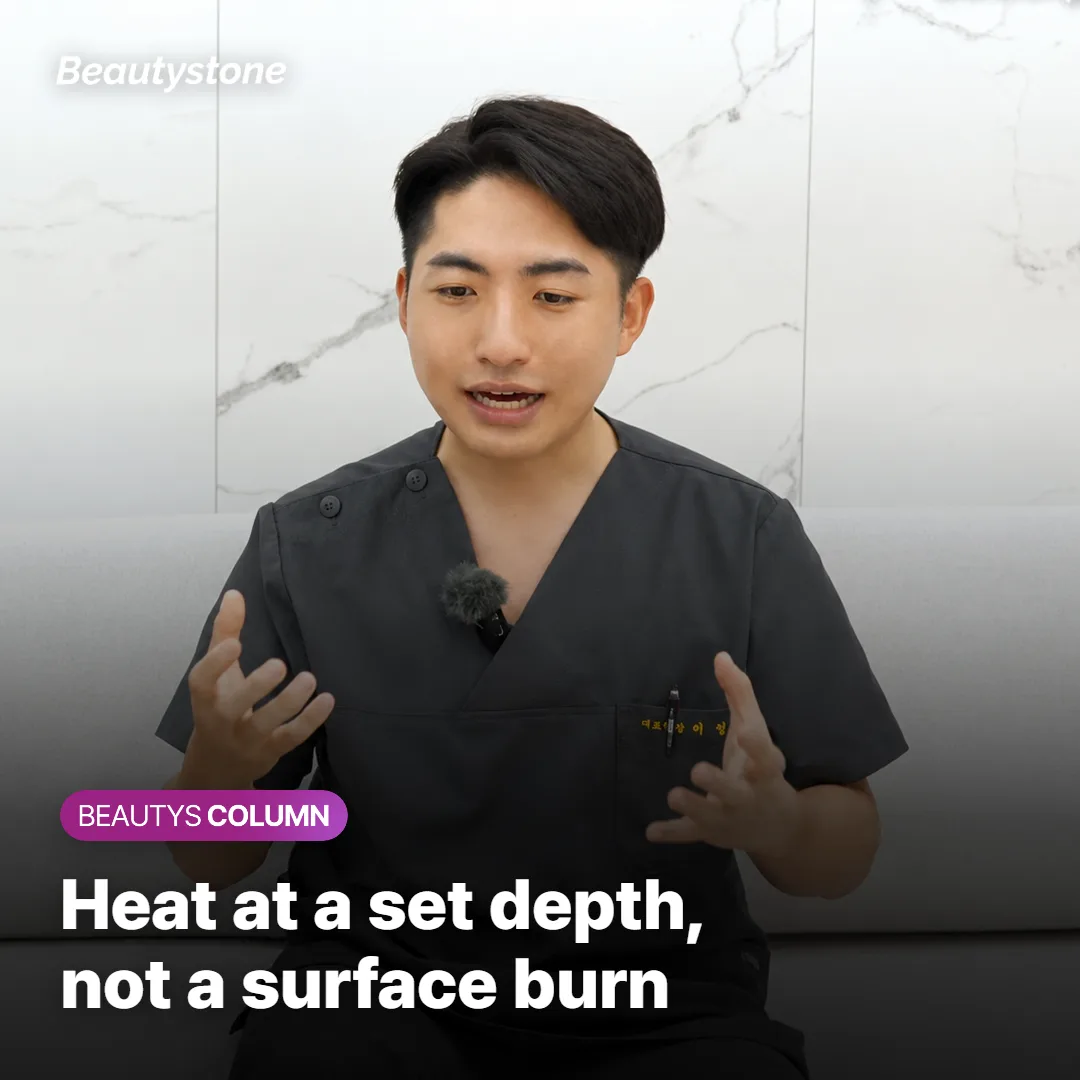
Focused ultrasound converges multiple sound waves into a single point at a chosen depth. The surface of your skin barely registers the pass-through, while the targeted layer underneath heats rapidly, typically up to around 65C (149F) for a brief instant. One review of focused-ultrasound lifting devices found that this targeted heating creates tiny thermal coagulation zones deep in the skin while leaving the epidermis essentially undisturbed.
So what you feel is not a burn on the outside. It is a fast, deep pulse of heat in a layer you cannot see, which is why the sensation can feel oddly internal and why it stops the moment the pulse does.
That heat does two jobs at once. Existing collagen fibers contract immediately, and a wound-healing response calls fibroblasts, the cells that produce collagen and elastin, into the area. Over the following weeks those fibroblasts build new collagen and elastin, which is what keeps firming the area long after the appointment. Classic and Universe share this part start to finish. Whichever handpiece delivers the energy, the biology underneath is identical.
Hold on to that, because it reframes the whole comfort question. You are not choosing between a gentle treatment and an effective one. You are choosing how the same energy arrives.
Setting 1: point shots or a continuous sweep
This is the actual difference between Classic and Universe. Classic works point by point, each pulse a single discrete shot, with the handpiece lifted and repositioned each time. Universe keeps that point mode and adds a continuous mode, where the handpiece is drawn along the skin in a line.
| Factor | Classic | Universe |
|---|---|---|
| Handpiece mode | Point, shot by shot only | Point mode plus a continuous sweeping mode |
| Sensation | Sharper, more concentrated per shot | Often described as more spread out |
| Speed on large areas | Slower | Faster |
| Coverage | Face-focused | Face plus larger areas such as the neck or body |
| Cartridge depths | Same depth options | Same depth options |
Because the continuous mode spreads the same energy over a moving line rather than concentrating it in static points, many people describe it as less intense in the moment. Classic delivers each pulse as a short, sharp jolt that is over quickly but feels more concentrated while it happens.
Do not assume that settles it for you, though. Some people find Classic's brief, predictable shots easier to sit through than a longer continuous pass, even when the pass is technically milder per unit of skin. If you are someone who copes better with something that ends fast, say so out loud at the consultation.
Setting 2: which depth cartridge is loaded
Comfort aside, the cartridge depth is what determines the kind of change you will see, and this is where Classic and Universe are genuinely identical. Both use the same range of interchangeable cartridges, typically around 1.5mm, 3.0mm and 4.5mm.
- 1.5mm, shallow: fine lines and surface-level firmness closer to the skin's surface.
- 3.0mm, mid: the dermis, where collagen and elastin are produced.
- 4.5mm, deep: the SMAS, the fibrous connective layer that structurally supports the jawline and cheeks, the same layer surgical facelifts work with.
A provider typically combines depths based on how much sagging is present and where. That combination, not the handpiece name on the machine, is what mostly decides how results turn out. Two people who both get Universe can end up with quite different outcomes if the depth and shot-count planning was not tailored to their skin.
For sensation, the practical translation is simple: depth is not a comfort dial you can turn down freely, because it is the setting doing the work. If the deep cartridge is what your jawline needs, the useful conversation is about numbing and pacing, not about skipping the depth.
Settings 3 and 4: shot count, treated area, and numbing
The last two levers are the ones people forget to ask about, and they often matter more to how a session feels than which machine is in the room.
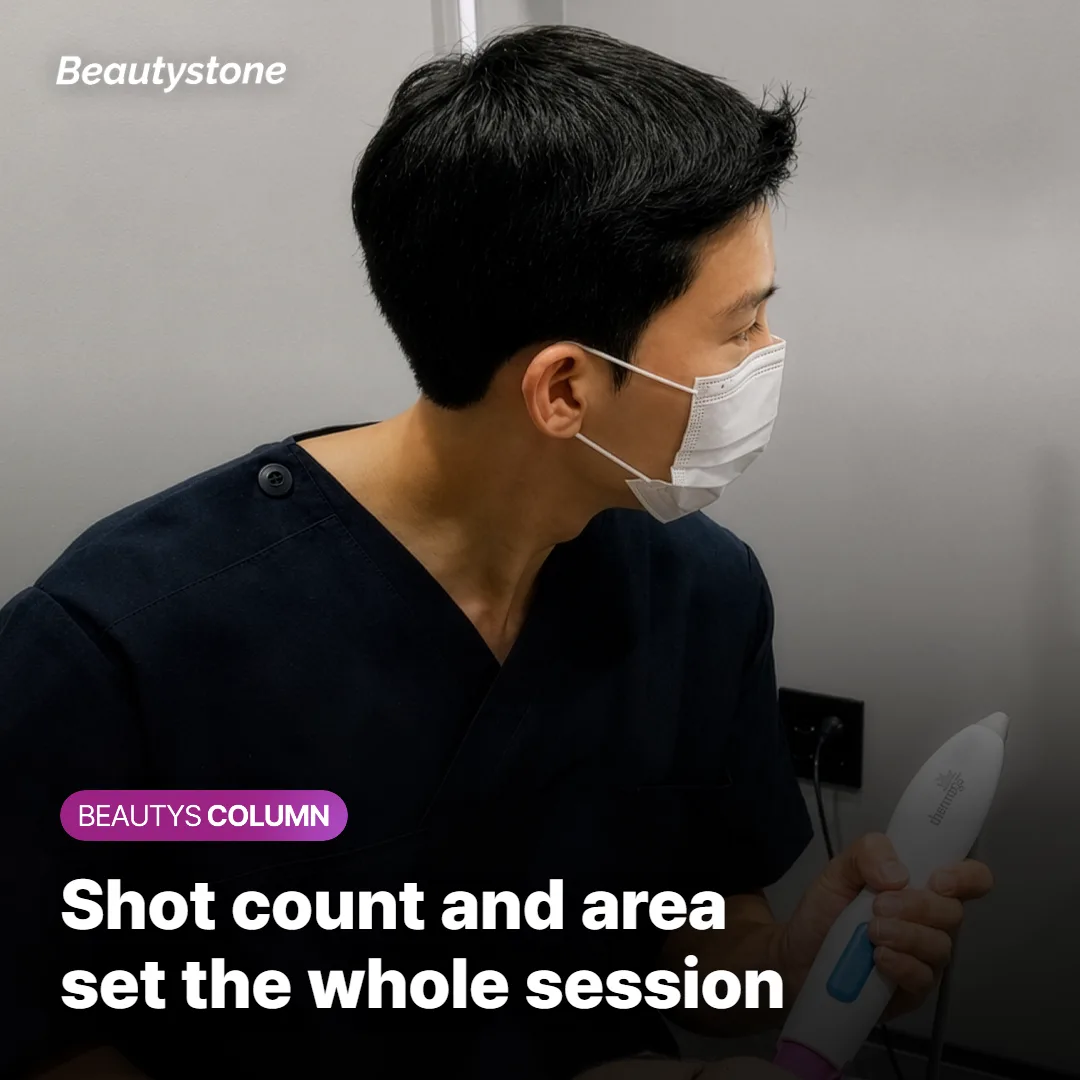
- Shot count and area: a jawline and under-chin plan is a different session from a full face plus neck. Universe's continuous mode covers larger areas faster, which shortens the time you spend sitting through it.
- Numbing and area sensitivity: numbing cream, the depth being treated, and how sensitive that particular area is all feed into what you actually experience.
Pain tolerance is genuinely individual, so the honest version of this section is that nobody can promise you a number in advance. What a consultation can do is set expectations area by area, so you know which parts of the plan are likely to be the sharpest and how long those parts should take.
It is also worth knowing what the treatment will not do on the day. Neither version produces a dramatic same-day transformation. You may notice a subtle immediate tightening as existing collagen contracts, but the real change builds gradually. Most people see the bulk of it over roughly two to three months, with some continuing to notice gradual refinement for up to six months. How long it holds varies widely, and many people see benefits last around a year depending on age, starting laxity, lifestyle and sun exposure.
What to ask before you book at Beautystone
Beautystone is a dermatology clinic in the Hapjeong area of Seoul, and the pre-treatment conversation there covers the same four settings above rather than starting from which machine sounds newer. That is the practical way to plan comfort: mode, depth, coverage and numbing are the levers, and they get set against your medical history and the area you actually want treated.
Both versions are generally well tolerated, but they are still delivering targeted heat to living tissue, so some reaction afterward is normal. Knowing which is which saves you a worried evening:
- Common and expected: mild redness, swelling and tenderness in the treated area, usually settling within a day or two on their own.
- Less common but not alarming: temporary numbness, small bruises, or firm little bumps under the skin where energy was delivered, which typically resolve within a few weeks without specific treatment.
- Contact your provider right away: spreading redness, worsening swelling, or a fever.
Some people should not have it at all. Neither version is typically recommended if you are pregnant or breastfeeding, have an active skin infection in the treatment area, or have certain metal implants nearby. Walk your provider through your full medical history before booking so anything relevant to you gets flagged ahead of time.
Four questions worth bringing with you: which depths do you plan to use on my face and why, will this be point mode or continuous, roughly how many shots and over which areas, and what numbing will I have? Answers to those tell you far more about your session than the words Universe or Classic ever will.
Frequently Asked Questions
Can I ask for a gentler setting partway through if it hurts more than I expected?
Say something rather than gritting through it. Pain tolerance is individual, and mode, pacing and numbing are all part of the plan rather than fixed properties of the machine. Depth is the one lever that is harder to trade away, since it is the setting doing the work, so the conversation is usually about how the energy is delivered rather than about skipping the depth your concern needs.
How long does the tenderness last after a session?
Mild redness, swelling and tenderness in the treated area are common and usually settle within a day or two on their own. Temporary numbness, small bruises, or firm little bumps under the skin are less common and typically resolve within a few weeks without any specific treatment.
When should I call the clinic instead of waiting it out?
Spreading redness, worsening swelling, or a fever are the signals to contact your provider right away rather than waiting to see whether they settle. The reactions that resolve on their own tend to stay put or shrink; ones that expand or come with a fever are the ones to report.
Is there anyone who should not have Shurink at all?
Neither version is typically recommended if you are pregnant or breastfeeding, have an active skin infection in the treatment area, or have certain metal implants nearby. Because the list depends on your own history, walk your provider through it before booking so anything relevant gets flagged in advance.