

Lifting vs. Skin Booster: Which First?
If you're planning to get both a lifting treatment and a skin booster, the order isn't one-size-fits-all. It usually comes down to whichever concern, sagging or texture, is bothering you more right now.

If you're weighing a lifting treatment and a skin booster and trying to figure out which one to book first, you're not the only one stuck on that question. It's one of the most common things we hear once someone decides they want to work on both firmness and texture at the same time.
The short answer: there's no single order that's right for everyone. What matters more is which concern feels more urgent on your own skin right now. In this article, we'll cover how lifting and booster treatments actually differ, which one usually makes sense first depending on your main concern, how much time to leave between sessions, and the recovery signs worth keeping an eye on.
What's the Difference Between Lifting and a Skin Booster?
The short answer: they work at different depths, for different goals. A lifting treatment uses focused energy, usually HIFU (high-intensity focused ultrasound) or radiofrequency, to reach deep into skin's structural layer and tighten tissue that's started to sag. A skin booster, on the other hand, delivers hydrating and repair ingredients into skin's more superficial layer to improve texture and moisture.
A review of how focused ultrasound affects skin (delivering heat energy deep into skin to increase collagen and elastin production) helps explain why lifting isn't a surface-level treatment. It's working on the structure underneath, not what's visible on top. That's also part of why lifting and boosters tend to complement each other rather than compete: one addresses sagging and lost definition, the other addresses rough texture and dryness, and neither really substitutes for the other.
How Do Lifting and Booster Treatments Actually Work?
Lifting treatments work by heating a targeted layer of tissue just enough to trigger a healing response, which kicks off new collagen production over the following weeks. That's why results build gradually rather than showing up immediately, and why most providers talk about a lifting treatment in terms of months, not days.
Boosters take a more direct approach. Ingredients like polynucleotides are injected into skin's shallower layers, where they support repair and hydration from the inside. A review of polynucleotide-based booster ingredients (use in improving skin texture, elasticity, and hydration) notes this kind of support tends to show up as smoother, more hydrated-looking skin rather than a dramatic lifting effect. Individual results vary, but the general pattern, structure from lifting and surface quality from a booster, holds up across most cases.
Which Should You Get First?
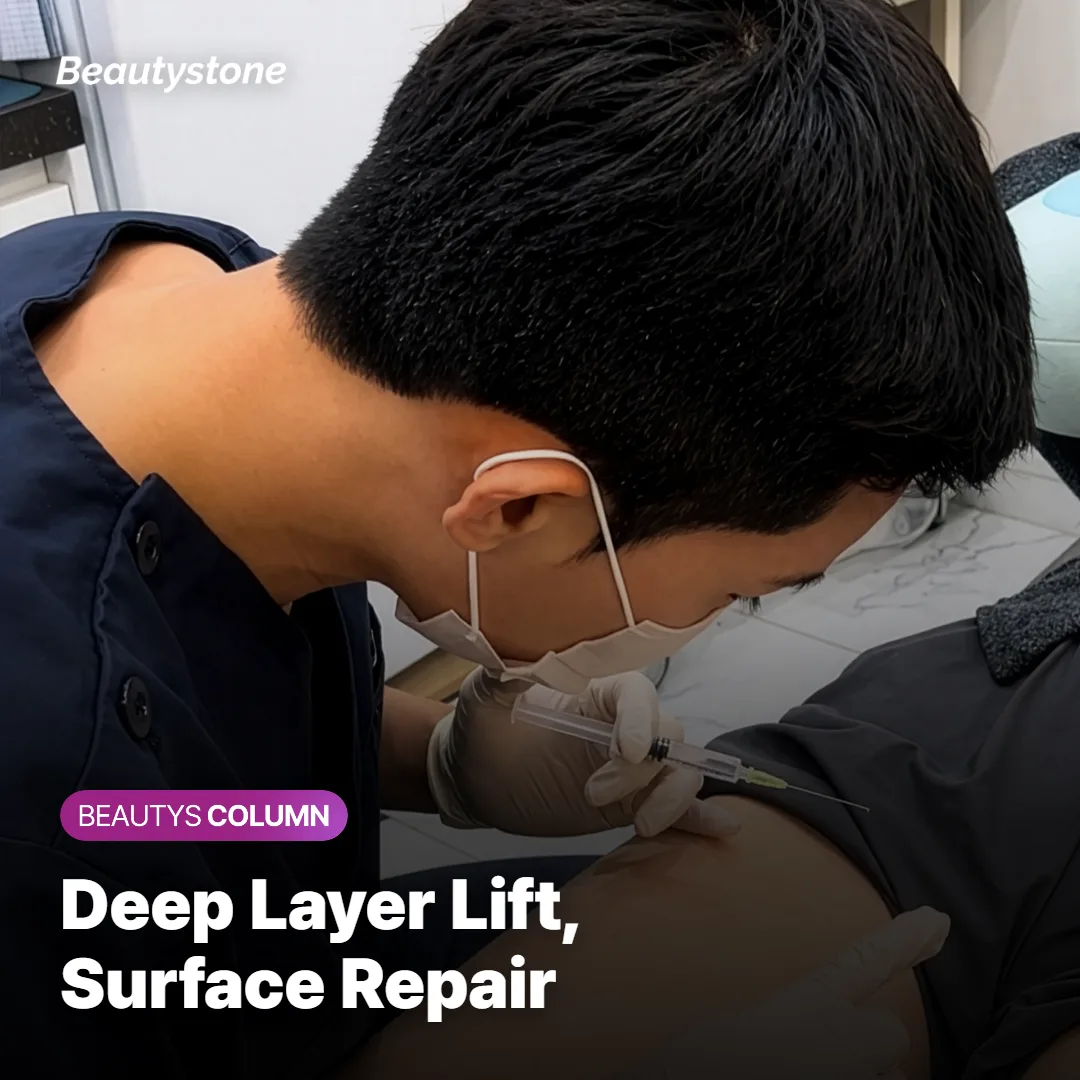
The short answer: whichever concern bothers you more right now. If sagging or a blurred jawline is what you notice first in the mirror, starting with a lifting treatment makes sense, since it addresses the structural piece before anything else. If rough texture, dryness, or fine lines are what's bothering you most, a booster first is usually the more logical starting point.
Here's a general breakdown of how that decision tends to shake out.
| Situation | Start With | Why |
|---|---|---|
| Sagging or a blurred jawline is the main concern | Lifting | Addresses structural support first |
| Rough texture, dryness, or fine lines feel urgent | Skin Booster | Restores surface hydration first |
| Both concerns feel about equal | Lifting, then a booster | Structure first, texture as a finishing touch |
| Downtime is a bigger worry than results | Skin Booster | Recovery is generally easier to manage |
Keep in mind neither order is set in stone. Plenty of people end up doing a lifting treatment first and adding a booster as a finishing step once they see how their skin settles, and that's a completely reasonable way to approach it too.
How Long Should You Wait Between Sessions?
If you're planning to get both, spacing them out is generally a better idea than stacking them on the same day. Lifting treatments trigger a heat-based healing response that can leave skin mildly swollen, and adding a booster injection on top of that can pile on more irritation than your skin needs to deal with at once.
A gap of one to two weeks between sessions tends to work for a lot of people, though that's a general guideline rather than a fixed rule. How much time you actually need depends on which specific treatments you're combining, how your skin reacts, and how quickly you personally recover. Your provider is in a much better position to fine-tune that timing than a blanket number ever could be.
It also helps to think of this as a phased plan rather than a single appointment. Address whichever concern is bothering you most, give your skin time to settle, and then layer in the second treatment once the first has had a chance to do its work.
Side Effects and Recovery Signs to Watch For
A few mild reactions are common in the days after either treatment, and most settle on their own without any extra care.
- Redness or warmth at the treated area: Usually fades within a few hours to a day or two.
- Mild swelling or a tight feeling: Can last several days after a lifting treatment while your skin adjusts.
- Small bruises or injection marks: Common after a booster and typically fade within a week.
- Slight dryness or tightness: Usually resolves quickly with a bit of extra moisturizer.
A smaller set of signs is worth contacting your provider about rather than waiting out.
- Pain or swelling that keeps getting worse instead of improving day by day.
- Fever, spreading redness, or oozing at the treated area, which can point to infection and needs medical attention.
- Numbness or unusual movement on one side of your face — contact your provider right away if you notice this.
- Swelling or a firm lump that hasn't resolved after two weeks.
- Hives or itching that's spreading rather than staying in one small area, which can signal an allergic reaction.
If you notice any of these, seek medical care right away rather than waiting to see if it resolves on its own. For everyday aftercare, skip the sauna, intense workouts, and alcohol for a day or two after either treatment, and stay consistent with moisturizer and sunscreen while your skin recovers.

Is Combining Both Worth It?
For a lot of people, yes, mainly because lifting and boosters are solving different problems rather than duplicating the same one. Addressing structure and texture together, on a schedule that gives each treatment room to work, tends to give a more complete result than picking just one and hoping it covers everything.
That said, it's not automatically the right call for everyone. If you're only bothered by one specific concern, there's nothing wrong with treating that alone and revisiting the other later. And however you plan it, results vary from person to person, so it's worth talking through your specific skin and goals with your provider before committing to a combined plan.
The Bottom Line
Lifting and skin boosters work on different layers of skin and solve different problems, so there isn't one universal answer for which comes first. Structural concerns like sagging generally point toward starting with lifting, while texture and hydration concerns point toward starting with a booster, and spacing sessions about one to two weeks apart tends to keep irritation from piling up.
Like most combination treatment plans, this comes with trade-offs. It takes more appointments and more patience than picking a single treatment, and, as with any procedure, individual results vary.
Ultimately, the right order and timing depend on your skin, your main concern, and how quickly you recover. If you're considering combining a lifting treatment with a skin booster, a consultation is the best way to find out what fits you. Beautystone is a dermatology clinic in Seoul's Hapjeong area — see current offers at /en/promotion.
Frequently Asked Questions
Q1. Can I get a lifting treatment and a skin booster on the same day?
It's possible, but it's usually not recommended. Lifting treatments can leave skin mildly swollen from the heat-based healing response, and adding a booster injection right on top of that can pile on more irritation than necessary. Spacing sessions out, often one to two weeks apart, tends to be the more comfortable route.
Q2. Which treatment works better first for sagging skin?
If sagging or a blurred jawline is your main concern, starting with a lifting treatment usually makes more sense, since it addresses the structural piece first. A booster can follow afterward to work on texture once your skin has settled from the lifting treatment.
Q3. Does spacing out treatments make results less effective?
No, spacing them out isn't about weakening results. It's about giving your skin time to settle between two different kinds of stimulation so the effects don't overlap and cause extra irritation. Each treatment still does its job during its own recovery window.
Q4. How long should I wait between a lifting treatment and a skin booster?
A general guideline is one to two weeks, though the right interval depends on which specific treatments you're combining and how your skin recovers. Your provider can fine-tune that timing based on your reaction to the first session.