

Shurink 1.5mm Tip: What It Really Targets
The Shurink 1.5mm tip tightens the dermis for smoother texture and tighter pores, but it doesn't reach the fat or SMAS layers responsible for a sagging jawline — so it isn't the fix for drooping skin on its own.

If you've searched "Shurink 1.5mm effect" and landed here with a nagging feeling that the numbers don't quite add up, you're not alone. The 1.5mm tip gets marketed as an all-purpose lifting tool, but it actually targets one specific layer of skin — and that layer isn't where visible sagging happens. In this article, we'll cover exactly what the 1.5mm tip reaches, what kind of results it realistically delivers, why it tends to underwhelm people chasing a tighter jawline, and how to tell whether it's the right depth for your goals.
What Is the Shurink 1.5mm Tip, and What Does It Actually Treat?
Shurink is a HIFU (high-intensity focused ultrasound) device used widely in Korean dermatology clinics to tighten skin without surgery or a long recovery. Unlike Botox or dermal fillers, it doesn't add volume or relax muscle — it heats a precise depth of tissue to trigger collagen remodeling underneath the surface. The catch is that Shurink isn't a single setting. It comes with multiple tip sizes, and each one is calibrated to stop the energy at a different depth. The 1.5mm tip is the shallowest option in the standard lineup, and it's built for one job: tightening the dermis, the layer just beneath your skin's surface.
That distinction matters more than most clinic marketing pages let on. Book "Shurink" without specifying a tip, and you might end up with a treatment that smooths your pores and fine lines beautifully while doing almost nothing for a drooping jawline or hollow cheeks.
How Does the 1.5mm Tip Work on Your Skin?
Your skin is built in layers, and with HIFU, depth is everything. The epidermis — the outermost layer — is only about 0.1mm thick. Just beneath it sits the dermis, typically 1 to 2mm deep, and that's where collagen fibers and blood vessels live. Below that is a layer of subcutaneous fat, and further down still is the SMAS (superficial musculoaponeurotic system), the connective tissue layer surgeons tighten during a facelift.
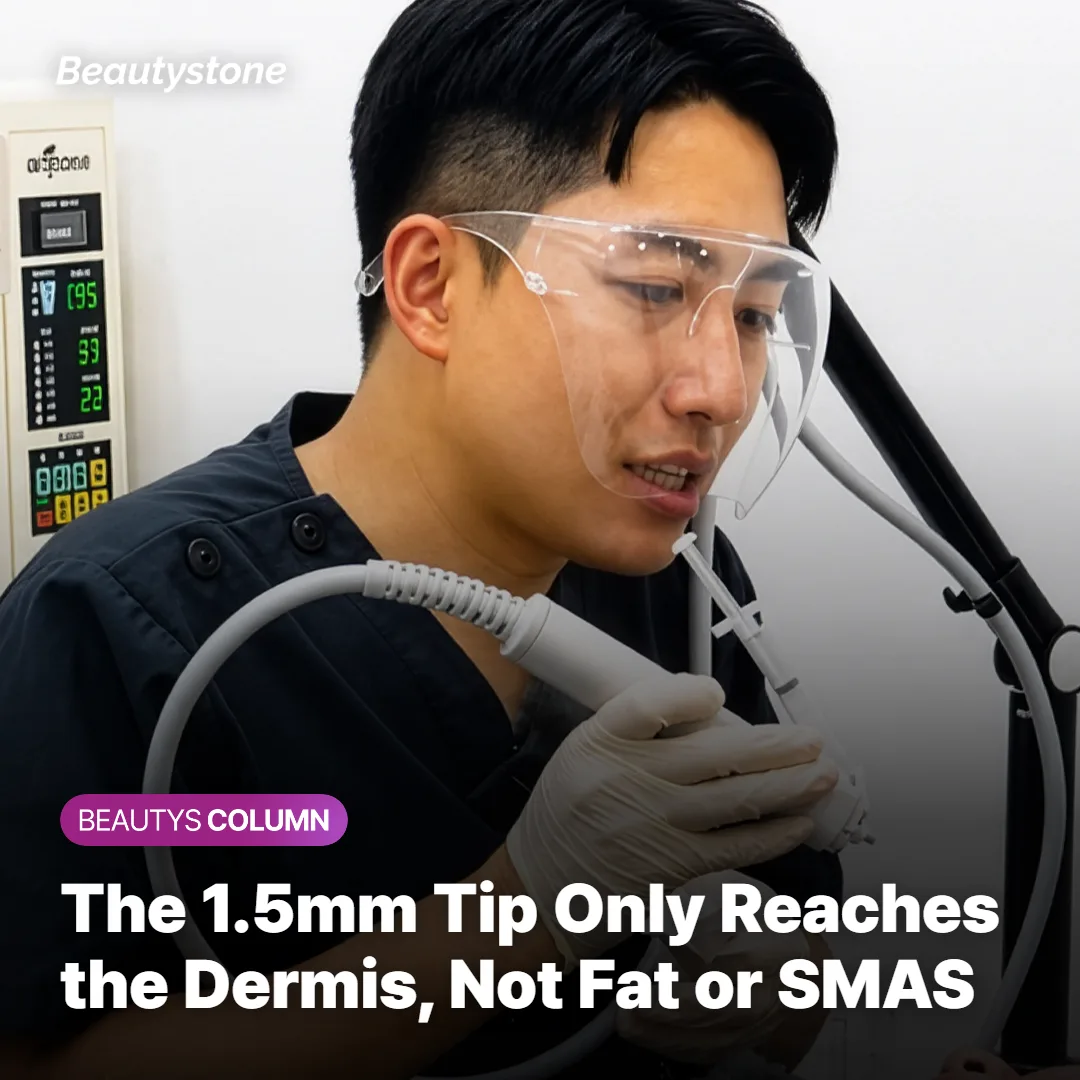
The 1.5mm tip is engineered to focus its ultrasound energy right at the lower dermis, roughly where blood vessels start to appear. That's a deliberate design choice — it's shallow enough to avoid nerves and deeper structures, which is part of why this tip tends to have a gentler side effect profile than deeper options. But it also means the energy never reaches the fat layer or the SMAS, the two layers most responsible for visible sagging around the jawline and cheeks.
What Timeline Should You Expect After a 1.5mm Session?
Results from the 1.5mm tip build gradually, since they depend on your body's own collagen response rather than an immediate physical lift. Most people notice smoother texture and slightly tighter-looking pores within two to three weeks, as early collagen remodeling kicks in.
- 2–3 weeks: Skin texture starts to look smoother, and pores may appear less noticeable.
- 2–3 months: Results typically peak as collagen remodeling continues.
- After the peak: Because dermal collagen turnover has a shorter lifespan than deeper tissue changes, tightening from 1.5mm alone tends to fade faster than results from deeper tips.
That's part of why many providers recommend a course of three sessions spaced about three weeks apart, rather than a single treatment, if your main goal is texture and pore refinement.
Why the 1.5mm Tip Won't Fix a Sagging Jawline
Here's the part that trips people up: sagging isn't a dermis problem. When your jawline blurs or your cheeks start to droop, that's usually the fat and SMAS layers loosening and shifting, not the surface layer losing its texture. Since the 1.5mm tip never reaches past the lower dermis, it simply doesn't interact with the tissue responsible for that kind of drooping.
Think of it like ironing a duvet cover. Running an iron over the fabric smooths the surface wrinkles, but if the filling underneath has bunched up, the duvet still looks lumpy no matter how flat the cover gets. For sagging, you need a tool that reaches the "filling," not just the surface.
| Concern | Best Tip Depth | Does 1.5mm Alone Help? |
|---|---|---|
| Pores, fine lines, texture | 1.5mm | Yes — this is its strength |
| Mild cheek volume loss | 3.0mm, supporting role | Limited on its own |
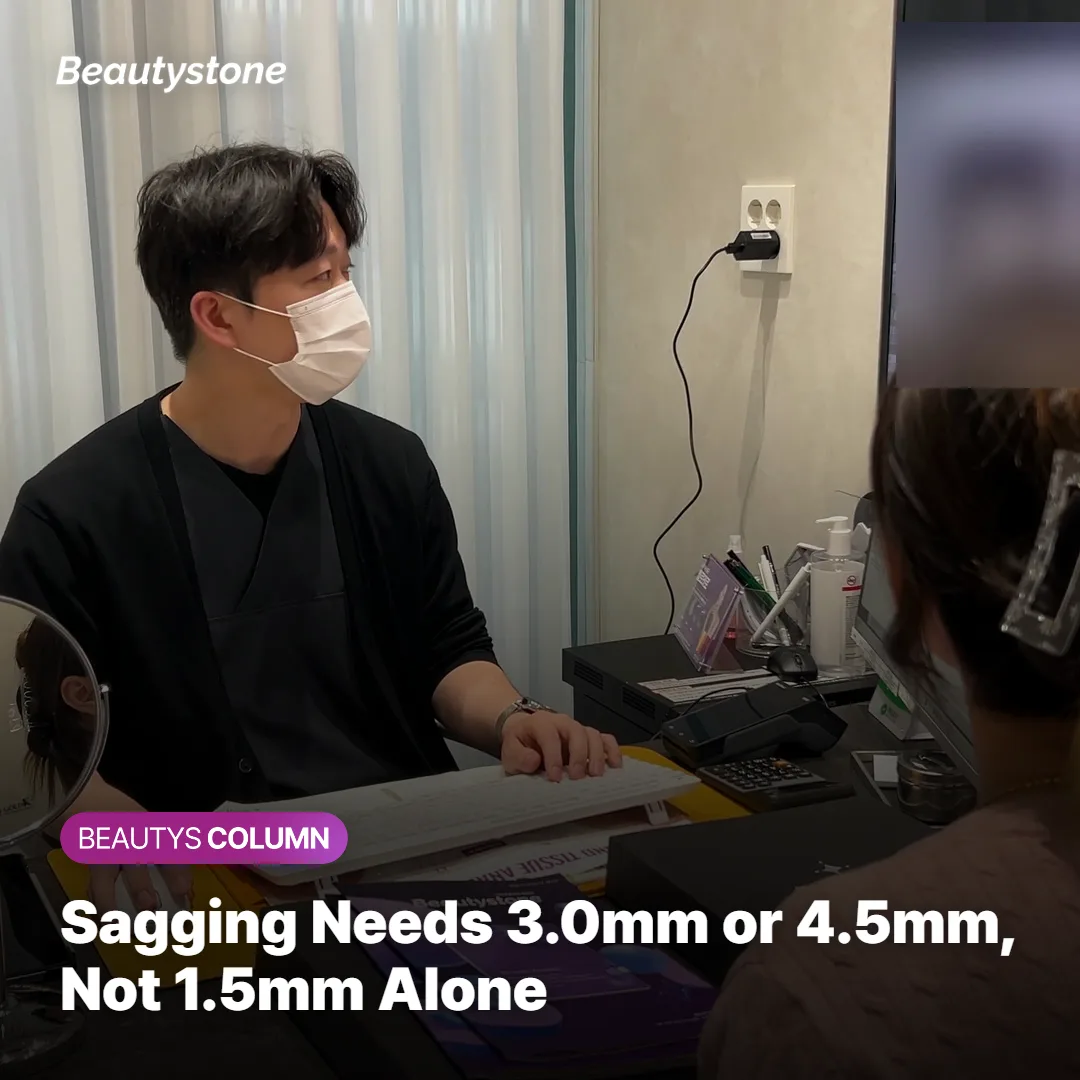
| Jawline or jowl sagging | 4.5mm, primary | Not by itself |
| Overall facial firmness | 3.0mm + 4.5mm main, 1.5mm finishing | Works best as a finishing layer |
If sagging is your main concern, ask your provider whether 3.0mm or 4.5mm passes should be the focus of your treatment plan, with 1.5mm added only as a finishing layer for texture.
Side Effects and Downtime: What's Normal?
Because the 1.5mm tip stays shallow, it tends to come with a comparatively mild side effect profile next to deeper tips. Redness and a warm, sunburn-like sensation right after treatment are common and usually settle within a few hours.
Pinpoint bruising is also fairly common with this specific tip, since the lower dermis is where small blood vessels sit. Most bruising fades within about a week, and any lingering warmth or tenderness typically resolves by the evening of your treatment day.
If you notice spreading redness, fever, or swelling that worsens rather than improves over the days after treatment, contact your provider right away — that's not typical and is worth having checked.

How Much Does Shurink Cost, and Is the 1.5mm Tip Worth It?
Pricing for Shurink varies by clinic, by tip combination, and by how many sessions your provider recommends, so it's worth treating any number you see online as a rough starting point rather than a fixed quote. A single-tip 1.5mm package tends to sit at the lower end of Shurink pricing, since it doesn't require the deeper, more time-intensive passes that 3.0mm and 4.5mm treatments do — but combining tips for a full-face plan naturally raises the total.
Whether it's worth it comes down to what you're actually trying to fix. If pores, fine lines, and overall texture are your main concerns, the 1.5mm tip is a reasonable, lower-cost place to start. If sagging is the priority, spending on 1.5mm alone risks paying twice — once for a treatment that doesn't address your main concern, and again later for the deeper tips that actually would.
A consultation is the best way to get a plan and pricing specific to your face — see current offers at /en/promotion.
The Bottom Line
The Shurink 1.5mm tip is a genuinely useful tool — just not for every job. It's well-suited to pores, fine lines, and overall skin texture, and it comes with a comparatively mild recovery.
- The 1.5mm tip only reaches the lower dermis — it doesn't touch fat or SMAS.
- That makes it strong for texture and pores, but limited for sagging.
- Jawline or cheek sagging typically needs 3.0mm or 4.5mm tips as the main treatment.
- Mild bruising and redness are common and usually resolve within about a week.
Like any procedure, it comes with trade-offs, and results vary from one person to another. Ultimately, the right depth combination depends on your skin, your goals, and your budget.
If you're considering Shurink, a consultation is the best way to find out what fits you. Beautystone is a dermatology clinic in Seoul's Hapjeong area — see current offers at /en/promotion.
Frequently Asked Questions
Q1. Does the Shurink 1.5mm tip hurt?
Most people describe it as a warm, prickling sensation rather than sharp pain, since the tip stays shallow and doesn't reach the deeper, more nerve-dense layers that 3.0mm and 4.5mm tips target. Sensitivity varies from person to person, and topical numbing cream can make the session more comfortable.
Q2. How long do results from the 1.5mm tip last?
Texture improvements typically peak around two to three months after treatment. Because the effect comes from dermal collagen turnover rather than a deeper structural change, it tends to fade faster than results from 3.0mm or 4.5mm tips, which is why many providers recommend spacing out a short course of sessions.
Q3. How much does Shurink cost?
Pricing depends on the clinic, the tip combination, and the number of sessions, so it's best treated as a range rather than a fixed number. A single-tip 1.5mm package usually costs less than a plan that adds 3.0mm or 4.5mm passes. See current offers at /en/promotion for specifics.
Q4. Can the 1.5mm tip alone fix a sagging jawline or jowls?
Not on its own. The 1.5mm tip only reaches the lower dermis, while jawline and jowl sagging comes from looser fat and SMAS tissue underneath. For that kind of sagging, 3.0mm and especially 4.5mm tips are typically the main treatment, with 1.5mm used as a finishing layer for texture.