Laser Hair Removal Folliculitis: 3-Day Rule
Most red bumps right after laser hair removal are a normal heat reaction. Here's how to tell them apart from folliculitis, and when to get checked.
Wi Young-jin
Chief Director, Myeongdong
Red, puffy follicles right after laser hair removal usually settle within 1 to 3 days. If the redness is still spreading after day 3, or you can feel tender bumps with pus in them, that points toward folliculitis, and it's time to get checked. Folliculitis after laser hair removal is uncommon, so a bumpy first day on its own isn't a reason to panic.
Below, we'll walk through how to tell the normal reaction from an inflamed follicle by timing and feel, who's more prone to it, how to care for your skin in the first few days, and the signs that mean you shouldn't wait.
Quick summary
- Redness and swelling around the follicles fade within 1 to 3 days, while pus bumps or growing pain need a doctor.
- A normal reaction is redness, swelling, and a warm sting that can look like a mild sunburn.
- In records of 2,359 people treated with an alexandrite laser, folliculitis showed up in 0.5%.
- Bumps around day 5 to 7 can come from treated hairs working their way out of the skin.
Are Red Bumps After Laser Hair Removal Folliculitis?
Usually not. In most cases, it's your skin's normal response to the laser's heat. A hair removal laser aims its heat at the pigment in the hair to reach the root, so right afterward each follicle (the tiny pocket a hair grows from) tends to turn red and puff up a little. It can look a lot like a mild sunburn, often with a warm, stinging feeling, and it typically fades within 1 to 3 days*.
*Based on American Academy of Dermatology guidance on laser hair removal.
A normal reaction is spread evenly across the treated follicles, and there's no pus head. Even with the redness and puffiness, most people go straight back to their day. A cool compress helps take the sting out.
What looks different is this: a day or two later, just a few red spots stand out from the rest, a yellow pus head forms in the middle, or they hurt when you press them. That pattern points to inflammation inside the follicle, and it deserves a closer look rather than another day of waiting.

How Are Bumps on Day 5 to 7 Different From Normal Swelling?
Timing and how the bump feels are your two best clues. Swelling from the laser itself is worst on day one and lightens each day after that. A red bump that appears new a few days later is a separate thing, and it's worth judging on its own.
| When | What it looks like | How it feels | What happens next |
|---|---|---|---|
| Right after to day 3 | Even redness and puffiness at each follicle | Warm, stinging | Fades within 1 to 3 days |
| Around day 5 to 7 | Red bumps or pus around leftover hairs | Itchy | Settled over 2 to 4 weeks once the hairs were out (one case) |
| Any time | A few large red bumps with a pus head | Tender when pressed | Get seen if they grow or turn into a firm lump |
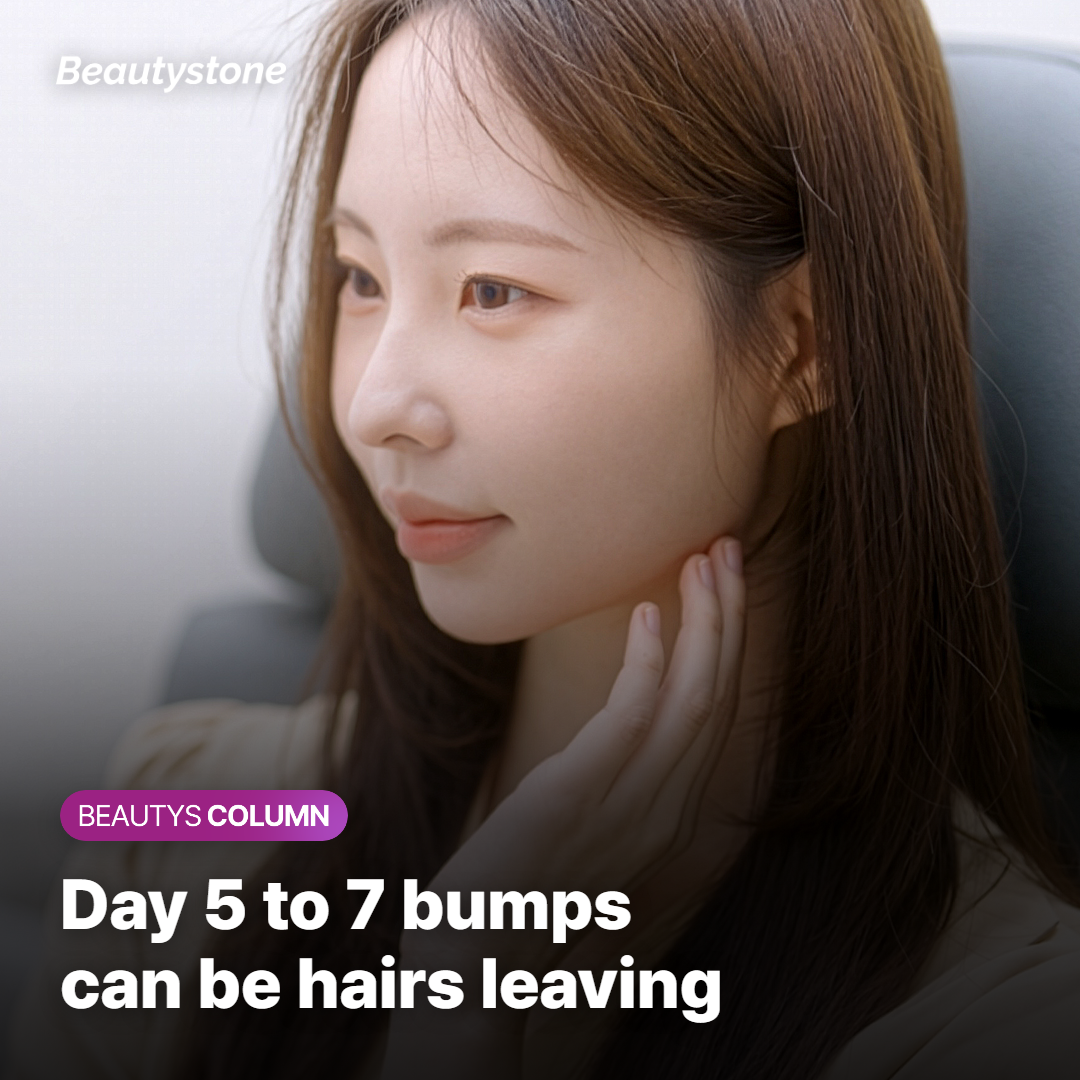
Bumps around day 5 to 7 can appear as treated hairs push their way out of the skin. In one case report, a 33-year-old man who had Nd:YAG laser hair removal on the front of his neck developed itchy red bumps with pus between days 5 and 7. They cleared over 2 to 4 weeks once the remaining hair shafts were shed or removed. That's a single patient, so it can't tell you how common this is.
Similar bumps can also show up after you shave, wax, or tweeze between sessions. When regrowing hair irritates the follicle, no bacteria are found when the pus is tested, and the itch tends to be the main complaint.
Who Is More Likely to Get Folliculitis After Laser Hair Removal?
Thick, curly hair, a habit of shaving close with a blade, and darker skin all make inflamed follicles more likely. Curly hair that's cut short tends to curl back into the skin, which is why bumps often follow a close shave. Across laser hair removal in general, side effects were also more common in darker skin. That's why your skin type gets sorted out first, and the wavelength and energy are chosen from there.
In a study that followed 2,359 people and 3,830 treated areas for 6 months, problems of any kind came up in 2.2%. Temporary darkening was 0.7%, folliculitis 0.5%, temporary lightening 0.5%, and blisters 0.4%, with no scarring or lasting color change. It came from one clinic using an alexandrite laser, though, so those numbers can't be carried straight over to other lasers or every skin tone.
What you put on your skin matters, too. Greasy ointments like petroleum jelly, heavy moisturizers, and dressings that seal over the follicles can set off folliculitis even when no bacteria are involved.
Laser Hair Removal Aftercare: How Do You Keep Bumps Down?
For the first 2 to 3 days, focus on cooling the heat and keeping the follicles clear. If the skin feels hot, use a cool compress, and keep direct sunlight off the treated area. Skip tanning beds as well.
- If you need moisturizer, use a thin layer of an oil-free one
- Between sessions, an electric razor tends to cause fewer bumps than a blade
- Hold off on hot tubs and spas until the redness has calmed down
- Don't pull out hairs that are working their way out; wash them away gently
The reason to wait on hot tubs is that certain bacteria thrive in warm water and can cause what's known as 'hot tub folliculitis.' The armpits and groin are also common places for staph bacteria to live, so if pus bumps show up there, it's worth having them looked at sooner.
Which Side Effects Mean You Shouldn't Wait for Day 3?
The changes below call for a different response than normal swelling, whatever day it is. When bacteria get deeper into a follicle, they can form a tender lump called a boil, and if the infection spreads into the surrounding skin, a fever can follow. A large boil may develop several pus heads or collect pus underneath.
- Pus bumps that grow in number or size from one day to the next
- A firm lump that hurts when you press it
- Redness spreading beyond the follicles, with heat that keeps building
- A fever, or feeling run down
- Blisters, oozing, or crusting
If you notice any of these, don't pick an ointment on your own; see a doctor. Never squeeze or pick at pus bumps. At the visit, the shape and location of the bumps help tell whether the pus comes from bacteria or from hairs on their way out, and treatment is chosen from there. Your next session is booked once the inflammation has settled.
Blisters, cold sore flare-ups, infection, scarring, and changes in skin color are rare but reported after laser hair removal.
Laser Hair Removal on a Trip to Seoul: Flying and Follow-Up
Unless you had sedation that day, there's no need to push back your flight because of laser hair removal. Travel tends to mean more time outdoors, so keep the treated skin covered and out of direct sun while you're sightseeing.
It also helps to know what one visit can do. Some treatments, like fillers, change your shape the same day. Laser hair removal works gradually instead, over a series of sessions, so a single trip won't replace the full plan. How much hair reduction you see depends on your hair and skin.
Bumps on day 5 to 7 can appear after you've already flown home. Once you're home, you can send photos through the consultation button on this page if something worries you. If pus spreads or you run a fever, see a local doctor first rather than waiting on a reply.
The Bottom Line: Compare Your Day 3 and Day 7 Photos
Photos taken on day 3 and day 7, in the same light and from the same angle, make it far easier to judge whether the redness is shrinking. If the red area is wider on day 7 than on day 3, or there are more pus bumps, that pair of photos is the most useful thing you can bring to a doctor.
Before your next session, ask: given how my skin reacted this time, should the energy or the gap before the next session change? Like any procedure, laser hair removal comes with trade-offs, and what fits depends on your skin and your hair.
Beautystone is a clinic in Seoul's Hapjeong area. When you reach out, include the area that was treated, the date of your last session, and how you've been shaving.
Sources
- How long redness and swelling last after laser hair removal, and aftercare: American Academy of Dermatology
- Results and side effects of alexandrite laser hair removal in 2,359 people: J Cosmet Laser Ther, 2009
- A case of folliculitis around hairs shedding after laser hair removal: J Clin Aesthet Dermatol, 2020
- A review of side effects from laser hair removal: Lasers Med Sci, 2006
- Underarm laser hair removal and changes in skin bacteria: Indian J Dermatol Venereol Leprol, 2024
- Causes and types of folliculitis: DermNet
- Why boils form and the symptoms that come with them: DermNet
- Why bumps form after shaving curly hair: DermNet
Frequently Asked Questions
Q. Can folliculitis after laser hair removal leave scars or dark spots?
A. Folliculitis after laser hair removal rarely leaves a scar. In records of 2,359 people followed for 6 months, there was no scarring or lasting color change, and temporary darkening showed up in 0.7%. Squeezing or scratching pus bumps can push the inflammation deeper, so leave them alone and have them checked.
Q. Are small clustered blisters around my mouth after laser hair removal folliculitis?
A. Small blisters clustered around the mouth after laser hair removal may be a cold sore (herpes) flare-up rather than ordinary folliculitis. It's a rare reaction after this treatment. Follicle inflammation caused by herpes tends to be painful and usually clears in around 10 days, but blisters are worth having a doctor look at first.
Q. Why do itchy little bumps spread across my back or chest?
A. Itchy, acne-like bumps spreading over the upper back and chest may be yeast (Malassezia) folliculitis. It's common on the upper body of young adults and is treated differently from bacterial folliculitis. Layering on more moisturizer can make it worse, so the usual next step is having a doctor tell the two apart by how they look.
Q. I get folliculitis on my buttocks a lot. Can I still get laser hair removal there?
A. Buttock folliculitis is common in both men and women, and a sudden, painful flare is usually caused by bacteria. It can get worse as hair grows back, so on a hairy area, laser hair removal may help. If you have active pus bumps right now, that spot is treated once they've calmed down.
Q. Does underarm laser hair removal change the bacteria on your skin?
A. One study found fewer skin bacteria after underarm laser hair removal. In 30 women who had 4 Nd:YAG sessions, bacteria counts, including staph, went down after treatment. Most of them said their sweat odor stayed the same or got worse, and the study was small and short.
Q. Are some people more prone to boils that keep coming back?
A. Some people with recurring boils carry staph bacteria in the nose, armpits, or groin all the time, and an estimated 10 to 20% of people do. Boils are also linked to diabetes, anemia, iron deficiency, smoking, and a weakened immune system. If you get boils often, mention it before your first laser session.