

Melasma vs. Pigmentation: Key Differences
A brown patch on your cheek could be an old sun spot or it could be melasma, and the treatment that clears one can make the other darker. Here's what separates the two, why aggressive lasers can backfire on melasma, and what actually works instead.

If you've got a stubborn brown patch that won't budge — or one that seems to get darker every time you try to treat it — you could be dealing with one of two very different things: ordinary pigmentation, or melasma. They can look nearly identical in the mirror, but treating them the same way is often exactly how melasma ends up worse instead of better. In this article, we'll cover what actually separates melasma from regular pigmentation, why going in too aggressively can backfire on melasma specifically, and what a realistic treatment plan looks like instead.
What's the Difference Between Melasma and Pigmentation?
The short version: ordinary pigmentation is a mark, and melasma is more like an ongoing condition. Both show up as brown or tan patches, and both are technically made of melanin, but where that pigment comes from — and why it keeps coming back — is completely different.
Pigmentation is the catch-all term for things like freckles, sun spots, and age spots. It's usually a one-time event: years of UV exposure damage a small patch of skin, melanin builds up in the outer layer, and once that pigment is broken up and cleared, it's largely gone for good.
Melasma works differently. It's not just pigment sitting on the surface — it's the pigment-producing cells (melanocytes) in that area being chronically overactive. Hormones, UV exposure, heat, and low-grade inflammation all send signals that keep those cells switched on, so even after you clear the visible pigment, the same cells are ready to make more.
Why Does Treating Melasma Too Aggressively Make It Worse?
This is the mix-up we see most often, and it's worth flagging on its own. A patient comes in after treating what they assumed was a sun spot with a strong, single-pass laser, and a month later the patch is darker than before they started.
Here's what's happening underneath: melanocytes don't just sit there and take damage. When they're hit with a strong burst of energy, they read it as an injury and respond the way skin cells generally respond to injury — by ramping up production, not shutting down. For ordinary pigmentation, that reaction is usually mild and temporary. For melasma-prone skin, where those cells are already primed to overreact, a strong single treatment can trigger a defensive surge in melanin that leaves the patch darker than it started. Dermatologists sometimes call this rebound hyperpigmentation, or post-inflammatory hyperpigmentation.
The takeaway: a spot you can safely blast in one strong session might be melasma in disguise, and treating it like a sun spot is exactly what sets off the rebound.
How Melasma Is Actually Treated
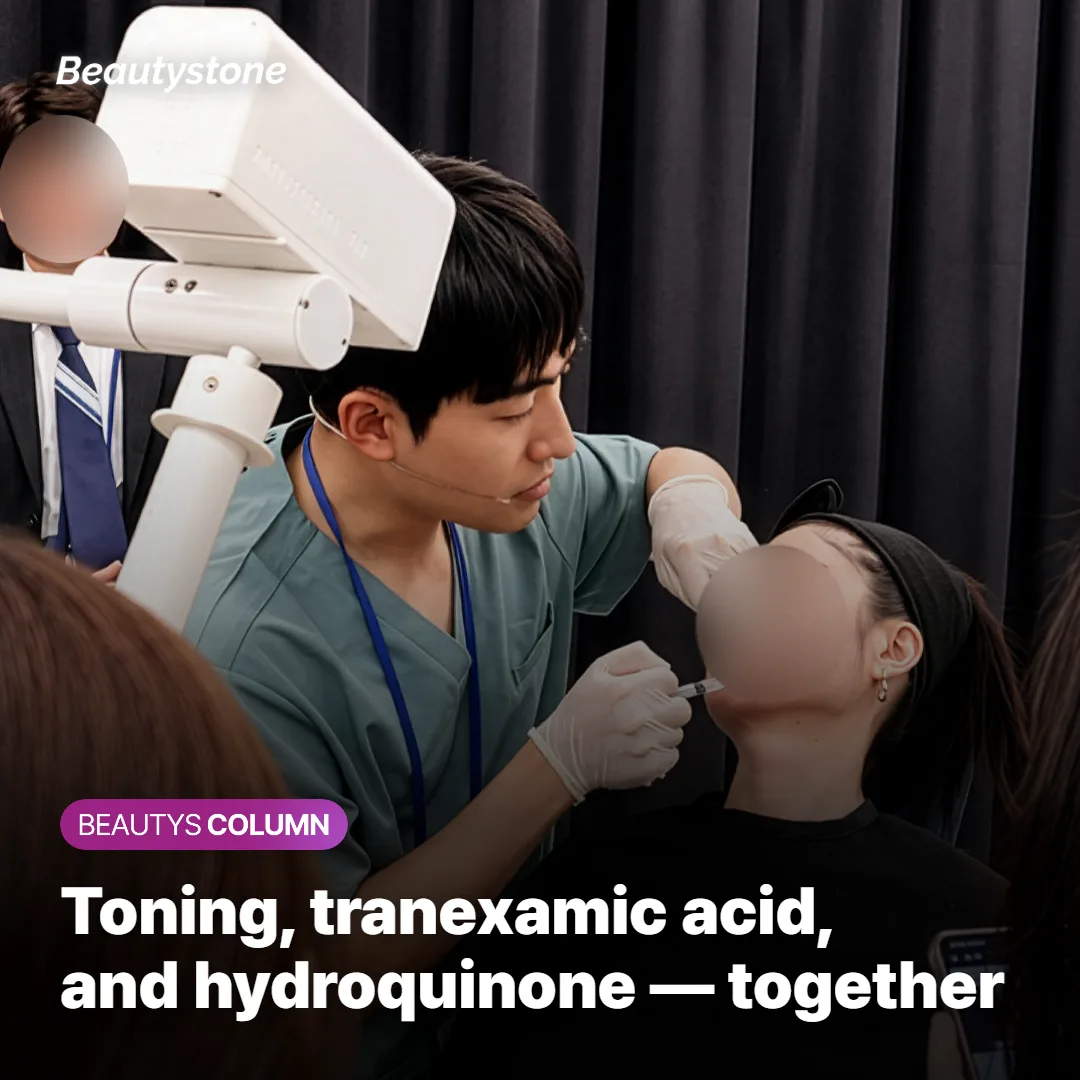
Because melasma is driven by overactive cells rather than a one-time pigment deposit, the goal isn't to blast it away — it's to calm the whole system down over time. That usually means layering a few approaches rather than leaning on one aggressive fix.
- Low-fluence laser toning: gentle, multi-pass sessions spaced roughly four weeks apart, typically five to ten rounds, aimed at gradually lowering melanocyte activity rather than stripping pigment in one go.
- Tranexamic acid: taken orally or delivered by micro-injection, it works by blocking some of the inflammatory signaling that reaches melanocytes from nearby blood vessels. Research suggests consistent use over three months or more is associated with meaningfully lower recurrence rates.
- Topical hydroquinone (commonly 4%): applied at night for roughly eight to twelve weeks, it works by inhibiting the enzyme melanocytes use to build pigment. It typically needs a break period afterward — continuous long-term use isn't recommended.
None of these work as a single knockout blow. They're meant to be combined and adjusted over months, which is a harder sell than "one laser and you're done," but it's the approach that tends to hold up.
Melasma vs. Pigmentation: How to Tell Which One You Have
A lot of people get this wrong on their own, and honestly, it's an easy mix-up to make — the two can look nearly the same at a glance. Here's a rough comparison to go by:
| Feature | Pigmentation (Sun Spots, Freckles) | Melasma |
|---|---|---|
| Cause | Cumulative UV damage | Overactive melanocytes (hormones, UV, heat, inflammation) |
| Typical shape | Small, distinct, coin-like spots | Larger patches with blurry, hazy borders |
| Distribution | Random, often one-sided | Frequently symmetrical on both cheeks |
| Response to a strong single laser pass | Usually clears without issue | Can trigger rebound darkening |
If your patches are symmetrical across both cheeks and the edges look soft or hazy rather than sharply defined, treat that as a reason to suspect melasma before assuming it's an ordinary sun spot. Deeper or mixed forms of melasma can be almost impossible to tell apart from pigmentation with the naked eye, which is why a dermatologist will often use a Wood's lamp or dermatoscope to check how deep the pigment sits before recommending any treatment.
What to Expect: A Realistic Timeline for Melasma Treatment
Melasma treatment is slow by design, and knowing that going in makes the process a lot less frustrating.
- Weeks 1–4: the first few toning sessions mostly work under the surface — visible change can be minimal, and that's normal, not a sign the treatment isn't working.
- Weeks 6–8: after five or six sessions spaced properly, tone typically starts to even out gradually.
- 3 months and beyond: this is usually when tranexamic acid and topical treatments show their fuller effect, alongside continued toning.
- Ongoing: daily sunscreen and a maintenance plan matter more than any single session — melasma tends to flare again without them.
A lot of patients want a single number, but there isn't one that applies across the board. Individual results vary depending on how long you've had melasma, how deep it sits, and how consistent you are with sun protection between sessions.

Side Effects & Risks of Melasma Treatment
Treated conservatively, melasma therapy has a solid safety track record — but melasma-prone skin tends to be more reactive than average, so a few risks are worth knowing going in.
- Rebound hyperpigmentation: the risk that matters most here — treating too aggressively or too frequently can provoke melanocytes into overproducing pigment, leaving patches darker than before.
- Sun sensitivity: skin is more vulnerable to UV right after a toning session, which is exactly when sunscreen matters most.
- Hydroquinone overuse: using it continuously for too long, without the recommended break periods, has been linked to a separate discoloration issue of its own — this is why providers typically cycle it on and off rather than prescribing it indefinitely.
- Mild redness or warmth: common right after toning sessions and usually settles within a few hours to a day.
If a treated area darkens dramatically, or you notice unusual discoloration that isn't fading over the days after treatment, contact your provider or seek medical care right away rather than waiting it out.
The Bottom Line
Melasma and pigmentation can look like the same brown patch, but they aren't the same problem, and treating them identically is usually how melasma gets worse instead of better. A few things worth remembering:
- Pigmentation is typically a one-time pigment deposit; melasma comes from melanocytes that stay chronically overactive.
- Strong, single-pass treatment can trigger rebound darkening in melasma-prone skin — gentler, spaced-out sessions tend to hold up better.
- Melasma treatment usually combines low-fluence toning, tranexamic acid, and cycled topical treatment rather than any single fix.
- Symmetrical patches with soft, blurry borders on both cheeks are a reason to suspect melasma before assuming it's an ordinary sun spot.
Like any procedure, this comes with trade-offs, and results vary depending on how long-standing and deep-rooted your pigment is. Ultimately, the right approach depends on your skin, your history, and how it responds over the first several sessions.
If you're not sure whether you're dealing with melasma or ordinary pigmentation, a consultation is the best way to find out before you start treatment. Beautystone is a dermatology clinic in Seoul's Hapjeong area — current offers are listed at /en/promotion, and full pricing details are available at /en/price.
Frequently Asked Questions
Q1. How can I tell if I have melasma or just an ordinary sun spot?
Symmetrical patches on both cheeks with soft, blurry edges usually point to melasma, while a small, distinct spot on one side is more likely ordinary pigmentation. A dermatologist can confirm the depth with a Wood's lamp or dermatoscope.
Q2. Why did my pigmentation get darker after a laser treatment?
If the pigment came back darker, it may have been melasma rather than a simple sun spot. Melanocytes in melasma-prone skin can react to strong energy defensively, producing more pigment instead of clearing it — a pattern known as rebound hyperpigmentation.
Q3. How long does tranexamic acid take to work for melasma?
Most providers look for meaningful change around the three-month mark of consistent use. It's typically used alongside, not instead of, low-fluence toning, and results tend to build gradually rather than all at once.
Q4. Is hydroquinone safe to use long-term for melasma?
Not continuously. It's typically prescribed for about eight to twelve weeks at a time, followed by a break period. Using it indefinitely without cycling off has been linked to its own discoloration issues, so ongoing use should be guided by a provider.