Ultherapy Results at 3 Months: What to Check?
Checking Ultherapy results at 3 months: how to repeat your starting photo, what to look for in brows, under the chin, jawline, and neck, and how to plan what comes next.
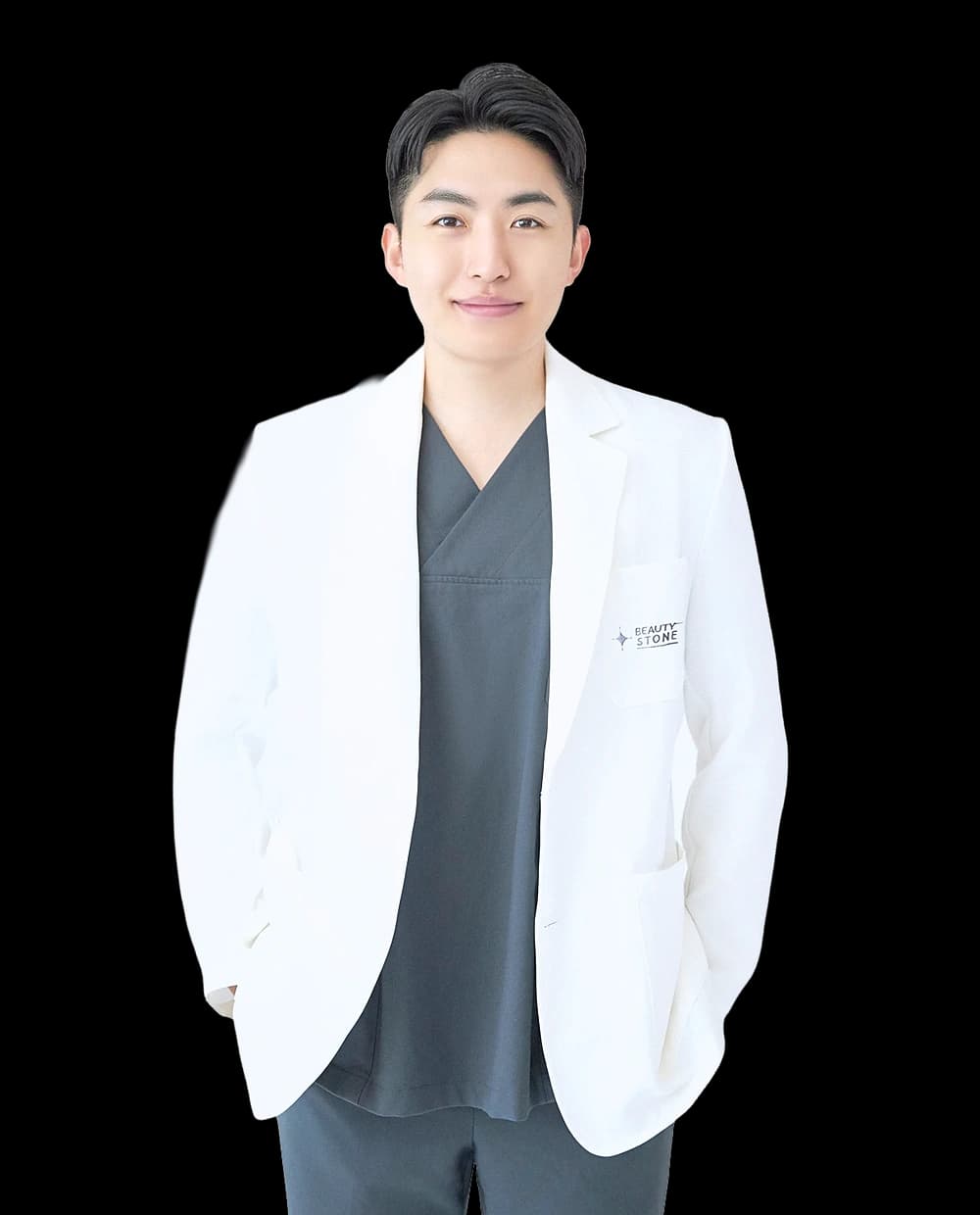
Wi Young-jin
Chief Director, Myeongdong
To check Ultherapy results at 3 months, put a day-90 photo next to one taken before treatment, shot under the same conditions, and look at one area at a time. Studies of Ultherapy read their results at about day 90 too, and the change wasn't the same in every part of the face. Two dated photos give you a fair basis for deciding what comes next.
A glance in the mirror rarely settles it. Overhead light, a chin raised a few degrees, or a phone held closer than last time can make the jaw look sharper or softer than it really is. Below, we walk through a photo setup you can repeat at home, why day 90 is the checkpoint, what to look for area by area, which reactions shouldn't wait, and how to turn two sets of photos into a plan.
Short on time?
- Each area responds differently, so the day-90 photo is compared with your starting photo one area at a time.
- Setup: match the time of day, the direction of the light, the phone distance, and a neutral face.
- In 25 Asian adults, brows sat 0.47 mm higher on average at day 90 and close to where they began at day 180.
- Next step: check brows, under the chin, jawline, and neck separately, then plan around where sagging remains.
What Photo Setup Makes Ultherapy Results Easy to Read?
Write down when and where you took your pre-treatment photo, then recreate that exact scene on day 90. Light and head position reshape a jawline in a photo more than most people expect. Tip your chin up slightly and the area under it looks smoother. Light from straight overhead drops a shadow below the cheekbones that can pass for contour.
- A spot where light reaches your face from the front or the side, with no window behind you
- Your phone at eye level, held the same distance from your face every time
- A relaxed, neutral face, shot straight on, from the left and the right, and at an angle
- Eyes straight ahead, chin neither lifted nor tucked
- Makeup, glasses, and hairstyle kept close to how they were the first time
Put the date in each file name so the order never gets mixed up. It also helps to set a reminder for day 90 in your phone's calendar on the day you're treated. If that date falls on a hectic weekday and you can't repeat the time, match the lighting first and let the exact day slide a little. For a fair comparison, light counts for more.
Why Are Ultherapy Results Checked Around Day 90?
The tight feeling on treatment day comes mostly from heat and swelling, so it can't tell you much about the result. Ultherapy leaves tiny heat points in the deep dermis and in the SMAS (a thin, tough layer beneath the fat that covers the facial muscles). As those points heal over several weeks, the tissue around them firms up.
That's why day 90 is the usual checkpoint. In a 2010 study, 35 people had one session on the face and neck, and their photos were reviewed on day 90. Brows had lifted in 30 of the 35, and the group's average lift came to 1.7 mm. A difference that small only shows when both photos were taken the same way, and how much you see depends on your skin.
Which Areas Should You Check in Your Ultherapy Results?
Go through four areas separately: brows, under the chin, jawline, and neck, each matched against the same area in your starting photo. Areas hold on to different amounts of change, so a general impression of the whole face blurs the answer.
| Area | Where to look | Day 90 | Day 180 |
|---|---|---|---|
| Brows | Brow height, front view | Up 0.47 mm on average | Close to the starting point |
| Under the chin | The line below the jaw, side view | A clear change | Smaller, and no longer a clear difference statistically |
| Jawline | Jaw outline, angled view | All 9 with moderate or worse sagging improved by at least one grade | Scored at day 90 only |
| Neck | Neck sagging, side view | All 12 with moderate or worse sagging improved by at least one grade; 14 of 18 with mild sagging (77.8%) improved | Scored at day 90 only |
The brow and under-chin numbers come from 25 Asian adults who had 800 lines on the face and neck and were measured with 3D imaging. The jawline and neck numbers come from 30 Asian adults whose sagging was graded after Ultherapy Prime on the lower face and neck, with 650 or more lines (792.3 on average). Different people, different ways of measuring, so the two sets of numbers can't be added up or ranked against each other.
Where your sagging started also shaped how much it moved. Having your current sagging grade written down before treatment tells you what the day-90 photo is being measured against. Results differ from person to person, and your own pair of photos is the comparison that applies to you.

Ultherapy Side Effects: What Shouldn't Wait for Day 90?
Redness and swelling on treatment day typically settle over the following days, so they belong in your photo log rather than on a list of worries. Three changes are different, and they don't get held for the 3-month check:
- A blister where the heat points were placed
- Fluid seeping from the skin
- Skin that looks raw or broken open
If you see any of these, take a photo of the spot and contact the clinic right away. Blisters and open sores have been described in published cases after this type of ultrasound treatment, including a 2018 report that gathered five patients. A photo sent by message gives useful context, but damaged skin still needs to be seen in person.
What If Ultherapy Results Look Smaller by Month 6?
Decide the next step from your day-90 photo, by looking at where sagging remains. The authors of the 25-person study also suggested reviewing results 3 months after the first session before considering more treatment. A change that looks smaller around day 180 isn't, on its own, a reason to book another session right away.
Hollows are a separate question. Heat points tighten tissue; they don't add volume, so an area that looks sunken rather than loose calls for a different conversation. To flag what's left, circle those spots with the markup tool in your phone's photo editor before you come in. If your weight changed a lot between the two photo sets, say so first, since it shifts the face outline as well.
- Take front, side, and angled photos before treatment
- Retake them on day 90 at the same time and in the same spot
- Compare brows, under the chin, jawline, and neck one at a time
- Mark the places where sagging remains
- Settle which areas to add, and when, at the consultation

How Does a Seoul Trip Fit Your Ultherapy Photo Plan?
Your starting photos can be taken in Seoul and the day-90 set at home, as long as you copy the setup. Ultherapy itself is no reason to postpone the flight home; the one exception is a day when you were given sedation. For sightseeing pictures, a plan of around 300 shots or fewer usually leaves swelling that barely shows on camera. If the plan is bigger, bring up the days you'll want photos while booking.
One visit won't finish the change on the spot. Filler can alter a shape the same day. Ultherapy typically works over time instead, easing your face toward an earlier version of itself, which is why the real comparison tends to happen after you've flown home.
When day 90 comes around, you can send both photo sets through this page's consultation channel, along with your questions. If a reaction turns strong or keeps spreading once you're home, get care from a local doctor first.
The Takeaway: Bring Your Photos in Matched Pairs
Pair the photos before you come in: front with front, each side with its match, angle with angle, the starting shot beside the day-90 shot. Laid out like that, going through the areas takes far less time.
One question moves the plan forward: "Where does sagging remain in my day-90 photos, and how many lines would go there?" If you kept the plan sheet from your first session, bring it along with the photos.
When you reach out, include your treatment date, the areas that were treated, and your paired photos. Since Beautystone is a clinic in Seoul's Hapjeong area, that first message can go out before you travel. Haven't taken the day-90 set yet? Send the starting photos anyway, and the setup for the next set can be matched from there.
References
- Brow and under-chin changes tracked in 3D at day 90 and day 180 in 25 Asian adults treated on the face and neck — Dermatol Surg, 2017
- Day-90 photo review of 35 people after one face and neck session — J Am Acad Dermatol, 2010
- Sagging grades for the jawline and neck in 30 Asian adults treated with Ultherapy Prime — Plast Reconstr Surg Glob Open, 2025
- Five patients with blisters or open sores after ultrasound lifting — Lasers Surg Med, 2018
Frequently Asked Questions
Q. If my Ultherapy results look the same at 3 months, did it fail?
A. If your Ultherapy results look about the same at 3 months, it's too early to call it a failure. In the 35-person study, the average brow change was 1.7 mm, a difference measured in millimeters. Zooming in on one area at a time, or going over the photos together at a consultation, makes small changes easier to spot.
Q. Can I use selfies to track Ultherapy results?
A. You can use selfies to track Ultherapy results, but arm length and distance tend to change from shot to shot. A phone stand with a timer, or someone else shooting from the same spot, keeps the distance steady. Whatever method you used before treatment, use it again on day 90.
Q. Do Ultherapy results disappear completely after 6 months?
A. Ultherapy results don't simply vanish at 6 months; how much remains differs by area. In the 25-person group, the change under the chin that was clear at day 90 had narrowed by day 180. If you have a photo from around 6 months, line it up with your day-90 photo and check each area.
Q. How do I compare Ultherapy photos if my weight changed?
A. If your weight changed a lot after Ultherapy, your face outline in photos can shift along with it. Jot down your weight on the day of each photo set. Mention the difference between the two at the start of your consultation.
Q. When are Ultherapy Prime results checked?
A. Ultherapy Prime results are also read at around day 90. In a series of 30 Asian adults who had Ultherapy Prime on the lower face and neck, sagging along the jawline and neck was graded at day 90. The same photo method works whichever version you had.
Q. Why not measure my jawline with a ruler after Ultherapy?
A. Measuring the jawline with a ruler after Ultherapy is hard because the lower face has no stable reference point to measure from. That's why sagging grades or matched photos are used instead. Areas near a clear landmark, like the brows, are the ones measured in millimeters. Even a small shift in where the tape sits would change the number.
Q. If I get Ultherapy again, will it be the same number of lines?
A. A repeat Ultherapy session isn't automatically planned with your first line count; it's built around the areas where sagging remains in your day-90 photos. If you kept the plan sheet from your first session, it shows the line counts by area. The spots you marked on your photos become the starting point.