

Oligio X vs. Thermage FLX: 2 RF Lifts, Depth Decides
Oligio X and Thermage FLX both get lumped into the same "monopolar RF lifting" conversation, but they don't heat your skin to the same depth — and that difference is why their results feel so different.


Planning a trip to Seoul?
Oligio X vs. Thermage FLX: Are They Really the Same RF Lift?
Sit through two different consultations about "no-cut lifting," and you'll probably hear Oligio X and Thermage FLX come up back to back — often described in almost identical language. Both get filed under monopolar radiofrequency (RF), and after a few minutes of explanation, the two start to blur together. It's easy to walk out having picked a device by price or name recognition rather than what your skin actually needs.
In this article, we'll cover what these two devices actually share, where their energy goes once it's under your skin, how that changes the way each one feels and what it delivers, and how to figure out which one lines up with what's bothering you.
The short answer: Oligio X and Thermage FLX are both monopolar RF devices that heat the skin to trigger new collagen, but they don't heat to the same depth, they don't feel the same on the table, and they're not spaced out on the same schedule. Depth is the detail that actually explains the difference — not which brand sounds newer.
How Does Monopolar RF Actually Work?
Here's the mechanism both devices share. Monopolar radiofrequency — energy delivered from a single electrode into deeper skin layers — heats the dermis, the layer beneath the surface where collagen and elastin actually live. That heat causes existing collagen fibers to contract almost immediately, which is why skin can look a little tighter right after a session.
The bigger change happens slower. Research on radiofrequency and skin remodeling has described how that initial heat signal prompts the body to rebuild new collagen and elastin over the following weeks and months — not instantly, but gradually, as the tissue heals. That's the whole reason neither treatment is a same-day transformation.
Monopolar radiofrequency: a single electrode sends RF energy deep into the skin to generate heat. It's well suited to broad, deeper heating, which is part of why it's a common choice for firmness and lifting.
Dermis: the layer under the epidermis where collagen and elastin are produced. RF heat works here to kick off new collagen growth.
Since Oligio X and Thermage FLX share this exact mechanism, it makes sense that a quick explanation of "how it works" sounds nearly identical for both. The difference only shows up once you ask how deep each one actually goes — and that's where the two start to diverge.

Key Differences: Oligio X vs. Thermage FLX
Same category, different specs. Here's how the two compare side by side.
| Factor | Oligio X | Thermage FLX |
|---|---|---|
| Delivery | Monopolar RF | Monopolar RF |
| Primary depth | Dermis-focused | Dermis through the SMAS layer |
| Sensation | Generally milder | Generally more intense |
| Downtime | Minimal to none | Minimal to none |
| Typical re-treatment interval | About 6–12 months | About 12–18 months |
Thermage FLX is built to send heat past the dermis and into the SMAS — the fibrous layer that helps support your jawline and cheeks — which is a big part of why it's associated with a more structural lift. Oligio X stays focused on delivering even heat across the dermis itself, which tends to show up as smoother texture, softer fine lines, and a less noticeable pore pattern. Both share close to zero real downtime, so neither one keeps you off your routine.
SMAS: short for the superficial musculoaponeurotic system — a fibrous layer deep under your skin, closely tied to how your face sags with age. It's a common target for deeper lifting treatments.
What to Expect: Procedure Day and Recovery
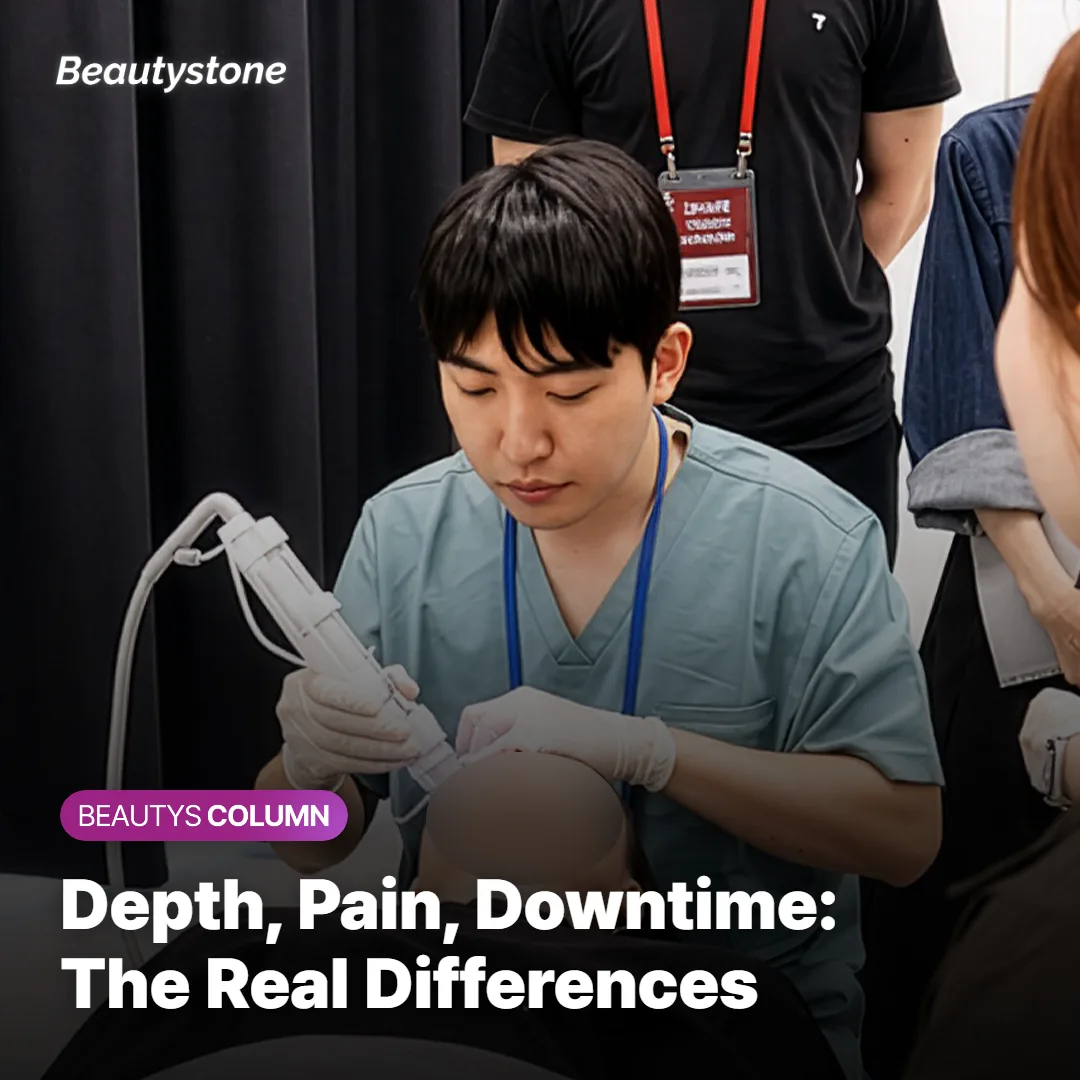
Both treatments follow a similar rhythm on the day itself. Your provider cleanses the area, applies a numbing cream, then passes the RF handpiece over the treatment area in a systematic grid to deliver even heat. Expect a warm, sometimes intensely warm, sensation as each pulse fires — that's the RF energy doing its job, not a sign of a problem.
Mild redness right after treatment is common and usually fades within a few hours, which is why most people head straight back to their day — makeup included — without blocking out real downtime.
- Treatment day: rinse with lukewarm water and skip strong actives (retinoids, acids) for about a day.
- Days 2–3: steer clear of saunas, steam rooms, and hot showers — anything that keeps heat on your skin.
- The first week: stay consistent with sunscreen — it protects the new collagen your skin is starting to build.
If redness sticks around for more than a day, or swelling and discomfort get worse instead of better, check in with the provider who treated you rather than waiting it out.
Side Effects & Risks You Should Know
Both Oligio X and Thermage FLX are generally well tolerated, but any treatment that heats living tissue is worth understanding before you book. Warmth during the session, brief redness afterward, and mild sensitivity for a day or so are all common and expected.
Less commonly, people notice temporary swelling, small areas of bruising, or a patch of skin that feels slightly numb or tender for longer than expected. These usually settle on their own within a few days.
If you notice redness spreading well beyond the treated area, swelling that keeps getting worse instead of better, or a fever, contact your provider right away rather than waiting to see if it resolves.
Neither treatment is typically recommended if you're pregnant or breastfeeding, have an active skin infection or inflammation in the treatment area, or have certain metal implants nearby. Walk your provider through your full medical history at your consultation so they can flag anything relevant to you.
How Much Does It Cost?
Pricing for Oligio X and Thermage FLX varies by clinic, how much of the face is treated, and how many sessions your provider recommends — and Thermage FLX in particular is often priced around the number of pulses used, so the total can shift quite a bit from person to person. There isn't one flat number that applies across the board.
A consultation is really the most reliable way to get pricing that matches your actual skin and goals rather than a rough estimate. Beautystone, our dermatology clinic in Seoul's Hapjeong neighborhood, can walk you through current offers at /en/promotion once a provider has taken a look.
Which One Fits You: Oligio X or Thermage FLX?
Once you know the depth difference, picking between the two usually comes down to what's actually bothering you.
- Fine lines, texture, or visible pores: Oligio X's dermis-focused heating tends to be the better starting point.
- Sagging along the jawline or cheeks: Thermage FLX's deeper reach into the SMAS is built for exactly this kind of structural lift.
- Sensitive to pain: starting with the generally milder option can make sense before working up to a deeper treatment.
- Both concerns at once: some people alternate between the two over time rather than choosing just one — worth raising with your provider.
It's also worth saying plainly: layering both treatments on the same area on the same day isn't something providers typically recommend, since it can push heat exposure higher than necessary. Spacing them out, if you want both, is the safer path.
The Bottom Line
Oligio X and Thermage FLX both fall under monopolar RF, and that shared mechanism is exactly why they can sound so similar in a five-minute pitch. But once you look at depth, they split into two different tools for two different jobs.
- Oligio X focuses on the dermis — a solid match for texture, fine lines, and pores.
- Thermage FLX reaches deeper into the SMAS — better suited to sagging along the jawline and cheeks.
- Both build results gradually over weeks and months, not overnight.
- Like any procedure, both come with trade-offs, including temporary redness and results that fade over time.
Ultimately, the choice depends on your skin, your goals, and your budget. If you're weighing Oligio X against Thermage FLX, a consultation is the best way to find out which one actually matches what you're dealing with. Beautystone is a dermatology clinic in Seoul's Hapjeong area — you can see current offers at /en/promotion.
Frequently Asked Questions
Q1. What's the actual difference between Oligio X and Thermage FLX?
Both are monopolar RF devices that heat the skin to trigger new collagen, but they don't heat to the same depth, don't feel the same during the session, and aren't spaced on the same treatment schedule. Depth is the detail that really explains the difference between them, not which name sounds newer.
Q2. How does monopolar RF actually work?
A single electrode sends RF energy into the dermis, the layer where collagen and elastin are produced, which heats it and causes existing collagen fibers to contract almost immediately. The bigger change — new collagen and elastin production — happens more gradually over the following weeks and months as the tissue heals.
Q3. What should I expect on procedure day and during recovery?
Since both devices work by heating the dermis to trigger collagen remodeling, neither is a same-day transformation — you may notice some initial tightening, but the fuller effect develops gradually. Your provider can walk you through what recovery looks like for the specific device and settings used on you.
Q4. How much do Oligio X and Thermage FLX cost?
Pricing varies by clinic, device settings, and how much area is treated, so it's best to get a specific quote during a consultation. Cost is one factor worth weighing alongside depth and comfort when choosing between the two.