

Cheek Sagging at 50: Why 2 Devices Target Different Layers
Ultherapy PRIME and Thermage tackle cheek sagging from different depths. Here’s how to tell which one lines up with what’s actually happening under your skin in your 50s.

If you’ve noticed your cheeks aren’t holding their shape the way they used to, you’re not imagining it — and you’re definitely not alone. By your 50s, two things are usually happening at once: the skin itself is thinning, and the deeper support layer underneath is loosening its hold. That’s exactly why two very different treatments, Ultherapy PRIME and Thermage, keep coming up in the same conversation, even though they work in completely different ways. In this article, we’ll cover what’s actually behind that sagging, how each treatment targets it, and how to think about which one to look into first.
What’s Actually Causing Cheek Sagging in Your 50s?
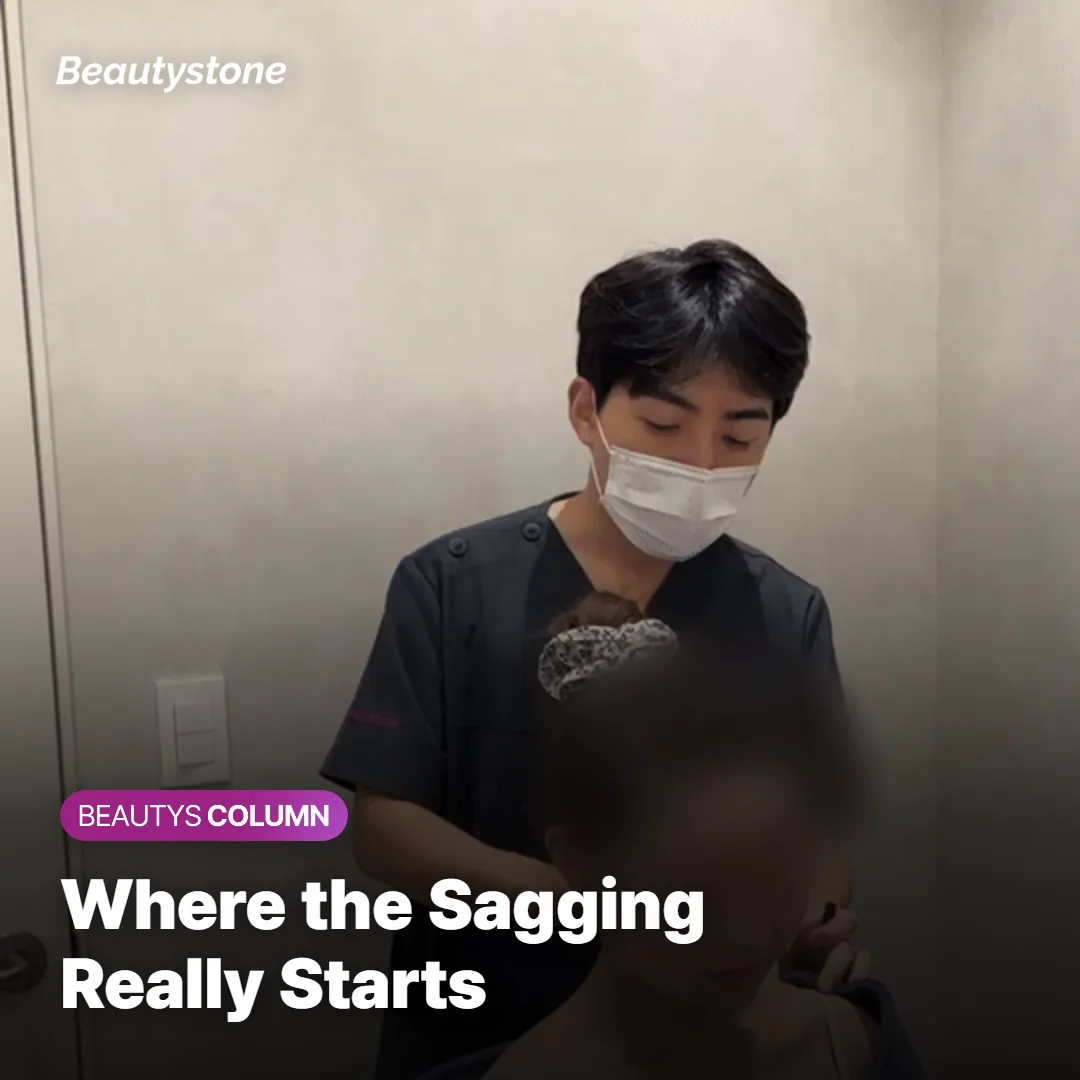
Sagging cheeks are rarely about just one layer of skin. There’s the epidermis and dermis on the surface, and underneath that sits the SMAS — the fibrous, muscle-like layer that gives your face its structure and helps hold your expressions in place. By your 50s, the dermis is producing less collagen, so the skin itself gets thinner and less resilient. At the same time, the SMAS and the ligaments anchoring it are loosening, which lets the deeper tissue — and the volume it’s holding up — drift downward. Research on collagen production in aging skin has found that fibroblasts in older skin simply produce less type I and type III collagen, which lines up with what most people notice in the mirror by this stage.
That’s why two people with the same complaint — “my cheeks look tired” — can have different underlying causes. One person’s main issue might be surface-level thinning and fine lines. Another’s cheeks might feel heavier, almost like the tissue itself has slipped, even though the surface skin still looks fairly smooth. Figuring out which one describes you is really the starting point for deciding what to look into.
Ultherapy PRIME vs. Thermage: How They Actually Work
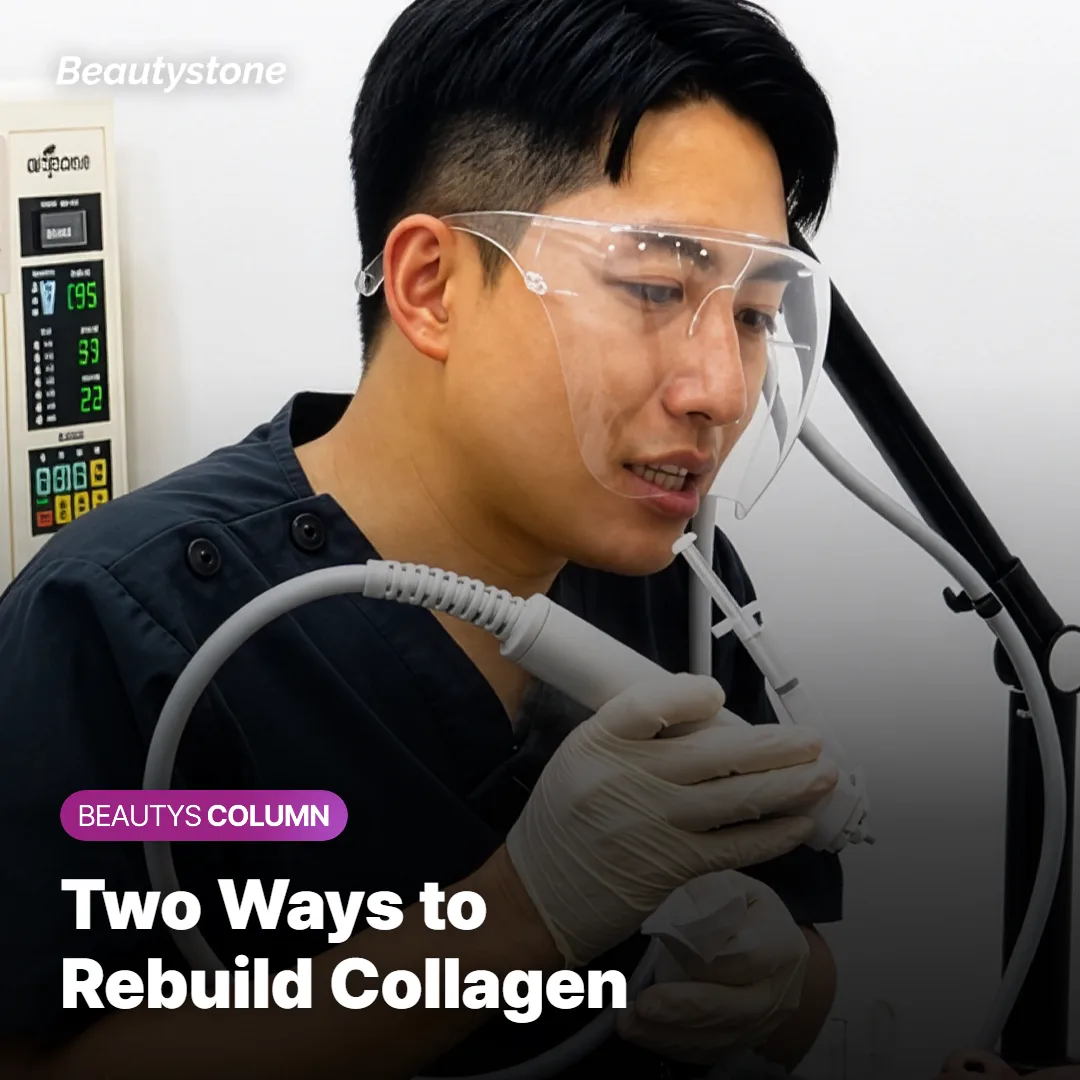
Ultherapy PRIME uses high-intensity focused ultrasound to concentrate energy at a single point, creating tiny zones of heat deep enough to reach the SMAS. As those pinpoint zones heal, the tissue tightens and new collagen gradually fills in around them. A study on focused ultrasound in aging skin found measurable increases in type I and type III collagen fibers after treatment, which is essentially the mechanism behind the gradual lift.
Thermage takes a different route. It uses monopolar radiofrequency to heat a broad area of the dermis while cooling the surface to protect it. Instead of pinpoint zones, it’s more like warming an entire sheet of tissue evenly, which encourages collagen to contract and reorganize over time. Research on monopolar radiofrequency backs this up, showing the epidermis stayed protected while dermal collagen density increased.
Here’s the short version: Ultherapy PRIME zeroes in on deep, specific points. Thermage warms the entire dermal layer at once. Neither is simply “stronger” than the other — they’re built to solve different problems.
Which Treatment Should You Consider First?
Since the two treatments work at different depths, the type of sagging you’re dealing with usually matters more than which one is more talked about. If the SMAS and the deeper structure feel like the main issue, Ultherapy PRIME’s point-by-point approach is often the more logical starting place. If it’s more about an overall loss of surface elasticity and firmness, Thermage’s broad, even heating tends to be the first stop instead.
| Factor | Ultherapy PRIME | Thermage |
|---|---|---|
| Energy type | High-intensity focused ultrasound | Monopolar radiofrequency |
| Primary depth | SMAS and deep tissue | Full dermal layer |
| Delivery style | Point by point | Even, broad coverage |
| Often the first stop when... | Deep structural laxity stands out | Surface firmness has dropped broadly |
Depth isn’t the whole story, though. Skin thickness, fat volume, and even your everyday facial expressions can shift how either treatment responds for you. Some people end up doing both, spaced out over time, rather than picking strictly one. Timing plays a role too — the collagen rebuilding process is gradual, so a single session rarely tells the whole story right away.
What to Expect: Timeline and Results
Neither treatment works like a light switch. Right after your session, you might notice mild tightness or warmth, but the real change — the kind that comes from new collagen forming — tends to build gradually over several weeks to a couple of months.
- Right after treatment: Skin may feel slightly tight or warm, and mild redness is common for a few hours.
- First couple of weeks: Any tightening you notice this early is mostly temporary swelling settling down, not the collagen effect yet.
- Two to three months: This is usually when the gradual lift becomes more noticeable, as new collagen continues building.
- How long it holds: Results vary by person, but effects are commonly reported to last several months, sometimes closer to a year, before a touch-up is considered.
Individual results vary quite a bit — skin thickness, age, and how your body responds to the heating all play a role. That’s part of why providers usually recommend thinking in terms of a series rather than expecting one dramatic before-and-after.
Side Effects & Risks
Both treatments are generally well tolerated, but it’s worth knowing what’s normal and what isn’t before you go in.
- Redness and swelling: Common right after treatment and usually settles within a few days.
- Warmth or tingling: Some people feel a warm or prickling sensation during the session, which typically fades soon after.
- Temporary tenderness: The treated area can feel sensitive to touch for a short stretch, similar to mild sunburn.
- Less common: Bruising, small areas of numbness, or uneven results have been reported in some cases.
If you notice spreading redness, fever, or pain that’s getting worse instead of better, seek medical care right away. And if you’re on certain medications or have an active skin condition, mention that during your consultation — it can change what’s recommended for you.
How Much Do These Treatments Cost?
Pricing for both Ultherapy PRIME and Thermage varies by clinic, the area being treated, and the specific plan your provider recommends, so there isn’t one flat number that applies to everyone. Rather than guessing at a figure, a consultation is really the best way to find out what a plan tailored to your skin would run — you can see current offers at /en/promotion.
The Bottom Line
Cheek sagging in your 50s usually comes from a mix of surface thinning and deeper structural loosening, and Ultherapy PRIME and Thermage are built to address different parts of that equation. Ultherapy PRIME goes after the deep SMAS layer point by point, while Thermage warms the broader dermal layer evenly. Like any procedure, both come with a gradual timeline and some normal, temporary side effects rather than instant results.
- Cheek sagging usually involves both surface thinning and deeper SMAS loosening.
- Ultherapy PRIME targets the deep layer point by point; Thermage warms the broader dermis evenly.
- Results build gradually over weeks to months, not overnight.
- Side effects are typically mild and temporary, but it’s worth knowing the red flags.
Ultimately, the choice depends on your skin, the type of sagging you’re dealing with, and what you’re hoping to see change. If you’re weighing Ultherapy PRIME against Thermage, a consultation is the best way to find out which one fits your skin first. Beautystone is a dermatology clinic in Seoul’s Hapjeong neighborhood — see current offers at /en/promotion.
Frequently Asked Questions
Q1. What's actually causing cheek sagging in your 50s?
It's usually a combination of two things happening at once: the dermis is producing less collagen, making the skin itself thinner and less resilient, while the deeper SMAS layer and its supporting ligaments are loosening, letting tissue underneath drift downward.
Q2. How does Ultherapy PRIME work to lift sagging cheeks?
It uses high-intensity focused ultrasound to concentrate energy at a single point, creating tiny zones of heat deep enough to reach the SMAS layer. As those zones heal, the tissue tightens and new collagen gradually fills in around them.
Q3. How is Thermage different from Ultherapy PRIME for cheek sagging?
Both target aging skin but rely on different technology and reach different depths of tissue. Since the two conditions behind sagging — surface thinning versus deeper SMAS laxity — aren't always the same, a consultation helps determine which approach fits your specific case.
Q4. Which treatment should someone consider first for cheek sagging at 50?
It comes down to which issue is more dominant for you: surface-level thinning and fine lines, or a heavier, deeper sense that the tissue itself has slipped. Identifying which one describes you is the real starting point for deciding what to try first.