

Shurink for Men: 2 Reasons Settings Must Change
If your jawline has started looking heavier or your cheeks are sagging, Shurink lifting can help, but the settings that work well for men aren't a copy-paste of a protocol built for women.


Planning a trip to Seoul?
If you've noticed your jawline looking heavier lately, or the skin along your cheeks starting to sag, you're not alone, and you're probably wondering whether a lifting treatment like Shurink even works the same way on men's skin. It does, but not identically. In this article, we'll cover how men's skin differs from women's at a structural level, how Shurink actually reaches that deeper layer, where the treatment protocol changes for men, and what to do before and after your session to get the most out of it.
What Is Shurink Lifting?
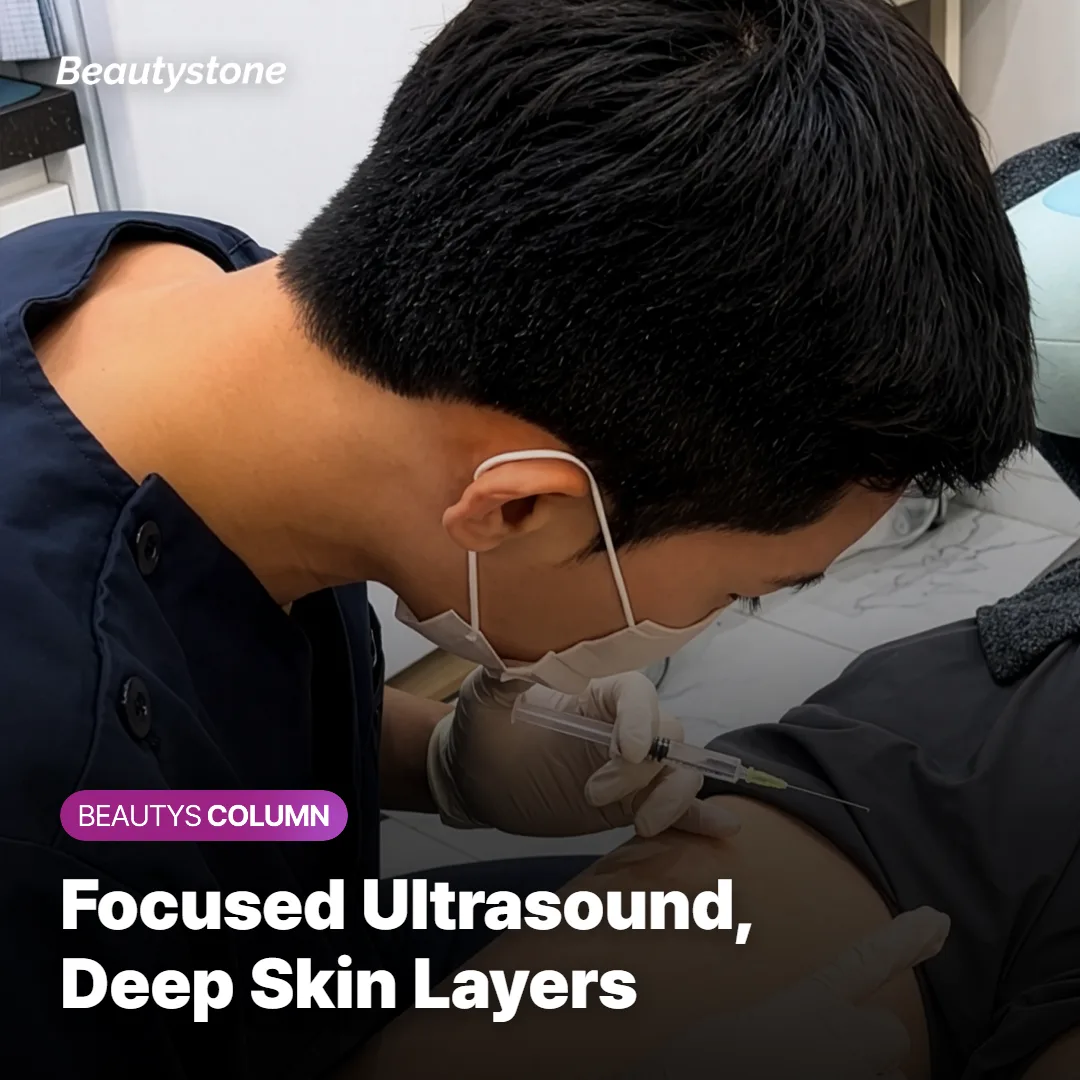
Shurink is a high-intensity focused ultrasound (HIFU) device that delivers tiny points of thermal energy into the deeper layers of skin, the dermis and the SMAS (the connective layer surgeons tighten during a facelift), without cutting or damaging the surface. That heat triggers a wound-healing response that prompts the skin to rebuild collagen* over the following weeks, which is what produces the lifting effect.
Collagen*: the structural protein that keeps skin firm. Production naturally slows with age, which is a big part of why skin starts to sag in the first place.
It's often described as a more affordable alternative to Ultherapy, another well-known HIFU brand, and the underlying mechanism is similar: both use focused ultrasound to reach deep tissue without surgery or major downtime.
How Does Shurink Work on the Skin?
The device focuses ultrasound energy at a specific depth, typically somewhere between 1.5mm and 4.5mm below the surface depending on the handpiece, and leaves a series of microscopic thermal dots along that plane. Because the surface itself isn't touched, there's no open wound involved.
A clinical review of focused ultrasound for facial skin laxity found meaningful improvement in mid-to-lower face sagging, with deeper tissue getting stimulated while the epidermis stayed intact. That's the mechanism at work here, and it's also why getting the depth right matters so much for men, whose deeper tissue tends to sit under a noticeably thicker dermis.
Men vs. Women: Where the Approach Really Differs
The short answer: the equipment doesn't change, but the settings usually do. Men's skin tends to have a thicker dermis and higher collagen density than women's skin at the same age, part of why fine lines tend to show up later, but also why sagging, once it starts, tends to look heavier and more noticeable. Higher sebum production and a beard-bearing jawline add a couple more variables a provider has to account for.
- Dermis thickness: Thicker in men, which typically means depth and energy settings need adjusting rather than reusing a female protocol as-is.
- Targeted depth: Men's protocols tend to skew toward deeper cartridges, while women's sessions are often split between shallow and mid-depth layers.
- Beard area: Shot spacing is usually adjusted around the jaw and chin to reduce stimulation of hair follicles.
- Pain perception: Fairly similar overall, though deeper-layer passes can feel like a heavier, duller pressure.
- Aftercare: Oil and sweat control tend to matter more for men; moisturizing routines are usually simpler.
| Factor | Typical for Men | Typical for Women |
|---|---|---|
| Dermis thickness | Thicker | Thinner |
| Primary depth | Deeper cartridges | Mixed shallow/mid |
| Beard area | Shot spacing adjusted | Not applicable |
| Aftercare focus | Oil and sweat control | Hydration-focused |
None of this makes the treatment fundamentally different for men, it just means a protocol built for women's skin, applied as-is to a man, tends to under- or over-deliver. Your provider should be adjusting depth and energy to your skin, not to a generic template.
What to Expect: Timeline and Results
There's no dramatic before-and-after moment with Shurink. The change is gradual, because it depends on your own body rebuilding collagen over time.
- Day of: Mild redness and warmth in the treated area, usually gone within a few hours.
- First 1-2 weeks: Most people don't notice much yet, this is the quiet part of the process.
- 1-3 months: Gradual firming as collagen remodels, typically when people start noticing a difference in the mirror.
- Beyond 3 months: Results are considered fairly settled, though how long they last varies from person to person.
How long the lift holds depends on your skin's own collagen turnover, sun exposure, and lifestyle. There's no fixed expiration date, and individual results vary quite a bit from one guy to the next.
Side Effects and Downtime: What to Know
Shurink is generally considered low-risk, but low-risk isn't the same thing as risk-free, and it's worth knowing what's normal versus what isn't.
- Redness and warmth: Common right after treatment and usually settles within a few hours to a day.
- Mild swelling or tenderness: Can linger for a day or two, especially over bony areas like the jaw.
- Temporary numbness or tingling: Uncommon but possible along nerve pathways, and it typically resolves on its own.
- Bruising: Rare, but more likely if you're on blood thinners or bruise easily.
If you notice spreading redness, worsening pain, or signs of infection in the days after treatment, contact your provider right away rather than waiting it out.
Aftercare Tips for Men After Shurink
Shurink doesn't come with much real downtime, but a few adjustments in the days around your session can make results more consistent.
- Skip intense workouts and saunas the day of: Heat and sweat on top of a treated area isn't a great combination in the first 24 hours.
- Go easy on shaving: Skin can be a little sensitive for a day or two, so a gentler razor pass, or skipping a day, helps.
- Don't skip sunscreen: Even with oilier skin, a lightweight, non-comedogenic SPF is non-negotiable. Sun exposure works against everything the treatment is trying to build.
- Keep moisturizing simple: Skin can feel temporarily dry after the heat exposure, so a basic, fragrance-free moisturizer is usually enough.
- Ease up on alcohol for a day or two: It can worsen swelling and flushing right after treatment.
Most people don't need to change much else. Results build over one to three months, so it's worth judging the outcome at that point rather than the day after.

The Bottom Line
Shurink works on men's skin the same way it works on anyone's, by using focused ultrasound to trigger deeper collagen rebuilding, but the depth, energy, and shot pattern usually need adjusting for a thicker dermis, oilier skin, and a beard-bearing jawline. Getting those settings right is what separates a natural-looking result from one that under-delivers.
Like any procedure, it comes with trade-offs: some temporary redness, a gradual rather than instant timeline, and results that vary from person to person. Ultimately, the right settings for your skin depend on your provider's assessment, not a one-size-fits-all protocol.
If you're considering Shurink lifting, a consultation is the best way to find out what fits your skin. Beautystone is a dermatology clinic in Seoul's Hapjeong area, see current offers at /en/promotion.
Frequently Asked Questions
Q1. Does Shurink lifting work differently on men than on women?
The device and mechanism stay the same, but the settings usually change for men. Men's skin tends to have a thicker dermis, so providers often adjust the energy level and depth to reach the SMAS layer effectively.
Q2. Is Shurink lifting painful for men?
Some discomfort during treatment is expected, since the device delivers thermal energy into deeper skin layers, though the surface itself isn't cut or damaged. Because men's skin is often thicker, providers may adjust settings to balance comfort with effective depth.
Q3. How long do Shurink results last for men?
Results build gradually as collagen rebuilds over the weeks following treatment, similar to how Ultherapy works. Exact duration varies by individual, and a thicker dermis in men can influence how that timeline plays out.
Q4. What's the downtime after Shurink lifting?
Because the surface of the skin isn't touched, there's no open wound and downtime is generally minimal. Some mild redness or sensitivity right after treatment is normal and tends to settle quickly.