

Is Preventive Lifting Worth It in Your 30s?
You're in your early 30s and nothing looks like it's sagging yet, but friends are already booking lifting treatments and it's hard not to wonder if you should too. Here's what preventive Oligio X treatment actually does before there's anything visible to correct.

You're in your early 30s, nothing in the mirror looks like it's sagging yet, but a few friends have already started getting lifting treatments, and it's hard not to wonder if you should be doing something too, even without an actual problem to point to.
That question comes up more than you'd think: does a firming treatment only make sense once skin has actually started to sag, or can starting earlier change how things go later on? Short answer: treatments like Oligio X aren't only for correcting sagging that's already visible. They're also used to slow the rate at which collagen declines in the first place. That said, starting too early or too aggressively isn't necessary either. In this article, we'll cover what preventive lifting actually means, how Oligio X works on skin that isn't sagging yet, when it makes sense to start and how often, what recovery and results look like, and what it costs.
Is Preventive Lifting Worth It Before You're Sagging?
Collagen, the protein that gives skin its structure and bounce, typically starts declining gradually sometime in your mid-20s. By your early 30s, that decline usually hasn't caught up to your reflection yet, but it's already underway underneath the surface. That's the entire premise behind preventive treatment: it's not about correcting something that's already sagging, it's about slowing down a process that's already started.
So the honest answer to "is it worth it" depends on what you're expecting from it. If you're hoping for a dramatic before-and-after, you're not really the target audience yet, and that's fine. If you're thinking about it as long-term maintenance that could reduce how much correction you need down the line, that's a more realistic way to frame it. Neither path is wrong, it just depends on your goals and your budget.
What Is Oligio X, and How Does It Work?
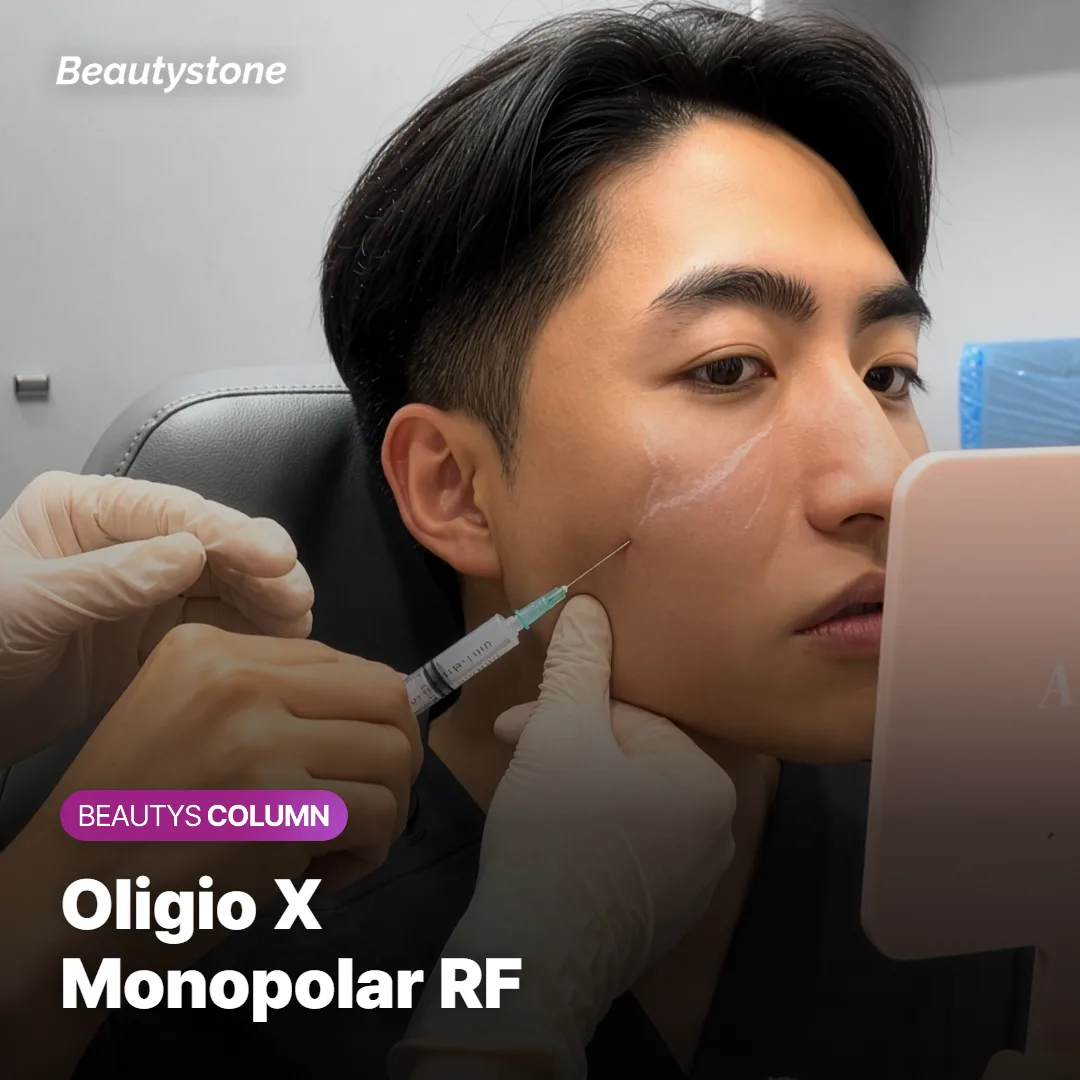
Oligio X is a monopolar radiofrequency (RF) device that delivers heat energy into the dermis, the structural layer beneath your skin's surface, without damaging the surface itself. That heat does two things: it immediately contracts existing collagen fibers, which is why some people notice a subtle tightening right after a session, and it triggers new collagen production over the following weeks.
A review of radiofrequency treatments for skin tightening (RF energy has been shown to contract and regenerate dermal collagen while leaving the skin's surface intact) backs up why this approach gets used preventively. That dual effect, contraction now plus rebuilding later, is the mechanism providers are counting on when they talk about slowing collagen loss before sagging ever shows up. It's not the same goal as correcting skin that's already lax, but it draws on the same underlying process.
When Should You Start, and How Often?
Preventive lifting isn't a race, and starting earlier isn't automatically better. It makes more sense to base timing on your own skin and habits than on a fixed age. Here's roughly how a preventive approach compares to treating sagging that's already visible.
| Category | Preventive Approach | Corrective Approach |
|---|---|---|
| Starting Point | When firmness starts to feel like it's changing | Once sagging is visible |
| Goal | Slow the rate of collagen decline | Lift skin that's already lax |
| Frequency | Spaced out, long-term maintenance | Sessions grouped closer together |
| Intensity | Kept conservative | Adjusted to how much correction is needed |
Most people in their early 30s fall into the left column. Rather than going in strong on one visit, it tends to work better to space sessions out and see how your own skin responds. Daily sunscreen and a consistent moisturizer routine matter here too. Without them, even a well-timed treatment has less to work with.
Recovery and Results: What to Expect
Because Oligio X doesn't damage the skin's surface, recovery tends to be light compared to more invasive options. Here's the general timeline.
- Day of treatment: Mild redness or a warm feeling can last a few hours afterward.
- The next day: Makeup and normal daily activities are usually fine.
- About a week: Holding off on saunas and intense workouts tends to make for a smoother recovery.
Results build gradually rather than all at once. You may notice a bit of immediate tightening from the initial collagen contraction, but the more meaningful change comes from new collagen forming over the following weeks and months. A study on monopolar radiofrequency in animal tissue (reported collagen content increasing from an average of 9.0% to 25.9% three months after treatment), which is roughly the kind of gradual timeline preventive patients should expect rather than an overnight transformation. Individual results vary, and it's worth checking in with your provider about pacing rather than judging results too early.

How Much Does Oligio X Cost?
At Beautystone, entry-level Oligio X pricing for the face starts at ₩429,000 for a 100-shot session. Per-shot pricing tends to improve as you move up in volume, so a higher-coverage 600-shot session runs ₩1,749,000 rather than scaling up in a straight line. Which tier makes sense for you depends on how much area you're treating and how your provider plans your sessions. Seoul clinic pricing is subject to change, so for current numbers and any active offers, check /en/price and /en/promotion.
Side Effects & Risks
Oligio X is generally well tolerated, especially at the conservative settings typically used for preventive treatment, but it's worth knowing what's common and what isn't.
- Common: Mild redness and a warm sensation right after treatment, usually settling within a few hours.
- Less common: Slight swelling or tenderness at the treated area for a day or so.
- Rare: Blistering or a burn-like mark, more likely if aftercare instructions aren't followed or settings are too aggressive for your skin.
If you notice spreading redness, a burn that isn't improving, or a fever after treatment, seek medical care right away rather than waiting it out. Providers typically ask about pregnancy, active skin infections, or metal implants near the treatment area before your first session, so bring those up during your consultation.
The Bottom Line
If you're in your early 30s and not sagging yet, that doesn't mean preventive treatment is pointless, it just means the goal is different. Oligio X uses monopolar radiofrequency to heat the dermis, contracting existing collagen right away and encouraging new collagen to build in over the following weeks, which is the mechanism behind slowing decline rather than correcting something that's already sagging.
Like any procedure, it comes with trade-offs, mild redness and warmth are common, and results take weeks to build rather than showing up overnight. Ultimately, the choice depends on your skin, your goals, and your budget, and there's no rule that says you have to start the moment a friend does.
If you're weighing whether preventive lifting fits where your skin is right now, a consultation is the best way to find out. Beautystone is a clinic in Seoul's Hapjeong area, and current offers are listed at /en/promotion.
Frequently Asked Questions
Q1. Is preventive lifting with Oligio X worth doing in your early 30s if nothing looks like it's sagging yet?
It depends on what you're expecting. Oligio X isn't only for correcting sagging that's already visible — it's also used to slow the rate at which collagen declines in the first place. If you want a dramatic before-and-after, you're not really the target audience yet; if you're thinking long-term maintenance, it's a more realistic goal.
Q2. How does Oligio X work on skin that hasn't started sagging visibly?
It's a monopolar radiofrequency device that sends heat into the dermis without damaging the surface. That heat immediately contracts existing collagen fibers, which is why some people notice subtle tightening right after a session, and it also triggers new collagen formation over time.
Q3. When should someone realistically start preventive treatments like this?
Collagen typically starts declining gradually sometime in your mid-20s, so by your early 30s that decline is already underway even if it's not visible yet. That said, starting too early or too aggressively isn't necessary either — it comes down to your goals and budget.
Q4. How much does Oligio X cost?
Pricing varies by clinic, the area treated, and the specific treatment plan, so it's best to get a personalized quote directly from the clinic rather than assume a fixed number.