

Sofwave Tightens Skin, Onda Reaches the Fat Layer
Sofwave and Onda both get filed under "non-surgical lifting," but they don't reach the same depth under your skin — and that depth difference is why they tend to suit different concerns.

Sofwave vs. Onda: Which Lifting Treatment Actually Fits You?
If you've been reading up on non-surgical lifting treatments, you've probably run into both Sofwave and Onda — and you're not alone in wondering how they're actually different. Both promise firmer, more lifted-looking skin without a single incision, and both tend to get lumped into the same "energy-based lifting" category at most clinics.
In this article, we'll cover how each device delivers heat to your skin, how deep that energy actually reaches, what kind of results and downtime to expect from each, and how to figure out which one lines up with what's actually bothering you.
The short version: Sofwave concentrates focused ultrasound in the dermis, while Onda uses microwave energy that can reach down into the fat layer beneath your skin. That depth difference is the real reason the two treatments tend to suit different concerns, even though they're often mentioned in the same breath.
How Do Sofwave and Onda Deliver Heat Differently?
Despite getting grouped together, Sofwave and Onda don't use the same kind of energy at all. Sofwave relies on focused ultrasound, while Onda uses microwave energy — sometimes marketed under the name Coolwaves — and that distinction is what drives most of the differences you'll notice in the results.
When ultrasound energy is focused into a single point, it creates a tiny zone of heat called a thermal coagulation point. Collagen fibers in that zone contract almost immediately, and over the following weeks your body rebuilds the area with fresh collagen, which is what gradually firms the skin. One review of ultrasound-based skin tightening describes exactly this pattern, with micro-coagulation points forming from the dermis down through deeper tissue to trigger both immediate contraction and longer-term collagen renewal (source).
Onda works on a different principle. Its microwave energy doesn't need to be focused into a single point the way ultrasound does — it spreads more broadly and can reach down into the subcutaneous fat layer, not just the dermis. That's a meaningfully deeper and wider target zone than Sofwave's, which is one reason Onda tends to get used for a slightly different set of concerns.
- Sofwave: focused ultrasound, concentrated mainly in the dermis.
- Onda: microwave energy, reaching from the dermis into the fat layer.
- Shared mechanism: both trigger collagen contraction right away, then collagen rebuilding over the following weeks.
- Why it matters: the layer that heats up is the layer that responds.
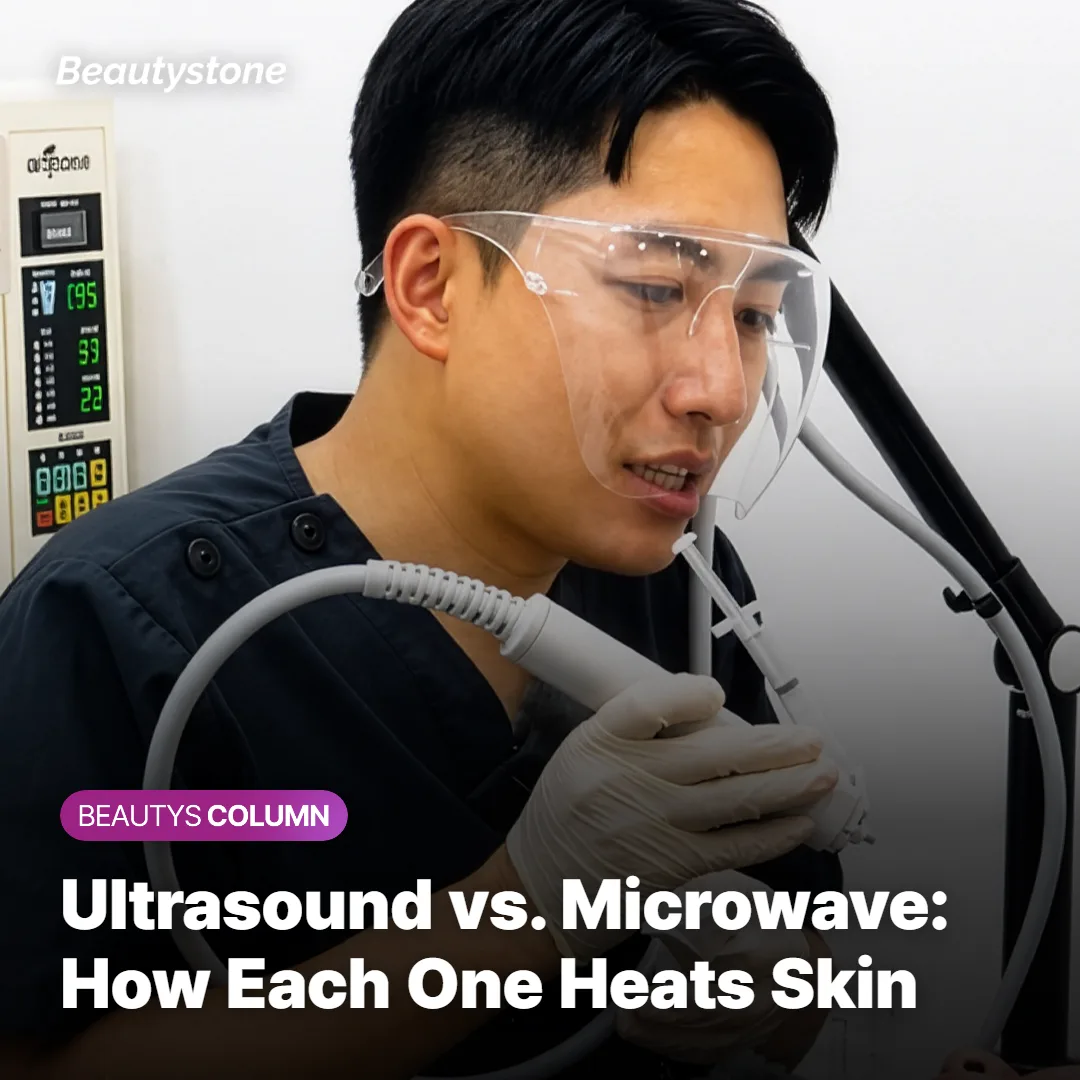
Sofwave vs. Onda: Side-by-Side Comparison
Once you line the two devices up next to each other, the practical differences get a lot easier to see.
| Factor | Sofwave | Onda |
|---|---|---|
| Energy type | Focused ultrasound | Microwave (Coolwaves) |
| Primary layer reached | Dermis | Dermis to subcutaneous fat |
| Tends to suit | Fine lines, texture, skin elasticity | Sagging contour, looser-feeling fat areas |
| During-treatment feel | Warm, tingly heat | Steady, spreading warmth |
| Surface cooling | Built in | Built in |
Neither device is objectively "stronger" than the other — they're just built for different layers. Sofwave tends to read as a surface-level texture refinement, while Onda's reach into the fat layer makes it a better match for contour and looser-feeling tissue.
Which Concern Matches Which Device?
The device name matters less than which layer your concern actually lives in. If fine lines and rougher texture are what bother you, a treatment focused on the dermis makes more sense. If it's a looser jawline or a soft, sagging contour under the cheek, something that reaches deeper is going to do more for you.
Skin sensitivity and pain tolerance are worth factoring in too. If you're sensitive to sensation, a milder, more surface-level warming might feel more comfortable than a treatment that goes in with a stronger, more concentrated pulse. That said, energy levels and depth settings are adjusted per person on either device, so this isn't a hard rule — it's a conversation to have with whoever's actually looking at your skin.
Ultimately, the right pick depends on your skin thickness, how your face tends to hold onto fat, and how quickly you recover from heat-based treatments — all things a provider needs to see in person, not guess at from a description.
What to Expect During Treatment and Recovery
Both treatments start with a numbing cream, and the session itself usually runs 20 to 40 minutes depending on how much area is being covered. You'll likely feel waves of warmth throughout, and it's common to look a little flushed or feel warm to the touch right after — that typically settles within a few hours to a day, and most people are back to their normal routine the same day.
Results build gradually rather than showing up all at once. Because new collagen takes time to form, most people notice the biggest change somewhere between four and twelve weeks after treatment, with skin looking progressively firmer as that process continues.
That gradual timeline is exactly why it's worth waiting a couple of months before judging whether a treatment worked — jumping to conclusions right after your appointment usually means comparing against a baseline that hasn't caught up yet. How long results last varies from person to person, so timing your next session is really something to work out with your provider based on how your own skin responded.

Side Effects and Safety: What You Should Know
Both Sofwave and Onda are generally well tolerated, but they're still delivering heat to living tissue, so a few reactions are worth knowing about ahead of time. Mild redness, warmth, and slight puffiness in the treated area are common and usually settle within a day or two.
Less commonly, some people notice more prolonged swelling, bruising, or temporary changes in skin texture. If redness spreads well past the treated area, swelling gets worse instead of better, or you develop a fever, contact your provider right away rather than waiting it out.
Neither treatment is typically recommended if you're pregnant or breastfeeding, have active skin infections in the treatment area, or certain implants nearby. Always walk your provider through your full medical history before booking, so they can flag anything relevant to your situation specifically.
How Much Does It Cost?
Pricing for both Sofwave and Onda varies quite a bit by clinic, how much area gets treated, and how many sessions your provider recommends — there isn't one number that applies across the board.
A consultation is really the most reliable way to get a price that reflects your actual skin and goals rather than a generic estimate. Beautystone can walk you through current offers at /en/promotion, or you can check /en/price for a general sense of what's available.
The Bottom Line
Sofwave and Onda both fall under "non-surgical lifting," but they're not interchangeable. Sofwave uses focused ultrasound to refine the dermis; Onda uses microwave energy that reaches deeper, into the fat layer, to help with looser contour.
- Sofwave targets the dermis with focused ultrasound — a good match for texture and fine lines.
- Onda's microwave energy reaches from the dermis into the fat layer — better suited to sagging contour.
- Both build results gradually over several weeks, not instantly.
- Like any procedure, both come with trade-offs, including temporary redness, swelling, and results that fade over time.
Ultimately, the choice depends on your skin, your goals, and your budget. If you're weighing Sofwave against Onda, a consultation is the best way to find out which one actually matches your concern. Beautystone is a dermatology clinic in Seoul's Hapjeong neighborhood — you can see current offers at /en/promotion.
Frequently Asked Questions
Q1. Do I have to choose between Sofwave and Onda?
Not necessarily. The two devices reach different layers, so some people use one for texture concerns and the other for contour, either at the same visit or spaced out over time. Which combination makes sense really depends on your skin, so it's worth raising at a consultation rather than deciding on your own.
Q2. Will I see results right after treatment?
You might notice a slight tightness right after, but the real change takes time. New collagen needs several weeks to form, so most people see the biggest improvement somewhere between four and twelve weeks out rather than immediately.
Q3. How much does it hurt?
Both treatments use a numbing cream beforehand, so most people describe the sensation as warm rather than painful. Sofwave tends to feel like a tingly heat, while Onda feels more like a steady, spreading warmth. Sensitivity varies from person to person, and your provider can adjust the energy level if it feels like more than you're comfortable with.
Q4. What should I avoid after treatment?
Skip saunas, steam rooms, and intense workouts on the day of treatment, since they raise heat and blood flow in the treated area. Stick to diligent sunscreen use, and if redness or swelling hasn't settled after a few days, check in with the provider who treated you.