Does Onda Actually Work Like a Microwave?
Onda runs on the same microwave frequency as your kitchen appliance — but instead of cooking food, it selectively heats fat cells under the skin. Here's how that's different from RF and HIFU, and what a realistic timeline looks like.

If you've heard the word "Onda" and immediately thought of your kitchen microwave, you're not entirely wrong. Onda treatments use the same 2.45GHz microwave frequency as the appliance on your counter — just at a fraction of the power, and aimed at a very specific target under your skin. In this article, we'll cover what Onda actually does, how it's different from RF and HIFU treatments, and what a realistic timeline looks like.
What Is Onda, and How Is It Different From RF or HIFU?
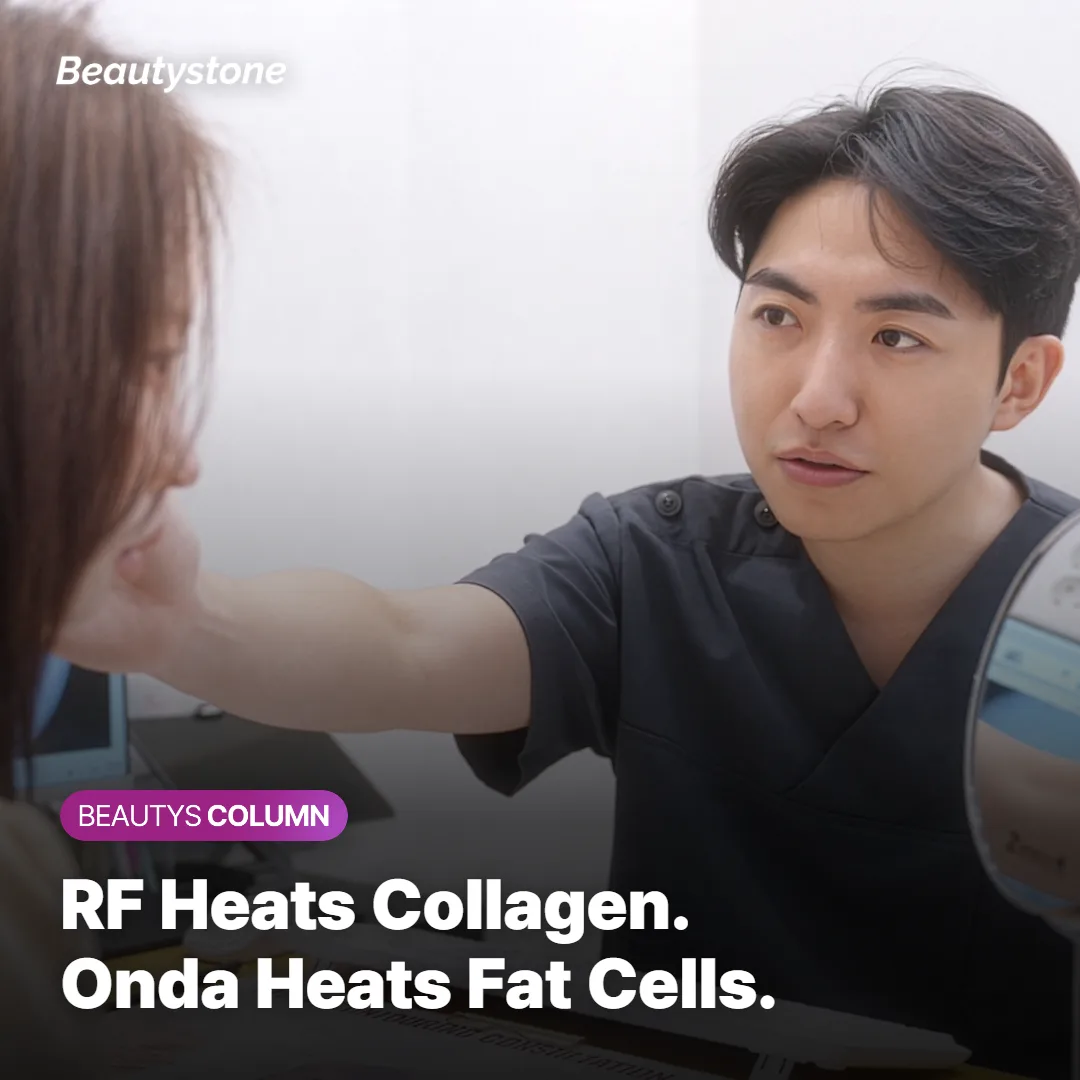
Onda is a microwave-based body contouring treatment that heats fat cells beneath the skin rather than the skin itself. That's the short answer. The longer answer is that Onda belongs to the same general family as RF (radiofrequency) and HIFU (high-intensity focused ultrasound) — they're all energy-based treatments that create heat to trigger a response in your tissue. But the target is different for each one.
RF treatments mostly heat water and collagen in your dermis (the layer of skin just below the surface), which is why they're associated with tightening. HIFU delivers focused points of heat deeper down, into the dermis and the SMAS layer (the connective tissue that supports facial structure) — that's the layer surgeons address in a facelift. Onda works differently: research suggests roughly 80% of its energy is absorbed by subcutaneous fat, with only about 20% reaching the dermis.
In other words, if RF and HIFU are mostly about tightening, Onda is mostly about reducing the appearance of fullness — a stubborn pocket under the chin, or fat along the jawline that makes the face look heavier than it needs to.
How Does Onda's Microwave Technology Actually Work?
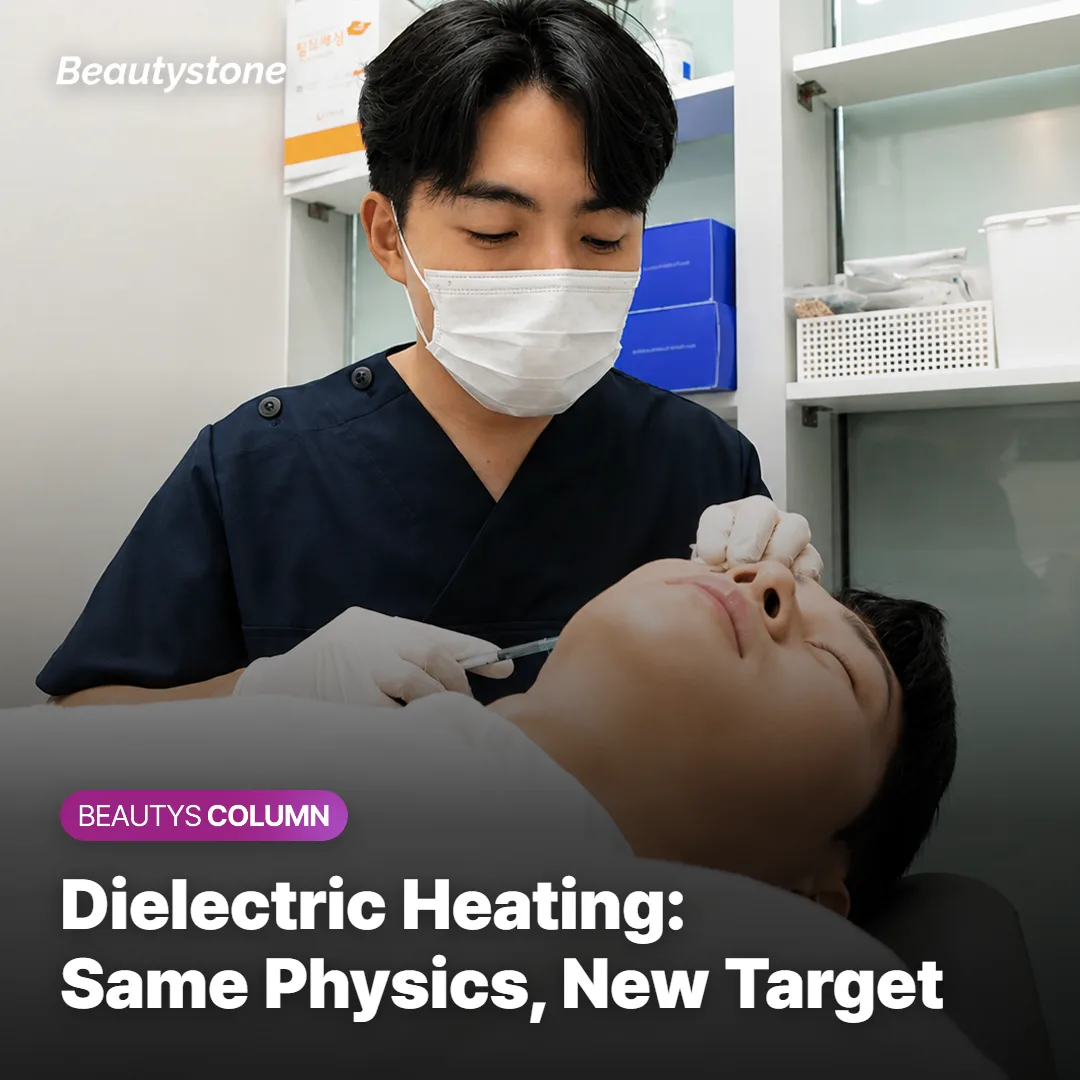
The mechanism behind it is called dielectric heating — the same basic principle, incidentally, behind your microwave oven. Molecules that are asymmetrical (polar) rotate and vibrate when they're exposed to an electromagnetic field, and that motion generates heat. Fat cells happen to respond well to the 2.45GHz frequency Onda uses, which is why the device can be fairly selective about its target instead of just heating everything in its path evenly.
Once fat cells are heated to a specific range — typically somewhere around 43–45°C (109–113°F) — for long enough, their membranes become damaged. From there, your body's own cleanup crew (macrophages, a type of immune cell, gradually clear the damaged cells out over the following weeks. Nothing "melts away" during the appointment itself — the real change happens after you've already left the treatment room.
Since roughly a fifth of the energy still reaches the dermis, there's typically a mild collagen-stimulating effect layered on top. That's the "bonus" tightening some patients notice — though it's a secondary effect, not the main event.
What to Expect: The Onda Treatment Timeline
Here's what a typical timeline looks like, though your provider will walk you through specifics based on the treatment area and your skin.
- Day of treatment: Expect a deep, warm sensation as the handpiece moves over the area. Most people describe it as intense heat rather than sharp pain, and cooling is built into the process to help protect the skin surface.
- First 24–48 hours: Mild redness or a heavy, "worked out" feeling in the treated area is common and usually settles down quickly.
- First 1–2 weeks: Some mild swelling or firmness can linger as your body starts processing the treated fat cells.
- 4–12 weeks: This is when visible changes gradually show up, as damaged fat cells are cleared out over time. Results build slowly rather than showing up all at once.
If you're expecting an immediately flatter look the moment you leave the clinic, it's worth resetting that expectation — Onda is a slow-build treatment, not an instant one.
Onda vs. RF vs. HIFU: Which One Fits Your Concern?
So, what does this mean for you? It really depends on what's actually bothering you when you look in the mirror.
If your main concern is sagging or a loss of firmness, RF or HIFU are generally the better-matched tools — they're built to work on collagen and the deeper support structures, not fat volume. If your concern is more about fullness or a heavy-looking area — a double chin, jowl fat, or fullness along the jawline — Onda's fat-targeting approach tends to be the better fit. And if you have both sagging and excess fullness in the same area, combining treatments is common, and your provider can help you figure out the right order and spacing.
| Treatment | Primary Target | Best For |
|---|---|---|
| RF | Dermal collagen & water | Early skin laxity, texture |
| HIFU | Deep dermis & SMAS layer | Structural sagging |
| Onda | Subcutaneous fat | Fullness, double chin, jowl fat |

Side Effects & Safety: What to Watch For
Onda is generally well tolerated, and when surface cooling is used correctly, the risk of a burn is low. That said, it's not without downsides.
- During treatment: A heavy, hot sensation is normal and expected.
- Redness and swelling: Common in the first few days and usually settles on its own.
- Bruising or firmness: Can linger for a week or two in some people, especially with more sensitive skin.
- Rare but possible: A skin surface burn if cooling isn't managed properly, which is one reason device settings and technique matter as much as the technology itself.
If you notice spreading redness, worsening pain, or a burn that isn't improving after a couple of days, contact your provider right away. And if you're planning to combine Onda with RF or HIFU in the same area, ask your provider how much spacing they recommend — stacking multiple heat-based treatments too close together can overwork the dermis and prolong swelling.
How Much Does Onda Cost?
Pricing for Onda varies quite a bit by clinic, treatment area, and how many sessions your provider recommends — there isn't a single number that applies across the board. In general, treatments that cover a larger area or require a course of multiple sessions will cost more than a single small-area touch-up.
Rather than guessing at a number, the most reliable way to get an accurate estimate is a consultation, where a provider can assess your specific concern and map out a realistic plan. If you'd like to see current pricing and offers, Beautystone lists them at /en/promotion.
Is Onda a Good Fit for You?
Onda tends to be the best match if you're dealing with fullness rather than sagging — think a soft area under the chin, jowl fullness, or a jawline that looks less defined because of fat rather than loose skin. It's also a reasonable option if you want a non-surgical approach and you're comfortable with results that build gradually over a few months instead of overnight.
It's probably not the right fit if your main issue is significant skin laxity with little to no excess fat — in that case, RF or HIFU (or, for more advanced sagging, a surgical consult) will likely serve you better. Everyone's anatomy is a little different, though, so this is exactly the kind of question worth bringing to a consultation rather than deciding on your own from a blog post.
The Bottom Line
Onda and your microwave technically run on the same frequency — but that's about where the similarity ends. Instead of cooking food, Onda uses that energy to selectively heat fat cells under your skin, while RF and HIFU are built to target collagen and deeper support structures instead.
- Onda targets subcutaneous fat; RF and HIFU mainly target collagen and deeper tissue.
- Visible changes build gradually over about 4–12 weeks, not overnight.
- It's best suited to fullness, not sagging — and can be combined with RF or HIFU when both concerns overlap.
Like any procedure, it comes with trade-offs, and individual results vary. Ultimately, the choice depends on what's actually causing the look you want to change — fullness, sagging, or both. If you're considering Onda, a consultation is the best way to find out what fits you. Beautystone is a dermatology clinic in Seoul's Hapjeong area — see current offers at /en/promotion.
Frequently Asked Questions
Q1. Does Onda Hurt?
Most people describe it as an intense, deep heat rather than sharp pain, and surface cooling is used to help keep things comfortable. Some areas — like directly under the chin — can feel more intense than others.
Q2. How Long Do Onda Results Last?
Because Onda reduces the number of fat cells in the treated area, changes tend to be long-lasting as long as your weight stays relatively stable. That said, individual results vary, and it's not a substitute for overall weight management.
Q3. How Much Does Onda Cost?
Pricing depends on the treatment area, how many sessions you need, and the clinic you visit — there's no single universal number. A consultation is the most reliable way to get an accurate quote; current offers are listed at /en/promotion.
Q4. Can I Combine Onda With RF or HIFU?
Yes, many providers combine Onda with RF or HIFU when a patient has both fullness and sagging in the same area. Ask your provider about timing and spacing, since stacking multiple heat-based treatments too close together can prolong swelling.