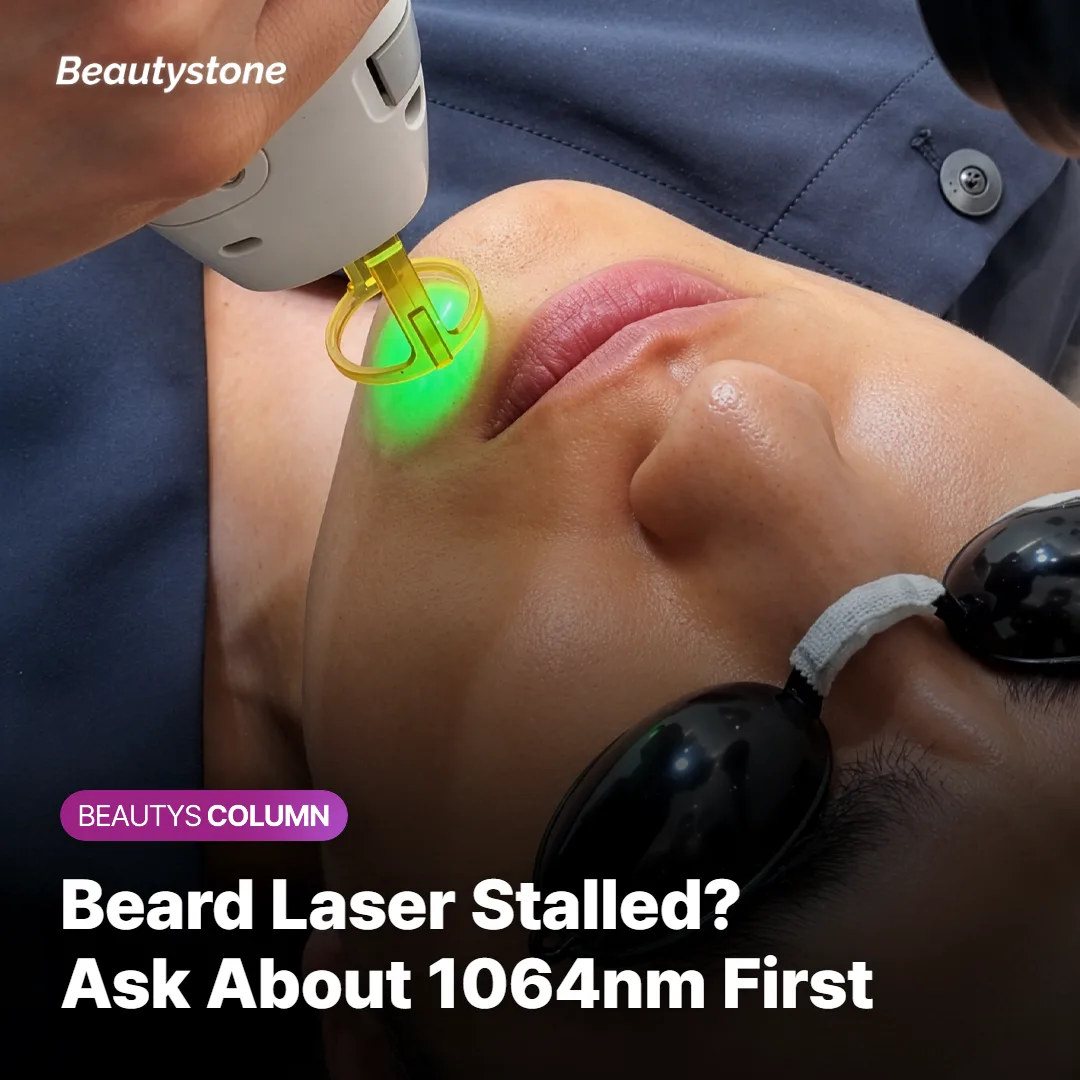
How Effective Is Thermage? 3 Settings That Decide Your Results
Same device, wildly different outcomes. Shot count, delivered energy, and the treatment map decide most of your result — and the side effects worth knowing about track the same three variables.


Here is the short answer first: Thermage does tighten skin, and it is FDA-cleared to do that without surgery, but the size of your result is decided mostly by choices made during your appointment rather than by the logo on the machine. Two people can walk out of two clinics having had the same branded treatment and end up with results that are not remotely comparable.
This page covers the two things people usually check at the same time: how much change Thermage can realistically produce, and what can go wrong. We will go through the three variables that decide your outcome, then walk through side effects in detail, including the rare ones worth knowing about and the point at which you should stop waiting and call someone. Individual results and recovery vary.
How Effective Is Thermage, Really?
The honest version: Thermage is a tightening treatment, not a substitute for surgical lifting. It heats the deeper layer of your skin enough to trigger your body's own collagen-remodeling response, and your skin firms gradually as that new collagen builds. What it does not do is remove tissue or reposition it. If your main concern is significant sagging that you expect to be lifted and held, a heat-based treatment is working against gravity with a smaller tool.
It is also not fast. Most people notice nothing dramatic in the first few weeks, see gradual tightening across roughly two to six months, and reach their peak result somewhere around six to twelve months after the session. That slow curve is the treatment working as designed, not a sign that it failed. Results are not permanent either, which is why many people plan to repeat about once a year instead of treating a single session as a one-and-done fix.
On the regulatory side, the precise wording matters more than it looks. Thermage is a device made by Solta Medical, and it has been FDA-cleared for non-surgical skin tightening since 2002. Devices are cleared; drugs are approved. A provider who uses those two words interchangeably is giving you a small signal worth noticing.
- Good fit: mild to moderate laxity, skin that still has some bounce, and patience for a result that arrives over months rather than weeks.
- Think twice: significant sagging that you expect to be lifted, or a hard deadline a few weeks away. The timeline will not cooperate.
- Probably wait: minimal laxity in your early 30s. Going in early and repeating aggressively can work against you rather than for you.
- Realistic payoff: firmer, tighter-looking skin that peaks months later and softens again over the following year. Individual results vary.
That last point is the one worth internalizing before you book anything. If you expect the mirror to change on the drive home, you will judge the treatment at the exact moment it has the least to show, and you will judge it wrongly.
Thermage RF and Thermage FLX: What Actually Changed
Thermage is monopolar radiofrequency. In plain terms, it sends RF energy through the skin so that the deeper layer heats up while the surface stays protected. That is the same underlying idea whether you see it written as Thermage RF, RF Thermage, or the newer Thermage FLX, which plenty of people type as Thermage FX. One device family, one mechanism.
The mechanism is a reverse-temperature trick. The epidermis, your top layer, is cooled to somewhere around 100-108°F while the dermis underneath, where your collagen lives, is pushed up to roughly 149°F. At that dermal temperature some of your existing collagen fibers partially denature, your body reads that as damage worth repairing, and over the following weeks and months it rebuilds and thickens the collagen network in that area. Controlled heat now, gradual remodeling later. That is the entire treatment in one sentence.
Here is the complication, and it is the reason this page exists at all. Skin resistance is not identical from person to person, so the same energy setting does not reach the same dermal temperature on every face. Thermage FLX addresses that with a real-time energy-compensation feature, which some providers call AccuREP, that measures skin resistance and fine-tunes output shot by shot. It genuinely helps. It does not replace a provider deciding where to push harder and where to ease off.
| Part of the treatment | What it does | What it cannot do on its own |
|---|---|---|
| Monopolar RF energy | Heats the dermis enough to trigger collagen remodeling | Decide how much of your face gets treated |
| Surface cooling | Keeps the epidermis near 100-108°F so the session stays non-surgical | Protect skin from settings that are wrong for it |
| FLX real-time calibration | Adjusts output shot by shot as skin resistance changes | Choose your total shot count or your treatment map |
| The provider's plan | Sets shot count, distribution, and pacing between sessions | Rescue a session that ends before the threshold |
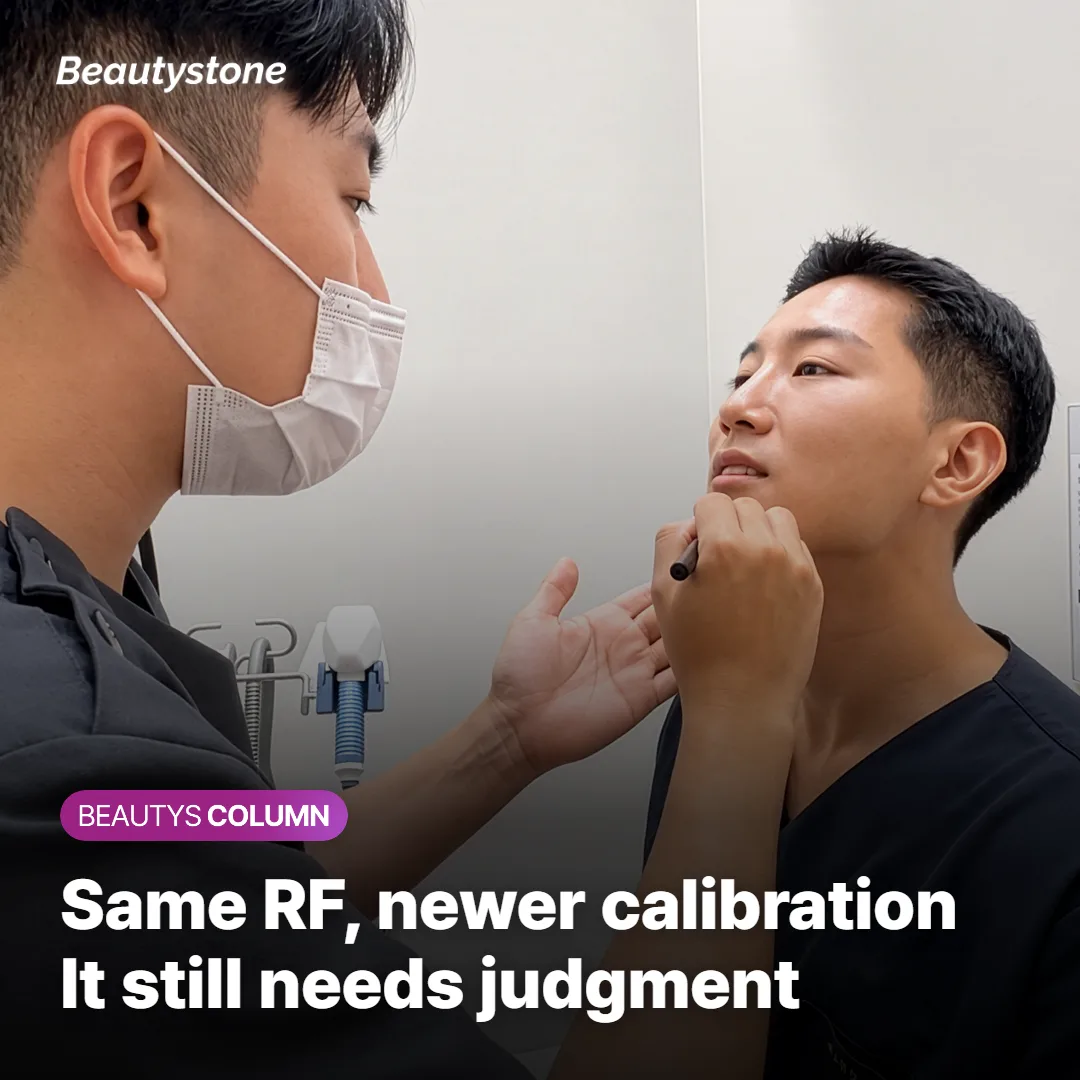
The 3 Settings That Decide Your Result
When two reviews of the same device contradict each other, the difference is usually sitting in one of three places. None of the three appear in a clinic's brochure, and all three are fair questions to ask before you pay for anything.
| Variable | What it changes | What to ask |
|---|---|---|
| Total shot count | Whether enough of your face reaches remodeling temperature at all | How many shots is this quote based on? |
| Delivered energy | Whether each shot actually reaches the dermal target in your skin | How do you set output, and how do you adjust it mid-session? |
| Map and pacing | Where the effect lands, and whether repeat sessions help or hurt | How are shots distributed, and when would you treat me again? |
Shot count comes first, because it is the variable that most often explains a disappointing result. A full-face treatment typically lands somewhere around 600 shots, though the exact number depends on your provider's protocol and your goals. Reviews describing almost no visible change frequently trace back to a session that used meaningfully fewer shots than that, spread too thin across the face. The appointment happened, but it may never have crossed the threshold where collagen remodeling begins in the first place. A treatment below that line is not a weaker version of the result. It can be no result at all.
Delivered energy is the second variable and the least intuitive one. Because skin resistance differs from person to person, the same number on the machine does not produce the same dermal temperature on every face. That is exactly what the FLX real-time compensation is for, and it is also why a provider who watches how your skin responds through the session is worth more than one who runs an identical protocol on everybody. The useful question is not which level do you use. It is how do you decide when to change it.
The third variable is the map: where the shots go, and how soon you come back. Distribution decides which parts of your face actually see the change, so a quote for a set number of shots means very little until you know how those shots will be spread. Pacing matters for a different reason. Repeating aggressively inside a short window is one of the situations where the rare and more serious side effects become more likely, so more is not automatically better here. With this treatment, more can be actively worse.
Put the three together and the contradictory reviews stop contradicting each other. Your friend's underwhelming session and someone else's dramatic one may not have been the same treatment in any meaningful sense. They were the same brand name printed on two very different plans.
Thermage Side Effects: Common, Rare, and When to Call
Thermage carries fewer risks than surgical lifting options, but it is not risk-free, and non-invasive is not the same thing as nothing can go wrong. Here is the breakdown, sorted by how often things actually happen rather than by how alarming they sound.
| What can happen | How common | Typical course | What to do |
|---|---|---|---|
| Redness and warmth | Common | Usually fades within a few days | Expect it; no special action needed |
| Mild swelling | Common | Brief and usually settles on its own | Watch it; intervention rarely needed |
| Temporary numbness or tingling | Less common | Usually resolves on its own | Raise it at follow-up if it lingers |
| Blistering or burns | Rare | Needs assessment rather than waiting | Contact your provider right away |
| Visible dents or areas of fat loss | Rare, more serious | Not something to watch and hope about | Contact your provider right away |
On sensation during the session itself: most people describe intense heat rather than sharp pain, and it tends to ramp up toward the end of each pass. Numbing cream and the device's built-in cooling take the edge off, but you should still expect to feel real heat throughout. Saying out loud when a pass is too much is useful information for your provider, not complaining.
The two entries that deserve a closer look are dents and areas of fat loss. They are rare, but they become more likely in specific circumstances: aggressive repeat treatments packed into a short window, or shots that overlap too heavily in the same spot. That is the concrete reason why more sessions, sooner is bad advice with this treatment, and why going in early, say in your early 30s with minimal sagging, can sometimes work against you rather than for you.
The red-flag threshold is straightforward. Pain that worsens instead of settling, blistering, or any skin change that is not improving within a few days means you stop waiting and contact your provider right away. If you cannot reach anyone and the skin is blistering or the pain is escalating, seek urgent care. Nothing on that list improves by being ignored for a week.

One practical note if you are travelling for treatment: aftercare is simplest when the clinic that treated you is still reachable. Ask before you book how follow-up is handled, and plan for the possibility that you may need a local provider where you live if something needs to be looked at after you have flown home.
What to Ask Before You Book
Pricing varies a great deal by clinic, by region, and by how many shots the plan calls for, which is why a single number rarely tells you anything useful on its own. A cheap quote built on a low shot count is not a bargain, it is a smaller treatment. The more productive move is to make the quote explain itself before you compare it to anything else.
- How many total shots is this quote based on, and how are they distributed across my face?
- How do you decide the energy level for my skin, and how do you adjust it during the session?
- What result is realistic for my degree of laxity, and by roughly when should I expect it?
- Is a follow-up visit included, and how do I reach you if something looks wrong afterwards?
- When would you treat me again, and are there reasons you would tell me to wait instead?
A provider who answers those five without hedging is telling you something useful about how they plan treatments. A provider who cannot say how many shots your quote covers is telling you something as well.
Because Thermage is typically an annual treatment rather than a quarterly one, many people find it easier to budget for one properly sized session a year than to chase frequent partial ones with whoever is running an offer that month. That framing also makes the shot-count question feel less like haggling and more like what it actually is: the main thing you are buying.
Beautystone is a dermatology clinic in the Hapjeong area of Seoul, and this page is general information rather than personal medical advice. For current pricing and offers, see /en/price and /en/promotion. Whether you book with us or somewhere else, bring those five questions to your consultation. Individual results vary, and the plan behind the treatment matters far more than the brand name on the device.
Frequently Asked Questions
What is the difference between Thermage and an at-home RF device?
They are not the same category of thing, even though both get described as radiofrequency. A clinic Thermage session works by cooling the surface while bringing the dermis to a temperature high enough to trigger collagen remodeling, with output adjusted for your skin as the session runs. A consumer gadget used at home is not a supervised clinical treatment, and we cannot speak to what any specific home device does. If your search started with an at-home tool and ended up here, the practical difference is that the clinic version is a planned procedure with a shot count, energy settings, and real side effects to weigh.
Can Thermage cause dents or fat loss?
It is a rare outcome, but it is a real one and worth understanding rather than dismissing. It becomes more likely with aggressive repeat treatments crammed into a short window, or when shots overlap too heavily in one area. That is why pacing between sessions is part of the plan rather than an afterthought. If you notice a visible depression or a change in facial contour after treatment, contact your provider instead of waiting to see whether it settles on its own.
How can I tell whether my session used enough shots?
Ask, ideally before the session and certainly after it. Full-face treatments typically land somewhere around 600 shots, with the exact number depending on the provider's protocol and your goals, so a plan far below that is worth a conversation before you book. If you have already been treated and saw nothing at all after several months, shot count and distribution are the first two things to check, not the device.
Is my early 30s too early for Thermage?
It can be. With minimal sagging, starting early and repeating often is one of the situations where the treatment can work against you rather than for you, since the rare risks rise with aggressive repetition while there is little laxity for the result to act on. Timing is worth discussing openly with a provider who is willing to tell you to wait. Not yet is a legitimate answer, and it is one you should be able to get before you pay for anything.