Juvelook Bruising: Normal, or 1 Red Flag?
Bruising after Juvelook Volume is common and usually fades within a week to ten days. Here's the day-by-day timeline and the simple care steps that make recovery easier.

If you noticed bruising around the injection sites the morning after your Juvelook Volume appointment, you're not alone.
The treatment itself takes only a few minutes, but the bruising that shows up over the next few days is often what people worry about most — will it fade in time for that event on your calendar, and is there anything you can do to speed it along?
In this article, we'll cover why bruising happens after Juvelook Volume, how long it typically takes to fade, and the small things you can do each day to make recovery easier — plus the warning signs that mean it's time to call your provider.
What Is Juvelook Volume, and Why Does It Cause Bruising?
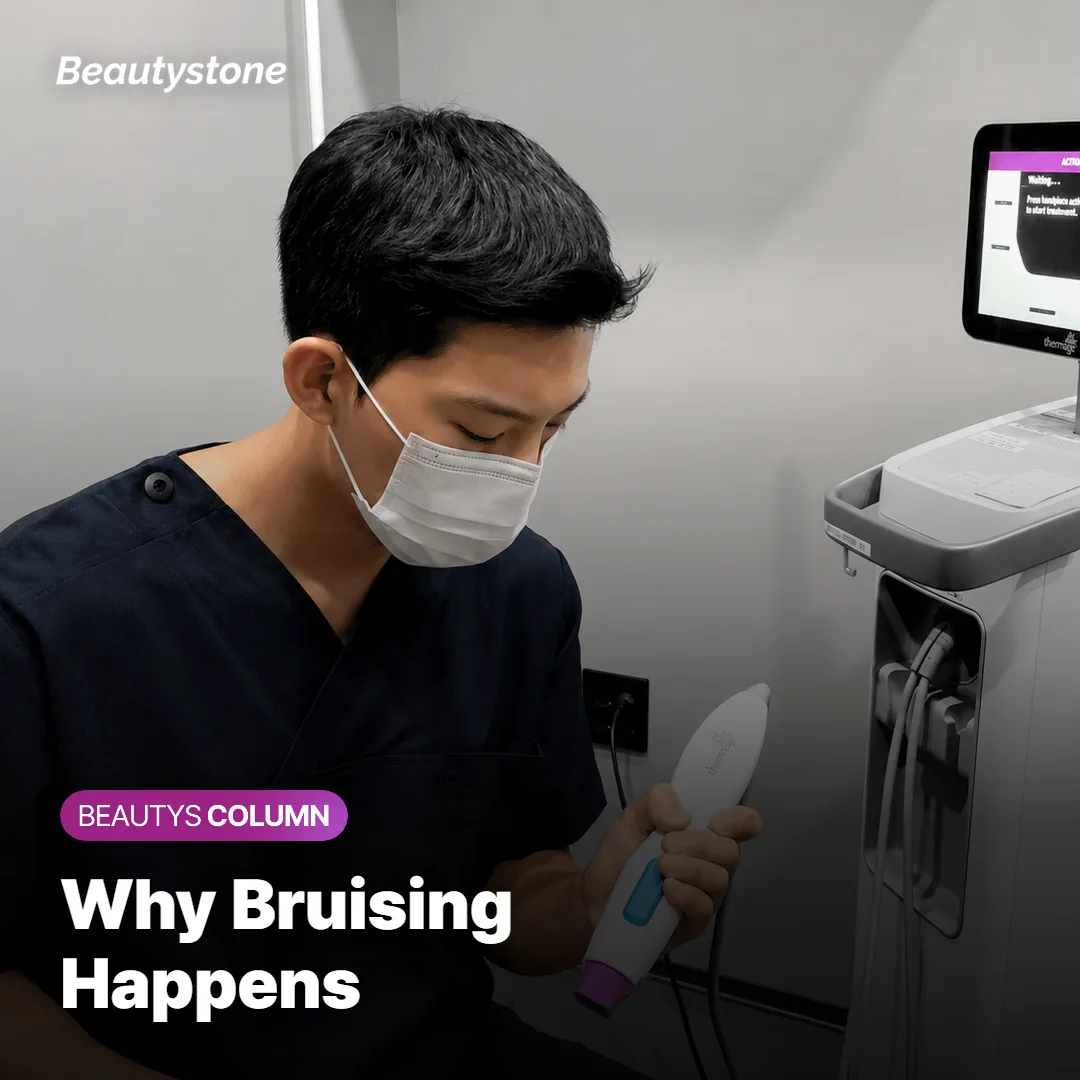
Juvelook Volume is a PDLLA*-and-hyaluronic-acid (HA) hybrid filler injected beneath the skin to restore lost volume while also stimulating your body's own collagen production. During the injection, a fine needle or cannula passes through the skin, and it can nick a small blood vessel along the way. When that happens, a bit of blood pools under the skin and shows up as a bruise.
This isn't a sign that anything went wrong with the procedure — it's simply a byproduct of the needle or cannula passing through tissue that happens to sit near tiny superficial vessels. Some areas of the face, and some people's skin, are just more prone to it than others.
PDLLA*: Poly-D,L-lactic acid, a biodegradable compound that stimulates new collagen formation in the skin. It's the main active ingredient in Juvelook Volume.
A consensus paper on PDLLA injection technique notes that bruising and mild swelling are among the most commonly reported reactions after treatment, and that injection depth and technique can influence how much bruising shows up.
How Long Does Post-Treatment Bruising Really Last?
Most bruising follows a fairly predictable pattern as your body reabsorbs the blood beneath the skin. Here's a rough timeline of what to expect:
| Timing | What the Bruise Looks Like | Note |
|---|---|---|
| Day 1–2 | Red to purple-blue | Usually at its most visible |
| Day 3–5 | Deep purple to brownish | Starting to fade |
| Day 6–10 | Yellow-green, then gone | Mostly resolved |
Put simply, bruising typically clears up on its own within about a week to ten days. How fast it fades depends on where it is and your individual skin — bruises in thinner-skinned areas or over more visible blood vessels can take a little longer, and concealer is a common (and totally fine) workaround while you wait it out.
How to Care for Bruising in the First Few Days
You can't rush a bruise, but a few simple habits during the first several days can make the process more comfortable.
- Cold, then warm: A gentle cold compress on day one can help limit swelling; after that, switching to a warm compress may help your body reabsorb the pooled blood faster.
- Hands off: Avoid rubbing, pressing, or massaging the area — let it heal undisturbed.
- Ask before you treat it: Vitamin K cream or arnica gel are popular over-the-counter options, but check with your provider before adding anything new to the area.
- Watch your meds: Aspirin, ibuprofen, and other NSAIDs can thin the blood and make bruising worse, so it's worth avoiding them around your appointment — talk to your prescribing doctor first if you take one regularly.
A review of lactic-acid-based injectable treatments describes redness, swelling, and bruising at the injection site as expected reactions that typically resolve within about a week to ten days on their own, which lines up with what most patients experience.

What to Avoid During Your Recovery
A little extra caution in the days right after treatment goes a long way.
- Skip the alcohol: Give it a day or two — alcohol can widen blood vessels and make bruising and swelling more noticeable.
- Ease off intense workouts: Hold off on anything that spikes your heart rate and blood pressure for the first 24 to 48 hours.
- Don't stack treatments: Avoid scheduling other procedures in the same area until the bruising has settled — layering irritation on top of irritation tends to prolong recovery.
- Plan around events: If you have something important coming up, book your appointment with at least ten days of buffer, just in case.
Is Bruising a Sign Something Went Wrong?
It's a fair question, and the honest answer is: usually not. The size of a bruise has more to do with which specific vessel was nicked than with how the injection was performed. A larger bruise can look alarming, but it generally follows the same color changes and timeline as a smaller one — it just takes a bit longer to fully clear.
That said, individual results vary, and what's "normal" for one person's skin isn't always the same as another's. If you're ever unsure whether what you're seeing is typical, a quick photo and message to your provider's office can offer peace of mind.
Downtime, Risks, and When to Call Your Provider
Downtime after Juvelook Volume is minimal for most people — many go straight back to their normal routine, bruising and all. But it's worth knowing the difference between a bruise that's healing on schedule and one that needs a second look.
Contact your provider if the bruising hasn't started improving after about ten days, if pain gets worse instead of better, or if you notice a firm, hardening lump under just one injection site. Fever, spreading redness, or increasing warmth around the area are signs to seek medical care right away rather than waiting it out.
The Bottom Line: What to Expect and Do Next
- Bruising after Juvelook Volume is a common, expected reaction — not a sign anything went wrong.
- Most bruises move through red, purple, and yellow-green tones before fading within about a week to ten days.
- Cold compress early, warm compress later, and steering clear of blood thinners can make recovery smoother.
- Bruising that lingers past ten days, worsens, or comes with a hard lump is worth a call to your provider.
Like any injectable treatment, Juvelook Volume comes with some trade-offs, and bruising is one of the more visible — if temporary — ones. Ultimately, how you manage those first ten days comes down to your skin, your schedule, and your comfort level.
If you're considering Juvelook Volume or have questions about bruising after a recent treatment, a consultation is the best way to get answers specific to your skin. Beautystone is a dermatology clinic in Seoul's Hapjeong neighborhood — you can see current offers at /en/promotion.
Frequently Asked Questions
Q1. How long does bruising last after Juvelook Volume?
Bruising typically follows a predictable pattern: red to purple-blue in the first day or two, deepening then fading through days three to five, and turning yellow-green before clearing by day six to ten. Most people are fully clear within about a week to ten days, though this can vary by person and injection site.
Q2. Is bruising after Juvelook Volume a sign something went wrong?
No. Bruising happens when the needle or cannula nicks a small vessel under the skin, which is a normal byproduct of injecting near superficial blood vessels rather than a sign of a botched treatment. Some areas of the face and some skin types are simply more prone to it than others.
Q3. What can I do to help Juvelook Volume bruising heal faster?
Gentle care in the first few days can make recovery more comfortable, though your provider's specific instructions should always take priority. If you're unsure what's appropriate for your skin, check with your provider rather than guessing.
Q4. When should I call my provider about bruising after Juvelook Volume?
If bruising isn't following the expected fading pattern, seems to be getting worse instead of better, or comes with other concerning symptoms, it's worth reaching out to your provider rather than waiting it out. They can tell you whether what you're seeing is within normal range for your case.