
Will Dissolving Filler Leave My Skin Saggy?
The fear that dissolving filler leaves stretched, saggy skin comes from somewhere real, but the conclusion is overstated. Here is what actually happens, including the first few days nobody warns you about.

If you're unhappy with a filler result and want it reversed, you've probably run into the same warning: "Dissolving it will leave your skin stretched out." Or the version that stings more — that your face won't go back to how it looked before you ever had filler. So you sit with a result you don't like, because undoing it sounds like it might be worse.
It's a fair worry, and it didn't come from nowhere. But the conclusion is overstated. The injection used to reverse hyaluronic acid filler is an enzyme called hyaluronidase, and it's far more selective than the word "dissolve" makes it sound. Here's what it actually breaks down, whether your skin genuinely stretches, what the first few days look like, which fillers it can't touch, and when refilling becomes a reasonable question.
How Does Hyaluronidase Actually Work?
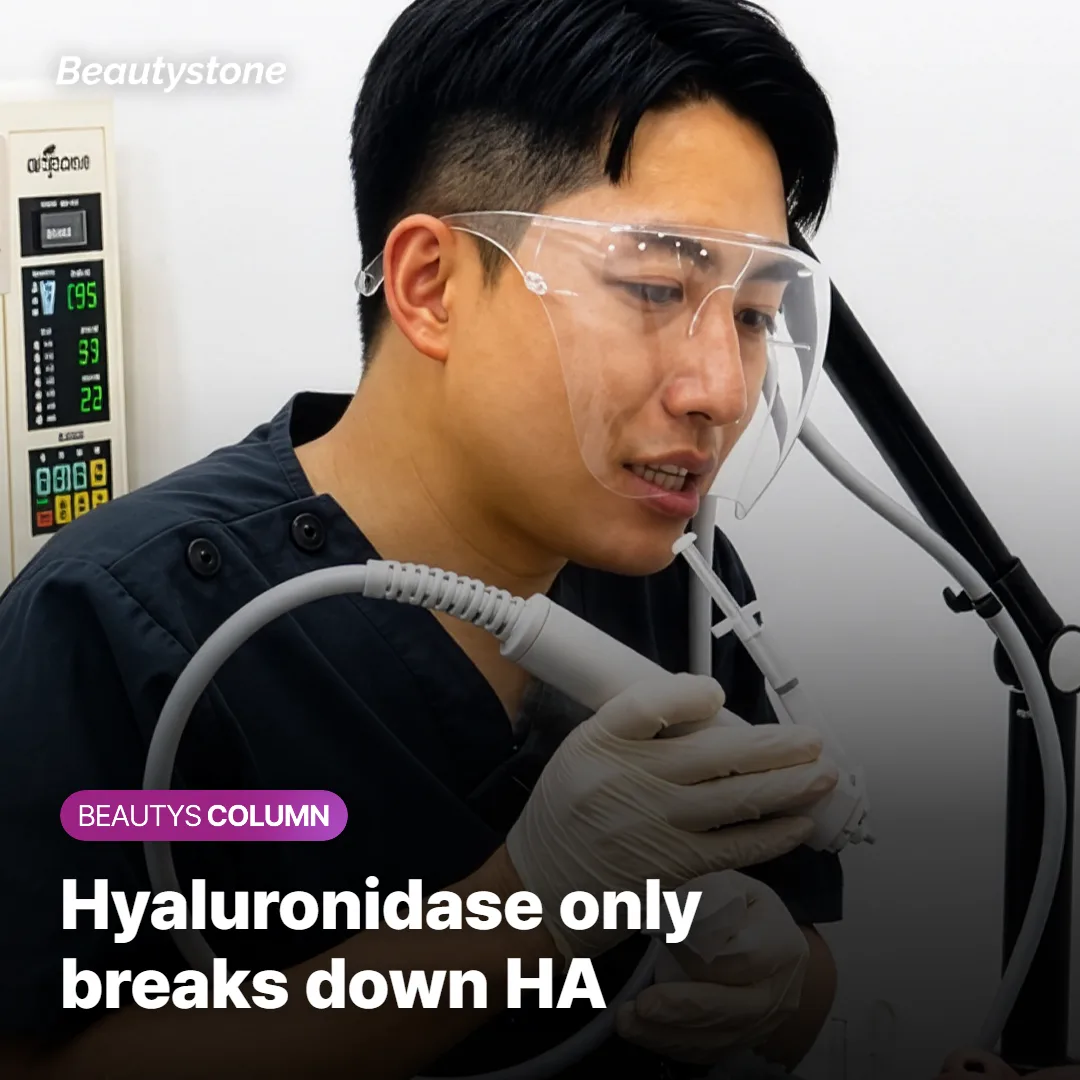
Hyaluronidase is an enzyme, not a solvent. It breaks the bonds holding hyaluronic acid chains together — and that's the whole of it. StatPearls' clinical review of hyaluronidase describes it as an agent that temporarily and reversibly depolymerizes hyaluronic acid. Nothing in that mechanism acts on collagen, elastin, fat, or the structural scaffolding that holds your face up.
One note on regulatory framing. Hyaluronidase is FDA-approved for other medical purposes — helping injected drugs and fluids disperse and absorb — and using it to reverse cosmetic filler is an off-label use. It remains off-label in many countries. Off-label doesn't mean improvised — it's the standard tool for this job worldwide — but you deserve to know that up front.
And one on allergies. That same source puts reported allergy rates at fewer than 0.1% of treated individuals — rare, but not zero. A provider should ask about prior drug allergies, bee sting reactions, and whether you've had this injection before. "Rare" and "no need to check" are different sentences.
Will Dissolving Filler Leave Your Skin Stretched or Saggy?
Here's the mental picture behind the fear: filler inflated the tissue like a balloon, so letting the air out leaves a deflated, empty pouch of skin. It's intuitive. It also blends two different things — volume added by a product, and structural laxity in the skin itself.
What's true: the enzyme isn't selective enough to touch only the filler. Some of the hyaluronic acid your own skin makes near the injection site can be broken down alongside it. That part of the worry is accurate, and providers don't dispute it.
What gets left out: your skin's hyaluronic acid isn't a fixed reserve you can permanently drain. A review of hyaluronan degradation in the skin describes HA metabolism as highly dynamic, with a half-life of roughly one day in the dermis — the pool turns over continuously rather than sitting there waiting to be depleted. What's temporarily reduced gets replenished by ordinary skin activity.
So for the volumes typically used in facial filler, reversing the product isn't generally understood to cause permanent skin stretching. Individual results vary, and your provider's assessment of your specific tissue matters more than any general rule.
One caveat, because it's where the myth draws its power: if you've carried filler for years, or had large volumes placed repeatedly, returning to baseline can reveal laxity that was already developing underneath. Filler masking something isn't the same as an injection creating it — but in the mirror, the two feel identical.
The First Few Days: What You'll Actually See
This is the part most articles skip, and it's why so many people conclude that dissolving ruined them. Two things happen at once: the volume filling the area leaves, and swelling from the injection arrives. The result can look flatter and more tired than you did before you ever had filler — hollow in the treated area, puffy around it, and slightly uneven while the two sides settle.
If you judge your outcome during this window, you'll almost certainly judge it wrong. Treat the first several days as a stretch where the mirror isn't reliable. Injection swelling generally settles over the following days, and the tissue keeps reorganizing after that — how fast depends on the area, the volume, and your own healing, so your timeline may differ from someone else's.
Most of what you feel here is ordinary: tenderness, mild swelling, a little bruising. Some signs are not. Spreading redness, fever, pain that worsens instead of easing, skin that turns dusky or blanched white, or any change in vision — contact your provider immediately or seek urgent care. Those are not wait-and-see symptoms.
If you're traveling for treatment, complications can surface after you've flown home. Plan for follow-up care where you live, and ask before you leave who to contact if something changes.
Which Fillers Hyaluronidase Can't Dissolve
The most important thing to settle before booking reduces to one question: what were you actually injected with?
Hyaluronidase only breaks down hyaluronic acid. If your filler was HA-based — Juvederm and Restylane are the familiar examples — it's reversible. If it wasn't, this injection does nothing for you. The American Society of Plastic Surgeons puts it bluntly in its overview of non-HA biostimulator fillers: HA "can be dissolved or reversed using hyaluronidase, and none of these others can."
The products that cannot be reversed this way include:
- Sculptra (poly-L-lactic acid, PLLA) — a collagen stimulator rather than a gel. No enzyme undoes it.
- Radiesse (calcium hydroxylapatite, CaHA) — a mineral-based particle suspension. No reversal agent exists.
- Ellanse (polycaprolactone, PCL) — a long-acting collagen stimulator; hyaluronidase has no effect on it.
- Juvelook (PDLLA) — also a collagen stimulator. Not FDA-approved in the US; used in Korea under MFDS authorization. Either way, hyaluronidase won't reverse it.
If you're unhappy with one of these, the conversation is different — usually about waiting and softening the look by other means rather than removing it. And if you can't recall the product name, ask the clinic that treated you for your records first. Without it, nobody can tell you whether dissolving is even on the table.
When Can You Refill — and How Do You Decide?
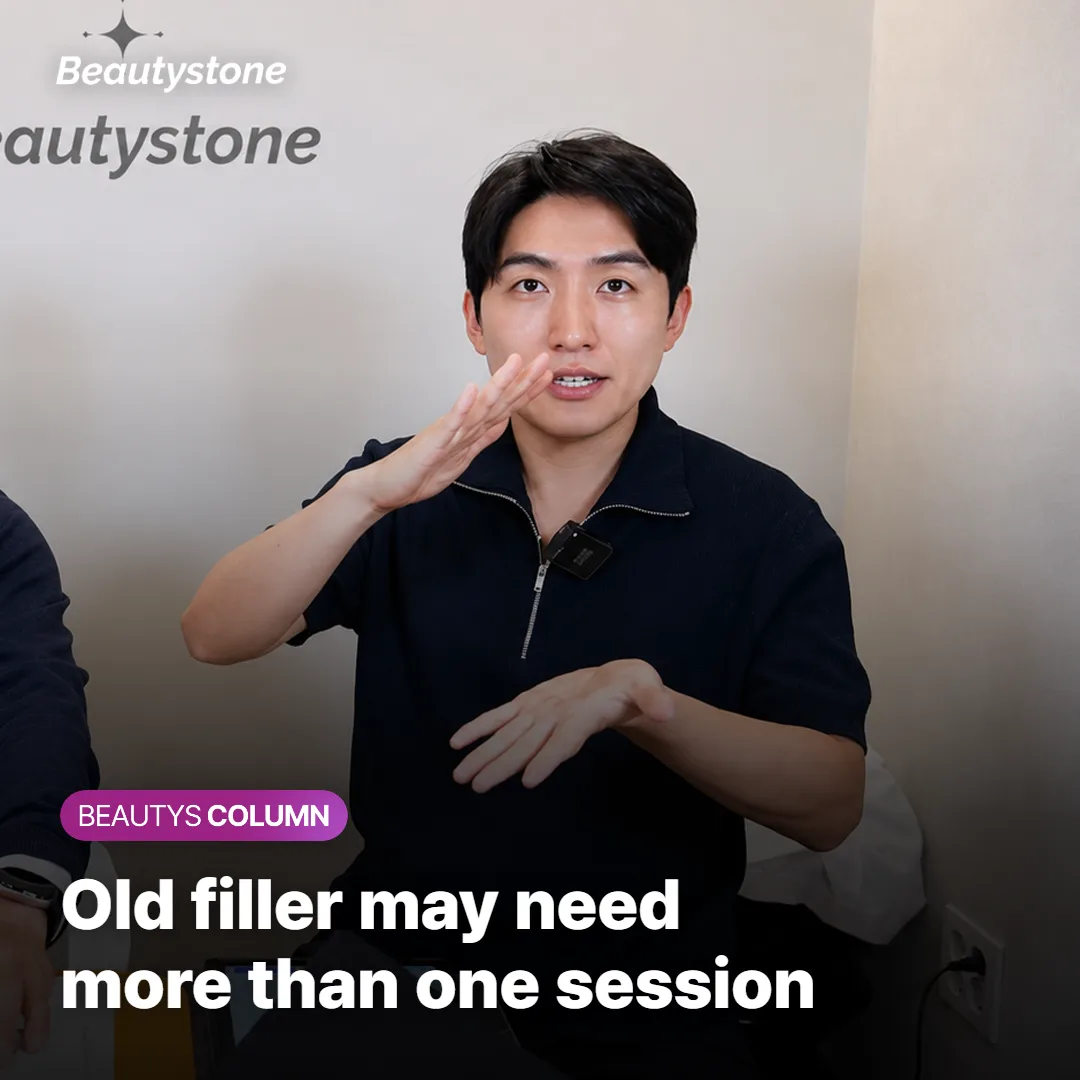
First, one session doesn't always clear everything. Filler that has sat for years, sits in a deeper plane, or was made with denser cross-linking may not release completely on the first pass. Providers commonly reassess and space out an additional session rather than pushing more enzyme in at once. That isn't a failed treatment — it's a staged one, matched to how much product remains.
Second, refilling right away is usually the wrong instinct. In the days just after dissolving, swelling and lost volume overlap, so you can't tell how much volume you're actually short — refilling then means injecting toward a target you can't see. Providers commonly ask patients to let the tissue settle, often on the order of one to two weeks, before making the call. That's a general pattern, not a rule: the right interval depends on the area, the volume, and your healing, so follow your provider's assessment.
Two other things shape the plan: whether the original problem was volume or placement, and whether the result is symmetric once swelling is gone. Going back to the same product in the same amount tends to reproduce the same outcome.
What to Ask at Your Consultation
Vague dread shrinks once you turn it into specific questions. Bring your treatment dates, the areas involved, and the product name if you have it. Then ask:
- "Is what I have even dissolvable?" — confirm whether it's hyaluronic acid first.
- "Do we need to dissolve all of it, or only the part that bothers me?" — partial correction is often an option.
- "How many days before I can fairly judge the result?" — knowing the wait stops you panicking mid-recovery.
- "What does my allergy screening look like?" — especially if you've had this injection before.
The Bottom Line
Here's a quick recap of what we've covered:
- Hyaluronidase breaks down hyaluronic acid specifically — not collagen, elastin, or the structures holding your face up.
- Some of your own hyaluronic acid goes with it, but skin HA turns over continuously and is replenished, so reversing typical filler volumes isn't generally understood to cause permanent stretching.
- The first few days can look worse than before you had filler, because lost volume and swelling overlap. That's a transition state, not your result.
- Non-HA products — Sculptra, Radiesse, Ellanse, Juvelook — can't be reversed with this injection at all, so identifying your product comes first.
- Old or deep filler may need more than one session, and most providers let tissue settle before refilling.
Reversing hyaluronic acid filler is one of the few aesthetic decisions that can be walked back in both directions, which is exactly why it doesn't need to be made in a panic. Individual results vary, and the right plan depends on what you had injected and what you want afterward.
If you're weighing whether to dissolve filler, a proper consultation — one that starts by identifying the product and examining the tissue rather than with a yes or no — is the best first step. Beautystone is a dermatology clinic in Seoul's Hapjeong area — you can explore current offers at /en/promotion.