
Closed Comedones: Squeeze Them or Wait It Out?
Those skin-colored bumps on your forehead are usually closed comedones, and squeezing tends to backfire. Here's how long a retinoid needs, and when extraction makes sense.

Those tiny skin-colored bumps across your forehead or chin are usually closed comedones, also called whiteheads. The opening of the pore is sealed over by a thin layer of skin, so squeezing rarely pushes anything out. What it tends to do instead is split the wall of the pore, and that's how a quiet bump turns into a red, sore pimple. For bumps that are skin-colored and don't hurt, a daily topical retinoid usually does more than your fingers, as long as you give it at least six to eight weeks before you judge it.
Not every bump follows that rule, though. A red and tender spot, a whitehead that's noticeably bigger than the rest and hasn't changed in months, or a cluster that sits only under the eyes each calls for a different next step. In this article, we'll walk through why closed comedones resist squeezing, a quick way to sort your own bumps, how long a retinoid needs and what the studies actually measured, what the first weeks feel like, and when an in-office extraction makes sense. It's written from the perspective of Beautystone Clinic, a dermatology clinic in the Hongdae–Hapjeong area of Seoul.
Why Closed Comedones Won't Pop
A comedone is a hair follicle plugged with dead skin cells and oil. DermNet, the New Zealand dermatology reference, describes closed comedones as whiteheads in which the follicle is completely blocked, and notes that comedones turn up most often on the forehead and chin. A blackhead is the same plug with an open top, which is why its tip looks dark. A whitehead's top is covered, so all you see from the outside is a small white or skin-colored dome.
Because the top is closed, pressure from two fingertips has nowhere to send the contents but sideways. DermNet lists rupture of the follicle from injury, such as squeezing pimples, among the things that make comedonal acne worse. Once packed keratin and oil leak through a torn wall into the surrounding skin, the body reacts to it as something that doesn't belong there, and the spot becomes red, swollen and painful. That's the moment a harmless whitehead becomes an inflamed pimple, and inflamed pimples are the ones that can leave marks.
So the useful question isn't how to get the plug out today. It's how to change the way the pore opening behaves so that new plugs stop forming and the existing ones loosen on their own. That's the job topical retinoids are built for.

Which Bumps to Leave Alone and Which Need a Doctor
Four things sort most bumps: color, pain, size and location. Look in a mirror in good light and match what you see to the rows below.
| What you see | What to do first |
|---|---|
| Skin-colored bumps on the forehead or chin that don't hurt when you touch them | Leave them alone and start a topical retinoid, then reassess after several weeks |
| A small dot with an open, dark tip | That's a blackhead, which has an open pore rather than a sealed one |
| Red, tender, or filled with visible pus | It's already inflamed, so stop touching it and see a doctor |
| Clearly larger than the others and unchanged for months | A larger comedone, which is worth discussing for in-office extraction |
| A cluster only under the eyes that doesn't respond to acne treatment | It may not be acne at all, so have it examined |
If your bumps are skin-colored and painless, there's no rush. Nothing bad happens if they sit there for a few more weeks while a treatment works. If a bump has turned red, hurts when pressed, or gets bigger and warmer over a few days, the pore wall has probably already given way. At that point squeezing only spreads the inflammation, and a doctor's visit is the quicker route to a spot that heals flat.
DermNet defines macrocomedones as facial closed comedones larger than 2 to 3 mm across. Those are the ones that tend to stay put even with good home care, and they're the main reason people end up asking about extraction.

How Long to Give a Topical Retinoid
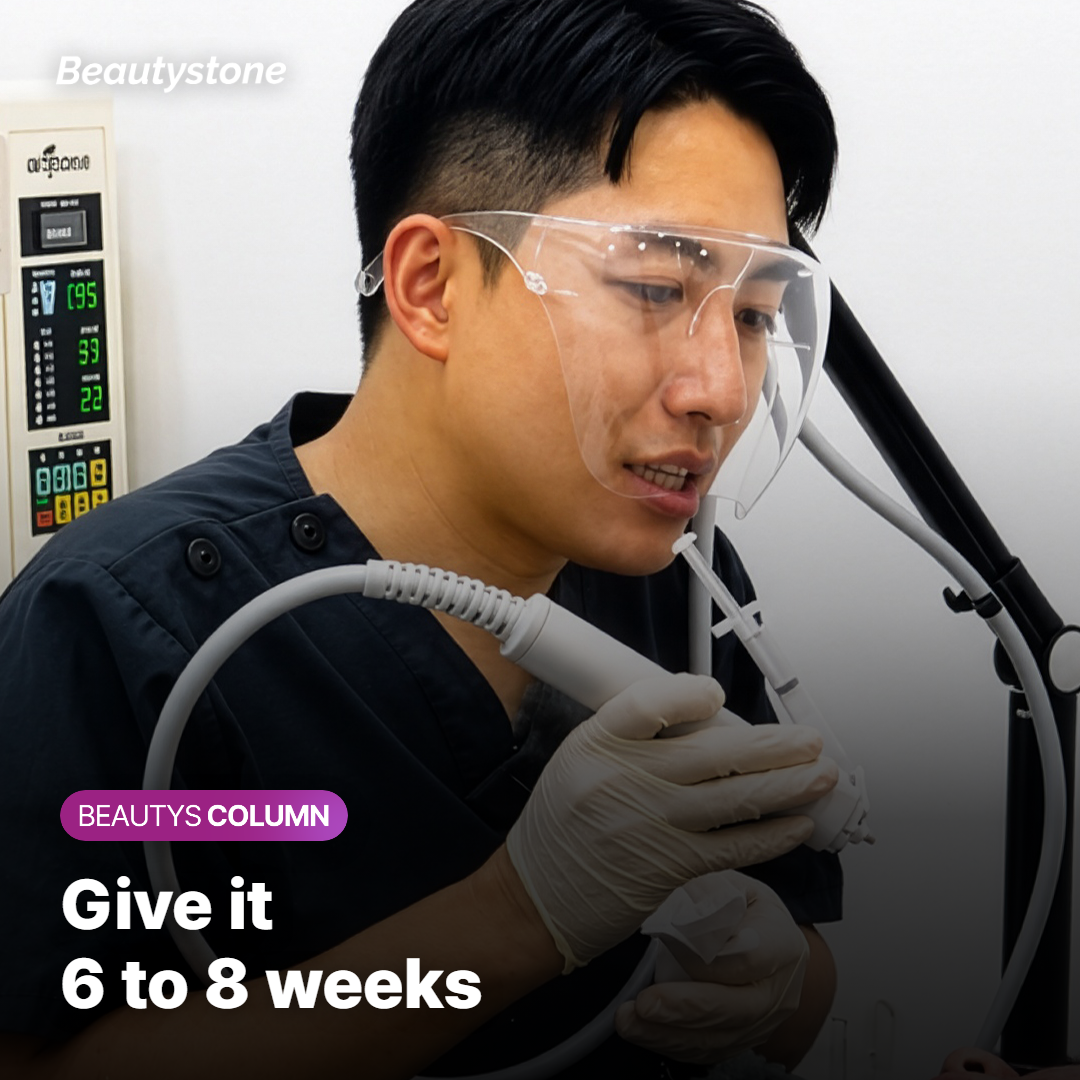
Retinoids are vitamin A–derived medicines that change how skin cells at the pore opening shed, so they stop clumping into plugs. The American Academy of Dermatology explains that a retinoid applied to the skin clears pores and treats blackheads and whiteheads, and it tells patients that it takes at least six to eight weeks before they start to see fewer breakouts.
Longer trials give a sense of how far that goes. In a multicenter trial of 323 people who applied either adapalene 0.1% gel or tretinoin 0.025% gel to the whole face once a day for 12 weeks, non-inflammatory lesions, meaning open and closed comedones counted together, fell by an average of 46% with adapalene and 33% with tretinoin. Adapalene was ahead from weeks 2 and 4 onward, but neither group reached its full result early.
Two details in that number matter. First, it's an average across people with mild to moderate acne, so some people improved more and some less. Second, it counts whiteheads and blackheads together, not whiteheads alone. What it does show clearly is the timeline: the change keeps building through the third month, which is why stopping at week three because nothing seems to be happening throws away most of the benefit.
A practical way to use that timeline is to take a close-up photo of the same area in the same light before you start, and again at around eight and twelve weeks. Day-to-day changes are too small to notice in a mirror, but side-by-side photos make the trend obvious, and they're also useful if you decide to see a doctor later.
Side Effects and Risks of the First Few Weeks
The first weeks are often the hardest part. In the same 12-week trial, both gels caused a mild irritation the authors called retinoid dermatitis, with dryness, redness and flaking, and people tolerated adapalene noticeably better than tretinoin. This is the point where many people quit, before the treatment has had a chance to work.
A few habits make that stretch easier:
- Apply a thin layer to the whole area where bumps appear, not just to individual spots
- If it stings, use it less often for a while instead of stopping completely
- Put on a plain moisturizer first when your skin feels tight, then the retinoid
- Don't stack exfoliating pads or other acid products on the same nights
- Wash gently with your fingertips rather than scrubbing
Mild dryness that settles as the weeks pass is expected. Burning that gets worse instead of better, oozing, or swelling is not. If that happens, stop applying it and get the skin checked before you restart.
Retinoids also make skin more sensitive to the sun for some people, so daily sunscreen is part of the routine rather than an extra. And if you're pregnant, planning a pregnancy or breastfeeding, raise it with a doctor before choosing a retinoid at all, since the right option may be different.

Keeping Them Away, and When Extraction Helps
When the bumps have clearly thinned out, it's tempting to stop. The trouble is that underneath the visible whiteheads there are microcomedones, plugs too small to see that keep forming. In a study that followed 54 people with mild to moderate acne, the median count of these invisible microcomedones on the forehead fell from 319 to 157 over 8 weeks of treatment, and in the 12-week maintenance phase that followed, the 49 people who were randomized and kept using adapalene daily or every other day held the count lower than those switched to a gel without the active ingredient.
That points to a simple rule: when things improve, space the applications out rather than stopping, and if bumps start coming back, move the schedule closer again. In that study, every-other-day use still helped hold the gains.
For the stubborn larger ones, an in-office extraction can help alongside the medicine. The American Academy of Dermatology describes acne extraction as a procedure in which a dermatologist physically removes breakouts, and says it should only be done by a doctor trained in it, to avoid scarring and infection. A case report described a patient whose large comedones had not cleared on oral isotretinoin and resolved without residual scarring after a series of in-office extractions, which fits extraction's role as a supplement to treatment rather than a replacement.
At Beautystone Clinic, the decision about extraction starts with the size and location of the bumps, which products you've been using, and for how long. If you reach out before a visit, these details make that call faster:
- A close-up photo of the area in bright, even light
- The names of any acne products or medicines you've used, and for how many weeks
- Whether any bumps have turned red or painful, and since when
The Bottom Line
Closed comedones resist squeezing because their opening is sealed, and pushing on them is one of the easiest ways to turn them into inflamed pimples. For skin-colored bumps that don't hurt, a topical retinoid used daily and judged after at least six to eight weeks is the better first move. In a 12-week trial, comedone counts dropped by roughly half with adapalene, and the gains kept building over the full three months. Red or painful spots need a doctor rather than fingers, and large whiteheads that stay for months are the ones worth asking about for extraction. If you're not sure which kind you have, a clear close-up photo and the list of products you've tried are the best place to start a WhatsApp conversation with Beautystone Clinic.
Frequently Asked Questions
Q. Will a scrub get rid of closed comedones?
A. Usually not, and it can make things worse. DermNet lists abrasive washing alongside squeezing as an injury that can rupture follicles and add to comedones. A topical treatment that loosens the pore opening is a safer way to deal with the buildup than rubbing it off.
Q. Are the little bumps under my eyes the same thing?
A. Often they aren't. Small firm bumps that sit only under the eyes are frequently milia or syringomas rather than acne, and they don't respond to acne creams. If they haven't changed after weeks of treatment, have them looked at before trying anything else.
Q. Which skincare ingredients should I avoid?
A. DermNet notes that heavy hair pomades and certain ingredients such as isopropyl myristate can contribute to comedones. If your bumps line up along the hairline, keep hair oils and waxes off your forehead, and if you started a new product shortly before the bumps appeared, try leaving it out for a few weeks.
Q. Once a whitehead is extracted, is it gone for good?
A. Not necessarily. The case report on extraction lists incomplete extraction and the comedone coming back among the risks to consider. That's why extraction usually goes together with a topical treatment that keeps new plugs from forming.