
Flat Warts From Shaving: Why They Spread
Flat warts often show up in a line along a scratch or a shaved area. Here's why they spread, how to tell them from milia or syringoma, and what dermatologists use to remove them.

If small, flat bumps keep popping up on your jaw, chin or forehead, and they seem to line up along the path of your razor, there's a good chance you're looking at flat warts. Flat warts are caused by the human papillomavirus (HPV) settling into the top layer of the skin, and the virus can move to the skin next door through the tiny nicks that shaving and scratching leave behind. That's why a few bumps can turn into a row of them over a couple of months.
So the first question isn't really "will these go away if I leave them alone?" It's "are they still spreading right now?" Many flat warts do clear up by themselves, but if you keep shaving over them or picking at them while they're multiplying, you may end up starting treatment with far more bumps than you began with. In this article, we'll walk through why flat warts form in lines, how to tell them apart from milia, closed comedones and syringoma, how long they tend to last without treatment, the options dermatologists use, and why you should mention them before any laser or peel. It's written from the perspective of Beautystone Clinic, a dermatology clinic in the Hongdae–Hapjeong area of Seoul.
Why Flat Warts Show Up in a Line
Flat warts, also called plane warts or verruca plana, are mostly caused by HPV types 3 and 10. They look like small, slightly raised bumps with a smooth, flat top. They're usually skin-colored or light brown, and they tend to appear in groups on the face, the backs of the hands and the shins. The New Zealand dermatology resource DermNet notes that on the shins and in the beard area, the virus is often spread by shaving, which is how one or two warts become many.
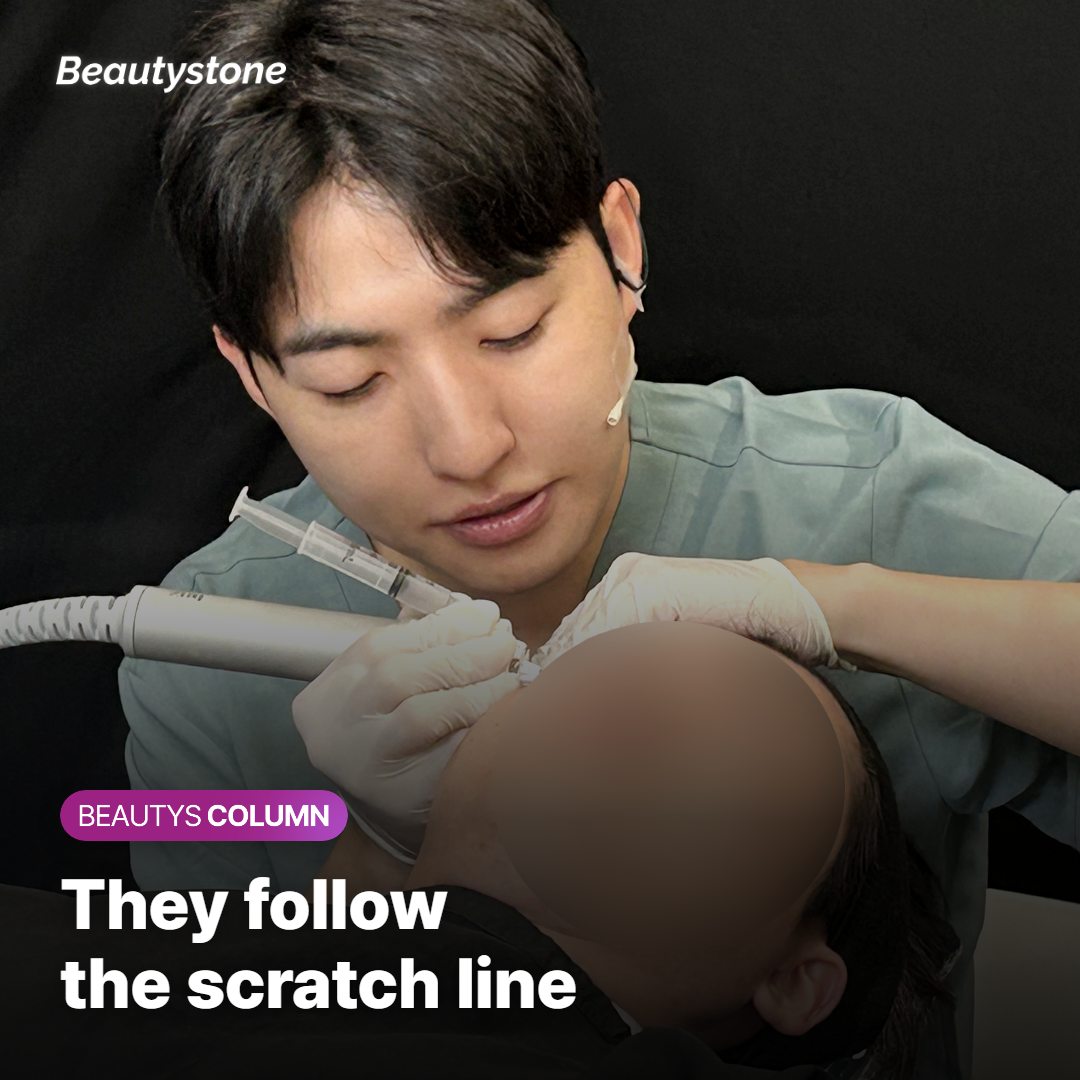
The virus spreads in two ways. One is skin-to-skin contact with another person. The other is autoinoculation, which simply means moving the virus from one spot on your own body to another. When a razor or a fingernail drags across a wart, it can carry virus particles into the fresh scratch it leaves behind. New warts then grow along that scratch, which is why they often line up like beads on a string. Doctors call this a pseudo-Koebner pattern.
There's also a delay that makes the link easy to miss. The incubation period can be as long as twelve months, depending on how much virus got into the skin. A patch you shaved over today might not show new bumps for weeks or even months, so it's easy to blame something else, like a new cleanser or a breakout.
Flat Warts vs Milia, Closed Comedones and Syringoma
Several kinds of small facial bumps look alike at first glance. Here's a rough way to tell them apart by eye.
- Flat warts: small, flat-topped, skin-colored or light brown bumps on the forehead, jaw or backs of the hands, often lined up along a scratch or a shaved area.
- Milia: tiny, firm, pearly white beads, often around the eyes and cheeks, that don't come out when squeezed.
- Closed comedones: rough, clogged pores on the forehead or chin that can release oil and that tend to come and go with your cycle or a change in skincare.
- Syringoma: small skin-colored bumps that usually sit under both eyes in a fairly symmetrical pattern and increase slowly over years.
Looking alone isn't always enough. One case report in the Indian Dermatology Online Journal described syringoma that looked so much like flat warts that a skin biopsy was needed to confirm what it was. If the bumps are under your eyes and don't follow a line, that's a reason to have them checked rather than treat them as warts on your own.
Will Flat Warts Go Away on Their Own?
Often, yes. The American Academy of Dermatology says most warts are harmless and go away on their own when the immune system is healthy, but it can take anywhere from a few months to a few years. DermNet gives figures for warts in children: even without treatment, about half disappear within six months, and around 90% are gone within two years. Warts in adults tend to hang around longer, although they usually clear eventually. People with a weakened immune system, such as organ transplant recipients, are more likely to see them come back.
There's an important catch, though. Until warts have cleared, you can keep spreading them, both to other parts of your face and to other people. So waiting is a reasonable choice only under certain conditions.
If the bumps don't hurt or itch, and the number and shape have stayed the same for several weeks, it's reasonable to watch them while keeping your razor away from that area. On the other hand, if the number is clearly growing, the shape is changing, or they bleed, itch or burn, it's time to see a dermatologist instead of waiting. The American Academy of Dermatology also recommends seeing a dermatologist for warts on the face, warts that change or bleed, and when there are many of them.

How Dermatologists Remove Flat Warts
It helps to know that wart treatments don't kill the virus itself. They work by removing the skin that contains the virus, which is why it can take a few rounds and why warts sometimes return. Different methods play different roles: topical treatments and peels thin away the infected surface across a wider area, while freezing and lasers target individual, well-defined bumps.
- Chemical peel: In a split-face trial of 30 people with widespread facial flat warts, a 35% glycolic acid peel given three times at two-week intervals cut lesions by more than 70% in 15 patients, compared with 8 on the side treated with adapalene gel alone. People who'd had the warts for a shorter time tended to respond better.
- Topical solutions: A randomized study of 60 patients compared 10% potassium hydroxide with 30% trichloroacetic acid applied weekly for up to 12 weeks. The difference in results wasn't statistically significant, and people whose warts fully cleared had no recurrence during three months of follow-up.
- Laser: In a study using a 532 nm laser for up to three sessions two weeks apart, 19 of the 22 patients who finished had more than 75% improvement. Keep in mind that 12 of the original 34 dropped out and there was no comparison group, so the numbers can't be taken at face value.
Oral medication has been studied too, but a systematic review of 15 studies on oral isotretinoin found the results varied too much to support routine use yet. The American Academy of Dermatology also lists over-the-counter salicylic acid as an at-home option only for flat warts that aren't on the face, so it's better not to use those products on facial bumps without advice.
Risks and Safety: Tell Your Doctor Before Laser or Peels
If you're planning a resurfacing treatment such as fractional laser, mention any flat warts first. A case report in Aesthetic Surgery Journal described a woman with flat warts on her nose and between her brows who developed multiple new warts two weeks after laser skin resurfacing. Another case report described flat warts appearing in the treated area six weeks after fractional CO2 laser. These are rare, but a wide fresh wound on the surface of the skin can give the virus a path to spread.
At Beautystone Clinic, the doctor first looks at the bumps closely to separate flat warts from milia or syringoma, then chooses one approach based on how many there are, how far they've spread and how long you've had them. If you have other skin treatments planned, the order is decided at the same time. When you contact us, it helps to share when the bumps first appeared and whether they've increased in recent weeks, whether they're in an area you shave or touch often, and the dates of any upcoming laser or peel treatments.
The Bottom Line
Flat warts can spread along shaving nicks and scratches, which is why they often appear in a line. Many fade on their own over months to years, but while they're still multiplying, the most useful step is to stop shaving over them and stop picking. If they're growing in number, changing shape, bleeding or itching, or if a laser or peel is coming up, get them looked at first so the treatment plan starts with fewer bumps, not more.
Frequently Asked Questions
Q. Can flat warts spread to other people?
A. Yes, they can. The American Academy of Dermatology says warts can spread for as long as you can see or feel them. Wash your hands after touching them, and don't share razors or towels while you have them.
Q. Can flat warts come back after treatment?
A. They can. The virus can stay in the deepest part of the skin's top layer and resurface, so it's worth keeping an eye on the area for a few months after the bumps clear. DermNet notes that recurrence is more common in people who smoke.
Q. My child has flat warts on the face. Do they need treatment right away?
A. Not always. Warts in children clear on their own at a high rate, so if there are only a few and they aren't increasing, many families choose to watch them. If your child keeps scratching them and new ones are forming in a line, it's a good idea to discuss options with a dermatologist.
Q. Can I use an over-the-counter wart remover on my face?
A. It's better not to without advice. The American Academy of Dermatology lists salicylic acid as an at-home option for flat warts that aren't on the face, and facial skin is more easily irritated. A doctor can confirm the bumps are warts and suggest something suited to facial skin.