Xeomin vs. Coretox: Which Is Right for You?
Xeomin and Coretox get treated as interchangeable because both are purified, complex-protein-free toxins — but the price gap, the clinical history behind each, and the right starting point for you are worth understanding before you book.

Wi Young-jin
Chief Director, Myeongdong
If you've searched "Xeomin vs Coretox," you've probably run into conflicting answers — some clinics treat the two as interchangeable, others insist one is dramatically superior. The truth sits somewhere in between, and it has less to do with brand loyalty than most marketing suggests. In this article, we'll cover what actually separates these two toxins, how to confirm the vial in front of you is the real thing, and when it makes sense to switch from one to the other.
What Are Xeomin and Coretox, Exactly?
Xeomin is made by Merz, a German pharmaceutical company, and it's what's often called a "naked" or purified botulinum toxin — the complex proteins that surround the active toxin molecule in older formulations are stripped out during manufacturing. Coretox, made by Huons in South Korea, follows a similar purification concept, removing those same complex proteins through its own process.
Unlike classic toxins such as Botox or Dysport, which retain their surrounding protein complex, both Xeomin and Coretox are built around a shared idea: fewer complex proteins may mean a lower chance of your body building resistance to the toxin over repeated treatments. That shared concept is exactly why people assume the two products are basically identical — and why the price difference feels confusing.
If They're Both "Purified" Toxins, Why Is There Such a Price Gap?
Here's the part that trips people up: sharing a purification concept doesn't mean sharing a track record. Xeomin has been used clinically in Germany since 2005, and in that time, a large body of global research has accumulated around its purification process and its association with lower antibody formation rates. That depth of data is a big part of what you're paying for.
Coretox is newer to the domestic market, launched in South Korea in 2019. It's approved by South Korea's Ministry of Food and Drug Safety, and it uses the same general complex-protein-removal concept — it simply hasn't had as many years to accumulate the same volume of published clinical data. That's not the same as being an inferior product; it's a younger one.
| Category | Xeomin | Coretox |
|---|---|---|
| Manufacturer | Merz (Germany) | Huons (South Korea) |
| Clinical track record | Used since 2005, extensive global data | Launched domestically in 2019, growing data |
| Typical price tier | Higher | Lower |
| Often recommended for | Long-time patients whose results have started fading faster | First-time patients, regular maintenance treatments |
How Do You Know You're Getting the Real Product?
Because Xeomin and Coretox are marketed around the same "purified toxin" concept, some clinics blur the line further than they should. It's not unheard of for a provider to advertise "Coretox with Xeomin-level results" while actually injecting a completely different, unverified product. That's where verifying authenticity becomes non-negotiable.
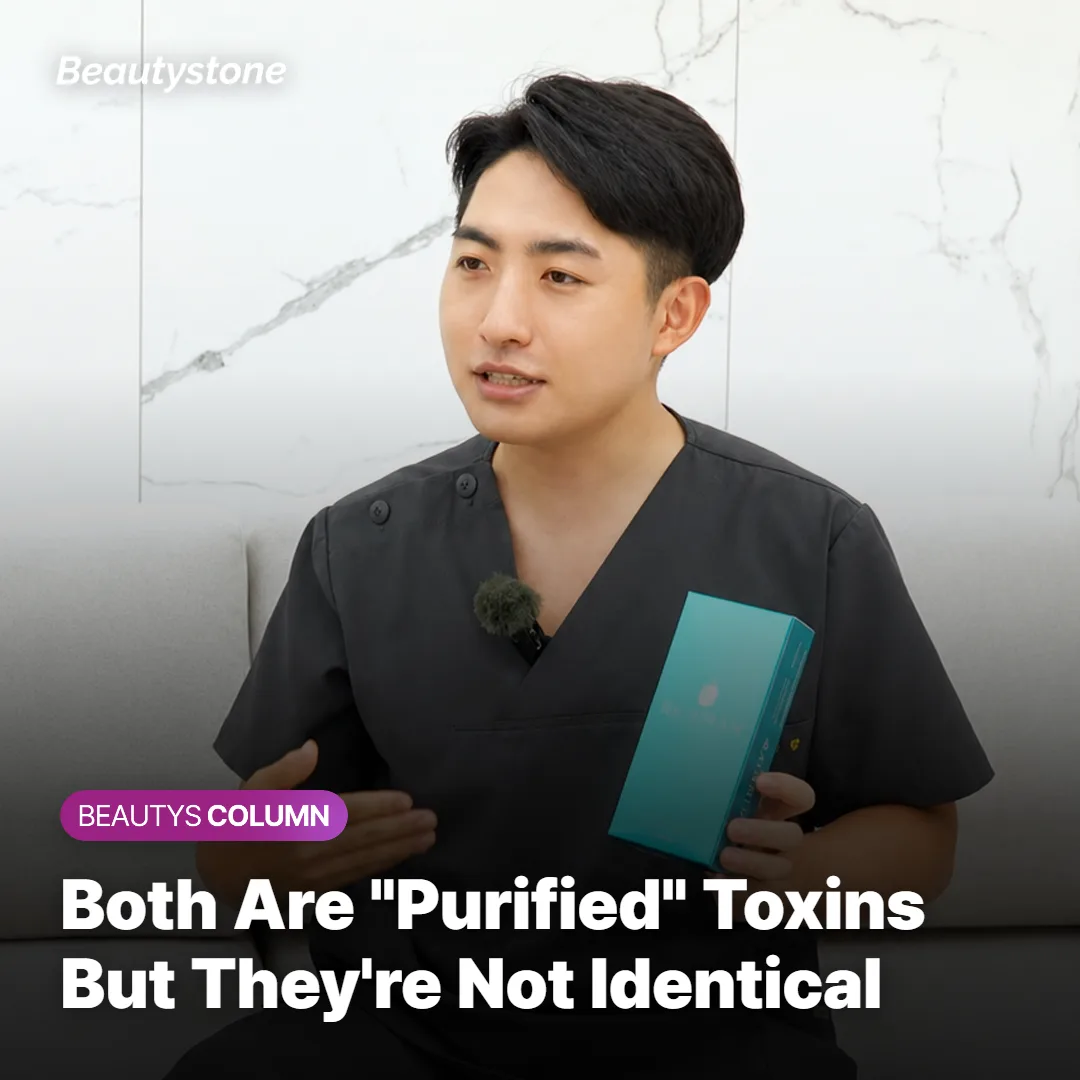
The check is simple: ask your provider to show you the vial before treatment starts. A genuine Xeomin vial carries the Merz logo along with "Xeomin" printed directly on the label. A genuine Coretox vial carries the Huons logo with "Coretox" printed on it. If a clinic hesitates or can't produce the vial, that's a reason to ask more questions before you agree to anything.

Who Should Start With Coretox — and Who Actually Needs Xeomin?
Two patients from last month illustrate how differently this plays out in practice.
A 41-year-old patient came in asking specifically for Xeomin to slim her jawline. "I need Xeomin for my jaw — I've heard it's the only one that really works," she said. She'd already had botulinum toxin injections four or five times at other clinics, and on examination, her masseter muscle wasn't particularly overdeveloped to begin with — it had already thinned out considerably from the repeated treatments. Adding more toxin, Xeomin or otherwise, risked over-thinning the muscle and creating an unnatural, uneven expression. The treatment was declined. Instead, the recommendation was to wait roughly six months and get reassessed before considering anything further. She was surprised at first, but understood once the reasoning was explained, and left without treatment that day.
A 46-year-old patient, by contrast, was getting her frown lines treated for the very first time. She started conservatively with 4 units of Coretox. The result held up well, the cost was manageable, and she's stayed on a four-month maintenance cycle ever since. There was no reason for her to start with the pricier option — the concept worked exactly as intended at the lower price point.
If it's your first treatment, there's rarely a good reason to jump straight to the more expensive product.
Switching From Coretox to Xeomin: Does It Actually Improve Results?
This is one of the most common questions in consultations, and the honest answer is: it depends on your history, not on which product sounds more premium.
If you're new to toxin injections, or if Coretox has been working well for you, switching to Xeomin typically won't produce a dramatically different result — the underlying purification concept is the same in both products, so there's no built-in upgrade waiting on the other side. Where switching does tend to make a difference is for patients who've been on Coretox regularly for a year or two and start noticing their results fade noticeably faster than they used to. In that specific pattern, moving to Xeomin sometimes restores some of that lost duration.
There's no blanket rule that says you should switch after a certain number of sessions. It comes down to watching your own pattern and adjusting from there — ideally with your provider, not a forum thread.
Side Effects and Safety: Does It Matter Where the Toxin Is Made?
A lot of people assume that because Coretox is domestically produced, it must come with more risk than a German import. That assumption doesn't hold up. Coretox has full approval from South Korea's Ministry of Food and Drug Safety, and its purification process follows the same complex-protein-removal concept that's become the global standard for lower-resistance toxins. Reported side effect profiles for Coretox are broadly comparable to Xeomin's in clinical practice — mild bruising, temporary swelling, and occasional headache are the most commonly reported reactions with either product, and these usually settle within a few days. If bruising spreads unusually or you notice drooping that doesn't improve, contact your provider right away.
What actually determines your outcome and your safety isn't the country printed on the vial — it's whether your injector is experienced and whether the product in that vial is genuinely what the label says. Country of manufacture is largely a distraction from the two questions that actually matter.
How Much Does It Cost, and Is the Price Gap Worth It?
Xeomin typically runs close to double the price of Coretox per session, and pricing varies by clinic, treatment area, and unit count, so it's worth getting a specific quote rather than assuming a fixed number. Whether that gap is worth it really depends on what you're optimizing for. If you place a lot of value on a long, heavily documented clinical history, Xeomin's premium can feel justified. If you're treating regularly and want to keep costs manageable over time, Coretox is the more pragmatic starting point.
In practice, a common approach for first-time patients is to start with Coretox, then reassess after a year or more of regular treatment — if the effect starts fading faster than it used to, that's the moment to talk to your provider about switching to Xeomin. If you're considering either option, a consultation is the most reliable way to get pricing specific to your case — current offers are listed at /en/promotion.
The Bottom Line: Start Simple, Upgrade Only If You Need To
- Xeomin and Coretox are both "purified" toxins built around the same complex-protein-free concept, but they come from different manufacturers with very different track records.
- If it's your first treatment, Coretox is typically the practical place to start — there's rarely a reason to pay the Xeomin premium out of the gate.
- Switching to Xeomin tends to matter most for patients who've been on Coretox regularly for a year or more and notice their results fading faster than before.
- Always ask to see the vial before treatment. Authenticity, not the brand name alone, is what actually protects you.
Like any injectable, both options come with trade-offs, and individual results vary depending on your muscle strength, treatment history, and how your body responds over time. Ultimately, the choice depends on your goals, your budget, and how your results have played out so far. If you're considering Xeomin or Coretox, a consultation is the best way to find out what fits you. Beautystone is a dermatology clinic in Seoul's Hapjeong area — see current offers at /en/promotion.
Frequently Asked Questions
Q1. Does switching from Coretox to Xeomin hurt more, or feel different during the injection?
No — the injection technique and sensation are essentially the same regardless of brand. Any mild pinching or pressure typically fades within minutes, and numbing cream can be used beforehand if you're sensitive.
Q2. How long does Xeomin or Coretox typically last?
Most patients see results lasting around three to four months, though this varies based on muscle strength, treatment area, and how many times you've been treated before. Individual results vary.
Q3. How much does Xeomin or Coretox cost?
Pricing varies by clinic, treatment area, and unit count — Xeomin is typically priced higher than Coretox given its longer track record. A consultation is the best way to get an accurate quote for your specific case.
Q4. When can I wear makeup after a Xeomin or Coretox treatment?
Most providers recommend waiting at least four to six hours before applying makeup to the treated area, and avoiding rubbing or massaging the spot for the rest of the day.