Botox vs. Filler: What's the Difference?
Botox relaxes the muscle behind a wrinkle. Filler adds back volume that's been lost. They solve two different problems, and using the wrong one for a given line can make it look worse, not better.

If you've ever sat down for a consultation and asked for filler in your forehead when what you actually needed was Botox, you're in good company. It's one of the more common mix-ups patients bring in, and it's an easy one to make, since both treatments are injectables aimed at the same general goal: smoother skin.
The truth is, Botox and filler work in completely different ways, and using the wrong one for a given wrinkle can leave you disappointed or, in some cases, make things look worse instead of better. In this article, we'll cover what actually separates Botox from filler, how to tell which one a specific wrinkle needs, whether you can get both on the same day, and which one carries the bigger safety risk.
What's the Real Difference Between Botox and Filler?
The short answer: Botox relaxes the muscle causing a wrinkle, and filler adds volume to a space that's lost it. They solve two different problems, and mixing them up is one of the most common injectable mistakes we see.
Botox is a purified form of botulinum toxin that temporarily blocks the nerve signal reaching a targeted muscle, so the muscle can't contract as forcefully. Filler, most often made from hyaluronic acid, is injected directly into a hollow or crease to physically fill the space. One changes how a muscle behaves. The other changes what's underneath the skin. Here's how they stack up side by side.
| Category | Botox | Filler |
|---|---|---|
| Mechanism | Relaxes an overactive muscle | Adds volume to a hollow or crease |
| Best For | Expression lines (forehead, between the brows, crow's feet) | Volume loss (cheeks, nasolabial folds, lips) |
| How Long It Typically Lasts | 3 to 6 months | 6 months to about a year and a half |
| Injection Depth | Muscle layer | Dermis to just above the bone, depending on the area |
How Does Botox Work?
Botox works on the nerve-to-muscle connection, not on the skin itself. Once it's injected into a specific muscle, it blocks the signal that tells that muscle to contract, so the muscle relaxes and the skin above it stops folding into a crease.
That's why Botox is most effective on expression lines, the ones that show up when you frown, squint, or raise your eyebrows and fade once your face relaxes. Results usually start showing within three to five days and settle into their full effect around the two-week mark, then typically last three to six months before muscle activity gradually returns.

How Do Dermal Fillers Work?
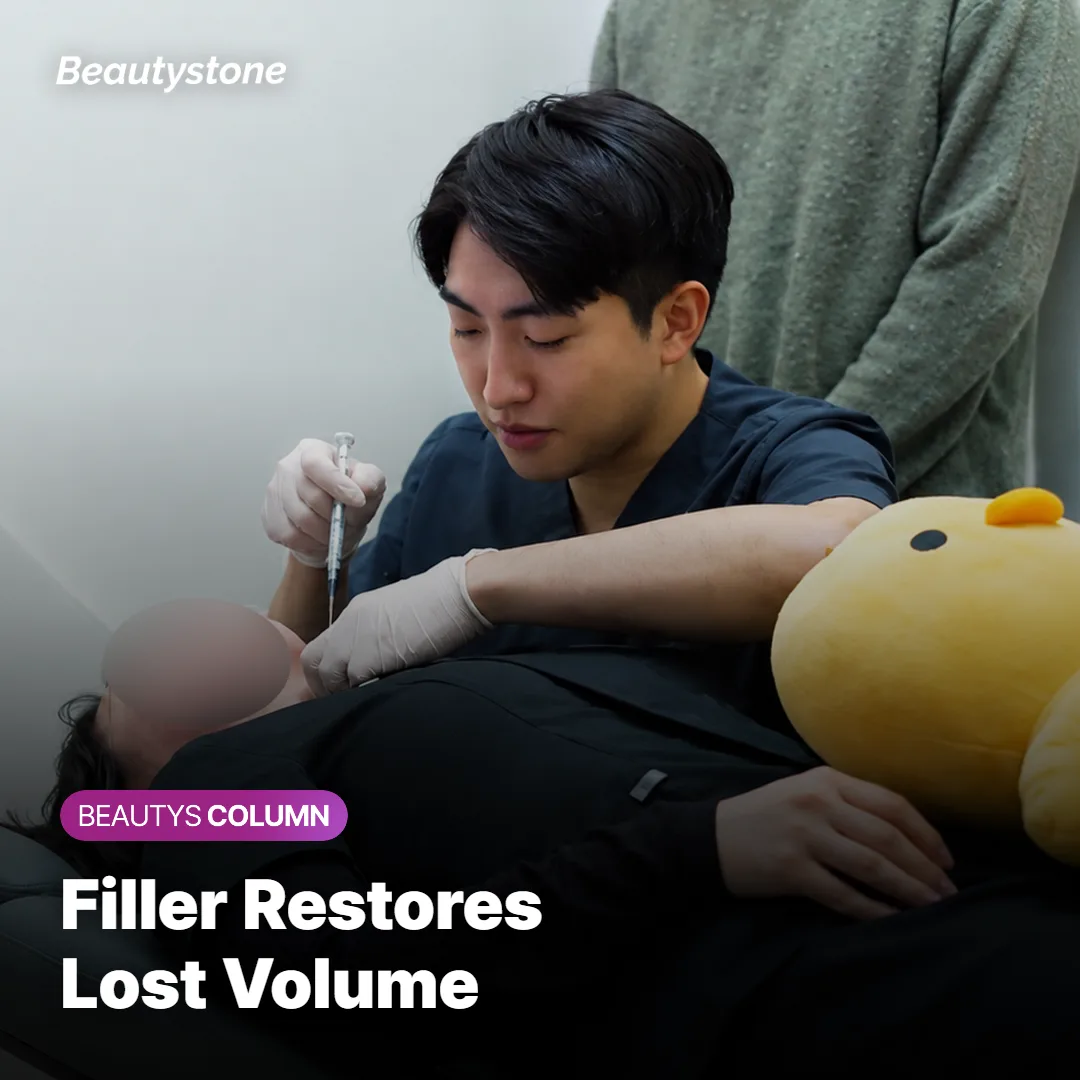
Filler doesn't touch muscle activity at all. It's placed directly into or under the skin to physically add volume where it's been lost, whether that's a deep static crease, hollow cheeks, or thin lips.
Most fillers used for facial rejuvenation are made from hyaluronic acid, a substance your skin already produces naturally to hold onto moisture and support structure. Depending on the area, a provider might place it in the mid-dermis for fine lines, or much deeper, closer to the bone, for structural volume like cheeks or jawline. That depth difference is a big part of why filler technique varies so much by area.
Because filler adds physical volume rather than relaxing muscle, it does something Botox can't: it changes the underlying shape of an area, not just the surface movement.
Do You Need Botox, Filler, or Both?
This comes down to one distinction that trips a lot of people up: whether a wrinkle is dynamic or static. Dynamic wrinkles only show up when a muscle contracts, like the lines between your brows when you frown. Relax your face and they mostly disappear. Static wrinkles are visible all the time, even at rest, because the skin itself has lost structural support.
Here's why that matters. If a provider fills a dynamic line with volume while the muscle underneath is still fully active, the filler tends to bunch and shift every time you make an expression, which can look more obvious, not less. That line usually needs Botox first, not filler.
Static wrinkles work the opposite way. Since there's no muscle overactivity driving them, Botox won't do much there. They need something to physically fill the lost volume, which is where filler comes in. A lot of patients end up needing both in different areas, treated in the right order rather than lumped together.
Can You Get Botox and Filler on the Same Day?
Technically, yes. It's not unsafe to receive both in one visit. That said, we don't usually recommend it.
Botox takes about two weeks to fully settle in, and filler placement decisions, especially around active muscles, are easier to get right once that settling has happened. If filler goes in while the muscle is still fully active, a provider may end up using more than necessary, and once the Botox kicks in and the muscle relaxes, that area can start to look overfilled.
Because of that, many providers prefer Botox first, then filler two to three weeks later once the muscle has settled. It's a sequencing preference more than a hard safety rule, so ask your provider what makes sense for your specific case.
Side Effects & Risks: What's Riskier, Botox or Filler?
A lot of people assume filler is the gentler, safer option since it's just volume rather than a toxin. In practice, that assumption doesn't really hold up.
Botox's most common side effects are temporary and mild: some bruising at the injection site, a mild headache, or in rare cases a slightly asymmetric brow or a temporary eyelid droop that resolves as the effect wears off. Serious complications from properly administered Botox are uncommon.
Filler carries a rarer but more serious risk: vascular occlusion, where filler is accidentally injected into or compresses a blood vessel, cutting off circulation to the surrounding tissue. That's part of why the emergency injectable cases a clinic sees tend to involve filler more often than Botox.
- Unusual, escalating pain during or right after a filler injection, well beyond typical injection discomfort.
- Skin that turns pale, dusky, or mottled near the injection site.
- A provider who keeps hyaluronidase on hand (the enzyme that dissolves hyaluronic acid filler) can reverse an occlusion quickly, so it is worth asking beforehand whether your provider is equipped for that.
If you notice spreading discoloration, worsening pain, or skin that feels unusually cool after a filler treatment, seek medical care right away rather than waiting to see if it resolves on its own.
How Much Does It Cost?
Cost is one of the harder things to pin down for either treatment, since it depends heavily on the area treated, the product used, and how much you need. Botox is generally priced per treatment area or by unit, while filler is priced per syringe, so the two aren't directly comparable dollar for dollar.
Frequency affects the math too. Botox typically needs a repeat treatment every three to six months, while filler tends to last closer to six months to a year and a half depending on the product and area, so the per-visit price doesn't tell the whole story on its own.
Because pricing varies so much clinic to clinic and case to case, a consultation is really the most reliable way to get a number that applies to you. Current offers are listed at /en/promotion if you want a starting point.
The Bottom Line
Botox and filler solve two different problems: Botox relaxes the muscle behind an expression line, and filler restores volume that's been lost. Neither one is a universal upgrade over the other, and using the wrong one for a given wrinkle can genuinely make things look worse instead of better.
Dynamic wrinkles, the kind that show up with movement, usually respond best to Botox. Static wrinkles, the kind that stick around at rest, usually need filler. And when it comes to safety, filler's rare but serious complication risk is arguably the bigger one to understand going in, not Botox's.
Like most things about your skin, the right combination and timing depends on your specific face, so it's worth thinking of these as complementary tools rather than competing ones.
If you're trying to figure out whether your wrinkles need Botox, filler, or both, a consultation is the best way to find out what actually fits your face. Beautystone is a clinic in Seoul's Hapjeong area, and current offers are listed at /en/promotion.
Frequently Asked Questions
Q1. Can I get Botox and filler on the same day?
Technically, yes, it's not unsafe to receive both in one visit. Most providers prefer to sequence them instead, though, giving Botox about two to three weeks to settle before adding filler. That way the filler amount is based on how your muscle actually behaves once relaxed, rather than risking an overfilled look once the Botox kicks in.
Q2. How long do Botox and filler results last?
Botox typically lasts three to six months before muscle activity gradually returns. Filler tends to last longer, usually six months to about a year and a half depending on the product and the area treated. Individual results vary, and areas with more movement tend to metabolize both faster.
Q3. Is filler really safer than Botox?
Not necessarily. Botox's most common side effects are mild and temporary, like bruising or a brief headache. Filler's side effects are usually mild too, but it carries a rarer, more serious risk called vascular occlusion, where filler compresses or enters a blood vessel. That risk doesn't exist with Botox, which is one reason filler complications tend to be the more urgent ones in a clinic setting.
Q4. How do I know if I need Botox or filler?
A simple starting point: relax your face completely and check the mirror. If the line disappears, it's likely a dynamic wrinkle that responds well to Botox. If it's still visible at rest, it's probably a static wrinkle that needs volume from filler instead. A lot of people have some of both, so a professional assessment gives you a more precise answer than a mirror check alone.