Don't Stop Retinol Before Your Laser? 1 Real Risk
Retinol thins and speeds up turnover of the skin's outer layer, so most providers recommend pausing it for a few days before a laser treatment and waiting for skin to settle before restarting.

If you've got a laser appointment on the calendar, there's a good chance you're also wondering what to do with your regular retinol routine. Do you stop a few days out, or is it fine to keep going right up until the appointment? And once the treatment's done, how soon can you start again without risking extra irritation?
The short version: most providers recommend pausing retinol for a few days before a laser treatment, then waiting until your skin barrier has settled before working it back in. But the exact timing isn't one-size-fits-all, and a lot of the advice floating around, "stop for a full month" on one end, "you can use it again the very next day" on the other, isn't especially helpful without more context. In this article, we'll cover why retinol timing matters before a laser treatment, what changes depending on whether you pause it or not, how your skin typically recovers stage by stage afterward, and the signs that tell you it's safe to pick retinol back up.
What Counts as "Retinol," and Why Does Timing Matter?
Retinol belongs to a broader family of vitamin A derivatives, often grouped together as retinoids, that also includes prescription-strength options like tretinoin and adapalene. They all work in a similar way: speeding up cell turnover at the skin's surface while encouraging collagen production deeper in the dermis. That's exactly what makes retinol useful for texture and fine lines day to day, and it's also exactly why timing matters once a laser treatment enters the picture.
A closer look at how retinoids restructure the stratum corneum while stimulating dermal collagen synthesis shows how consistently these ingredients act on skin's outer layer over time, and that outer layer happens to be the same one a laser interacts with first. Under everyday use, that's a feature. Right before a laser session, it's a variable worth accounting for.
How Retinol Affects Your Skin During a Laser Treatment
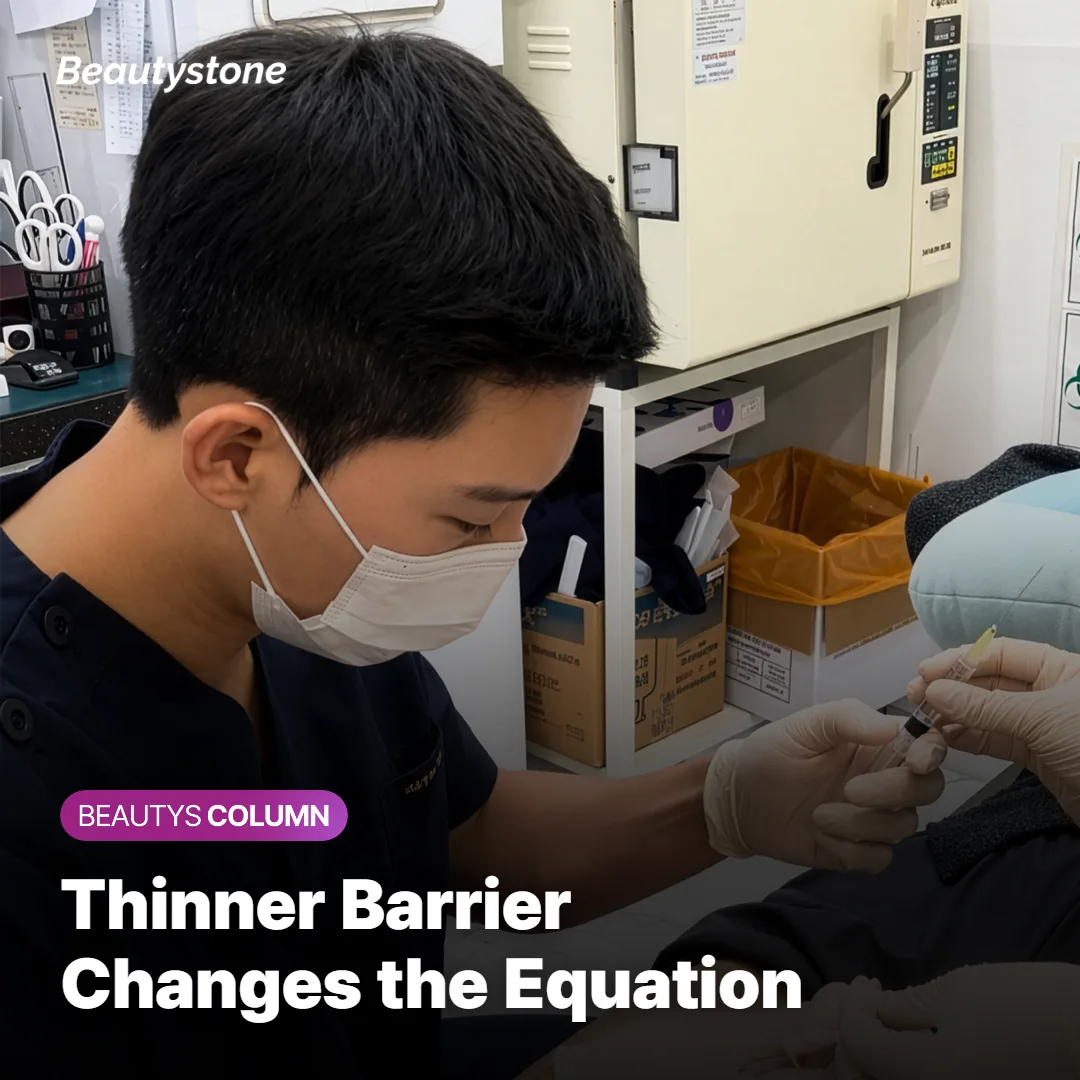
Laser treatments work by creating controlled, targeted damage in the skin to trigger a healing and rebuilding response, and how that plays out depends partly on how thick and intact the outer skin barrier is going in. Retinol thins and speeds up turnover of that outer layer, the stratum corneum, so skin that's been using it consistently tends to start out with a thinner surface barrier than skin that hasn't.
That's not automatically a problem on its own, but it does shift the equation. With a thinner starting barrier, the same laser settings can end up delivering more effective intensity than intended, which can translate into more noticeable redness, more sensitivity, or a longer recovery window than expected. It's less that retinol is unsafe before a laser and more that it changes your skin's baseline, which is why pausing it beforehand tends to make outcomes easier to predict.
Stopping Retinol vs. Not Stopping: What Changes
Skin that's had a break from retinol before a laser treatment and skin that hasn't tend to respond a little differently once the treatment is over. Neither path is automatically wrong, but the difference shows up in how predictable recovery feels. Here's a general side-by-side.
| Category | Paused Retinol Beforehand | Kept Using Retinol |
|---|---|---|
| Stratum Corneum Thickness | Partially recovered before treatment | Still thinner going into treatment |
| Post-Laser Sensitivity | Tends to be milder | Can feel sharper or more pronounced |
| Redness and Dryness Duration | Usually settles faster | Can linger longer |
| How Predictable Recovery Feels | Relatively consistent | Varies more from person to person |
Generally speaking, pausing retinol ahead of time tends to make recovery easier to anticipate. That said, there's no single cutoff that applies to everyone. How long you should pause depends on the strength of the retinol you've been using, how sensitive your skin runs day to day, and which laser you're scheduled for. Patient-education resources on laser resurfacing, including DermNet NZ, describe the treatment as working by triggering controlled regeneration at the skin's surface, which is part of why keeping your skin's starting condition consistent beforehand tends to support a smoother outcome.

Your Skin's Recovery Timeline After the Laser
If you paused retinol beforehand, irritation from the laser itself tends to follow a fairly predictable curve afterward, even though the exact pace varies from person to person. The first day or two after treatment is usually when redness and mild stinging are at their most noticeable. This is the window to keep things simple: gentle moisturizer, sun protection, and a break from every active ingredient, retinol included.
By days three to five, the surface typically starts settling down, and that tight, drawn feeling tends to ease up noticeably. Around the one-week mark, most people find they're close to back to their everyday skincare routine, minus the actives they're still holding off on.
Restarting retinol is really more about your skin's signals than the calendar. Once redness has mostly faded, moisturizer doesn't sting going on, and you're not shedding visible flakes anymore, it's usually reasonable to work retinol back in slowly, starting at a lower concentration and every other day rather than nightly. The American Academy of Dermatology's patient guidance on retinoids covers similar ground on easing actives back into a routine gradually, and it's worth checking in with your own provider about timing, since the right restart window can shift depending on which laser you had done.
Signs Your Skin Is Ready for Retinol Again
Rather than counting to a fixed number of days, it helps to run through a short mental checklist before you reintroduce retinol. Is the redness from your treatment mostly gone? Does your moisturizer go on without stinging? Has visible flaking or peeling stopped? If you can answer yes to all three, your skin's barrier has likely recovered enough to handle a gentle reintroduction.
When you do restart, easing back in beats jumping straight to your old routine. A lower concentration applied every other night, rather than nightly at full strength, gives your skin a chance to confirm it's tolerating the ingredient again before you ramp back up to where you left off.
Side Effects and Risks to Watch For
Using retinol too close to a laser treatment, or restarting it too soon afterward, can show up as extra redness, flaking, or a stinging sensation that lasts longer than the usual recovery window. Most of this is uncomfortable rather than serious, and it typically settles on its own once you back off the retinol again and stick to gentle, barrier-supporting care for a few days.
That said, a few signs are worth taking more seriously. If redness spreads well beyond the treated area, if you notice blistering or open skin, or if discomfort gets worse instead of better several days in, contact your provider right away rather than waiting to see if it resolves on its own. It's also worth mentioning your retinol routine, including how recently you used it, at your pre-treatment consultation so your provider can factor it into your plan.
The Bottom Line
- Retinol thins and speeds up turnover of the skin's outer layer, which is why most providers recommend pausing it for a few days before a laser treatment.
- Skin that's had a break from retinol beforehand tends to have milder, more predictable post-laser irritation than skin that hasn't.
- Recovery generally eases from the most sensitive first day or two, through days three to five, to close to normal around the one-week mark.
- Restarting retinol is a matter of watching your skin's signals, not counting days, and easing back in with a lower concentration on alternating nights.
Like most pre- and post-procedure decisions, there's no single number of days that works for everyone here. Like any procedure, laser treatments come with some trade-offs around timing, and how long you should pause or wait to restart depends on your retinol strength, your skin's usual sensitivity, and which laser you're having done. Ultimately, the choice depends on your skin, your routine, and what your provider recommends for your specific treatment.
If you're planning a laser treatment and aren't sure how to handle your retinol routine around it, a consultation is the best way to find out what fits you. Beautystone is a clinic in Seoul's Hapjeong area, and current offers are listed at /en/promotion.
Frequently Asked Questions
Q1. How many days before a laser treatment should I stop using retinol?
There's no single number that applies to everyone. Many providers suggest pausing for several days beforehand, but if you've been using a higher concentration or your skin runs sensitive, a longer break tends to be safer. The laser you're having also plays a role, so it's worth confirming exact timing with your provider when you book.
Q2. When can I start using retinol again after a laser treatment?
Go by your skin's signals rather than a fixed date. Once redness has mostly faded, moisturizer doesn't sting when you apply it, and you're not shedding flakes, it's usually reasonable to reintroduce retinol at a lower concentration every other night. Jumping straight back to your full nightly routine too soon can bring irritation right back.
Q3. I forgot and used retinol the night before my laser appointment. Is that a problem?
One missed pause doesn't automatically mean your appointment has to be rescheduled. Your skin may be a bit more reactive than usual, though, so mention it honestly at your pre-treatment consultation. Your provider can look at your skin and adjust the treatment intensity or timing if needed.
Q4. What about other active ingredients like AHAs, BHAs, or vitamin C before a laser?
Exfoliating acids and high-strength vitamin C are generally treated the same way as retinol: worth pausing for a few days beforehand, since they can also leave the skin's surface more reactive. If you're using several actives in your routine, it's helpful to walk your provider through all of them so you get guidance on when to pause each one.