

CellREDM vs. RE2O: What's Really Different?
CellREDM and RE2O both belong to a newer category of ECM skin boosters, but they're processed into different particle forms — and that difference shapes how each one spreads and settles.

If you've been reading up on skin boosters lately, you've probably run into a term that wasn't part of the conversation a couple of years ago: ECM booster. CellREDM and RE2O keep coming up together in the same breath, both described as coming from donor dermal tissue — which makes it easy to assume they're basically interchangeable. They're not quite the same thing, and the difference comes down to how each one is processed. In this article, we'll cover what makes ECM boosters different from the skin boosters you already know, how CellREDM and RE2O actually differ, who tends to be a good fit, and what a normal recovery looks like.
What Are ECM Skin Boosters, and How Are They Different?
A classic skin booster — think hyaluronic acid or a polynucleotide formula — works by topping up one specific ingredient and letting your skin do the rest. An ECM booster takes a different approach. Instead of a single ingredient, it delivers the extracellular matrix (ECM)* itself: the structural scaffold made of collagen, elastin, and water-binding components that holds skin together in the first place. That's the core distinction. You're not replacing one thing — you're reintroducing the framework.
*Extracellular matrix (ECM): the network of proteins and other components that sits between skin cells and gives the skin its structural support. Collagen and elastin are two of its main building blocks.
Both CellREDM and RE2O are built on human acellular dermal matrix (hADM) — donor dermal tissue that's had its cellular material removed while its structural scaffold stays intact. According to research on acellular dermal matrix scaffolds, stripping out the cellular components while preserving the native ECM architecture is what keeps the risk of an immune reaction low. That's a meaningfully different mechanism than a typical filler or booster, and it's part of why results tend to build gradually rather than show up overnight — the scaffold has to settle in and get incorporated by your own tissue first.
CellREDM vs. RE2O: What Actually Sets Them Apart
Since both products start from the same base material, the real differences show up in how that material gets processed and delivered. CellREDM is manufactured as an ultra-fine, micronized particle, and the brand's pitch centers on that particle size supporting an even, consistent spread once it's injected. RE2O, on the other hand, is processed into a powder form, with the manufacturer emphasizing its own proprietary purification method. Same category, different engineering choices.
| Category | CellREDM | RE2O |
|---|---|---|
| Base material | Human acellular dermal matrix (hADM) | Human acellular dermal matrix (hADM) |
| Particle form | Ultra-fine, micronized particles | Powder form |
| What the brand emphasizes | Even, consistent distribution | Proprietary purification process |
| Core components | Collagen, elastin, water-binding elements | Collagen, elastin, water-binding elements |
| When results build | Weeks to months | Weeks to months |
Neither particle form has a clear edge on paper — the honest answer is that the format matters less than how it's actually placed in your skin, how many sessions you get, and how your own tissue responds along the way. It's easy to get caught up comparing brand names, but the injection plan your provider builds around your skin tends to matter more than which product you land on.
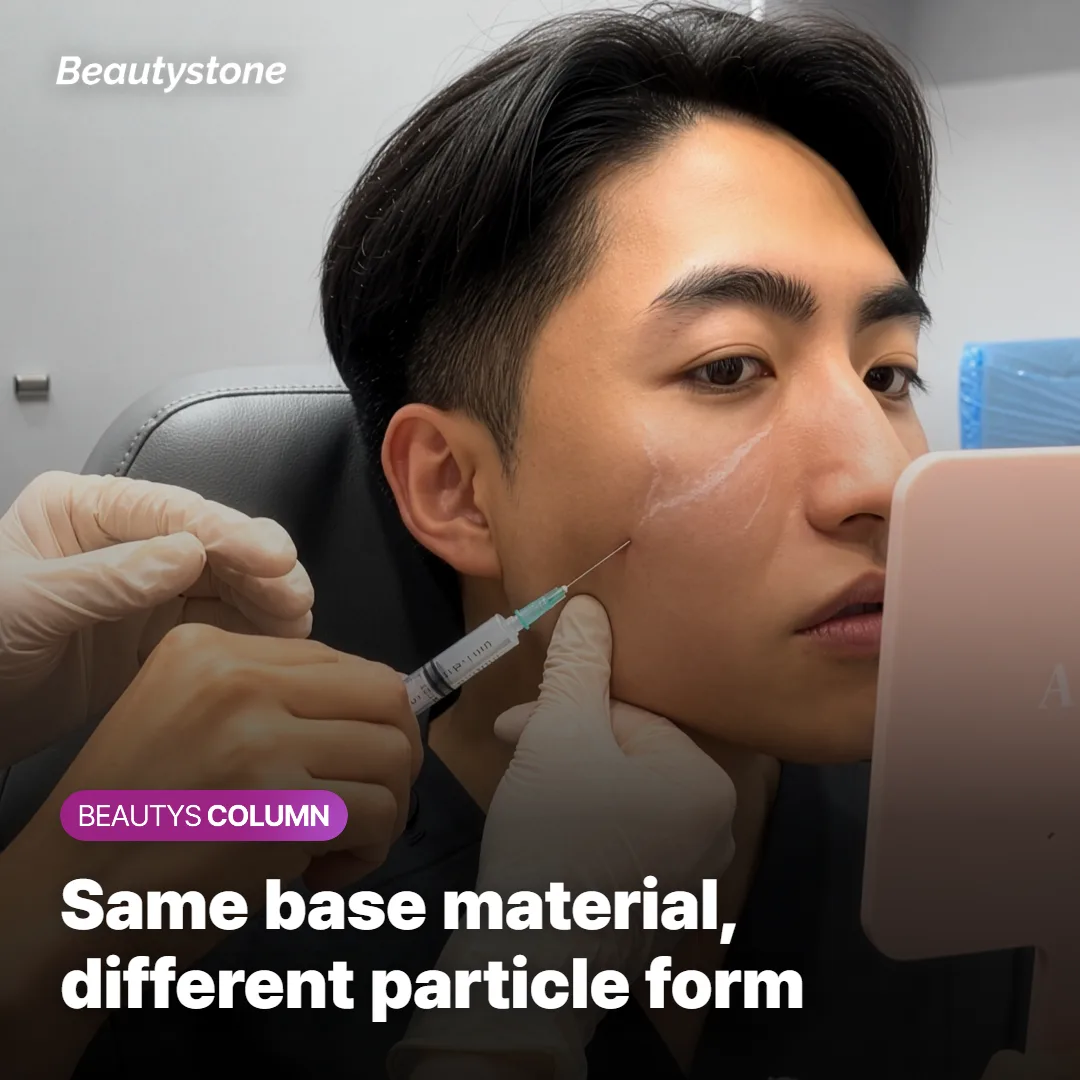
How ECM Boosters Work Under the Skin
Once an hADM-based product is injected, it doesn't just sit there — it gets incorporated into the surrounding tissue over time. A review on how acellular dermal matrix integrates with host tissue describes a gradual process where the scaffold is populated by the body's own cells and progressively replaced with the patient's own collagen. That's a slower, more biological process than a simple volumizing injection, and it's why providers typically plan for more than one session rather than a single visit.
In practice, that means you shouldn't expect a dramatic before-and-after in the mirror the next morning. The scaffold needs time to settle and get remodeled into your own tissue, so the improvement tends to show up gradually — a little firmer, a little more resilient — over a series of weeks rather than days.

Who's a Good Candidate for an ECM Booster?
Before picking between CellREDM and RE2O, it's worth stepping back and asking whether an ECM booster is the right category for your skin at all. If your skin has thinned out and lost overall resilience — and a single-ingredient booster hasn't moved the needle the way you'd hoped — reintroducing structural components can be a reasonable next step.
That said, because these products come from donor tissue, it's worth having a real conversation with your provider about how your skin is likely to respond before you commit. Skin thickness and healing speed vary from person to person, even with the same product, so most providers start conservative on the first session and adjust from there based on how you react. Which product you use ends up mattering less than getting an accurate read on your skin and a plan that's tailored to it.
Side Effects and Recovery: What's Normal, and When to Call Your Provider
Mild reactions in the first few days after an ECM booster session are common, and most resolve on their own without any specific treatment.
- Redness and swelling at injection sites: Usually settles within one to three days.
- Small, grain-like bumps under the skin: As the particles disperse, these typically flatten out within a few days.
- Light bruising: Usually fades within a week and is easy to cover with concealer in the meantime.
- Mild stinging or tightness: Keeping the area moisturized tends to help it settle within a few days.
A few signs point to something you should flag to your provider rather than wait out:
- Pain or swelling that keeps getting worse: This needs a proper look, not a wait-and-see approach.
- High fever, intense redness, or heat at the site: These can point to infection.
- A firm lump that hasn't gone down after two weeks: Worth having checked so it can be monitored.
- Spreading hives or itching: Could signal an allergic reaction.
- Skin at the injection site turning white: Contact your provider right away if you notice this.
During recovery, it's a good idea to skip saunas, intense workouts, and alcohol for a day or two, and to avoid rubbing or pressing on the treated area. Keeping up with moisturizer and sunscreen supports the skin as it remodels. This article is meant as general information — your own candidacy and recovery plan are worth confirming directly with the provider who treats you.

How Much Do CellREDM and RE2O Cost?
Pricing for ECM boosters varies quite a bit by clinic, by how many sessions your provider recommends, and by how much area you're treating — there isn't a single number that applies across the board, and quoting one here wouldn't be accurate. What tends to drive cost more than the brand name is the treatment plan itself: how many syringes or vials, how many sessions, and how the areas are spaced out.
If cost is a deciding factor for you, a consultation is genuinely the most reliable way to get a number you can plan around, since a provider can map out a realistic session count for your skin. Current offers are also worth checking at Beautystone's promotion page before you book.
The Bottom Line
CellREDM and RE2O sit in the same category — both are hADM-based ECM boosters that reintroduce structural components rather than a single ingredient, and both build results gradually over a series of sessions rather than all at once. The real difference between them comes down to particle form and processing: micronized particles built for even spread on one side, a purified powder format on the other. Like any injectable, ECM boosters come with trade-offs, and mild swelling or bruising in the first few days is part of the normal course.
Ultimately, which one fits you depends less on the product name and more on your skin's condition, your goals, and how your provider plans the sessions. If you're considering an ECM booster, a consultation is the best way to find out what's realistic for your skin. Beautystone is a dermatology clinic in Seoul's Hapjeong neighborhood — you can see current offers at Beautystone's promotion page.
Frequently Asked Questions
Q1. Are ECM boosters better than regular skin boosters?
Not necessarily better — just different. A regular booster tops up a single ingredient, while an ECM booster reintroduces a whole structural scaffold of collagen, elastin, and water-binding components. If overall resilience has dropped across the board, an ECM approach can make sense; if you're targeting one specific concern, a standard booster might be the simpler fit.
Q2. Should I choose CellREDM or RE2O?
Both are hADM-based ECM boosters, so the category is the same — the difference is in particle form and processing, not in the core ingredients. Neither one is universally better; it comes down to your skin's condition and how it responds to the first session. Talking it through with your provider and adjusting after you see how you react is the safer approach.
Q3. Is it safe to use a product made from donor tissue?
Human acellular dermal matrix has its cellular material removed while the structural scaffold stays intact, which is designed to lower the risk of an immune reaction. That said, individual responses vary, so it's worth discussing your skin history and any allergies with your provider before your first session, and reaching out promptly if you notice anything unusual afterward.
Q4. How long does it take to see results?
Since the scaffold needs time to integrate and get replaced by your own collagen, results build gradually rather than appearing right away. Most people notice firmer, more resilient-looking skin over the course of several weeks to a few months, and providers typically plan for more than one session to track how things progress.