
Forehead and Glabella Botox Side Effects
Most Botox side effects are bruises at the injection point. Weakness depends on the muscle next door: the eyelid for glabella, the brow for the forehead, and the mouth corners near the cheek.

Wi Young-jin
Chief Director, Myeongdong
If you're worried about Botox side effects, start by asking which muscle sits right next to the spot you're getting injected. In an analysis of 17,352 cosmetic botulinum toxin sessions from 30 studies, bruising was reported in 5%, headache in 3%, and facial muscle weakness in 2%. A bruise stays where the needle went in, while weakness happens when the toxin reaches a neighboring muscle, so the second type looks different on the forehead, between the brows, and near your smile.
Quick summary
- Look at the muscle next to each injection point first, then check the reaction that belongs to that area.
- The most common reactions (pain, bruising, swelling, redness) come from the injection itself, not from the toxin.
- In US label trials, eyelid droop followed glabella injections and brow droop followed forehead injections.
- Weakness in a nearby muscle shows up after fewer than 10% of treatments and can last up to 12 weeks.
Botox Side Effects: Is It a Bruise or Muscle Weakness?
A bruise and a weak muscle come from two different places, and telling them apart changes what you do next. The first group happens where the needle passes through skin: tenderness, a small bruise, swelling, or redness at the injection point. These are the most common Botox side effects, and they're caused by the injection rather than by the toxin.
The second group starts with the toxin itself. Botox relaxes a facial expression muscle, and if a little of it spreads sideways into a muscle next door, that muscle can lose some strength too. This kind of weakness follows fewer than 10% of treatments. It tends to show up in the eyelid, the brow, or the lips, and it can last up to 12 weeks before the muscle fully recovers.*
*Based on DermNet's patient guide to botulinum toxin.
That's why the same product can raise different concerns depending on where it goes. The rates in this article come from Botox Cosmetic (onabotulinumtoxinA) trials and a pooled analysis of botulinum toxin A. Other toxins, such as Xeomin, have their own labels, so read the numbers as a guide to each area rather than to a specific brand.

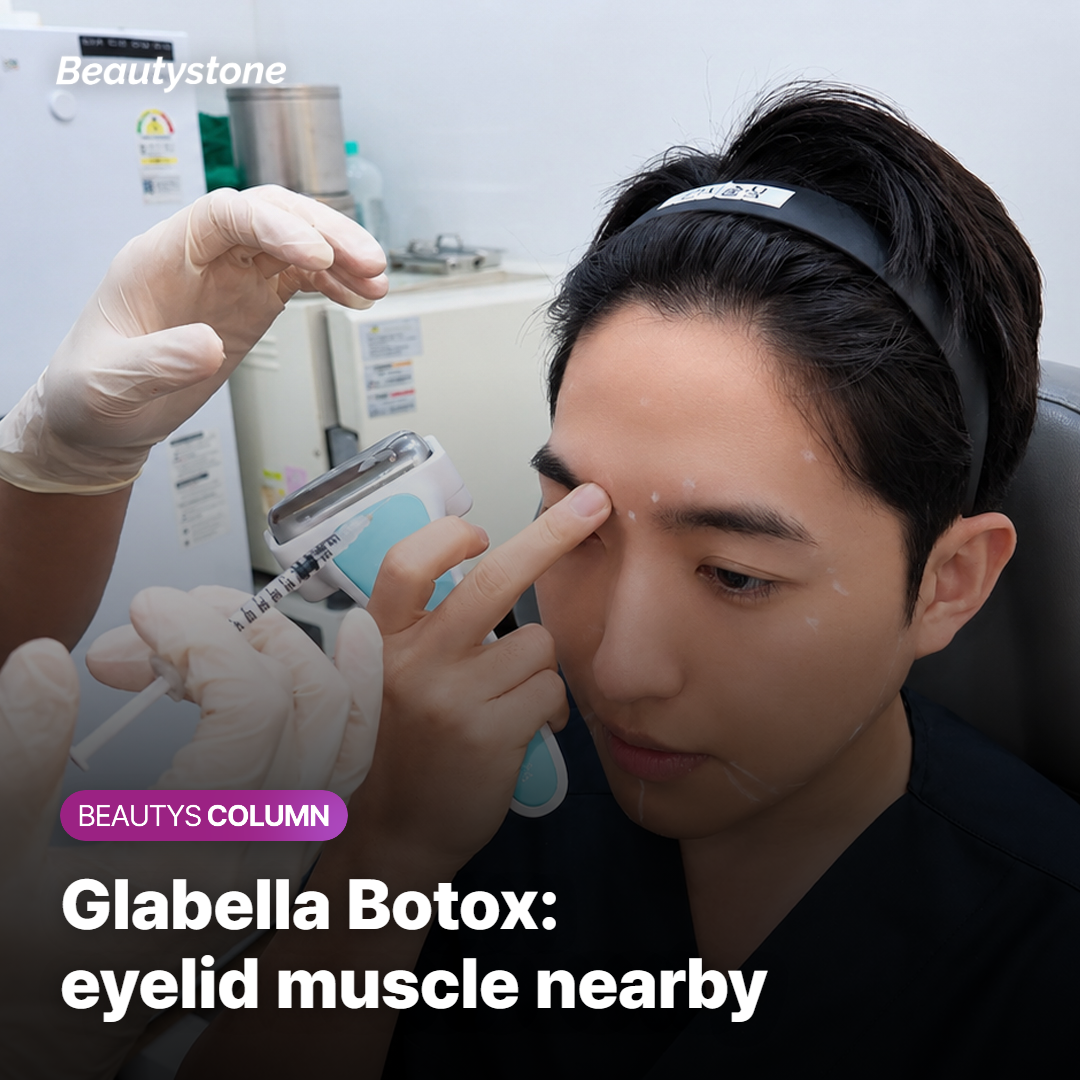
Glabella Botox Side Effects: Why Can an Eyelid Droop?
If you're getting glabella Botox for the "11" lines between your brows, the key detail is that the muscle that lifts your upper eyelid sits just below that area. When the toxin reaches it, one eyelid can feel heavy and your eye may not open as fully. In the US label trial for frown lines, 13 of 405 people (3%) reported eyelid droop.
To lower that risk, the outer injections between the brows are placed at least 1 cm above the bony ridge over the eye, and the dose isn't pushed past the planned amount.*
*From the injection directions in the US prescribing label for Botox Cosmetic.
Deep frown lines are usually treated with Botox first, and filler is added only when a crease stays very deep at rest. Fortunately, worry about eyelid droop isn't a reason to skip the area. Getting the injection points and dose right is the step that matters more. Individual results vary.
Forehead Botox Side Effects: When Do Brows Feel Heavy?
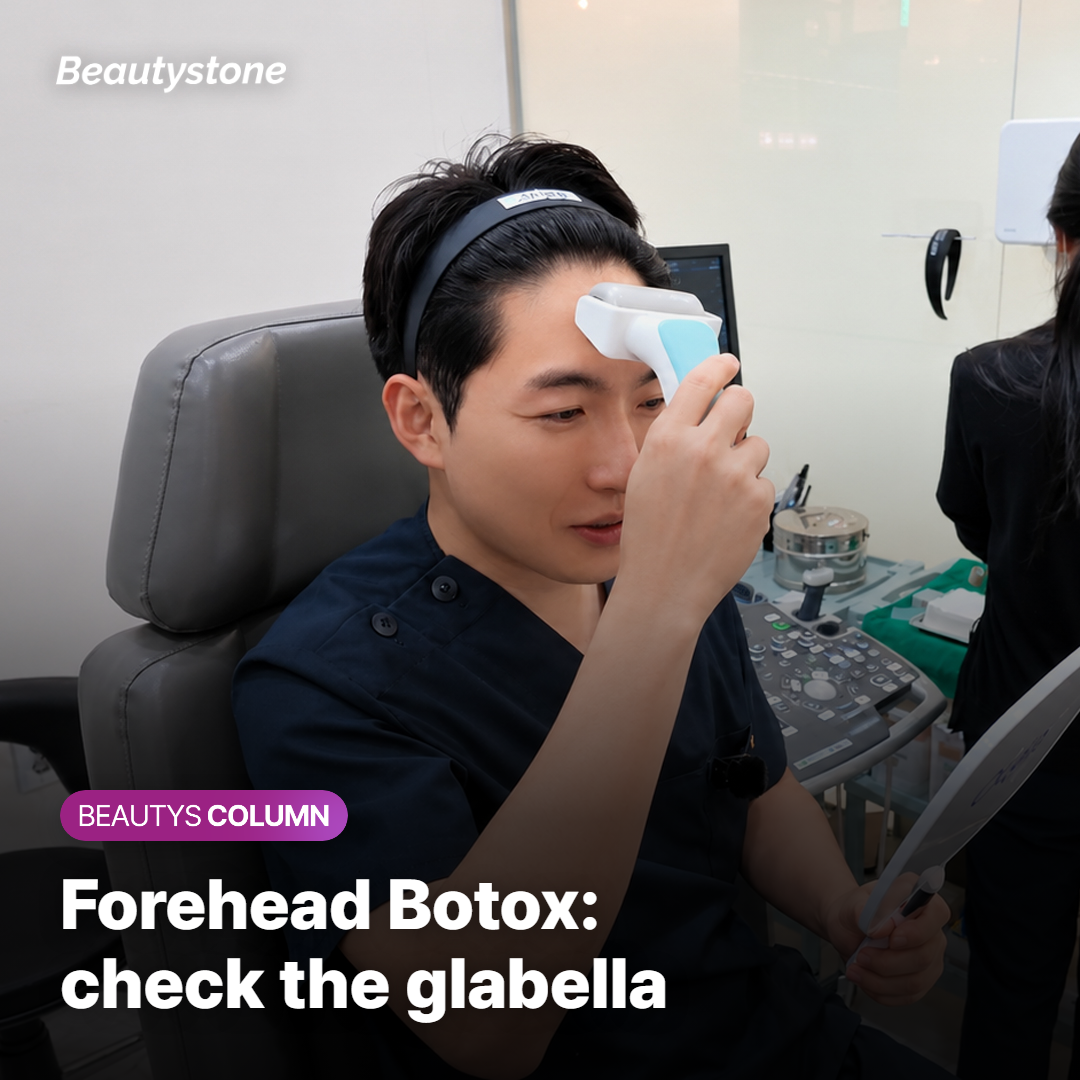
If you're planning forehead Botox, the first question is whether your glabella should be treated at the same visit. The forehead muscle lifts your brows, and the muscles between your brows pull them down. Your brow height depends on the balance between the two, so treating forehead lines alone can let the brows settle lower. The US label advises treating forehead lines together with frown lines to keep that risk down.
In the label trial where 665 people had both areas treated, brow droop and eyelid droop were each reported in 2%. If your brows already sit low, or you tend to lift your forehead to help your eyes open, the plan usually starts with keeping the forehead injections a little farther from the brow. How much your brows shift differs from person to person.
Crow's Feet and Cheek Botox: Can It Change Your Smile?
Lines that deepen at the outer corners of your eyes when you smile ("crow's feet") are usually treated with Botox first. That said, the lower an injection goes toward the cheek, the closer it gets to the small muscles that lift the corners of your mouth. If some toxin spreads there, your lip muscles can lose a bit of strength, and one side of your smile may not rise as high as the other.
In the US label trial for crow's feet, the most common reaction was eyelid swelling, reported in 1%. Weakness near the mouth tends to wear off over time like weakness around the brows. If it makes talking or eating uncomfortable, though, don't just wait it out. Get it checked by a doctor.

Which Botox Side Effects Need a Doctor Right Away?
Bruising, swelling, and a tight or achy feeling stay at the injection point and fade over the following days. Signs that the toxin has spread more widely are a different matter. They're reported only rarely, but they can appear anywhere from a few hours to a few weeks after your injection. Get medical care right away if you notice any of these:
- Double vision or blurred vision
- Eyelids drooping so much that your eyes are hard to open
- A hoarse or changed voice, or trouble saying words clearly
- Trouble swallowing or breathing
- Muscle weakness all over your body, or loss of bladder control
It's better to postpone Botox in these situations:*
- You have a condition that weakens muscles, such as myasthenia gravis
- There's inflammation or infection where you'd be injected
- You've had an allergic reaction to a botulinum toxin before
*Based on DermNet's guide and the US prescribing label for Botox Cosmetic.

Fitting Forehead or Glabella Botox Into Your Travel Itinerary
If you're fitting Botox into a trip to Korea, three things are worth knowing before you book.
First, your flight. Apart from a day when you've had sedation, there's no need to postpone your flight because of Botox.
Second, what one visit can do. Some treatments, like filler, change shape the same day. With Botox, the muscle relaxes gradually, so you may see the full effect after you're home. Most treatments bring you a little closer to how you used to look rather than changing your face in one sitting.
Third, after you're home. If something worries you, you can send photos through the consultation button on this page. If any of the warning signs above appear, see a local doctor right away instead of waiting for a reply.
The Bottom Line: Check the Muscle Next to Each Injection Point
The variable to carry into your consultation is the distance between each injection point and the nearest muscle you don't want relaxed: the eyelid lifter for glabella Botox, the brow for forehead Botox, and the corners of the mouth for lower crow's feet or cheek injections.
Once the effect has fully set in, take three photos in the same light: a neutral face, a frown, and a smile. Compare your brow height and the corners of your mouth on both sides. If one side looks lower, that's the question to bring next time: should the injection point on that side move? If side effects are your main concern, talk to your provider before deciding. Beautystone is a clinic in Seoul's Hapjeong area.
References
- How often cosmetic botulinum toxin side effects occur, pooled from 17,352 sessions, J Plast Reconstr Aesthet Surg, 2022
- Common reactions, nearby muscle weakness, and who should wait, DermNet
- Botox Cosmetic US prescribing label: reaction rates by area and spread warning, DailyMed (US National Library of Medicine)
Frequently Asked Questions
Q. Should I tell my provider I take aspirin before Botox?
A. Yes, tell your provider before Botox if you take aspirin or another blood thinner, such as warfarin or dabigatran. These medicines raise the chance of a bigger bruise at the injection point. Don't stop them on your own; check with the doctor who prescribed them first.
Q. My eyelid drooped after glabella Botox. Do I just wait?
A. An eyelid droop after glabella Botox wears off on its own, but it can last up to 12 weeks, so it's worth seeing a doctor if it bothers you. Prescription eye drops that help the eyelid-lifting muscle can be an option. If the lid covers your eye or you see double, get care right away.
Q. Is a headache after forehead Botox a side effect?
A. Yes, a headache after forehead Botox is a common reaction. In the US label trial where the forehead and glabella were treated together, 9% reported a headache, compared with 5% after a placebo injection. It usually starts 2 to 4 hours after the injection and settles with a pain reliever like acetaminophen.
Q. How common are Botox side effects overall?
A. Across 30 studies and 17,352 cosmetic sessions, side effects were reported after 16% of facial botulinum toxin treatments, with an estimated range of 8% to 25%. Most were injection-site reactions such as bruising. Whole-body symptoms like trouble breathing are reported far less often.
Q. Can I get Botox while taking antibiotics?
A. Some antibiotics, specifically the tetracycline and aminoglycoside groups, can strengthen the effect of Botox, so it's better to avoid them around your appointment. Tell your provider the name of any antibiotic you're taking so the timing can be planned. Sharing the name is a good idea for other antibiotics too.
Q. Can I get Botox while pregnant or breastfeeding?
A. It's best to postpone Botox if you're pregnant or breastfeeding. Botulinum toxin is advised against during both. If you're planning a pregnancy, mention it at your consultation so the next treatment can be timed around it.
Q. Does getting Botox more often increase side effects?
A. Getting Botox very often can, rarely, lead your body to make antibodies, so the same dose works less well. How often you're injected is the biggest risk factor, which is why injections more often than every 8 to 12 weeks are advised against. Wait for the effect to fade rather than booking by the calendar alone.
Q. Can I get glabella or forehead Botox if my eyelids already droop?
A. Yes, but if your eyelids already droop, the injection points and dose for glabella or forehead Botox are chosen with extra care. The US label calls for caution where droop or marked muscle weakness is already present. A doctor will first check whether you're using your forehead to lift your eyelids.