Juvelook vs. Rejuran: Fine Lines or Volume?
If fine lines and rough texture bother you, look at Rejuran first. If side light shows a hollow under your cheekbone, look at Juvelook Volume first. Here's how the two differ in depth, sessions, and side effects.

Wi Young-jin
Chief Director, Myeongdong
If fine lines and rough texture are what bother you, look at Rejuran first; if a hollow under your cheekbone casts a shadow on the side of your face, look at Juvelook Volume first. Rejuran is most often given as 3 sessions spaced 4 weeks apart, while Juvelook Volume results in a cheek study were judged 3 months after the last session. Neither one reshapes your face on the day, so the fair comparison happens weeks later, in the same lighting. In this article, we'll cover how to tell which concern is yours, which Rejuran suits fine lines, how Juvelook Volume works on a sunken cheek, side effects, and how to fit either one into a trip to Korea.
At a glance
- Fine lines or rough texture: start with Rejuran. A shadowed hollow under the cheekbone: start with Juvelook Volume.
- Depth: in the studies, Rejuran went into or just under the dermis, and Juvelook Volume went into the shallow fat layer below it.
- Recovery: redness and swelling after these injections tend to settle within 7 to 14 days.
- Need a visible change on the day? Look at hyaluronic acid filler before either one.
- Neither Rejuran nor Juvelook is FDA-approved in the US; both are authorized in Korea by the MFDS as medical devices for temporarily improving facial wrinkles.
Juvelook vs. Rejuran: Which One Fits Your Concern?
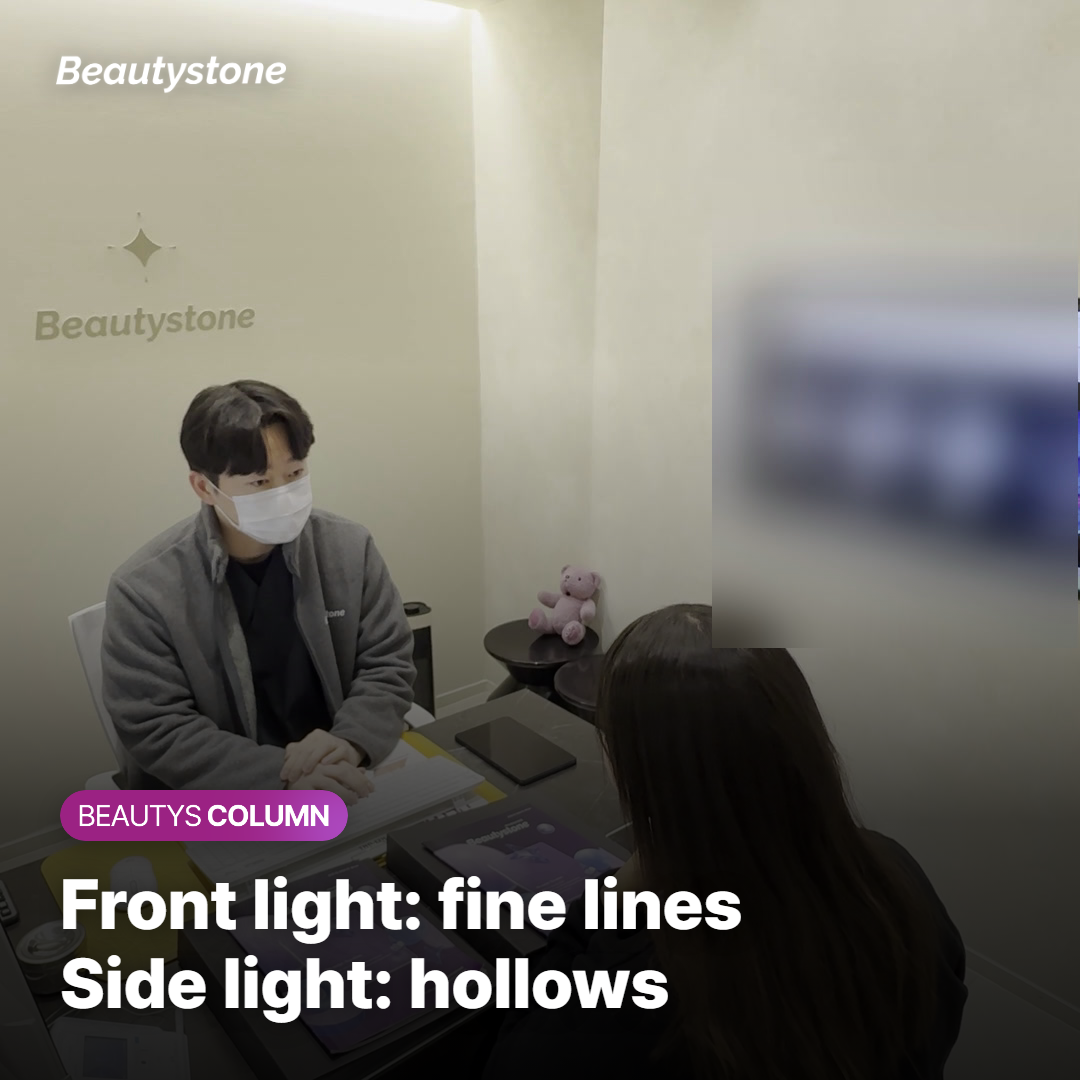
Check your bare face in two kinds of light before you choose. If straight-on light shows fine lines on your cheeks and around your eyes, and your fingertips catch on uneven texture, you're in Rejuran territory. If your face looks fine head-on but side light shows a hollow under the cheekbone, Juvelook Volume is the one to look at.
The two injections differ in what's inside and how deep they go. Rejuran's main ingredient is PN (polynucleotide), sourced from salmon. Juvelook pairs tiny, slowly dissolving particles of PDLLA (poly-D,L-lactic acid) with hyaluronic acid.
| Choosing factor | Rejuran Healer | Juvelook Volume |
|---|---|---|
| Concern to look at first | Fine lines, rough texture | Hollow at the side of the cheek |
| Main ingredient | PN | PDLLA particles + hyaluronic acid |
| Layer used in studies | Dermis, or just below it | Shallow fat layer |
| Usual series | 3 sessions, 4 weeks apart | 3 sessions, 3 weeks apart (one study) |
| Change on the day | Little | Little |
The top row is the one that settles it. A concern you notice in straight-on light points to Rejuran, and one you only notice in side light points to Juvelook Volume.
Rejuran HB vs. Healer: Which One for Fine Lines?
For fine lines on the cheeks and around the eyes, or uneven texture, start with the basic Rejuran, which clinics usually call Rejuran Healer. In a survey of 235 Korean dermatologists, cheek fine lines were the most common reason for using PN injections, followed by fine lines under and around the eyes and uneven skin texture.
If needle pain is your biggest worry, check whether you're being offered Rejuran HB Plus, the version with a numbing ingredient. It adds hyaluronic acid and lidocaine (a local anesthetic) to PN, and its approved use in Korea is narrower than the basic version: fine lines at the outer corners of the eyes*.
*Based on Korea's MFDS device approvals for Rejuran and Rejuran HB Plus.
What about results? In a study where 40 adults had Rejuran injected into both cheeks over three sessions, one cheek in the dermis and the other just beneath it, fine-line scores were lower than at the start on both sides by week 12. The side injected just beneath the dermis also scored lower for pain at every session. There wasn't an untreated comparison group, so the study shows how two depths compare rather than how Rejuran compares with doing nothing. Individual results vary.
How Does Juvelook Volume Fill a Hollow Cheek?
When the area under your cheekbone has sunk enough to throw a shadow on the side of your face, look at Juvelook Volume rather than the lighter Juvelook types. If texture and fine lines are your only concern, the Juvelook skin booster types are the ones to consider instead.
All six Juvelook types sold in Korea are authorized as products whose tiny particles physically fill the layer under the skin to soften wrinkles for a while*. The idea that they boost collagen comes from the manufacturer and published research, not from that authorization.
*Based on Korea's MFDS device approval for Juvelook.
In a case series of 24 adults with sunken side cheeks, Juvelook Volume was diluted and placed in the shallow fat layer with a blunt cannula, 3 times, 3 weeks apart. Three months after the last session, 7 were rated very much improved, 11 much improved, 5 improved, and 1 unchanged. There was no comparison group, and how much you'd see depends on your own face. The authors described the approach as building up gradually rather than adding volume all at once.
That gradual pace is the trade-off. If you need a visible change on the day, a hyaluronic acid filler such as Juvederm is the option to look at before Juvelook Volume.
Rejuran and Juvelook Side Effects: What's Normal?
Redness, swelling, tenderness, and occasional bruising at the injection sites tend to clear within 7 to 14 days after filler-type injections*. If they worsen or spread, contact your provider right away.
*Based on American Academy of Dermatology guidance on fillers in general.
With Rejuran placed in the dermis, small raised bumps can show at each injection point. In the split-cheek study above, these bumps appeared only on the side injected into the dermis, and most were mild to moderate.
In the Juvelook Volume case series, 3 of the 24 people bruised, and the bruising faded within 10 days. If swelling hasn't gone down after 2 weeks, or a red, painful lump keeps getting bigger, get it checked in person.
Product getting into a blood vessel is rarely reported. Even so, vision problems and blindness have been reported with Juvelook Volume, so if you notice any of the following, get care right away, no matter how many days it's been since treatment*.
*Warning signs based on US FDA guidance on dermal fillers in general.
- Skin near the injection site turning white, gray, or blue, or unusual pain: get medical care right away
- Any change in your vision: go to the nearest emergency room
- Sudden trouble speaking, numbness or weakness in your face, arms, or legs, trouble walking, or a drooping face: go to the nearest emergency room
- Severe headache, dizziness, or confusion: go to the nearest emergency room
Filler side effects can also appear weeks, months, or even years later. A message to the clinic doesn't replace an in-person exam.

Getting Rejuran or Juvelook During a Trip to Korea
Unless you had sedation that day, there's no need to postpone your flight because of a Rejuran or Juvelook Volume session.
Some treatments, like filler, change your shape on the day. Most, including these two, bring your skin closer to how it used to look little by little rather than all at once. Both are usually planned as a series, so a single visit during a trip isn't the whole course, and the result you see on the flight home isn't the final picture.
Once you're home, you can send photos taken in the same lighting through the consultation button on this page and ask about anything that worries you. If you notice warning signs like skin turning pale or bluish, a painful lump that keeps growing, or any change in your vision, see a doctor where you are first instead of waiting for a reply.

The Bottom Line: Front Light or Side Light?
The variable worth taking into your consultation is depth: whether your concern sits in the dermis, where Rejuran works on fine lines, or in the shallow fat layer, where Juvelook Volume slowly builds up a hollow. Before you decide, ask which layer the doctor would target on your cheek and why. That one answer makes the two options much easier to compare.
If you can't tell which concern is bigger, a photo of your face taken in side light is a good place to start. Beautystone is a clinic in Seoul's Hapjeong area, and the doctor looks at your whole face from the front and the side, including any difference between the two sides, before deciding which injection comes first.
Sources
- How 235 Korean dermatologists use PN injections and how often (J Cosmet Dermatol, 2024)
- Rejuran injected into the dermis vs. just beneath it in 40 adults (J Cosmet Dermatol, 2026)
- Juvelook Volume for sunken side cheeks in 24 adults (J Craniofac Surg, 2026)
- A firm lump after PDLLA injection under the eyes: one case (J Cosmet Dermatol, 2025)
- Expert consensus on vision problems after Juvelook Volume (J Craniofac Surg, 2026)
- How long redness and swelling last after fillers (American Academy of Dermatology)
- What to tell your provider and warning signs after fillers (US FDA)
Frequently Asked Questions
Q. I have fine lines and a sunken cheek. Should I get Rejuran or Juvelook first?
A. If you have both fine lines and a sunken cheek, start with whichever one stands out more. If fine lines catch your eye first in straight-on light, Rejuran goes first; if a shadow under the cheekbone shows first in side light, Juvelook Volume goes first. Whether both are done the same day or spaced apart depends on whether the injection areas overlap and whether swelling from the first session has settled, and that's decided at your consultation.
Q. Does Rejuran hurt?
A. Rejuran does sting. In a study of 40 adults, average pain after the first session was about 60 out of 100 on the cheek injected into the dermis and about 48 on the cheek injected just beneath it. Rejuran HB Plus contains lidocaine, a local anesthetic, and options such as numbing cream are chosen at your consultation based on the area and how sensitive you are.
Q. Why doesn't Rejuran look different right after the injection?
A. Rejuran doesn't show results right away because it works by supporting your skin's own recovery rather than filling space. Its PN ingredient, sourced from salmon, helps create an environment where skin repairs itself, so changes build up over time instead of appearing the way filler volume does. Right after treatment, what you'll mostly see are small raised bumps at the injection points and some swelling, which settle over a few days.
Q. Rejuran or Juvelook for fine lines under the eyes?
A. For fine lines under the eyes without a hollow, look at Rejuran first. If the under-eye area is actually sunken and filler makes you uneasy, Juvelook Eye is the type to look at. A case report described a firm lump 3 weeks after the larger-particle Juvelook Volume was used under the eyes, which is why the type is matched to the area.
Q. What if I need a visible change before an event?
A. If you need a visible change by a set date, look at hyaluronic acid filler before Rejuran or Juvelook Volume. Juvelook Volume fills in gradually over weeks rather than adding volume on the day, and Rejuran targets texture and fine lines, so neither changes your contours right away. Mention the date of your event at the start of your consultation.
Q. When will I see results from Rejuran and Juvelook Volume?
A. With Rejuran, fine-line scores in a 40-person study were already lower than at the start by week 9 and were still lower at week 12. With Juvelook Volume, a cheek study judged results 3 months after the final session. For either one, compare photos taken in the same lighting after the last session rather than right after the first.
Q. Are Rejuran and Juvelook FDA-approved?
A. No, neither Rejuran nor Juvelook is FDA-approved in the US. Both are authorized in Korea by the MFDS, the country's drug and device regulator, as medical devices for temporarily improving facial wrinkles.
Q. Can I get Rejuran or Juvelook if I'm pregnant, breastfeeding, or under 22?
A. For people under 22 or who are pregnant or breastfeeding, the safety of filler-type injections hasn't been established, according to US FDA guidance on fillers. If you're considering Rejuran, tell your provider before treatment whether you're pregnant or breastfeeding and which medicines you take.
Q. Should I wait if I have a breakout where I'd be injected?
A. Yes, if there's a pimple, hives, a rash, or any other inflammation or infection where you'd be injected, wait until it's under control. US FDA guidance on fillers advises the same. Also tell your provider beforehand if you have a bleeding disorder or have had a severe allergic reaction.