Nasolabial Fold Filler or Lifting? 4 Types
A deep groove beside the nose points to HA filler first, while a fold driven by sagging cheeks points to lifting. Here's how to tell the four fold types apart in a mirror, how long filler typically lasts, and which reactions after treatment are normal.

Wi Young-jin
Chief Director, Myeongdong
If your nasolabial folds have sunk into deep grooves, hyaluronic acid (HA) filler is the treatment to look at first. HA filler softens the groove on the day it's placed, and the result typically lasts 4 to 12 months. If the fold comes from sagging cheeks, or from thin skin layered with fine lines, filling the groove alone usually isn't enough, and another treatment belongs in the plan.
In this article, we'll cover how to tell which kind of fold you have, when filler comes first, what to look at when it doesn't, and which reactions after filler are normal.
Quick summary
- A deep groove points to HA filler first; a fold driven by sagging cheeks points to lifting first.
- How long it lasts: HA filler typically lasts 4 to 12 months.
- Redness, swelling and occasional bruising usually settle within 7 to 14 days.
- Creams and facial massage care for the skin surface; they can't fill a groove that has already formed.
Which Type of Nasolabial Fold Do You Have? Check Two Faces
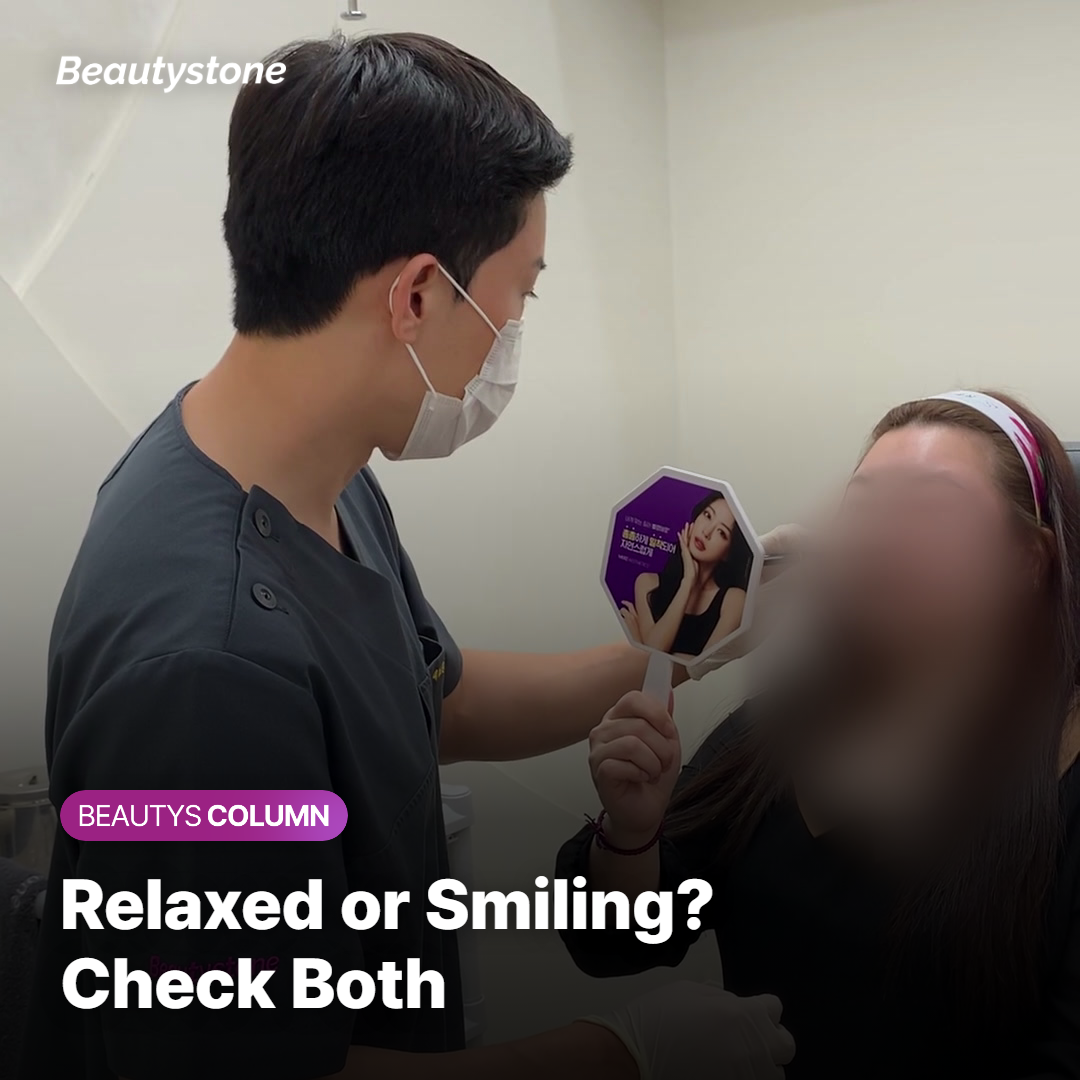
Look at your face twice in the mirror: once relaxed, once smiling. If a clear groove runs from the side of your nose to the corner of your mouth even when your face is at rest, the groove itself is a big part of the problem. If the line deepens when you smile and fades once you relax, it leans toward the type where facial muscles fold the skin as you move.
Next, place your fingertips on your cheeks and lift them gently toward your cheekbones. If the fold smooths out a lot, sagging cheek tissue is adding to it. Then pinch the skin beside the fold. If it feels thin and you see a web of fine lines, loss of skin firmness is part of the picture.
Many people have more than one of these at once. That's normal, and the plan starts with whichever one stands out most. Still, a fold that only shows when you smile isn't proof of the muscle type on its own, so the relaxed view matters just as much.
Nasolabial Fold Filler: When Does It Come First, and How Long Does It Last?
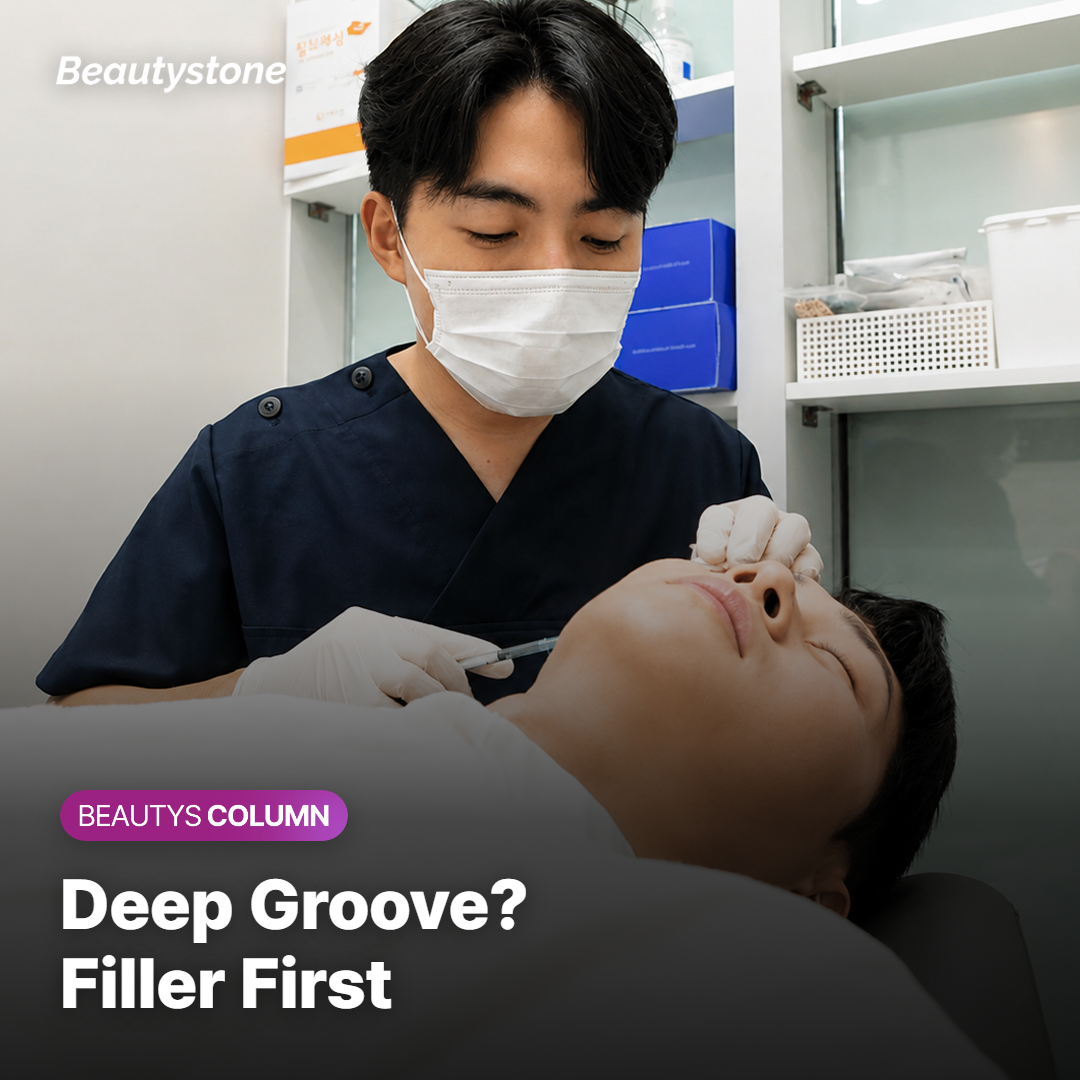
Filler comes first when a deep groove is the center of your concern and your cheeks haven't dropped much. In that case, filling the groove reduces the shadow it casts, and the change shows the same day. If your cheeks have sagged a lot, though, filling only the groove can make the area around your mouth look heavy.
There's solid comparison data for this area. In a study of 138 people, each person had an HA filler in the fold on one side of the face and bovine collagen on the other, assigned at random. At 6 months, the HA side was rated better for fold depth in 56.9% of people, versus 9.5% for the collagen side. Reactions at the injection site were similar on both sides in how often they happened and how long they lasted.
Keep in mind that the comparison product, bovine collagen, isn't a common choice today, so the study shows how HA holds up over 6 months rather than ranking it against current options. Individual results vary.
As for how long it lasts, HA filler typically holds for 4 to 12 months. Where you land in that range depends on the product, how deep the fold was and how your body breaks it down, so timing your next session by the calendar tells you less than comparing photos taken in the same light.
Sagging Cheeks or Thin, Crepey Skin: What Comes Before Filler?
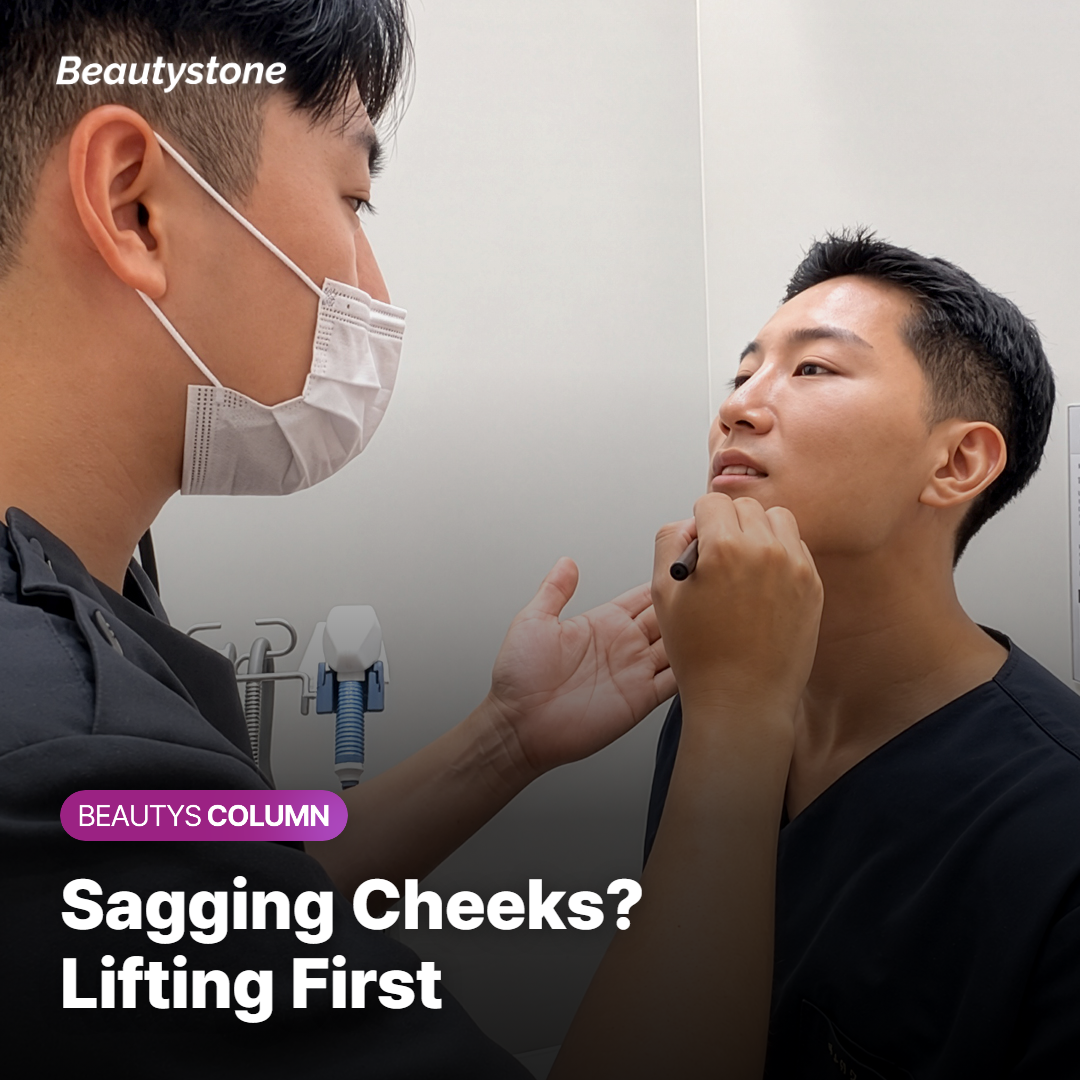
If heavy, sagging cheek tissue is draping over the fold, lifting, such as Ultherapy, comes first. The problem sits above the groove, so raising that tissue is the logical first step, and filler can follow if a groove remains.
Here's a quick way to match what you see in the mirror with where to start:
| Fold type | What you see in the mirror | Usually looked at first |
|---|---|---|
| Deep groove | Clear groove even with a relaxed face | HA filler |
| Sagging cheeks | Fold smooths out a lot when you lift your cheek | Lifting (Ultherapy and similar) |
| Thin, crepey skin | Skin feels thin when pinched, with many fine lines | Thermage or a collagen-stimulating injection |
| Deepens only when smiling | Fades once your face relaxes | A small amount of filler, or Botox |
If thin skin with fine lines is part of your fold, Thermage or a collagen-stimulating injection is worth adding to the plan. And if filler feels like more than you want, and you'd rather see volume build up gradually, a collagen-stimulating injection is another place to start. How much you see depends on your skin.
Lifting and filler aren't rivals here. When a fold has both a deep groove and sagging cheeks, the two are often planned together, with the bigger of the two problems deciding which one goes first.
Nasolabial Fold Filler Side Effects: What's Normal and When to Get Care
Redness, swelling, tenderness and occasional bruising usually settle within 7 to 14 days*. It's best to skip strenuous exercise until the next day and to stay out of the sun while the area heals.
*Based on American Academy of Dermatology patient guidance.
It's better to postpone filler if any of these apply to you*.
*Based on US FDA guidance on dermal fillers.
- Inflammation or infection where the filler would go, including acne or a rash
- A condition that makes bleeding hard to stop, or a past severe allergic reaction
- Pregnancy or breastfeeding, because safety hasn't been established
Filler getting into a blood vessel is rarely reported, but when it happens it can be serious. The signs below call for medical care no matter how many days it's been since treatment*.
*Listed in the same US FDA guidance on dermal fillers.
- Unusual pain, or skin near the injection site turning white: get medical care right away
- Changes in your vision: go to the nearest emergency room
- Sudden difficulty speaking, numbness or weakness in the face, arms or legs, difficulty walking, or a drooping face: go to the nearest emergency room
- A severe headache, dizziness or confusion: go to the nearest emergency room
A message through the consultation button doesn't replace seeing a doctor in person.

Smile Lines Filler: How Much Is Too Much?
Smile lines filler looks overdone when the amount goes beyond the depth of the groove. Too much can make the sides of your nose and the corners of your mouth look puffy, and your smile can feel stiff.
That's why a cautious plan starts with a smaller amount. Once the swelling has gone down, usually by 1 to 2 weeks, any side that still looks short can be topped up. If one fold is deeper than the other, the amount for each side is planned separately instead of being split evenly.
If you've had filler before and some of it is still there, that spot gets checked first. Adding more on top of leftover product is one of the more common ways a fold ends up looking full instead of smooth.

Fitting Nasolabial Fold Filler Into a Trip to Korea
If you're planning nasolabial fold filler during a stay in Seoul, three points are worth thinking through before you book.
Your flight. Unless you had sedation that day, there's no need to postpone your flight home because of nasolabial fold filler.
What one visit means. Some treatments, like filler, change your shape the same day. Most others bring you a little closer to how you used to look over time rather than all at once. Keep in mind that early swelling can blur the true shape for the first days.
After you fly home. If you're unsure whether something is normal, you can send photos to Beautystone through the consultation button on this page. We can't promise a reply time or remote care, so if any of the warning signs above appear, see a local doctor first.
The Bottom Line: Lift Your Cheek in the Mirror Before You Choose
The variable to carry with you is which layer is driving your fold: a deep groove, sagging cheek tissue above it, or thin skin on top. The cheek lift test in the mirror is the quickest way to tell the first two apart. If the fold barely changes when you lift your cheek, filler is the likely starting point; if it smooths out a lot, lifting is.
One question is worth bringing to your consultation: when you lift my cheek, how much of my fold is groove and how much is sagging? If you're considering nasolabial fold filler, a consultation is where you can find out what fits you. Beautystone is a clinic in Seoul's Hapjeong area.
References
- 138 people with HA filler on one side of the face and collagen on the other: Dermatol Surg, 2003
- How long each filler type lasts and what to expect afterward: American Academy of Dermatology
- Common reactions and blood vessel warning signs after filler: US FDA
Frequently Asked Questions
Q. Can massage or creams get rid of nasolabial folds?
A. Massage and creams can't fill a nasolabial fold that has already formed into a groove. Moisturizing and daily sunscreen protect the skin surface and are worth keeping up, but they don't change how deep the fold is. Rubbing hard during massage pulls on the skin and can add strain instead of helping.
Q. Will I see a difference right after nasolabial fold filler?
A. Yes, HA filler in the nasolabial folds makes the groove shallower on the same day. The first few days include some swelling, though, so the real shape is easier to judge once it settles, around 1 to 2 weeks later. If the two sides still look different then, that's the time to have them checked.
Q. Is Botox an option for nasolabial folds?
A. Botox for nasolabial folds is looked at mainly when the fold deepens as you smile and fades when your face relaxes, often alongside a small amount of filler. If a groove stays visible even at rest, there's a hollow to address as well, and filler becomes part of the plan.
Q. Is there an option if I don't want filler for my smile lines?
A. If filler feels like more than you want for your smile lines, a collagen-stimulating injection is another option for people who'd rather see volume build gradually. Change with this approach comes slowly rather than on the day, and how much you see varies from person to person. A deep groove usually responds more directly to filler.
Q. How often do I need nasolabial fold filler touch-ups?
A. HA filler in the nasolabial folds typically lasts 4 to 12 months, but the timing of a touch-up depends on how much of the groove has come back. Comparing a new photo with your first one, taken in the same light, is a better guide than a fixed date.
Q. Does nasolabial fold filler hurt?
A. Nasolabial fold filler is injected beside the nose and near the corners of the mouth, so expect a stinging, achy pressure. Ways to ease discomfort, such as numbing cream, are decided at the consultation based on the area and how sensitive you are.
Q. Can I get filler and lifting for my nasolabial folds at the same time?
A. When a nasolabial fold has both a deep groove and sagging cheeks, filler and lifting are often planned together. Which one goes first depends on whether the sagging or the groove is bigger, and whether they're done on the same day or spaced apart is decided after your face is examined.