Does Potenza Help Rosacea and Redness?
If your cheeks stay flushed long after you've cooled down, the redness may be coming from blood vessels under the skin, not just surface sensitivity. Here's where Potenza microneedle RF fits in and where it doesn't.

You wash your face, and twenty minutes later your cheeks are still pink. Or you step from an air-conditioned office into a warm room and your whole face lights up before you've even sat down. If a glass of wine or a bite of something spicy sends your skin into overdrive, and it takes hours — not minutes — to settle back down, you're not imagining it.
Persistent facial redness is easy to write off as "sensitive skin," but for a lot of people it's tied to changes happening deeper in the skin, not just on the surface. Potenza, a microneedle radiofrequency (RF) device, comes up a lot as a possible fix — but it doesn't work the same way for every type of redness, and it's not a cure-all. In this article, we'll cover what actually drives persistent redness, how Potenza is supposed to help, where it falls short, and what to ask before you book a session.
Why Won't Persistent Redness Go Away?
Facial redness isn't one single thing. For some people it's surface-level — skin that reacts fast to heat, spice, or alcohol and then calms back down within an hour or so. For others, the blood vessels sitting in the dermis, the layer underneath the skin you can see, have widened or become more visible over time. That's a different, more stubborn kind of redness.
A flush that comes and goes is usually blood vessels temporarily dilating in response to a trigger. Redness that lingers for hours, or that comes with visible thread veins across the cheeks and nose, tends to point to more established vascular changes underneath.
One common condition behind this kind of long-term redness is rosacea, a chronic skin condition centered on the face that tends to flare with heat, sun exposure, spicy food, alcohol, and stress. It's generally not something that gets "cured" so much as managed, which is part of why redness can feel so persistent no matter what you put on your skin.
The tricky part is that calming skincare alone usually can't reach blood vessels sitting in the dermis. Moisturizing and avoiding triggers still matter, but when redness is coming from deeper vascular changes, some people start looking at in-office treatments — Potenza among them — as a next step.
What Is Potenza, and How Does It Treat Skin?
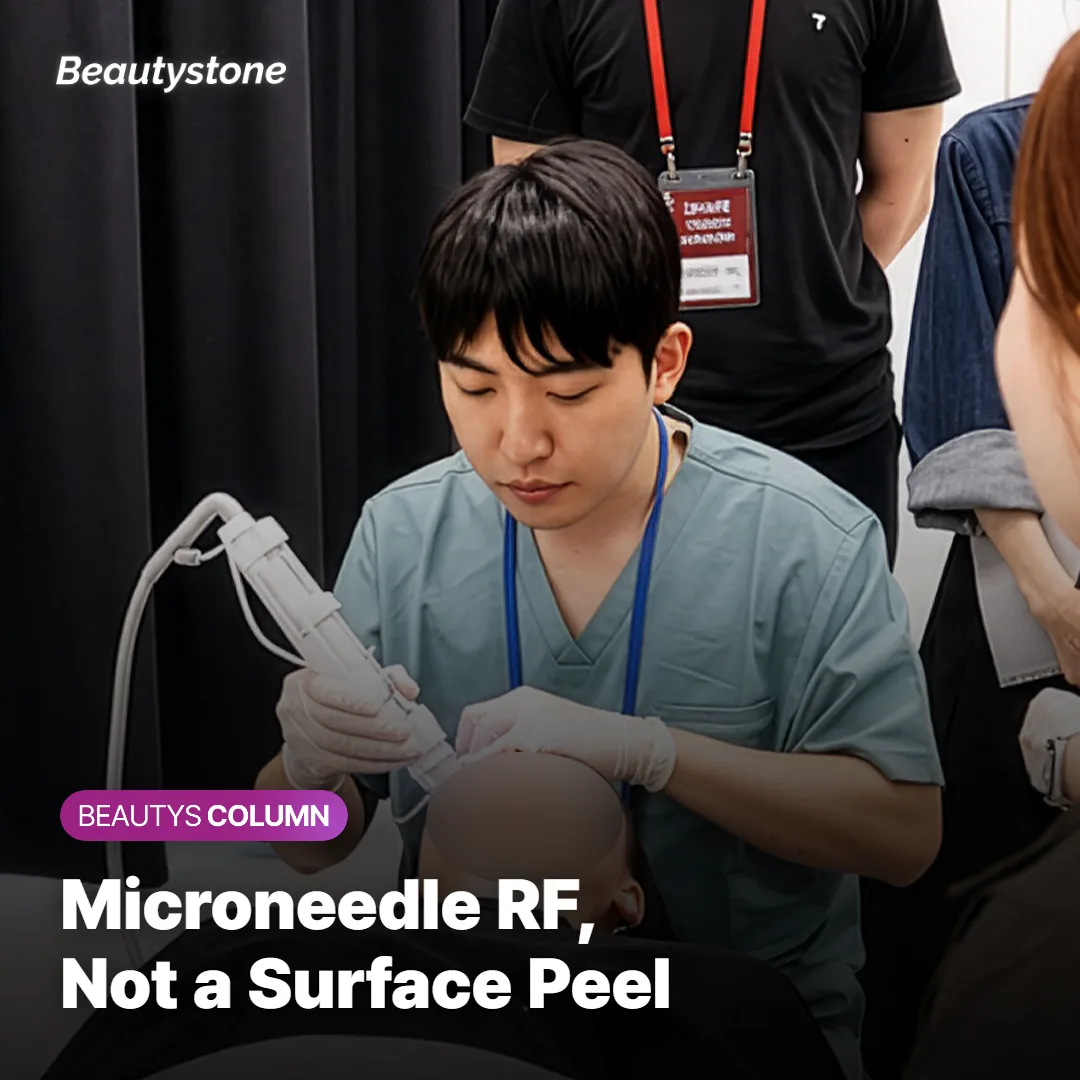
Potenza is a microneedle radiofrequency (RF) device. Instead of heating the surface of your skin broadly, it uses very fine needles to create tiny channels, then delivers RF energy from the tip of each needle directly into the dermis. That's the key distinction: the heat is concentrated at a controlled depth rather than spread across the surface.
Research on RF microneedling suggests the dermis responds gradually rather than all at once. One review found that RF microneedling triggers dermal remodeling and new collagen formation that continues to develop for months after a session. For redness specifically, the idea is that heat delivered into the dermis can influence the tissue environment around dilated vessels and support overall skin remodeling, rather than targeting a single blood vessel the way a laser would.
- Controlled heat at depth: RF energy released from the needle tip acts locally in the dermis, not across the whole surface.
- Gradual remodeling: Collagen production and dermal repair unfold over weeks to months, not overnight.
That mechanism doesn't automatically translate into "redness gone." The next section gets into where Potenza actually helps with redness, and where it doesn't.
Can Potenza Actually Help With Redness or Rosacea?
Here's the honest answer: a lot of persistent facial redness comes down to the blood vessels themselves, and Potenza only partially addresses that. Visible thread veins and clearly dilated vessels are usually a better match for vascular lasers, which are built to target blood vessels directly. Depending on what's actually driving your redness, a different tool may be the better fit.
That doesn't mean microneedle RF is irrelevant to redness, though. In one observational study, rosacea patients who hadn't responded well to other treatments saw their erythema (redness) scores and hemoglobin levels drop significantly after treatment with non-insulated fractional microneedle RF. That's a meaningful result, but it's worth reading the way researchers do: some patients improved. It's not "everyone gets clear skin."
| Type of Redness | How Potenza Fits | When Another Approach May Fit Better |
|---|---|---|
| Dermal remodeling, texture | Generally a reasonable match | Surface pigment is a separate issue |
| Visible thread veins | Only partial effect | Vascular laser is more targeted |
| Sudden flushing episodes | Not a direct target | Trigger management comes first |
| Reactive, compromised barrier | May cause a temporary flare | Calm the barrier first |
There's also a caveat that tends to get left out of the marketing: if your redness is already severe, or your skin is highly reactive, Potenza itself can trigger a temporary flare instead of calming things down. That's why matching the treatment to what's actually causing your redness, and to how reactive your skin currently is, matters more than the device name on the treatment menu.
What to Expect: Timeline From Treatment Day to Results
Because Potenza works by triggering a gradual dermal response, the timeline for redness-focused treatment looks less like a switch flipping and more like a slow curve.
- Day of treatment: Skin typically looks flushed and can feel warm or tight for a few hours — this is a normal, expected reaction to RF microneedling, not a red flag on its own.
- 24–48 hours: Redness and mild swelling usually start to settle. Tiny pinpoint marks from the needles fade over this window too.
- 1–2 weeks: Most of the visible treatment reaction has calmed down, though skin tone can still look a little uneven while it recovers.
- 4–8 weeks and beyond: Dermal remodeling continues quietly in the background, so changes in texture and, for some people, redness tend to show up gradually over this stretch rather than all at once.
Providers often space sessions weeks apart rather than treating repeatedly in a short window, since the dermis needs time to actually remodel between visits. Your provider can map out a realistic schedule once they've seen how your skin responds to the first session.
Side Effects and Risks to Know Before You Book
Redness, mild swelling, and pinpoint bleeding right after treatment are common and usually settle within a few days on their own. If redness or swelling gets worse instead of better, spreads beyond the treated area, or comes with fever, contact your provider right away.
If your skin already flushes easily or you have rosacea-prone skin, it's worth expecting a temporary flare before things calm down — that's part of why timing and skin prep matter so much going in. Potenza generally isn't recommended over active breakouts, open wounds, or infections, and your provider will want a full picture of your skin history and any medications before treating you.
Sun exposure is one of the most reliable ways to aggravate redness, during recovery and long after. Daily sunscreen isn't optional here — it's one of the few things in this whole picture that's genuinely non-negotiable.
How Much Does Potenza Cost?
Potenza pricing varies by clinic, how many sessions your provider recommends, and how much of your face is treated, so there isn't one number that applies to everyone. A treatment plan built around redness usually means more than one session spaced out over weeks, which affects the total cost more than any single visit does.
Because pricing and current offers change by clinic and season, a consultation is genuinely the most reliable way to get a real number for your situation, and you can see current offers at /en/promotion.
The Bottom Line: Is Potenza Right for Your Redness?
A few things worth carrying with you into a consultation:
- Persistent facial redness usually has more than one cause, and figuring out whether yours is mostly surface-level or vascular changes the entire conversation.
- Potenza delivers RF energy into the dermis through fine needles, and research points to gradual, ongoing remodeling rather than an instant fix.
- It can help some redness, including rosacea-related redness in studies, but visible thread veins usually respond better to vascular lasers.
- Severe or highly reactive skin can flare temporarily before it improves, so skin prep and timing matter.
Like any procedure, Potenza comes with trade-offs, and it's not the right tool for every kind of redness. Ultimately, the right approach depends on your skin, what's actually driving the redness, and your goals.
If you're considering Potenza for persistent redness, a consultation is the best way to find out what actually fits your skin. Beautystone is a dermatology clinic in Seoul's Hapjeong area — you can see current offers at /en/promotion.
Frequently Asked Questions
Q1. Will one Potenza session get rid of my redness?
Probably not completely. Potenza works by triggering a gradual response in the dermis, so results tend to build over weeks rather than showing up all at once after a single visit. How much it helps also depends on what's actually causing your redness — visible vessels tend to respond less than general dermal remodeling does.
Q2. Can Potenza make rosacea-prone or reactive skin worse?
It can cause a temporary flare, especially right after treatment. If your skin already flushes easily, expect some redness and warmth in the first day or two. That's a reason to talk through your skin history in detail before treatment, not necessarily a reason to rule it out.
Q3. How is Potenza different from a vascular laser for redness?
Vascular lasers are built to target visible blood vessels directly, while Potenza delivers RF energy into the dermis through microneedles to encourage broader remodeling. If thread veins are your main concern, a vascular laser is usually the more direct option; if it's more about overall dermal changes, Potenza may fit better.
Q4. What should I do to take care of my skin after Potenza?
Keep things gentle for the first few days — skip strong exfoliants and retinoids or acids, focus on moisturizing, and stay consistent with sunscreen. Sun exposure is one of the most common triggers for redness, so keeping it in check helps protect whatever progress the treatment gives you.