Toning, Pico, or IPL: Picking the Right Laser
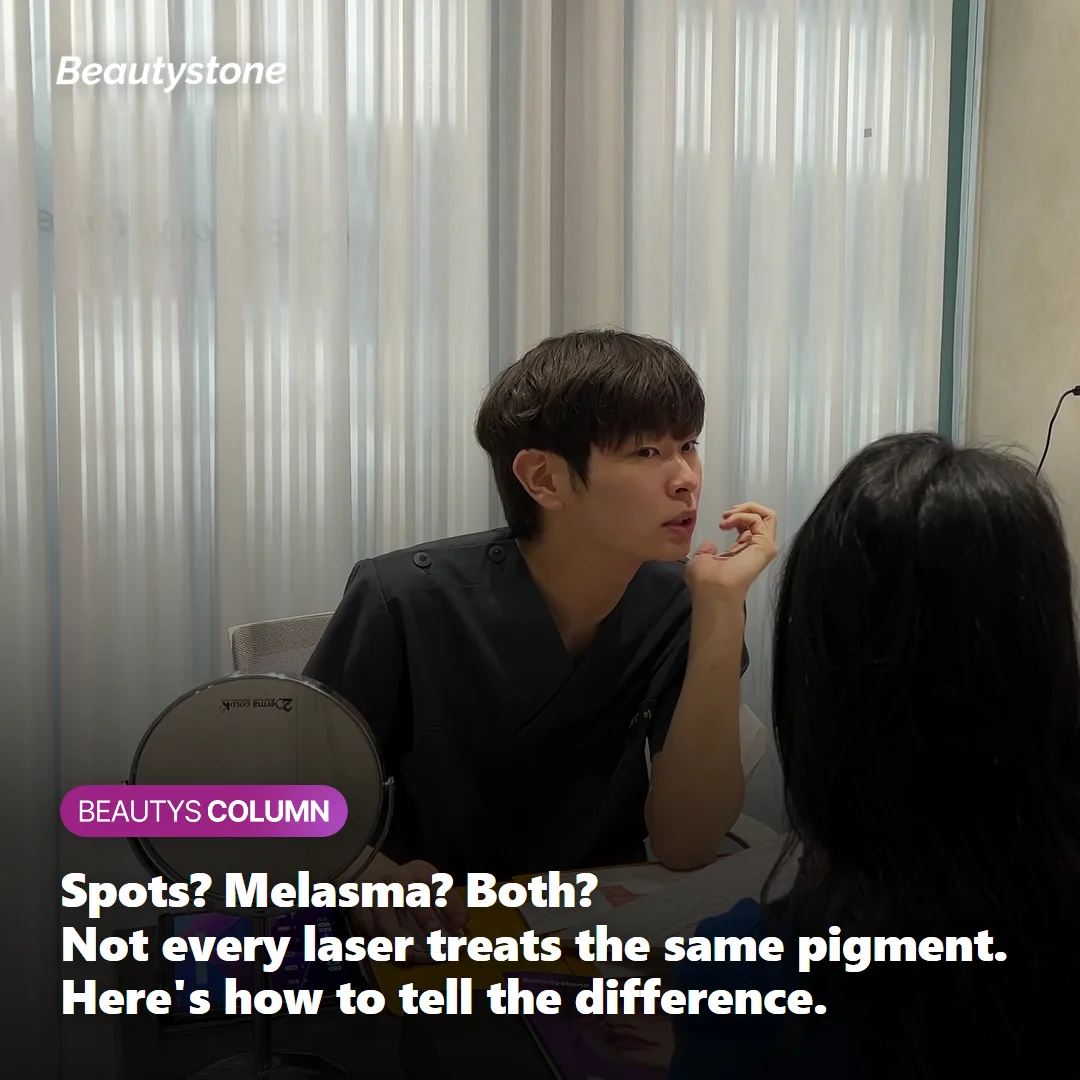
If you're dealing with a mix of sunspots and melasma, not every laser treats both equally well. Here's how laser toning, Pico, and IPL work — and which one fits which type of pigmentation.

Wi Young-jin
Chief Director & CEO, Myeongdong
One of the most common questions we hear at Beautystone is: "I have both melasma and sunspots — why do I keep getting different treatment recommendations?"
The answer comes down to a simple but important fact: not all pigmentation behaves the same way, and not every laser is designed to treat the same target. Laser toning, Pico lasers, and IPL each work by different physical principles — and matching the right device to the right type of pigment can mean the difference between gradual fading and making things worse.
In this article, we'll cover what sets these three approaches apart, how each one interacts with different pigment types, what you can realistically expect, and what risks to watch out for.
Not All Pigmentation Is the Same
Before you can choose a laser, it helps to understand what you're actually treating.
Spots (lentigines, freckles, post-inflammatory marks) tend to be epidermal — sitting in the upper layers of skin where melanin is concentrated and relatively accessible. They're often discrete, round, and darker than the surrounding skin. Because the pigment is shallow and localized, it tends to respond more predictably to targeted wavelengths.
Melasma is a different animal. It's driven largely by hormones, sun exposure, and genetics — and the melanin it produces tends to sit deeper, sometimes spanning both the epidermis and dermis (so-called "mixed" melasma). A dermatology reference on melasma notes that the condition is notoriously prone to recurrence, especially with heat and UV exposure. This is why any laser treatment for melasma requires extra caution: the wrong approach, or too much energy, can actually trigger a rebound flare.
The key takeaway: A laser aggressive enough to clear a stubborn freckle might set off a melasma flare. Going gentler with melasma means slower, less dramatic results — but it's usually the right tradeoff.
How Laser Toning Works
Laser toning uses a low-fluence Q-switched Nd:YAG laser — typically at 1064 nm — to deliver many low-energy passes across the skin. The goal isn't to ablate or destroy pigment in one session; it's to gradually fragment melanin granules and suppress melanocyte activity over a course of treatments.
What it does well: Laser toning is widely regarded as the most melasma-compatible approach currently in clinical use. The low energy per pass minimizes the thermal spike that can trigger post-treatment darkening or rebound pigmentation. Research indicates that repeated sessions can modestly reduce melasma — typically across 8 to 12 or more treatments, with results that vary by individual.
What it doesn't do: It's not going to dramatically clear a dark sunspot in one or two visits. It works gradually, and results depend on skin tone, melasma subtype, and how consistently you protect from the sun between sessions.
Session experience: About 20–30 minutes, mild warmth, and temporary redness that typically fades within hours. Numbing cream is available but most people find it tolerable without.
What Pico Lasers Bring to the Table
Pico lasers — devices like PicoWay — fire ultrashort pulses of energy measured in picoseconds, or trillionths of a second. The key distinction from older Q-switched devices is how that energy interacts with pigment: the ultrashort burst creates a photoacoustic shattering effect rather than relying primarily on heat.
- For spots: Pico lasers are highly effective at clearing discrete epidermal pigment. Sunspots, freckles, and post-inflammatory hyperpigmentation tend to respond well to the precise photoacoustic shatter.
- For melasma: Results are more mixed than the marketing sometimes suggests. While the photoacoustic mechanism does reduce heat-related risk compared to purely thermal devices, it doesn't eliminate it. Some protocols have shown benefit for mild melasma, but individual results vary significantly, and rebound remains a real concern.
- For deeper pigment: Pico wavelengths — 532 nm for more superficial targets, 1064 nm for deeper layers — can reach into the dermis, making them more versatile than IPL when pigment sits at different skin depths.
Session experience: Typically faster than toning, with slightly more sensation — often described as rubber-band snaps. Temporary darkening of treated spots (a sign the laser is working) is common and usually resolves within about a week. Individual results vary.
IPL — Broad-Spectrum or Too Broad?
IPL (Intense Pulsed Light) isn't technically a laser — it emits a broad spectrum of light across multiple wavelengths simultaneously, filtered to target specific chromophores like melanin and hemoglobin. This broadband approach makes it popular for overall photo-rejuvenation, addressing both pigmentation and redness in one session.
Where IPL works: Superficial, discrete spots — solar lentigines, mild freckling, and some vascular marks — respond well when there's enough contrast between the lesion and the surrounding skin tone. A skilled provider can calibrate fluence and cut-off filters to focus on shallow melanin.
Where it falls short:
- Melasma: IPL is generally considered risky for melasma, particularly mixed or dermal subtypes. The heat it generates can stimulate melanocytes and worsen the condition — many dermatologists avoid it for melasma-prone patients entirely.
- Skin tone range: IPL's margin for error narrows significantly with darker skin tones (Fitzpatrick III–VI), where off-target energy absorption is higher and the risk of post-inflammatory hyperpigmentation increases.
- Depth: Because IPL relies on superficial chromophore absorption, it can't meaningfully reach dermal pigment the way longer-wavelength lasers can.
Session experience: Moderate snapping sensation, some redness, and temporary "coffee-ground" darkening of spots before they flake off over 1–2 weeks. Formal downtime is minimal for most people.
Toning, Pico, and IPL Side by Side
Here's a quick look across common decision factors:
| Laser Toning | Pico Laser | IPL | |
|---|---|---|---|
| Mechanism | Low-fluence thermal fragmentation | Photoacoustic shattering | Broadband photothermal |
| Best for | Melasma, diffuse dullness | Spots, freckles, mild melasma | Superficial spots, redness |
| Melasma risk | Lowest (gentlest) | Moderate — protocol matters | Higher — often avoided |
| Typical sessions | 8–12+ | 3–6+ | 3–5 |
| Downtime | Minimal | Minimal to mild | Mild (1–2 wk spot darkening) |
| Skin tone range | Broader | Broad | Narrower (higher risk III–VI) |
* Individual results vary. Table reflects general published characteristics; your provider will tailor the approach to your skin.
What Are the Risks? Side Effects to Know
All three approaches carry real risks — and they're especially important to understand when melasma is part of the picture.
Common across all three:
- Redness and mild swelling after the session (typically resolves within hours to a day)
- Temporary darkening of treated spots — more common with IPL and Pico 532 nm wavelengths
- Dry or sensitive skin for a few days post-treatment
Melasma rebound: This is the most feared complication in pigment laser treatment. Any heat — from the laser itself or from sun exposure afterward — can trigger melanocytes and cause melasma to return darker than before. Strict sun avoidance before and after every session is non-negotiable. Sunscreen is non-negotiable.
Hypopigmentation: Higher-fluence approaches and darker skin types carry a greater risk of lightening the skin beyond the target area. This can be temporary, but in rare cases may be prolonged.
Post-inflammatory hyperpigmentation (PIH): Treating pigmentation can paradoxically create new pigment if the skin's inflammatory response is strong. Risk is higher in Fitzpatrick types III–VI.
Redness and swelling are common and usually settle within a day or two. If they worsen, spread, or are accompanied by fever or blistering, contact your provider right away — and seek medical care if symptoms escalate.
The Bottom Line
Here's what to take away from this comparison:
- Laser toning is the gentlest option for melasma — slow and steady, but the approach most providers reach for when minimizing rebound risk matters most.
- Pico lasers (like PicoWay) are highly effective for discrete spots and freckles, and can help with mild melasma under the right protocol — though they're not automatically safe for every melasma type.
- IPL works well for superficial spots and mixed vascular-pigment concerns, but carries a meaningful risk of worsening melasma and isn't suitable for all skin tones.
Like any procedure, these come with real trade-offs. The right laser depends on your specific pigmentation pattern, skin tone, lifestyle (especially sun habits), and how committed you can be to a full course of treatment.
Ultimately, the choice depends on your skin, your goals, and your budget. If you're dealing with a mix of spots and melasma and aren't sure where to start, a consultation is the best first step. Beautystone is a dermatology clinic in Seoul's Hapjeong area — see current offers at /en/promotion.