Radiesse Price: How Many Syringes per Area?
A Radiesse total depends on syringe size, syringes per area, and the touch-up plan more than on the one-syringe price. See study volumes for the jawline and hands, and what to plan if you're visiting Korea.

Wi Young-jin
Chief Director & CEO, Myeongdong
Your Radiesse total is set less by the price of one syringe than by three things: the syringe size, how many syringes each area takes, and whether a touch-up or retreatment is built into the plan. "One syringe" isn't a fixed unit. It can mean a 1.5 mL product or a 0.8 mL product, so two quotes with the same per-syringe figure may cover very different amounts.
The area matters just as much. One side of the jawline, both sides, and the backs of the hands each use different volumes, and many plans add a top-up a few weeks later. Below, we walk through the volumes each area used in studies, what a touch-up adds, and how to line up quotes so you're comparing the same thing.
At a Glance
- Compare Radiesse quotes by syringe size, syringes per area, and whether a touch-up or retreatment is included, not by the one-syringe price.
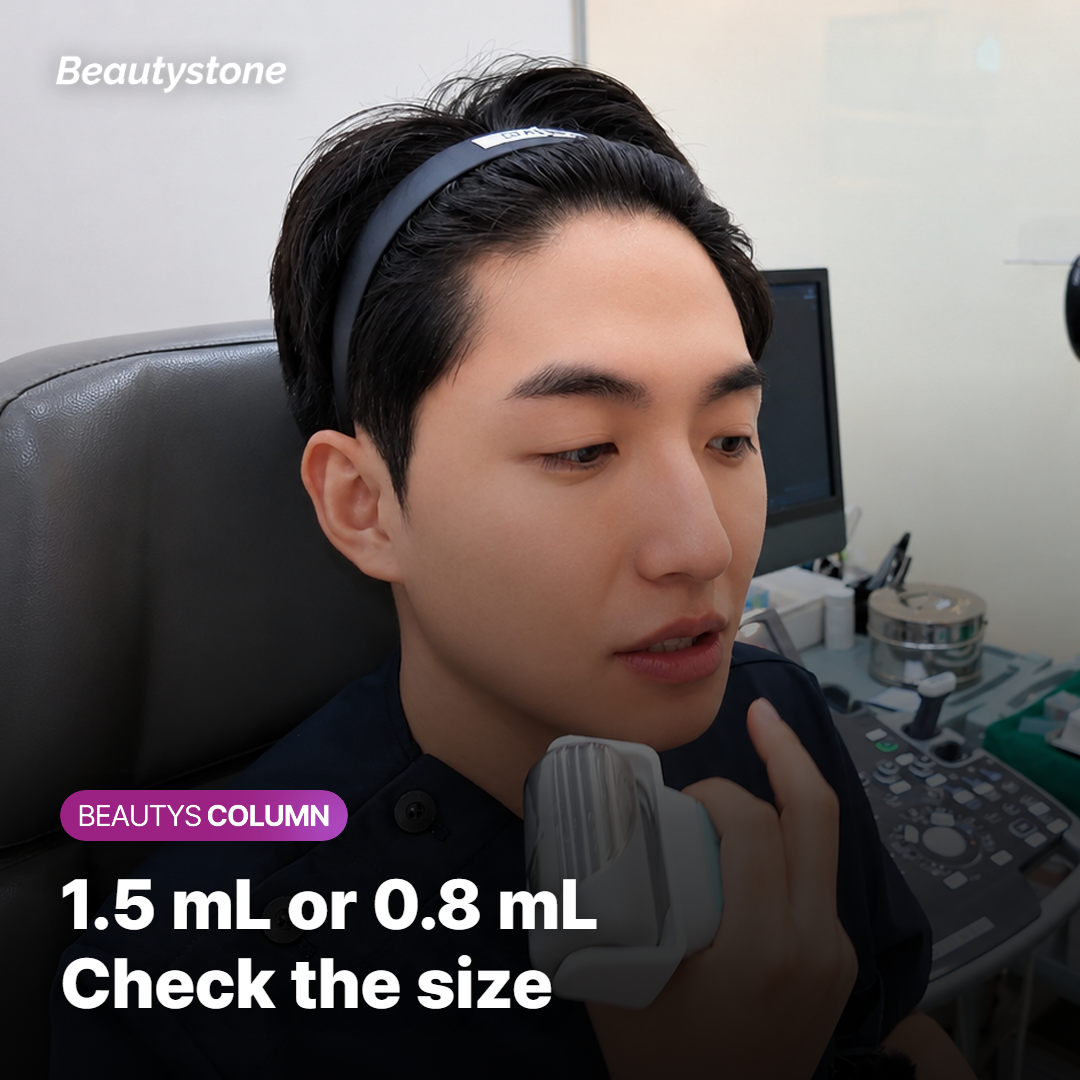
- A Radiesse syringe can hold 1.5 mL or 0.8 mL, so check which size each quote means.
- In a US jawline study, the median first treatment was 1.8 mL per side, and a touch-up was allowed at 4 weeks.
- At week 60, 74.6% of people retreated around week 48 still showed improvement, compared with 43.5% of those who had only the first treatment and touch-up.
Why Doesn't the One-Syringe Price Tell You the Total?
Because the syringe itself comes in more than one size. Besides the familiar 1.5 mL syringe, a smaller 0.8 mL fill volume has been approved in the US since 2009. When a quote says "per syringe," the first thing to pin down is which of the two it means.
The difference is bigger than it looks. Two 0.8 mL syringes add up to 1.6 mL, roughly what a single 1.5 mL syringe holds. So a lower per-syringe figure on a 0.8 mL product doesn't necessarily mean a lower bill for the same area. You may simply need more syringes to reach the same volume.
It also helps to know what you're paying for. Radiesse is made of tiny calcium hydroxylapatite (CaHA) particles suspended in a gel. The gel gives support right away, and as it's absorbed, your own tissue forms around the particles that remain. For jawline contour, it's placed deep, in the deep subcutaneous layer (the fat layer under the skin) or right on the bone. How much support an area needs and which layer it goes into decide the volume, and volume is the real unit behind any total.
How Many Syringes Does Each Area Need?
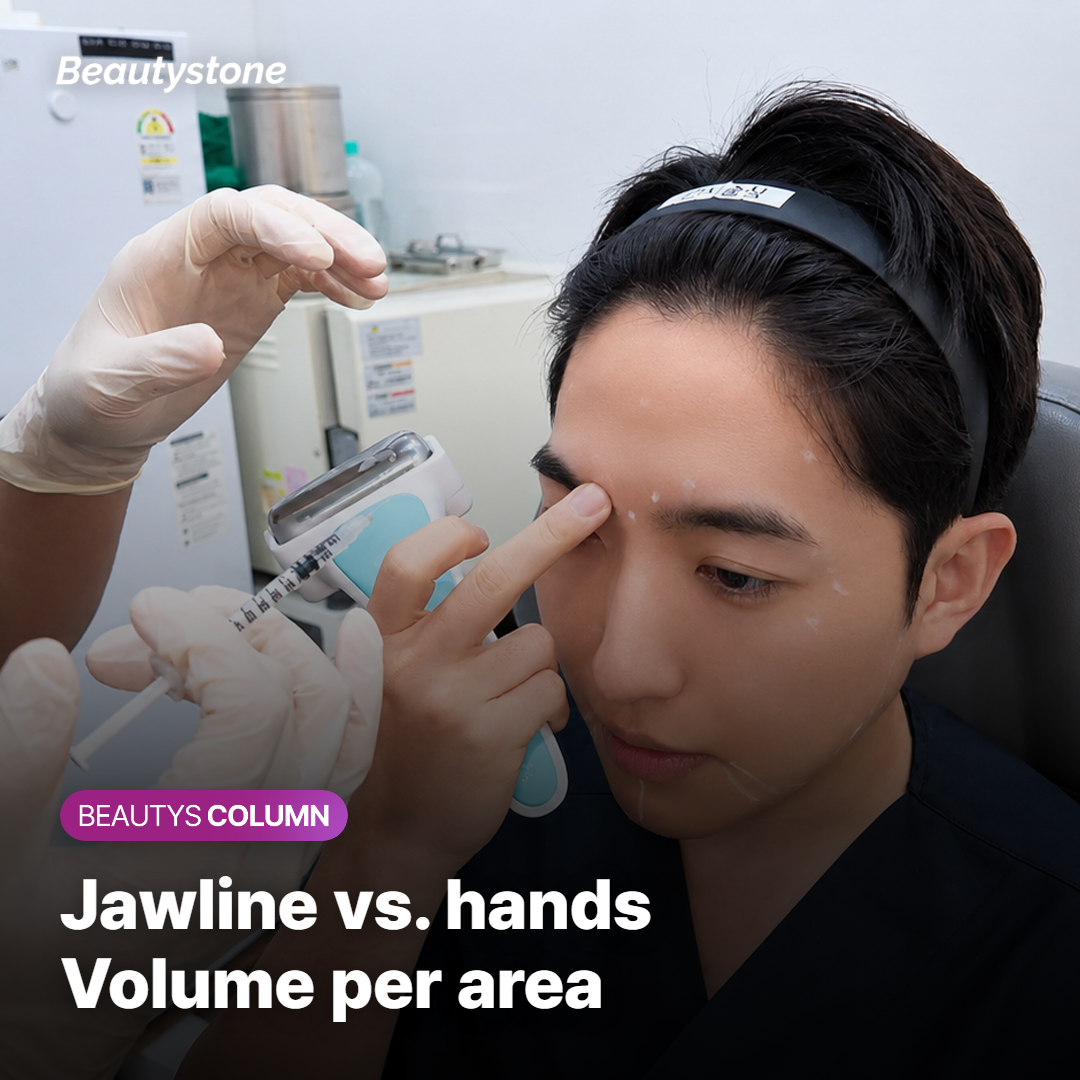
There isn't one number for everyone, but US approval studies give a useful reference point. For the jawline, the median first treatment was 1.8 mL per side, which is already more than a single 1.5 mL syringe holds. For the backs of the hands, people received up to 3.0 mL per hand, 2.5 mL on average.
Here's how the study amounts compare by area. Keep in mind that every figure is per side or per hand.
| Area (study) | First treatment | Follow-up |
|---|---|---|
| Jawline, one side | Median 1.8 mL | Touch-up at 4 weeks: median 1.1 to 1.25 mL; retreatment: median 1.4 to 1.5 mL |
| Back of one hand | Average 2.5 mL (up to 3.0 mL) | Second treatment at 6 months: average 1.6 mL |
These are study medians and averages, not a prescription. The amount your face or hands need depends on how much support the area calls for, and results differ from person to person. What you can do with the table is check the basis of a quote: does it cover one side of the jawline or both, and one hand or both? A quote written for one side can look much lower than a plan for the whole jawline.
Is a Touch-Up or Retreatment Part of the Cost?
Often, yes, and it's the part of a quote that's easiest to leave vague. A single session isn't the whole story for most people. In a jawline study of Radiesse with lidocaine, people were split two to one into a treated group and a group that waited, with touch-ups allowed and retreatment offered only to the treated group.
At week 12, 75.6% of the treated group (93 of 123) had improved by at least one point on the jawline scale, compared with 8.8% of the waiting group. Among those who had improved at week 12, 67.3% (76 of 113) were still improved at week 48. That's a real effect, but it also shows the improvement doesn't hold for everyone through the first year.
A long-term follow-up of the same study adds the piece that matters for budgeting. Responder rates were 77.9% at week 12, 78.7% at week 24, and 62.9% at week 48. At week 60, 74.6% of people who were retreated still showed improvement, compared with 43.5% of those who had only the first treatment and touch-up. How much you keep depends on your tissue and the plan, so think of the total as three parts: the first session, a possible touch-up around 4 weeks, and a possible retreatment around the one-year mark.
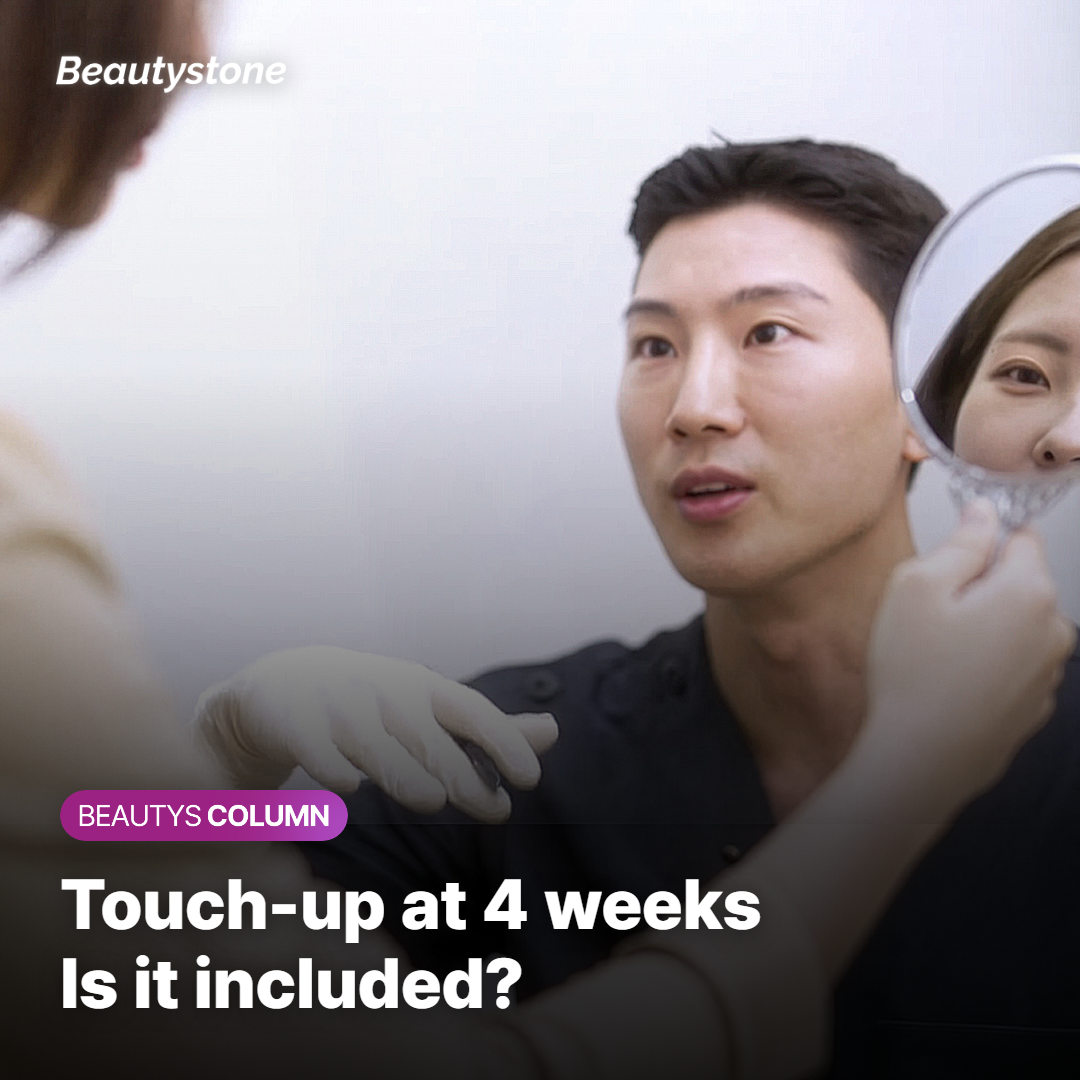
Getting Radiesse in Korea: Can You Come Back at 4 Weeks?
If you're flying in for treatment, the 4-week touch-up is the part to plan before you book. In the jawline study, the touch-up was allowed at 4 weeks, and the median amount added then was 1.1 to 1.25 mL per side. That's a meaningful share of the total, so it's worth deciding early whether you can realistically come back.
There are a few practical ways visitors approach this:
- You're staying in Korea for a month or longer, so the touch-up can happen on the same trip.
- You plan a second trip, and the doctor sets the first session knowing the top-up will come later.
- You can't return soon, so you talk through what the plan looks like without a touch-up on this trip.
None of these is right for everyone, and the doctor decides the amount per session. Whichever route you take, ask for a written note of the product, the syringe size, and the volume used in each area. If you see a provider back home later, that record makes the next decision much easier.
Radiesse Side Effects and Risks: What's Normal, What Isn't?
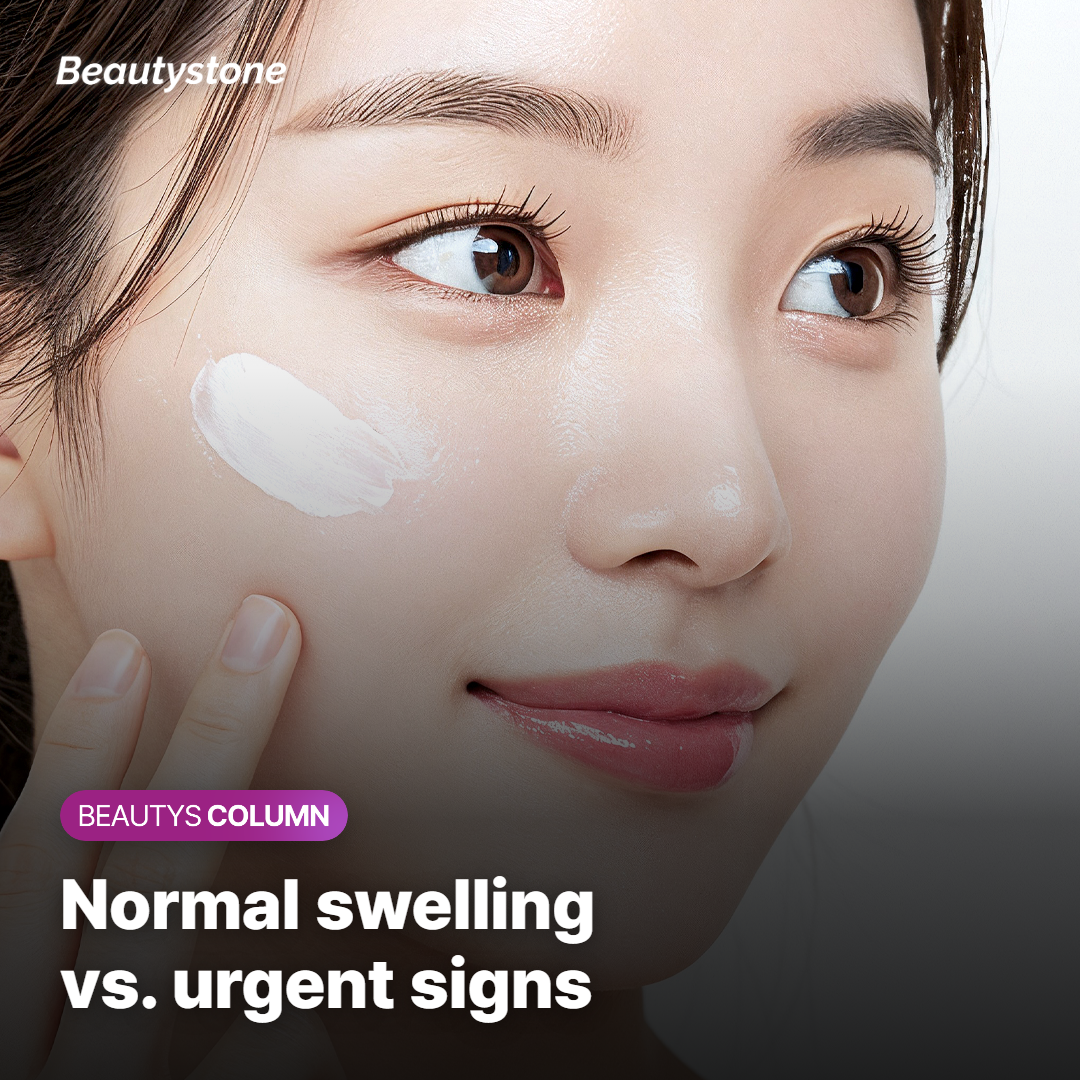
Most reactions are mild and pass on their own. Swelling, redness, pain, bruising, and itching are the common ones. In jawline treatment, 57% of these reactions lasted 7 days or less, 26% lasted 8 to 14 days, and 17% lasted 15 to 28 days. The treated area may also feel firm for a while, and that firmness goes away over several weeks.
A few things are worth knowing before and after treatment:
- Avoid strong sun and heat for 24 hours, or until the first swelling and redness have settled.
- Tell your provider beforehand if you've had cold sores (herpes), since treatment can trigger an outbreak.
- Safety and effectiveness in the lips and around the eyes haven't been established, and lumps (nodules) can form in the lips.
- Safety during pregnancy or breastfeeding hasn't been established.
- The particles show up on CT scans and may show up on X-rays, so tell radiology staff you've had Radiesse.
If a common reaction gets worse instead of settling, or lasts beyond the ranges above, contact your provider.
Some signs can't wait. According to the US FDA, filler injected into a blood vessel by accident is rare, but it can be serious and permanent, causing tissue death (necrosis), vision problems including blindness, or stroke. Seek immediate medical attention if you notice:
- Unusual pain
- Vision changes
- Skin near the injection site turning white, gray, or blue
- Signs of stroke: sudden difficulty speaking, numbness or weakness in the face, arms, or legs, difficulty walking, visual changes, face drooping, severe headache, dizziness, or confusion
For vision changes or any sign of stroke, go to the nearest emergency room right away. Don't wait to message the clinic first.
How Should You Line Up Two Radiesse Quotes?
Put each quote into the same few lines before you look at the total. If any line is missing, that's the question to ask.
- Syringe size: 1.5 mL or 0.8 mL?
- Syringes per area: how many for each area, and is the jawline counted per side or for both sides?
- Product type: plain Radiesse or the version mixed with lidocaine, a numbing medicine?
- Touch-up: is a top-up around 4 weeks included, or is it charged separately?
- Retreatment: is there a plan for later, and how would it be quoted?
Not every area on your list needs the same approach. At Beautystone, a clinic in Seoul, the doctor first separates the areas that need contour support from the areas where the concern is closer to skin quality, then decides the layer and the amount for each area at the consultation. That way, the syringe count on your quote comes from a plan for each area rather than a round number.
The Bottom Line: What to Ask Before You Book
Syringe size is the detail that makes or breaks a price comparison, so get it in writing before anything else. Then ask the same question everywhere: "For both sides of my jawline, which syringe size, how many syringes, and when is the touch-up?" To ask Beautystone, send a message through the consultation button on this page. In your first message, include the areas you'd like treated, any previous filler or Radiesse and roughly when you had it, and the syringe size and count from other quotes or your travel dates.
Sources
- Approval of the 0.8 mL Radiesse syringe size — US FDA, 2009
- Jawline study comparing Radiesse with lidocaine to no treatment — J Drugs Dermatol, 2021
- Long-term jawline results with and without retreatment — J Cosmet Dermatol, 2024
- Dermal filler risks and warning signs after injection — US FDA
Frequently Asked Questions
Q. Does a Radiesse injection hurt?
A. Most people feel it, but the version mixed with lidocaine, a numbing medicine, is noticeably more comfortable. In a split-face comparison, pain right after injection was rated about 2.3 out of 10 with lidocaine versus about 6.7 for plain Radiesse. If you're allergic to lidocaine, tell your provider before treatment.
Q. How long do Radiesse results last?
A. It varies by area and by person. In a nasolabial fold study, 78.6% of 117 people were improved at 6 months, and 35 of them were still improved at least 30 and up to 39 months after their last injection. Many people don't keep the full effect that long, which is why retreatment is often part of the plan.
Q. Can Radiesse be used in the lips or under the eyes?
A. Safety and effectiveness of Radiesse in the lips and around the eyes haven't been established. Lumps called nodules can form when it's placed in the lips. Ask your provider which product suits these areas instead.
Q. Will Radiesse show up on an X-ray or CT scan?
A. Yes, the calcium hydroxylapatite particles are visible on CT scans and may be visible on X-rays. Tell radiology staff that you've had Radiesse and where, so the particles aren't mistaken for something else.
Q. Can I get Radiesse while pregnant or breastfeeding?
A. Safety during pregnancy or breastfeeding hasn't been established. Mention it at the consultation if either applies to you, so the timing can be discussed.
Q. I've had cold sores before. Does that matter for Radiesse?
A. Yes. Treatment can trigger a herpes outbreak in people with a history of cold sores, so tell your provider beforehand. They can then decide how to plan around it.
Q. Why might two clinics suggest different amounts for the same jawline?
A. Because the amount depends on how much support your jawline needs, the layer it goes into, and whether the quote covers one side or both. In a US approval study, the median first treatment was 1.8 mL per side, but that's a midpoint, not a fixed dose. Ask each clinic to write down the syringe size and the count per side.