Jawline Lifting: Sagging Skin or Chin Fat?
A double chin can come from sagging skin, a layer of fat, or neck muscle bands, and each one changes what comes first. Here's how to tell them apart, how Ultherapy and a thread lift differ for sagging, and what's used when fat is the main cause.
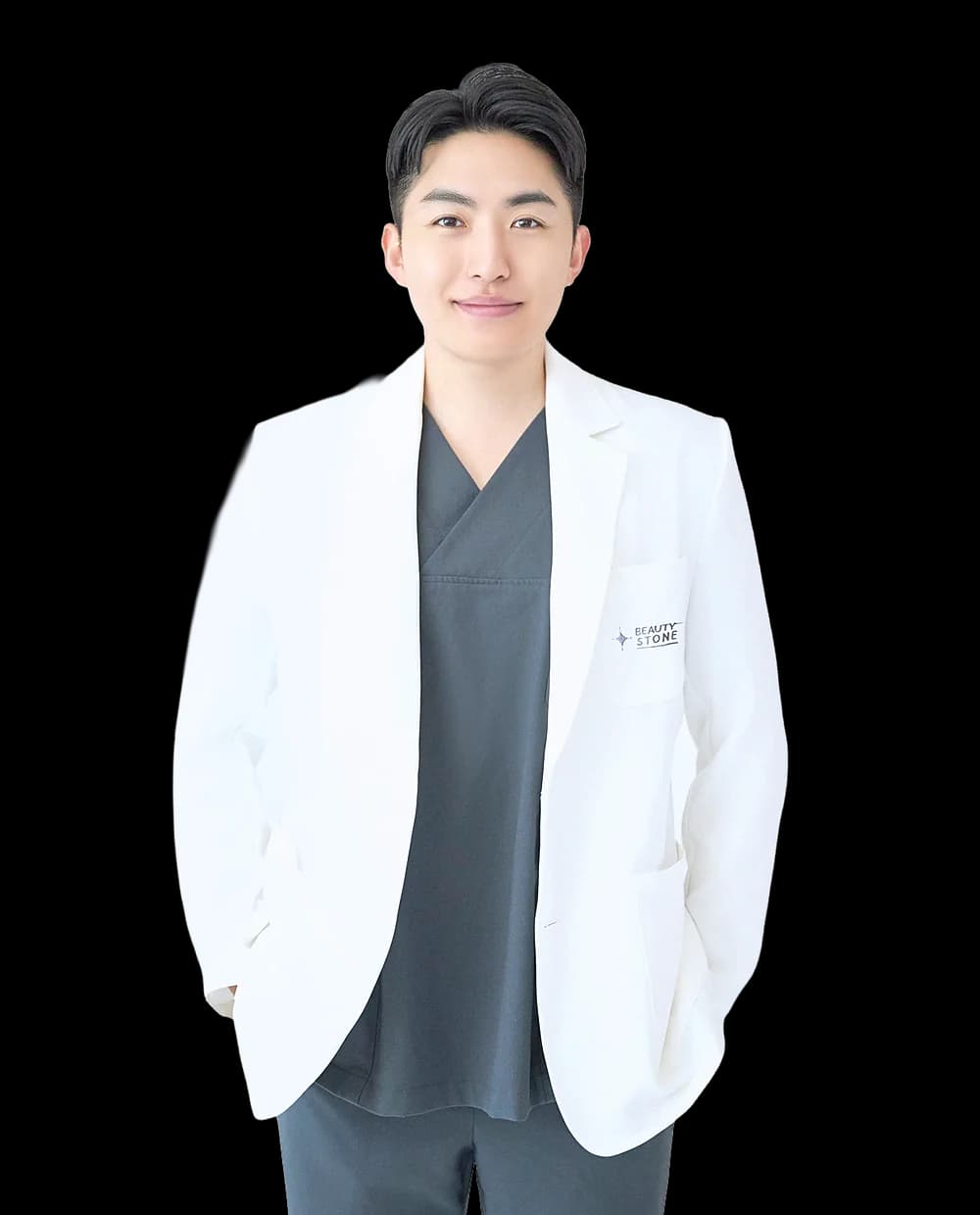
Wi Young-jin
Chief Director & CEO, Myeongdong
Start with what's actually making your chin look full. If loose skin has slid down past the jawline, a lifting treatment like Ultherapy or a thread lift comes first; if a thick layer of fat sits under the chin, reducing that fat comes first. Many faces have some of both, so the order depends on which one makes up more of yours.
A third factor, the muscle bands at the front of the neck, can blur the jawline too. In this article, we'll cover how to tell the three apart, how ultrasound lifting and threads differ for sagging, what's used when fat is the main cause, which reactions are normal, and how treatment fits into a trip.
Quick summary
- Which treatment comes first depends on whether sagging, fat, or neck muscle bands make up most of your double chin.
- Ultrasound lifting: the lift under the chin was largest at 90 days and had shrunk by 180 days.
- A thread lift changes the shape right away, though satisfaction went from 98% just after the procedure to 88% at 6 months.
- Fat: when fat under the chin is the main cause, fat-reducing options are weighed before lifting.
Is Your Double Chin Sagging Skin, Fat, or Neck Bands?
Your own fingers can give you a rough answer. Pinch the area under your chin between your thumb and index finger. If you grab a thick, soft roll, fat is likely a big part of it. If you catch only a thin layer of skin and the jawline looks blurred because the lower cheeks have drifted down over it, sagging is the bigger share.
Next, swallow hard, or pull the corners of your mouth down firmly. If vertical bands stand out on the front of your neck, the platysma (the thin sheet of muscle that covers the front of the neck) is part of the picture as well.
Keep in mind the pinch test is only a starting point, since fat and sagging often overlap. At the consultation, we look at your jawline while you're sitting up and again while you're lying down, then measure how thick the fat layer is with an ultrasound scan. That's how the three causes get weighed against each other. The balance of your whole face and any difference between the left and right sides are checked at the same visit.
Ultherapy or a Thread Lift: Which Fits a Sagging Jawline?
If the sagging is mild and you'd like little downtime, ultrasound lifting is the usual starting point. If you want a drooping area visibly lifted, a thread lift goes on the table alongside it.
Ultherapy and Shurink (Ultraformer MPT) are both HIFU (high-intensity focused ultrasound) devices. They send focused energy to set depths under the skin without breaking the surface, and the tissue tightens gradually as it repairs itself. In a Korean study of 20 adults who had one Ultherapy session, the jawline improved the most of the seven facial areas assessed. It was a small group with no untreated comparison, and results differ from person to person. The change builds over months, so you won't see a new jawline on the day.
A thread lift works differently. Absorbable threads with tiny barbs are placed under the skin to hook the sagging tissue and pull it up, so the shape changes right after the procedure. When sagging is the main issue, lifting it with threads earlier tends to hold up longer than waiting until it's deep. If your cheeks look hollow rather than droopy, though, filler to restore volume is the better fit, not threads. When we place threads, we use a reverse technique aimed at avoiding the puckered dimples a pull can leave.
| What to compare | Ultrasound lifting (Ultherapy, Shurink) | Thread lift |
|---|---|---|
| When the change shows | Over a few months | Right after the procedure |
| Main concern it suits | Mild sagging, loose skin under the chin | Visible sagging |
| Common reactions | Redness, swelling, bruising that cleared within 2 weeks in one study | Swelling (35%), with dimpling in 10% |
| Breaks the skin? | No | Yes, threads go in through a needle |
If sagging is your only concern, the first two rows are usually enough to choose between them.
When Does Ultherapy Show the Most Change Under the Chin?
Around the 3-month mark. In a Taiwanese study, 25 adults had one Ultherapy session on the face and neck, and the area under the chin had lifted by an average of 26.44 mm at 90 days. By 180 days the lift measured 13.76 mm, and that was no longer a meaningful difference from where they'd started.
So the change from a single session isn't something to count on holding indefinitely. How much you see depends on your skin, and one session rarely reshapes a jawline in one go.
That's why it helps to take photos at 3 and 6 months in the same light and from the same angle. Comparing how far the line under your chin has drifted back gives you and the doctor something concrete to go on when deciding on the next step.
What Helps When Fat Under the Chin Is the Main Cause?
When what you pinch is a thick layer of fat, reducing that volume comes before pulling skin up. A survey of 13 Korean doctors shows how this plays out in practice: for faces with a lot of fat, 61.5% used more than 450 to 600 HIFU shots on the jowls and the area under the chin, and 36.4% added deoxycholic acid injections.
Deoxycholic acid is a bile acid your body uses to break down dietary fat. Injected into a small area, it destroys the fat cells there. In a trial that compared it with placebo injections, 66.5% of people who received deoxycholic acid had at least a one-grade improvement in fat under the chin, compared with 22.2% of those given placebo. Individual results vary.
If the fat shrinks while the skin is still loose, the area under the chin can look slack. So when sagging is also part of your picture, we plan the lifting to follow once the fat has been reduced.
Jawline Lifting Side Effects: What Fades and When to Call
After ultrasound lifting, redness, swelling and bruising tend to pass on their own; among the 20 Korean adults mentioned above, they cleared within 2 weeks. If they get worse or spread instead of fading, contact your provider right away.
After a thread lift, swelling is the most common reaction. Here's how often each reaction showed up when the results of many thread lift studies were pooled:
- Swelling: 35%
- Dimpling (a small dent or pucker in the skin): 10%
- Paresthesia (tingling or altered feeling in the skin): 6%
- A thread you can see or feel: 4%
- Infection: 2%
- A thread working its way out (extrusion): 2%
Some signs shouldn't be waited out. An infection at a thread site doesn't clear up by itself and needs treatment. Contact the clinic that treated you right away if you notice any of these:
- The thread site turns red, feels hot, hurts more each day, or drains pus
- The end of a thread pokes out through the skin
- Swelling, or numbness on one side of your face, that hasn't improved after 2 weeks

Jawline Lifting Within Your Travel Itinerary in Korea
Unless you had sedation that day, there's no reason to push back your flight home because of a jawline treatment.
It also helps to know what one visit can do. Some treatments, like fillers, change your shape the same day, and a thread lift lifts right away as well. Most others, ultrasound lifting included, don't transform things in one go; they bring you gradually closer to how you used to look.
If your plan combines fat reduction and lifting, bring the dates of your next possible trips. That way the steps can be spaced around when you'll actually be here.
Once you're home, you can send photos through the consultation button on this page if you have questions about how things are going. If a reaction looks serious, such as spreading redness or pus at a thread site, see a local doctor first rather than waiting on a reply.
The Bottom Line on Choosing a Jawline Treatment
Before you compare an Ultherapy plan with a thread lift plan, ask one question: how thick is the fat under my chin on the ultrasound scan, and how much of the blur comes from sagging? That single measurement decides whether lifting or fat reduction goes first, and it makes two quotes much easier to compare.
At Beautystone, a clinic in Seoul's Hapjeong area, the doctor checks your jawline sitting and lying down before choosing the order. You can reach us through the consultation button on this page. In your first message, include a front and a side photo, the date of any recent lifting treatment, and whether your weight has changed lately.
Sources
- One Ultherapy session in seven facial areas of 20 Korean adults — Annals of Dermatology, 2015
- How far the area under the chin lifted after ultrasound lifting in Asian adults — Dermatologic Surgery, 2017
- How often side effects occur after a thread lift, and how satisfied people were — Aesthetic Plastic Surgery, 2021
- Deoxycholic acid injections compared with placebo for fat under the chin — Journal of the American Academy of Dermatology, 2016
- How 13 Korean doctors choose treatments by the amount of facial fat — Annals of Dermatology, 2025
Frequently Asked Questions
Q. How long does a thread lift last?
A. Long-term data is still thin. In a review of absorbable thread studies, the longest follow-up was 2 years, and there wasn't enough evidence to confirm lasting results. A separate pooled analysis found satisfaction dropped from 98% right after the procedure to 88% at 6 months, and how long the lift holds depends on how deep the sagging is and the type of thread used.
Q. Is a thread lift riskier if I'm over 50?
A. The risk of dimpling is higher. In a pooled analysis, 16% of people over 50 had skin dimpling after a thread lift, compared with 5.6% of younger people. If your skin is thin and the sagging is deep, the number of threads and the direction they're placed in need more careful planning.
Q. Can ultrasound lifting reduce fat under the chin?
A. There's early evidence that it can. In a study of 30 Asian adults who had one HIFU session at deep focal depths of 4.5 mm and 6.0 mm, doctors rated the fat under the chin as improved at 4 weeks, and 82% said it looked better. The study only followed people for 4 weeks, so it isn't known yet how long that change lasts.
Q. When can I judge results from a fat-dissolving injection?
A. In the main deoxycholic acid trial, results were judged 12 weeks after the last injection. Most side effects happened at the injection site, and people were followed for 44 weeks. The number of sessions is set by how much fat sits under your chin.
Q. Can I get Ultherapy and a thread lift on the same day?
A. The two are sometimes planned together, but whether they're done on the same day or spaced apart depends on how deep the sagging is and how much swelling you have. That's decided after an exam, so mention at the consultation that you're considering both.