

Does Laser Toning Make Melasma Worse?
If your melasma looks darker instead of lighter after laser toning, it's usually not your imagination. Too much energy or too little time between sessions can push reactive melanocytes to make more pigment, not less.

If your melasma seems to be getting darker instead of lighter after laser toning, you're not imagining it, and you're not alone. Aggressive energy settings and back-to-back sessions can push pigment-producing cells into overdrive instead of calming them down. In this article, we'll cover why more laser doesn't always mean less pigment, who's most likely to see this backfire, and the spacing that actually works.
Can Laser Toning Make Melasma Worse?
Yes — and it's more common than a lot of people expect.
Laser toning (usually a low-fluence Q-switched Nd:YAG laser) works by breaking up melanin sitting in the skin. But that energy also causes a small amount of micro-injury in the dermis. If that injury turns into inflammation, melanocytes — the cells that make pigment — can actually ramp up production instead of settling down. Dermatologists call this post-inflammatory hyperpigmentation, or PIH, and it means a fresh layer of pigment gets stacked right on top of the melasma that was already there.
The assumption that 'more sessions equals more improvement' really doesn't hold up for melasma the way it might for a single sunspot or freckle.
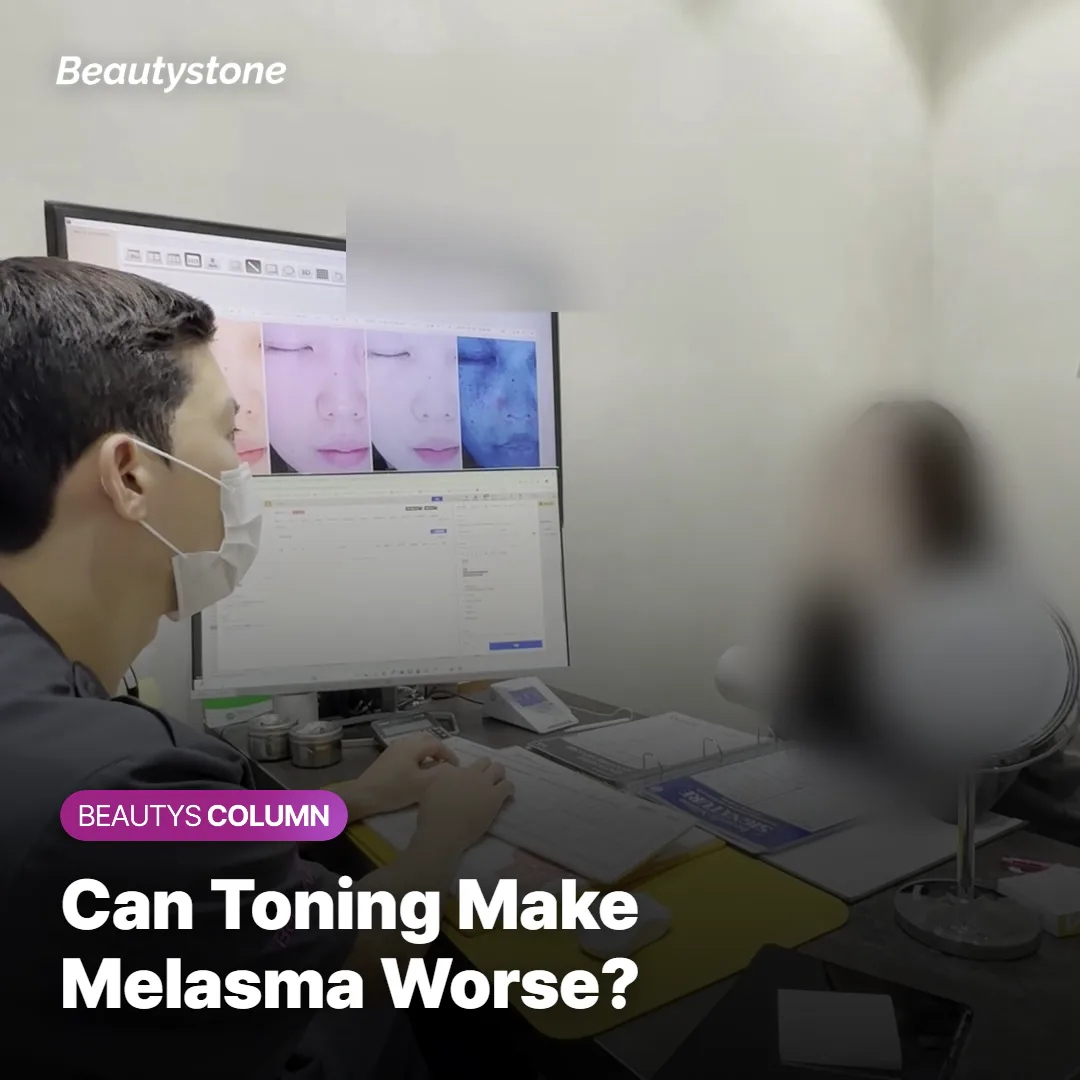
How Rebound Hyperpigmentation Happens
Melasma isn't just ordinary sun damage — the melanocytes involved are simply more reactive to begin with. Heat, UV exposure, and hormonal shifts all read as threat signals to these cells, and their go-to response is to make more pigment, not less.
When sessions are scheduled too close together — every one to two weeks, for example — the skin doesn't get a full inflammation-to-recovery cycle before the next round of energy hits. New pigment keeps getting added faster than the old pigment clears, and the color can shift from tan-brown to a darker gray-brown tone.
- Energy set too high: More power feels like it should mean faster results, but it also means more micro-injury and more inflammation per session.
- Sessions too frequent: Skin needs time to fully calm down between treatments — a one- to two-week gap often isn't enough for reactive melanocytes.
- Underlying trigger still active: Ongoing sun exposure, heat, or hormone shifts can undo progress between sessions, no matter how gentle the laser setting is.
Why Hormonal and Pregnancy-Related Melasma Reacts Differently
Hormonal melasma calls for environment management before it calls for more laser.
Melasma that starts during pregnancy, with birth control, or around perimenopause develops because melanocytes are already primed to overreact. The same amount of sun exposure that barely affects someone else's skin can darken this type of melasma noticeably faster.
Relying on laser toning alone tends to raise the rebound risk in these cases. Many providers instead combine longer intervals — often two to four weeks apart — with oral tranexamic acid and skin-barrier-supportive care. Research suggests tranexamic acid may help regulate melanocyte activity, though it isn't the right fit for everyone and should be discussed with your provider, especially if you're pregnant or breastfeeding.
During pregnancy specifically, most providers hold off on laser treatment altogether and focus on sun protection and topical care until after delivery.
Common Side Effects and Warning Signs
Most melasma laser side effects trace back to the same two variables: energy that's too high and sessions that are too frequent.
| Side Effect | How Common | What Helps |
|---|---|---|
| Rebound hyperpigmentation | Most common with frequent, high-energy sessions | 4–8 week break plus calming, anti-inflammatory skincare |
| Post-inflammatory hyperpigmentation (PIH) | More likely with darker skin tones or high energy settings | Lower energy, plus oral medication if your provider recommends it |
| Faint pale patches (hypopigmentation) | Rare, reported mostly after 100+ cumulative sessions | Stop treatment and prioritize strict sun protection |
| Persistent redness or warmth | Common in sensitive skin | Calming skincare and a longer gap before the next session |
If you notice spreading redness, warmth that doesn't settle after a few days, or new pale patches anywhere on treated skin, contact your provider right away rather than waiting for your next scheduled appointment.

How to Lower Your Risk: Energy and Timing
The short version? Lower the energy, extend the interval, and judge progress by how your skin responds — not by how many sessions you've logged.
- Start conservative: A lower energy setting with a consistent schedule tends to outperform an aggressive setting with an inconsistent one.
- Space sessions two to four weeks apart: This gives the skin a full cycle to calm down before the next round of energy.
- Watch your first four sessions closely: If pigment isn't budging by then, that's a signal to adjust the plan, not push harder.
- Treat a slow response as a stop sign, not a green light: Bumping up the energy when results are disappointing is exactly the pattern that leads to rebound pigmentation.
None of this is about doing less for the sake of it. It's about giving reactive melanocytes room to settle instead of staying in a constant state of alarm.
Is Laser Toning Still Worth It?
For a lot of people, yes — melasma just responds better to a patient pace than an aggressive one.
Laser toning can still meaningfully fade melasma when it's dosed conservatively, spaced out appropriately, and paired with daily sun protection. It's not a quick fix, and individual results vary depending on skin tone, hormone status, and how consistent you are with aftercare — but that's true of most melasma treatments, not just laser.
If you're considering treatment, a consultation is the best way to find out what pace and settings make sense for your skin. Beautystone is a dermatology clinic in Seoul's Hapjeong neighborhood — see current offers at /en/promotion.
The Bottom Line
- Melasma laser side effects are usually tied to energy that's too high or sessions scheduled too close together.
- Hormonal and pregnancy-related melasma are more reactive and often need a longer interval, not a stronger setting.
- A slow response is a cue to pause and reassess, not to increase the energy.
- Two- to four-week spacing, conservative energy, and daily sun protection are the pattern most providers now favor.
Like any procedure, laser toning comes with trade-offs, and melasma in particular rewards patience over intensity.
Ultimately, the choice — and the pace — depends on your skin, your triggers, and how your melasma has responded so far. Talk to your provider before your next session if anything looks or feels off.
Frequently Asked Questions
Q1. Does laser toning make melasma worse?
It can, especially when energy is set too high or sessions are scheduled too close together. The laser breaks up pigment, but the micro-inflammation it causes can trigger melanocytes to produce even more pigment — a rebound effect rather than a straightforward fade.
Q2. How long should you wait between melasma laser sessions?
Many providers now favor two- to four-week intervals over the one- to two-week spacing that used to be common, giving the skin a full cycle to calm down before the next round of energy. Your provider will adjust based on how your skin responds after the first few sessions.
Q3. What are the signs of rebound hyperpigmentation?
Watch for pigment that looks darker or more gray-brown a few weeks after a session instead of fading, along with redness or warmth that lingers longer than expected. If that happens, the usual fix is a break of several weeks, not another treatment right away.
Q4. Is laser treatment safe for hormonal or pregnancy-related melasma?
Pregnancy-related melasma is typically managed with sun protection and topical care until after delivery, since hormonal shifts can make melanocytes more reactive to any heat-based treatment. For hormonal melasma outside of pregnancy, providers often combine longer intervals with other options — always something to bring up with a board-certified dermatologist first.