Melasma: Can 1 Laser Session Make It Worse?
Here's why melasma won't fade with a single session like moles or dark spots do — and why aggressive lasers can actually trigger a rebound effect.

Many patients feel frustrated after getting a laser procedure for melasma, only to watch it return a few weeks later — wondering if they wasted their money. It's especially disheartening when moles and dark spots respond so well to laser, yet melasma seems to resist.
The short answer: melasma is not a pigment you eliminate in one session — it's closer to a chronic pigmentation condition that requires consistent, ongoing management to keep it faded. In fact, aggressive laser procedures can sometimes make it darker. Understanding why melasma behaves differently from other pigmentation, and how to approach laser realistically, can save you both money and disappointment.
This article was prepared by Beautystone Clinic in Hongdae as an informational guide.
What you'll learn from this article

  · Why melasma can't be cleared in a single session
  · Why laser procedures can sometimes make melasma worse
  · How melasma recurs — and what a realistic management plan looks like
  · Habits that help slow down recurrence
Why Melasma Doesn't Disappear After Just One Laser Session
Melasma develops when the cells responsible for producing melanin* become overactivated. Unlike moles or dark spots — where pigment sits in a relatively localized, shallow area that laser energy can break apart — melasma is diffuse and stems from sensitized melanin-producing cells. Destroying the pigment doesn't resolve the underlying issue; those same cells simply produce more pigment when triggered again.
Melanin*: The pigment that gives skin its color. It is produced in greater quantities in response to stimuli such as UV exposure, heat, and hormonal changes.
This is why melasma needs to be managed more like a chronic condition. As noted in this overview of melasma as a chronic pigmentation condition with a high recurrence risk following laser or IPL and UV re-exposure, the realistic goal is not elimination but sustained fading — preventing it from darkening again, rather than trying to erase it all at once.
Why Laser Can Actually Worsen Melasma
The same high-energy laser that works well on moles and dark spots is often poorly suited for melasma. Intense heat can further stimulate already-sensitized pigment cells, triggering a rebound effect where the melasma returns darker than before. Here's how melasma compares to general pigmentation:
| Category | General Dark Spots & Moles | Melasma |
|---|---|---|
| Pigment distribution | Relatively shallow and localized | Diffuse and widespread |
| Response to high-energy laser | Generally responds well | May darken due to rebound effect |
| Recurrence tendency | Relatively low | Relatively high |
| Recommended approach | One to two removal sessions | Low-intensity sessions spread over time |
For melasma, a safer approach involves multiple sessions of low-intensity Laser toning* — gradually reducing pigment over time — combined with topical agents and consistent sunscreen use, rather than trying to clear it all at once with aggressive energy.
Laser toning*: A method of gradually reducing pigmentation through multiple low-intensity laser sessions. By avoiding high energy in a single session, the risk of a rebound effect is significantly lowered.

A Look at How Melasma Recurs Over Time
Visualizing melasma intensity as a curve makes the pattern much easier to understand. With consistent management, pigmentation gradually fades — but during periods of high UV exposure or lapsed care, it tends to resurface.
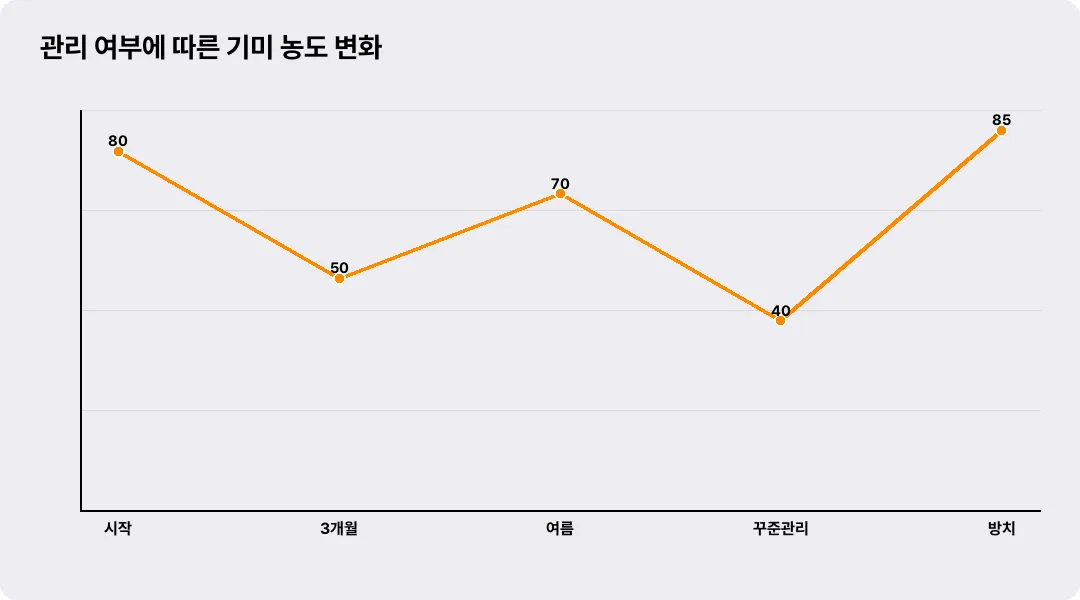
This is why "I've kept it faded" is a more accurate description than "I got rid of it." Without ongoing maintenance, melasma tends to darken again — which means consistency is what determines long-term results.

Why Beautystone Clinic in Hongdae?
At Beautystone Clinic in Hongdae, when it comes to stubborn pigmentation like melasma that doesn't resolve in a single session, we make it a point to explain upfront why it doesn't disappear all at once — and what a realistic management plan looks like. Rather than promising to clear it aggressively in one go, we guide patients toward low-intensity approaches that reduce the risk of rebound, alongside topical care and sun protection. As a small clinic conveniently located near Hapjeong Station, we're able to monitor how the pigmentation is fading and adjust the intensity and interval of each session accordingly.

How to Manage Melasma and Slow Down Recurrence
For melasma, building habits that minimize irritation and block UV exposure is just as important as any procedure.
- Daily sunscreen — UV exposure is the leading trigger for melasma recurrence. Apply sunscreen thoroughly every day, even on overcast days.
- Physical sun protection — Hats and parasols that directly block sunlight provide an additional layer of meaningful protection.
- Minimize friction — Vigorous scrubbing during face cleansing or frequent exfoliation can stimulate pigment cells.
- Consistent topical use — Sticking to the brightening topical agents recommended by your doctor without skipping is essential.
Melasma is a pigmentation condition that fluctuates with the seasons and your lifestyle — not something that ends with a single procedure. Maintenance is necessary even after it fades. Since the appropriate intensity and session intervals vary depending on your skin's condition, it's important to discuss your plan directly with a medical professional who has examined you in person. This article is intended as general information only.

Frequently Asked Questions
Q. Can melasma be completely removed with laser?
A. In many cases, complete removal in a single session is not achievable. Because melasma involves sensitized melanin-producing cells, aggressive laser energy can sometimes trigger a rebound, causing it to return darker. A more realistic approach is to gradually lighten it over multiple low-intensity sessions while combining topical agents and consistent sun protection.
Q. My melasma looks darker after a laser procedure. Why?
A. This may be a rebound effect, where intense heat further stimulates already-sensitive pigment cells, producing more melanin. In this situation, it's important to reduce stimulation — either by lowering the laser intensity or taking a break from procedures. Rather than adding other procedures on your own, consult with your treating physician to reassess the approach.
Q. Can melasma fade just by wearing sunscreen consistently?
A. Sunscreen is the cornerstone of melasma management. While it alone won't fully eliminate it, it plays a key role in preventing further darkening and maintaining the progress you've made. Results tend to be better sustained when sun protection is combined with topical agents and appropriate procedures.
Q. How long does melasma management need to continue?
A. Because melasma fluctuates with the seasons, hormonal changes, and lifestyle habits, ongoing management is recommended even after the pigmentation has faded. Pay extra attention during periods of intense UV exposure. Consistent sun protection and maintenance are the most reliable ways to preserve long-term results.