Collagen Boosters: What They Fix in Your 20s vs 40s
Here's how collagen boosters stimulate your skin's natural collagen production, and how the goals and expected results shift depending on your age.


The moment your skin starts feeling different than it used to, a familiar question follows: "Is now the right time to start a collagen booster, or is it too soon?" Ads will tell you earlier is better, while others suggest waiting until you're a bit older — and it's easy to feel confused.
The short answer is this: there's no fixed "right age" to start a collagen booster. It's really a matter of how quickly your skin is losing collagen and what specific concerns you're hoping to address. Since the changes people notice most tend to shift with age, the goals and expected outcomes from the same procedure can look quite different from one person to the next.
This article is a procedure information guide from Beautystone Clinic in Hongdae.
By the end of this article, you'll understand:

  · How collagen naturally declines as we age
  · How collagen boosters work in your skin
  · How the expected results and choices differ by age group
  · Key things worth knowing before you get started
First, Let's Talk About How Collagen Declines With Age
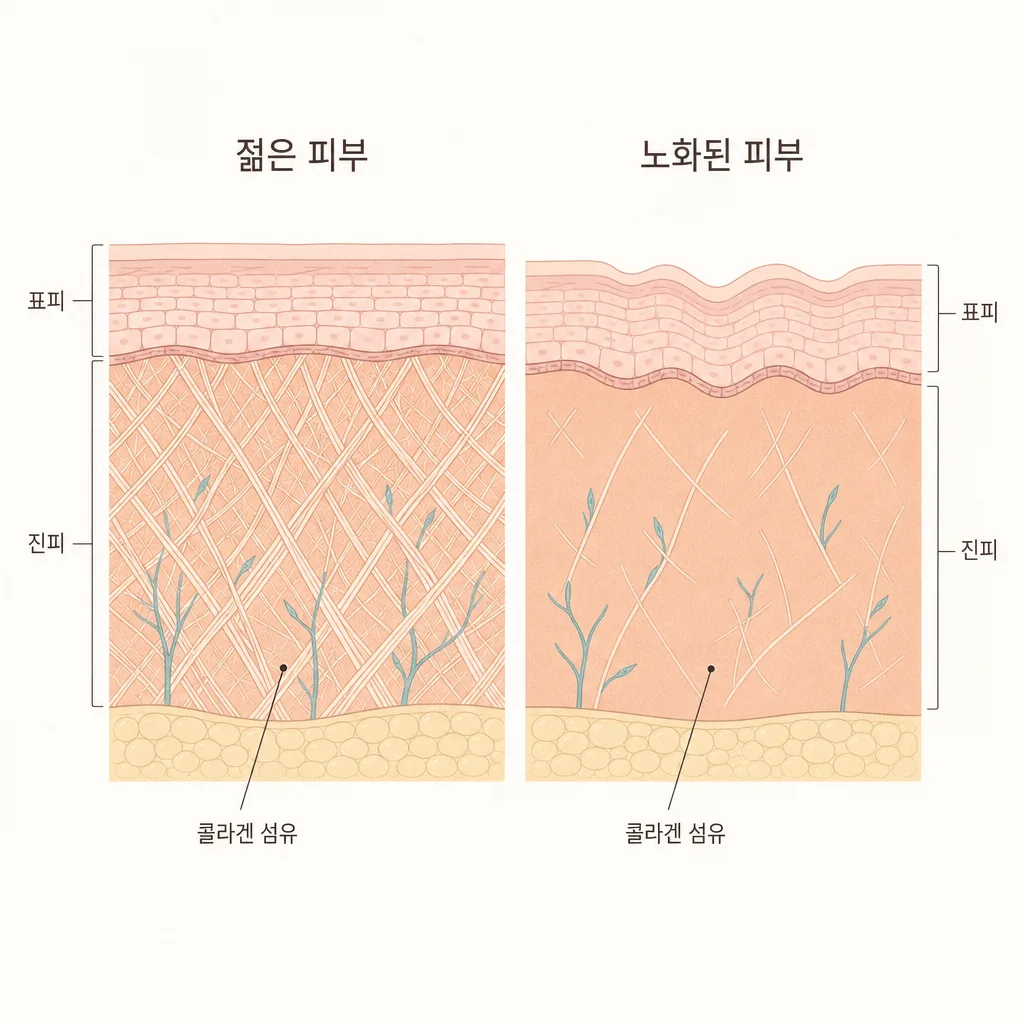
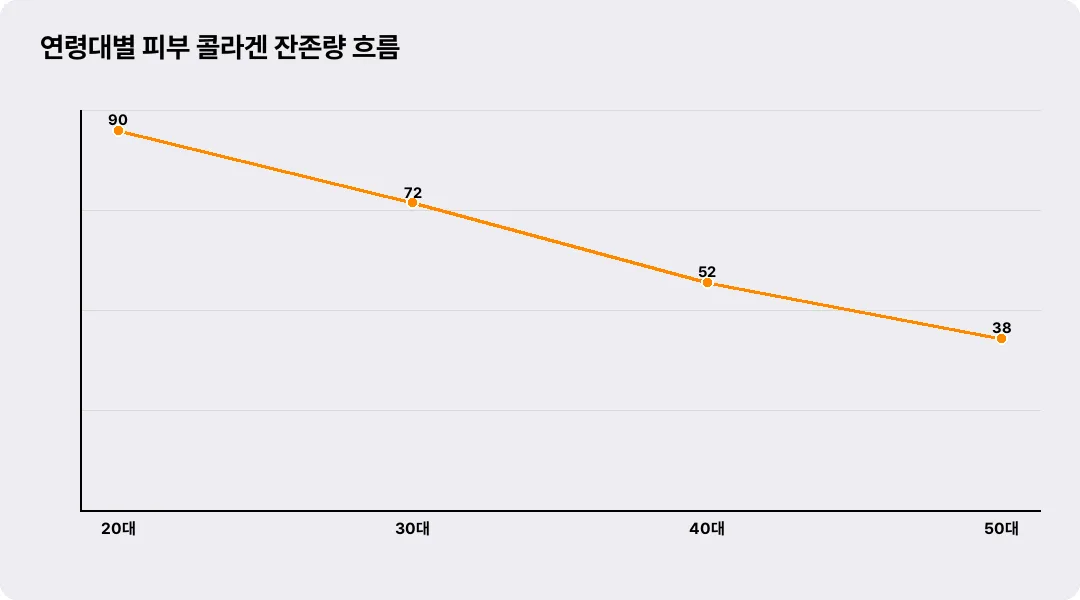
Skin elasticity comes from collagen and elastic fibers within the dermis. These are continuously produced by fibroblasts* in the skin — but as we age, these cells gradually slow down, and collagen production can no longer keep pace with its breakdown. As a result, collagen begins to quietly diminish from the late twenties onward, leaving skin looking progressively less firm and voluminous.
Fibroblasts*: Cells in the dermis responsible for producing collagen and elastic fibers. Their activity slows with age, leading to a reduction in collagen levels.
Collagen boosters work by stimulating the skin to rebuild the collagen it has lost. As one example, poly-L-lactic acid (PLLA) has been described as stimulating new collagen synthesis within the skin, with effects that develop gradually over several months — meaning it's not simply filling space, but encouraging your skin to do the work itself.
How Do Collagen Boosters Actually Work?
Collagen boosters vary in their active ingredients depending on the type. Sculptra is based on poly-L-lactic acid (PLLA), Rejuran uses polynucleotides (PDRN), and Juvelook contains ingredients that support collagen synthesis. What they share in common — and what sets them apart from traditional Filler — is that they work by stimulating your skin's own collagen-producing process from within.
Because of this, results don't appear immediately after the procedure. Changes unfold gradually over weeks to months as new collagen builds. Most patients receive multiple sessions to allow collagen to accumulate steadily, and the duration of results tends to be comparatively long-lasting. If immediate volume is your primary goal, a different approach may be more appropriate — so it's worth clarifying whether Elasticity or volume is what you're actually after.

How Goals and Outcomes Differ by Age
Even with the same collagen booster procedure, the changes patients experience and the reasons they seek it out tend to vary by age group. Here's a general overview:
| Age Group | Primary Changes Noticed | Common Approach |
|---|---|---|
| Late 20s | Early signs of reduced Elasticity | Preventive care with a lighter booster |
| 30s | Fine Lines and declining Elasticity | Elasticity-focused boosters |
| 40s | Noticeable volume loss alongside Elasticity changes | Combining boosters with volume-restoring procedures |
| 50s and beyond | Sagging and deeper wrinkles | Planning alongside Lifting procedures |
As the table suggests, younger patients tend to focus on prevention and maintaining Elasticity, while those who are older begin factoring in volume loss and sagging as well. Your actual skin condition matters more than your age when determining the right starting point.

Why Beautystone Clinic in Hongdae?
At Beautystone Clinic in Hongdae, consultations for collagen boosters start with your skin condition — not your age. Even among patients in their 30s, the rate of collagen loss and lifestyle factors vary considerably, so rather than recommending a one-size-fits-all approach, we work with each patient to determine the right ingredients and number of sessions. As a small clinic just steps from Hapjeong Station, we're able to monitor how your Collagen builds over time and plan your next session together accordingly.

Things Worth Knowing Before You Start
A few things that can help set realistic expectations before beginning a collagen booster:
- Results develop gradually — Changes appear over weeks to months, so there's no need to rush to conclusions early on.
- Multiple sessions are common — Think of it as a process rather than a one-time fix.
- Know whether your goal is Elasticity or volume — If immediate volume is what you're after, a different procedure may be a better fit.
- Swelling and Bruising may last a few days after the procedure — If you have important plans coming up, it's a good idea to allow yourself some buffer time.
Mild Swelling, Bruising, or redness at the injection site after the procedure typically resolves within a few days. However, if Pain worsens or Swelling persists, please consult the medical professional who performed your procedure. This article is intended as general information only — the right ingredients and timing for your specific situation should always be determined in direct consultation with a qualified medical provider.

Frequently Asked Questions
Q. I'm in my 20s — is it too early to start a collagen booster?
A. There's no fixed starting age. Some patients in their late 20s who are beginning to notice early signs of reduced Elasticity do start with a lighter, preventive approach. Whether it's truly necessary depends on your individual skin condition, so a consultation is the best way to find out.
Q. What's the difference between a collagen booster and a Filler?
A. Filler directly fills in areas of volume loss for an immediate result, while a collagen booster stimulates your skin to gradually build its own Collagen, improving Elasticity over time. The right choice depends on whether your primary goal is volume or Elasticity.
Q. How long do the results last?
A. It varies by product and individual, but since the mechanism involves generating new Collagen, results tend to last comparatively longer. That said, Collagen will continue to break down over time, so many patients choose to top up periodically as part of their ongoing skin maintenance.
Q. Can I see results from just one session?
A. Some patients do notice a difference after a single session, but in most cases, spacing out several sessions over a few weeks allows Collagen to build more consistently and sustainably. The recommended number of sessions varies based on your skin condition and the product used, so this is best discussed during your consultation.
You Might Also Like
- If You Came In for Cheek or Temple Volume, a Collagen Booster Might Actually Be the Better Fit Than Filler
- If Your Dark Circles Change Color Within a Day, You Likely Have the Vascular Type — and the Right Procedure Is Different
- Why Ultherapy Results Vary From Person to Person: It Comes Down to Candidacy — Who It Works Well For and Where Its Limits Lie
- Skin Booster Options Explained: How to Actually Choose the Right One for You