Blackhead Removal at Home: Why Wait 6–8 Weeks?
Pore strips and metal extractors promise quick blackhead removal, but both have limits. Here's how to tell blackheads from sebaceous filaments, what to apply at home and for how long, and when in-clinic extraction is worth a look.

At-home blackhead care works best when it stops at a leave-on retinoid such as adapalene, used for 6 to 8 weeks before you judge it. Pore strips only make your nose look clearer for a short while, and squeezing with your fingers or a metal extractor can leave scars. If nothing has changed after 8 steady weeks, that's the point to look at in-clinic extraction.
A lot of people treat the dark dot as dirt that needs scrubbing out. It isn't, which is why harder washing and weekly strips rarely keep pores clear for long. In this article, we'll cover how to tell blackheads from sebaceous filaments, what strips and squeezing really do, what to apply and for how long, when to move on to extraction and how it fits a trip to Seoul.
Quick summary
- Use a leave-on treatment at home to keep pores from clogging, and leave squeezing to a clinic.
- How long to wait: give a retinoid 6 to 8 weeks before deciding whether it's working.
- Pore strips make pores look clearer only briefly and can dry out or irritate your skin.
- The gray or yellowish dots on many noses are sebaceous filaments, a normal structure that keeps coming back.
Gray Dots on Your Nose: Are They All Blackheads?
Often, they aren't. The tiny gray, light brown or yellowish dots packed across your nose are usually sebaceous filaments, which are smaller, flatter and lighter in color than blackheads. A blackhead tends to look like a dark dot sitting on a slightly raised bump*.
*Based on Cleveland Clinic guidance.
A sebaceous filament is a thin column of oil (sebum) that lines the inside of a pore, and everyone has them. A blackhead forms when a pore gets clogged but stays open at the surface, so the exposed plug looks dark.
Telling the two apart matters because your goal changes. Sebaceous filaments refill within 30 days after you squeeze them out, so getting rid of them for good isn't a realistic target. When you come in, I look at your nose under magnification first. If they're blackheads, the plan focuses on keeping those pores from clogging again.

Do Pore Strips Actually Pull Blackheads Out?
They lift some of the plug, but only for a while. A pore strip uses adhesive to grab the oil sitting at the opening of the pore, so your nose looks clearer the moment you peel it off. The effect is short-lived, though, and strips can dry out or irritate your skin.
Peeling sebaceous filaments off with a strip has its own downside. It can leave your skin dry and let bacteria in, which may lead to breakouts.
Using one before a big day probably isn't a problem. If you're peeling strips every week, though, switching to a leave-on treatment tends to slow how quickly pores clog again. Scrubbing doesn't help either. That dark dot isn't dirt, and rubbing harder can make acne worse.
Squeezing Blackheads at Home: Scarring and Infection Risks
Squeezing pushes bacteria and oil from your hands into the pore, and that can inflame it. Pressing hard can also damage the skin around the pore and leave a permanent scar. A store-bought comedone extractor carries the same risk, because it's hard to judge the angle and pressure on your own face.
In-clinic extraction isn't a one-visit fix either. In a study of people with dense blackheads, one side of the face was treated with an extractor 4 times, 2 weeks apart, and blackheads dropped by an average of 46%. Close to half remained even after 4 sessions, so extraction works best as a helper alongside a leave-on treatment. How much clears varies from person to person.
If a spot you've been squeezing gets worse, leave it alone and have it checked. Stop touching it and see a doctor if you notice:
- Redness and swelling that hurts
- Pus forming in or around the spot
- Warmth over the area
- Swelling that keeps spreading
A visit lets the doctor check how deep the inflammation goes before anything else is done to that area.

What Should You Apply at Home, and for How Long?
Start with a retinoid, which helps unclog pores. Adapalene is one you can buy without a prescription, and pairing it with a benzoyl peroxide wash is the basic combination*. You'll need the full trial period before you can tell whether it's working.
*Based on American Academy of Dermatology guidance.
In a study of 323 people with facial acne, each person applied either adapalene 0.1% gel or tretinoin 0.025% gel once a day for 12 weeks. Blackheads and whiteheads (non-inflamed acne) went down by 46% with adapalene and by 33% with tretinoin. Both groups had mild redness and peeling, and adapalene was the easier of the two to tolerate. Results differ from person to person.
| At-home product | What it does | What to keep in mind |
|---|---|---|
| Adapalene | Helps keep pores from clogging | Judge it only after the full trial period |
| Benzoyl peroxide wash | Reduces acne-causing bacteria | Doesn't dissolve blackheads directly |
| Salicylic acid wash | Dissolves dead skin inside the pore | 2–4% product, once a day |
| Glycolic acid wash | Exfoliates the skin's surface | 10% product |
If you add only one thing, the retinoid is the place to start, and the washes support it. If you're pregnant or planning to be, tell your provider before you start a retinoid.
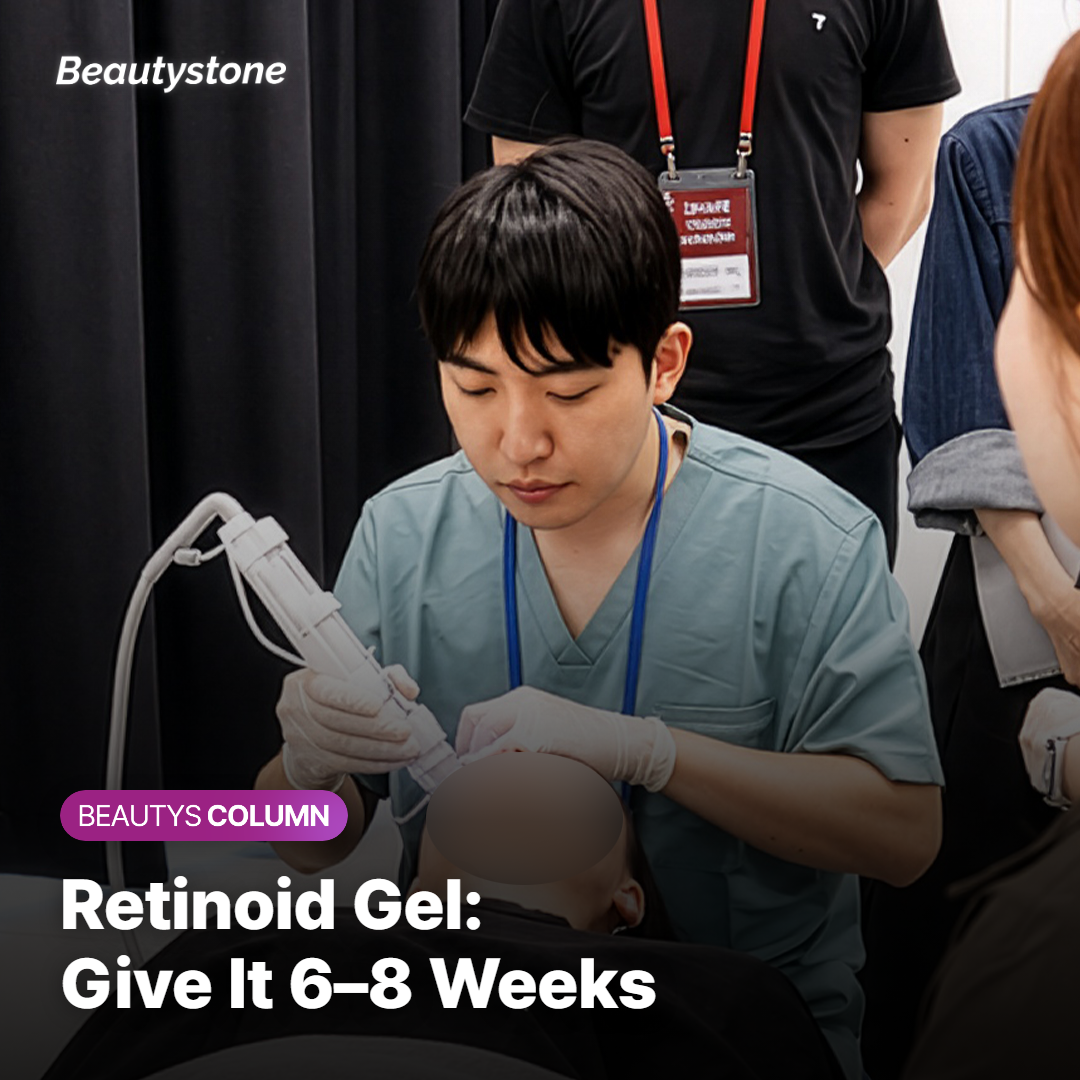
Still There After 8 Weeks: What's the Next Step?
If steady use through that window hasn't reduced your blackheads, it's time to consider an in-clinic procedure such as extraction. It helps to know the product's name and how long and how often you applied it, because that shapes what comes next.
At the visit, I check where the blackheads cluster and whether red, inflamed pimples are mixed in. Then I decide the order of extraction and the leave-on treatment for your skin.
Taking a close-up photo of your nose under the same light on the day you start and again at week 8 makes it easier to see how much has changed. Everyone's skin is different, and two photos side by side tell you more than the mirror does on any single day.
Fitting Blackhead Care Within Your Travel Itinerary
Unless you've had sedation that day, there's no need to postpone your flight home after a blackhead extraction.
It also helps to know what one visit means. Some treatments, such as fillers, change your shape the same day. Most others work more gradually, bringing your skin closer to how it used to look rather than changing it all at once. Extraction clears some pores in a visit, but it doesn't replace the leave-on treatment you keep using at home.
Once you're home, you can send photos through the consultation button on this page if you have questions about how your skin is settling. If a spot becomes hot, swollen and painful or keeps spreading, see a local doctor first rather than waiting for a reply.
The Bottom Line: Know Which Dots You're Treating
Before you decide on extraction, ask whether the dots on your nose are blackheads or sebaceous filaments, because that one answer changes what's worth treating. Strips are quick but short-lived, and a retinoid is slower but works on the clog itself. Ultimately, the choice depends on your skin and how long you're willing to wait.
Beautystone is a clinic in Seoul's Hapjeong area, and you can reach us through the consultation button on this page. In your first message, include the products you're using, how often you squeeze or use pore strips, and two close-up photos of your nose if you have them.
Sources
- Leave-on treatments for blackheads and how long to wait — American Academy of Dermatology (AAD)
- A 323-person study comparing adapalene gel and tretinoin gel over 12 weeks — J Am Acad Dermatol, 1996
- A study of 4 extractor sessions on faces with dense blackheads — Lasers Med Sci, 2024
- Risks of pore strips and squeezing, plus salicylic and glycolic acid washes — Cleveland Clinic
- How sebaceous filaments differ from blackheads and how fast they refill — Cleveland Clinic
Frequently Asked Questions
Q. Is the black dot in a blackhead dirt?
A. The black dot in a blackhead isn't dirt. The pore is clogged but still open at the surface, which is why the plug looks dark, and that's also why scrubbing or washing harder won't remove it. Rubbing can actually make acne worse, so wash gently.
Q. Should I stop adapalene if it stings and my skin peels?
A. Mild redness and peeling when you start adapalene is a light irritation that was reported in research, and in the same study adapalene was easier to tolerate than tretinoin. If your skin swells or starts to ooze, though, stop applying it and see a doctor.
Q. Can adapalene make sebaceous filaments smaller?
A. Sebaceous filaments can clog more slowly with a retinoid such as adapalene or with salicylic acid. Still, they're a normal part of your skin and refill within 30 days even after you squeeze them out, so removing them completely isn't the goal.
Q. What strength of salicylic acid wash should I use for blackheads, and how often?
A. A salicylic acid wash at 2% to 4%, used once a day, is a reasonable place to start. Salicylic acid dissolves the dead skin that builds up inside pores, so it works on blackheads directly. If your skin feels tight or stings, use it on fewer days.
Q. How is a glycolic acid wash different from a salicylic acid wash?
A. A glycolic acid wash exfoliates dead skin on the surface, and 10% products are the usual strength. A salicylic acid wash dissolves dead skin inside the pore, so for blackheads salicylic acid reaches the clog more directly.
Q. Will one in-clinic extraction clear all my blackheads?
A. One in-clinic extraction won't clear every blackhead. In a study where people with dense blackheads had extraction 4 times, 2 weeks apart, blackheads went down by an average of 46%. Close to half remained after 4 sessions, so it's worth continuing a leave-on treatment afterward.
Q. Can a benzoyl peroxide wash alone get rid of blackheads?
A. A benzoyl peroxide wash alone doesn't clear blackheads directly. Benzoyl peroxide reduces acne-causing bacteria, which helps prevent red, inflamed pimples. For blackheads, pair it with adapalene or salicylic acid so something actually reaches the clogged pore.