
Pico Toning Cost for Melasma: 3 or 5 Sessions?
Melasma laser cost comes down to the price of one session times how many you need. Split-face trials found pico toning and laser toning faded melasma about equally, so the session plan and possible relapse shape the total more than the laser name.

Wi Young-jin
Chief Director, Myeongdong
Melasma laser cost is the price of one session multiplied by the number of sessions you need. The per-session price depends first on whether it's laser toning or pico toning, and the session count ranges from 5 visits 1 week apart to 3 visits 4 weeks apart, depending on the plan.
Here's the part most price lists don't show: when the two lasers were tested on opposite halves of the same face, melasma faded by about the same amount. So comparing only the price of one session can mislead you. In this article, we'll cover how the two lasers differ, the session plans studies actually used, what relapse means for your budget, which reactions are normal, and how a series fits a trip to Korea.
Quick summary
- Your total is the per-session price times the number of sessions, and both numbers shift with the laser type and the plan.
- Session benchmark: studies comparing the two lasers used plans such as 5 sessions every 2 weeks or 3 sessions every 4 weeks.
- In a split-face trial, melasma improved about equally on both sides, but first-session pain averaged 3.1 out of 10 with pico versus 5.3 with laser toning.
- Even after a full series, 10 of 17 people saw melasma return or darken within 2 years, so budget for possible repeat sessions.
Pico Toning vs. Laser Toning: Is the Cost per Session Different?
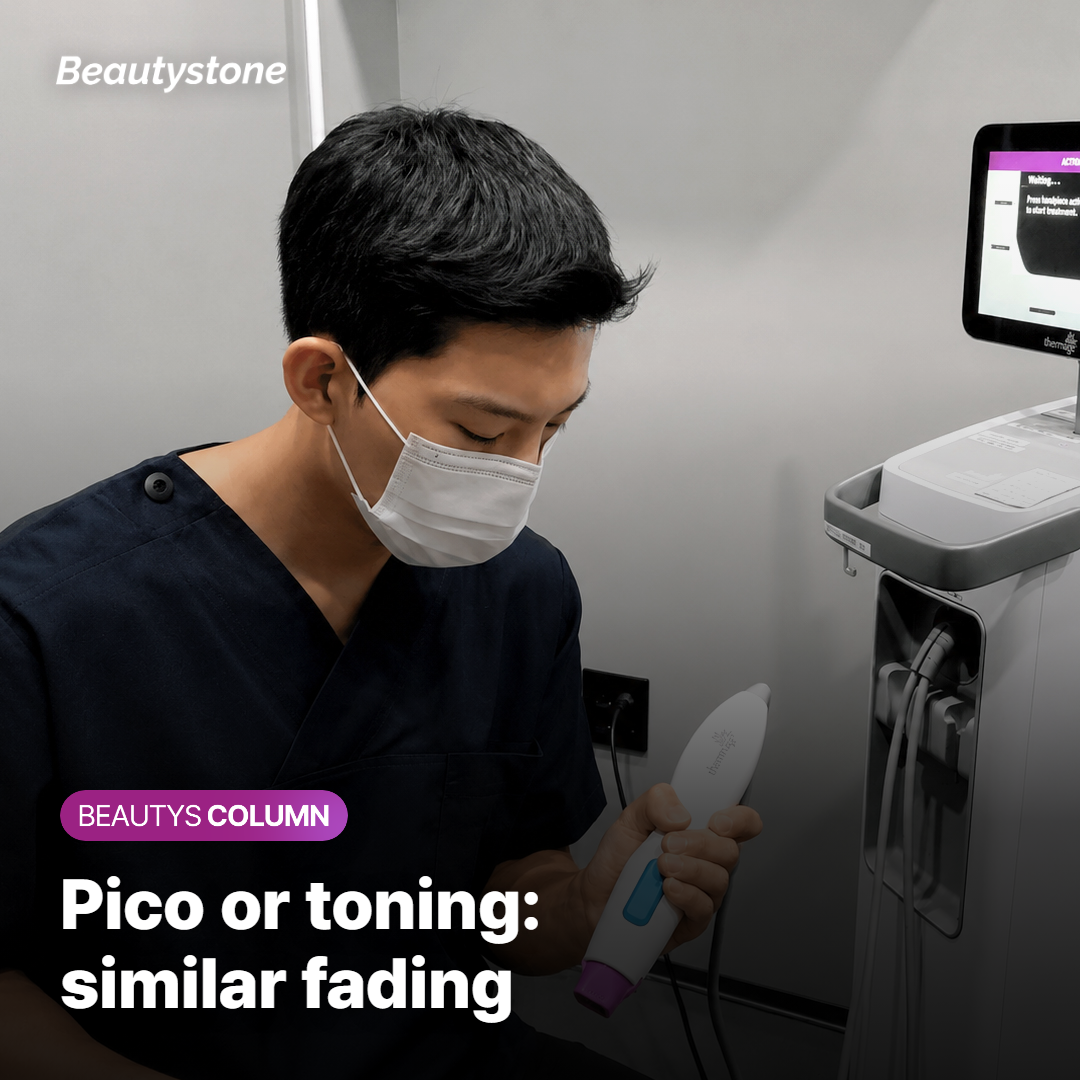
Yes, the per-session price usually differs, because the two treatments run on different machines. Laser toning uses a Q-switched 1064 nm laser at low energy, passed evenly over the face. Pico toning uses a picosecond laser at the same wavelength, but each pulse is far shorter. On a quote, that's why you'll typically see a separate price for each laser name.
| Comparison | Laser toning | Pico toning |
|---|---|---|
| Pulse length | Nanoseconds (billionths of a second) | Picoseconds, shorter than 1 nanosecond |
| How pigment is broken up | More of a heat effect | Mostly a pressure (shock) effect |
| Plans in split-face trials | 5 sessions every 2 weeks, or 3 every 4 weeks | Same day, same plan |
| How much melasma faded | No difference | No difference |
| First-session pain (0 to 10) | Average 5.3 | Average 3.1 |
If pain worries you most, look at the pain row. If cost per visit is your main concern, line up the session plan first.
You may hear that pico lasers cut the number of sessions. That finding comes from tattoo removal, not melasma*.
*Based on DermNet's patient information on picosecond lasers.
For melasma, both halves of the face looked about the same after the same number of sessions. So switching lasers alone isn't yet a reliable way to shorten a melasma series.
Why Does Melasma Laser Treatment Take Several Sessions?
Melasma laser treatment takes several sessions because low energy is used to break up pigment in the skin a little at a time. Turning the power up to finish in one visit can inflame the skin and leave brown marks behind, known as post-inflammatory hyperpigmentation. That's why the work is split into a series. Faded melasma can also darken again with sun exposure or hormonal changes, so care continues after the laser part ends.
At the first visit, we look at where the patches sit, whether on the cheeks, forehead, or upper lip, and at your skin tone. Then we set the energy and the interval, and check how many days the redness usually takes to settle so the plan fits your schedule.
Laser Toning: How Many Sessions, and How Far Apart?
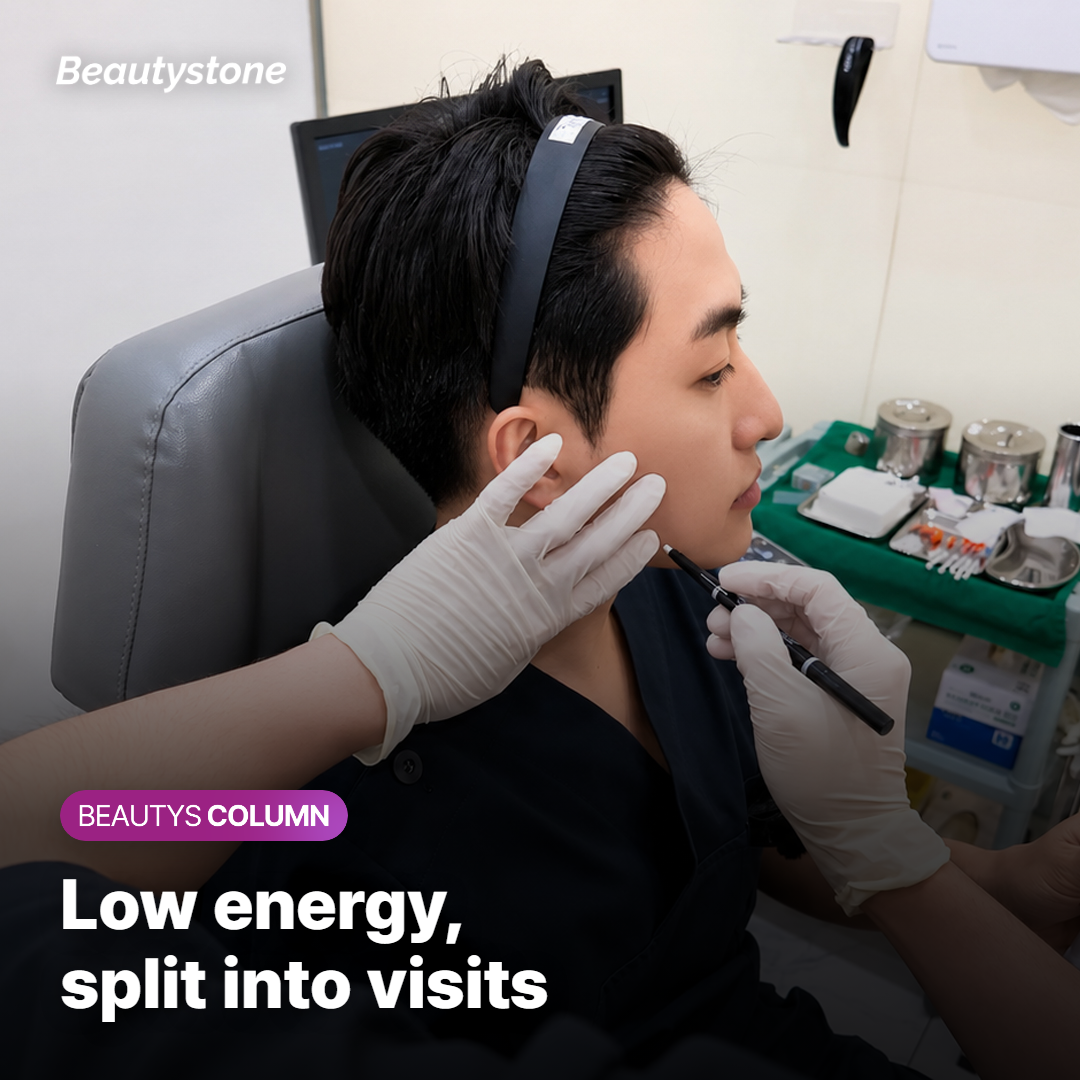
Laser toning sessions vary more with the plan than with the laser itself. The table below shows the intervals and session counts that studies comparing these lasers actually used.
| Who and which lasers | Interval | Sessions | First to last session |
|---|---|---|---|
| 20 Korean patients, pico toning vs. laser toning | 2 weeks | 5 | 8 weeks |
| 16 Asian women, 1064 nm pico vs. laser toning | 4 weeks | 3 | 8 weeks |
| 20 Chinese patients, 755 nm pico vs. laser toning | 1 month | 3 | 2 months |
| 22 Thai patients, laser toning plus a cream vs. cream alone | 1 week | 5 | 4 weeks |
| 99 women, fractional pico vs. laser toning | 2 to 4 weeks | 2 to 5 | 2 to 16 weeks |
Five sessions take 4 weeks at a weekly pace, or 8 weeks every 2 weeks. If the per-session price is the same, the total stays the same, but your monthly spend and the number of trips to the clinic change. Ask for the session count and the interval to be written on the quote.
Fractional pico splits the beam into tiny points. In a look back at records from 54 women treated with it and 45 treated with laser toning, melasma scores dropped 23.7% versus 9.8% after 2 sessions, and 40.7% versus 29.5% after 5. Patients weren't randomly assigned, so it's too early to say fractional pico clears melasma faster in the same number of sessions. Individual results vary.
Does Melasma Treatment Cost End With the Last Session?
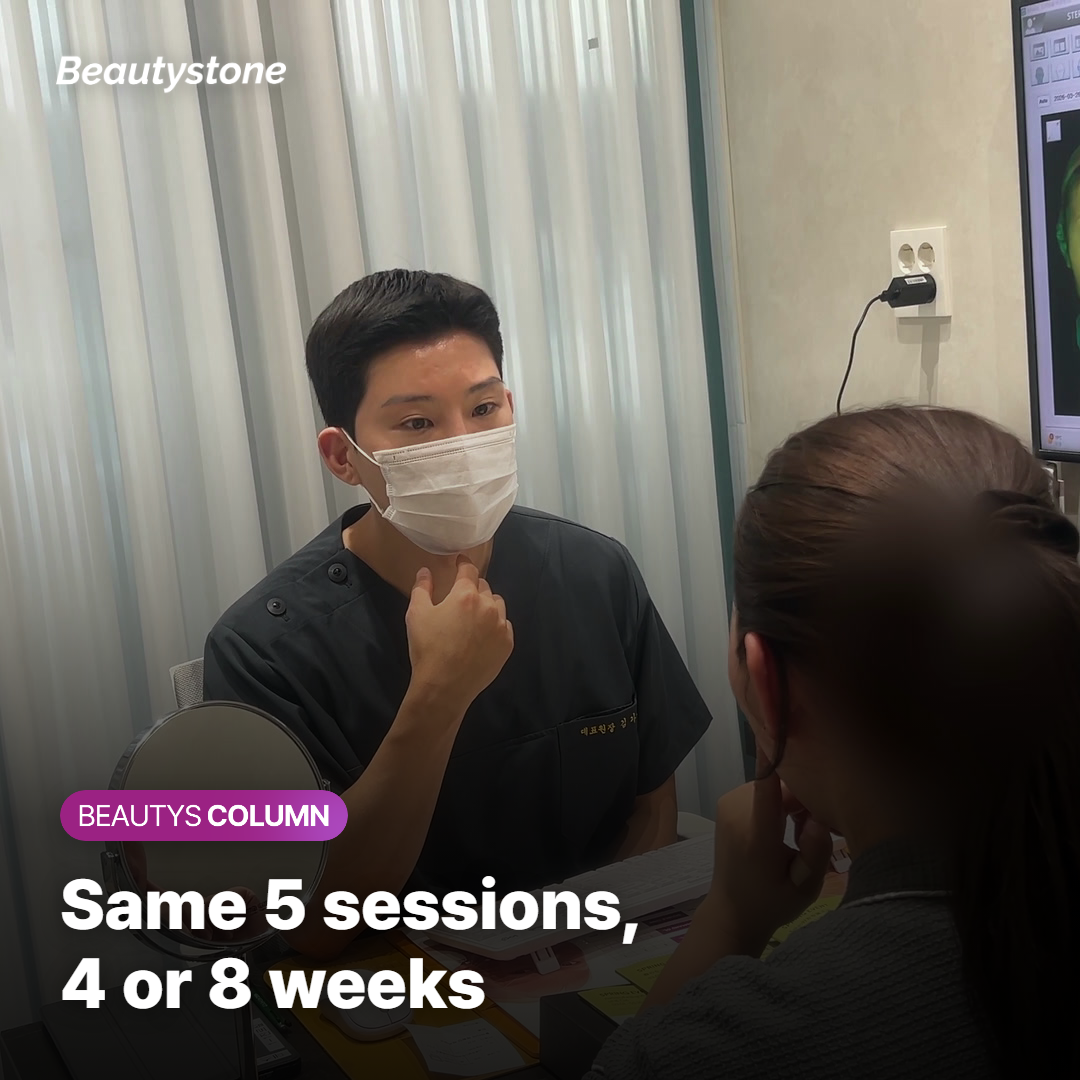
Often it doesn't, because melasma tends to come back, so it's worth budgeting for repeat sessions. When 17 people who had 3 monthly sessions were followed for 2 years, 10 of them (58.8%) saw their melasma return or get darker. In a group of 22 Thai patients who had laser toning weekly for 5 weeks, melasma came back in everyone during follow-up.
Q-switched and picosecond lasers both carry a risk of melasma returning or becoming harder to treat, so they need experienced hands*.
*Based on DermNet's patient information on melasma.
Some studies found that adding a laser helped when a person was already using a prescription cream and daily sunscreen. That's why the months of cream use belong in the plan alongside the laser sessions. How much you see depends on your skin.

Pico Laser Downtime: What's Normal and What Needs a Call?
Mild redness right after treatment is normal and fades. In one trial comparing the two lasers, the appearance of mild redness was used as the signal to stop for that day. After a pico laser, you may also notice stinging, swelling, pinpoint bleeding, or light crusting.
If you notice any of these, hold off on the remaining sessions and get checked first:
- White, blotchy spots appearing where the melasma was
- Melasma turning darker than before treatment
- Blisters on the treated skin
- Brown marks left behind once the redness fades
Of 22 people who had laser toning weekly for 5 weeks, 3 developed mottled white spots. If white spots or darkening show up, the energy and interval need to be reset before the series continues. If redness spreads, or you develop a fever or worsening pain, seek medical care right away.

Melasma Laser Sessions Within Your Travel Itinerary in Korea
Unless you had sedation that day, there's no reason to delay your flight because of a melasma laser session. The bigger issue is the schedule: plans in the studies ran from 4 weeks to 2 months, so a full series is hard to finish on one short trip. It helps to ask in advance which sessions could be done during your stay and how the rest would be timed.
It's also worth knowing what one visit can do. Some treatments, like filler, change your shape the same day, but melasma lasers aren't one of them. Pigment tends to lighten gradually over a series rather than all at once, and one visit doesn't replace the full plan.
Once you're home, you can send photos through the consultation button on this page if something worries you. If a reaction looks serious, such as blisters or spreading redness, see a local doctor first instead of waiting for a reply.
The Bottom Line: How to Compare Two Melasma Laser Quotes
Two melasma laser quotes are only comparable when each one names the laser, the number of sessions, and the weeks between them. Check these before looking at the price:
- Laser name: laser toning (Q-switched) or pico toning, and the wavelength
- Number of sessions in the plan
- Weeks between sessions, and which session includes a progress check
Before you decide, ask: "For my melasma, how many weeks apart and how many sessions would you plan, and when would we review progress?" That one answer makes two clinics' prices easier to line up. Beautystone is a clinic in Seoul's Hapjeong area. When you reach out, include the name of any melasma laser you've had before, how many sessions it was, and the month you'd like to start.
References
- Pico toning vs. laser toning in 20 Korean patients, 5 sessions 2 weeks apart, J Dermatolog Treat, 2022
- 1064 nm pico vs. Q-switched laser in 16 Asian women, pain and relapse, J Cosmet Dermatol, 2026
- Fractional pico vs. laser toning in 99 women, results by session, J Cosmet Laser Ther, 2025
- 755 nm pico vs. laser toning with 2-year follow-up, Lasers Surg Med, 2024
- Weekly laser toning in 22 Asian patients, white spots and relapse, Dermatol Surg, 2010
- 755 nm pico vs. Q-switched laser in 12 Asian patients, Lasers Med Sci, 2018
- Relapse risk with lasers and lifelong sun protection, DermNet
- How picosecond lasers work and possible reactions, DermNet
- Adding lasers to creams and sunscreen for melasma, American Academy of Dermatology
Frequently Asked Questions
Q. Does pico toning hurt less than laser toning?
A. Pico toning scored lower for pain than laser toning in one trial. In a split-face study of 16 Asian women, average first-session pain was 3.1 out of 10 on the pico side and 5.3 on the laser toning side, and 14 of the 16 said the laser toning side hurt more. If stinging worries you, whether to use numbing cream is decided at the visit.
Q. What if my melasma gets darker halfway through the sessions?
A. If melasma turns darker than before during a series, the next session shouldn't go ahead until you've been checked. Among 22 Thai patients who had laser toning weekly for 5 weeks, 4 had this kind of rebound darkening. Taking a photo of the darker area before your next appointment helps the energy and interval be reset.
Q. Does pico toning lower the chance of melasma coming back?
A. It's too early to say that pico toning lowers melasma relapse. In a 16-person split-face trial, relapse 6 months after the last session was 12.5% on the pico side and 18.8% on the laser toning side, and the difference wasn't statistically meaningful. A separate study that followed patients for 2 years also found no difference in relapse between the two lasers.
Q. Which causes more brown marks afterward, pico or laser toning?
A. No clear difference in brown marks after inflammation was confirmed between the two lasers. In records from 99 women with melasma, these marks appeared in 7.4% of the fractional pico group and 13.3% of the laser toning group, but the gap wasn't statistically meaningful. If brown marks tended to linger after past treatments, mention it at your first consultation.
Q. Does a 755 nm pico laser clear melasma faster than 1064 nm toning?
A. Results for the 755 nm pico laser in melasma have been mixed. In a split-face study of 12 Asian patients with 4 monthly sessions, the 755 nm pico side was lighter from the 2nd session onward. In a study of 17 Chinese patients with 3 monthly sessions, only the laser toning side improved meaningfully from baseline at 6 months, and the two sides didn't differ from each other.
Q. Do I still need sunscreen after my melasma laser series is finished?
A. Yes, sun protection for melasma is meant to continue for life, not only during the series. Without it, faded patches can darken again. Daily sunscreen is one of the simplest ways to protect the time already spent on sessions.