PicoWay vs. PicoSure: Melasma or Tattoo Color?
PicoWay and PicoSure are both pico lasers, but they don't use the same wavelengths. Here's how that played out for melasma, sun spots and tattoo ink colors, which reactions after treatment pass on their own, and what to check in a quote.
Wi Young-jin
Chief Director, Myeongdong
PicoWay and PicoSure use different wavelengths, so which one fits depends on how deep your pigment sits and what color your tattoo is. PicoSure started out as a single 755nm laser. PicoWay works with 1,064nm and 532nm, plus 730nm and 785nm handpieces. Both are pico lasers that fire light in bursts lasting trillionths of a second, so the wavelength used on your skin matters more than the brand name.
In this article, we'll cover why wavelength comes first, how the two did on melasma and sun spots, which wavelength suits each ink color, which reactions pass and which can't wait, what to check in a quote, and how a session fits a trip to Korea.
Quick summary
- PicoWay and PicoSure differ in wavelength, so the better fit depends on pigment depth, tattoo ink color and skin tone.
- Benchmark: in 60 people with melasma who had 3 sessions 4 weeks apart, 1,064nm pico lowered melasma scores more than 755nm pico.
- On 30 pairs of sun spots on the arm, a single 755nm session lightened more spots than 532nm did.
- A blister where you were treated means getting seen right away, not waiting for your next appointment.
PicoWay vs. PicoSure: Why Does the Wavelength Matter First?
Each laser wavelength is absorbed best by certain colors. With one wavelength, the range of pigment and ink colors it can target is narrower. With several, the wavelength can be switched to match the color in your skin. 532nm is used for shallow spots near the surface, and 1,064nm for blue, gray and black tattoos.*
*Based on DermNet's guide to Nd:YAG lasers.*
The line between the two devices has blurred a little. Newer PicoSure workstations add attachments that convert the 755nm beam into 532nm and 1,064nm. So when a clinic says “PicoSure,” it's worth asking whether that means the 755nm beam alone. Otherwise you aren't comparing like with like.
The pulse length differs too. A picosecond is a trillionth of a second, and PicoSure's pulses run longer than PicoWay's (the exact ranges are in the table further down). Both are much shorter than the nanosecond pulses of older Q-switched lasers.
At the visit, the first check is whether the pigment sits shallow in the epidermis (the top layer) or deep in the dermis (the layer below it), and how dark your skin is. Next comes whether it's a pigment that tends to come back, like melasma. Only then are the wavelength and the number of sessions set.
PicoWay or PicoSure for Melasma and Sun Spots?
Melasma and sun spots went in opposite directions. Sixty people with melasma were split into three groups: 1,064nm pico, 755nm pico, or a 2% hydroquinone lightening cream. The lasers were given 3 times, 4 weeks apart, and results were compared at 12 weeks.
- 1,064nm pico: melasma scores dropped the most
- 755nm pico: about the same as the lightening cream
- Who took part: Chinese adults with skin types III to IV, at a single center
Because everyone came from one group at one center, it's hard to stretch that result to every skin. Individual results vary.
For sun spots (solar lentigines), 755nm came out ahead. Thirty Thai adults each had a pair of spots on the arm, one treated once with 532nm pico and the other with 755nm pico. At 12 weeks, 25 of the 755nm spots and 19 of the 532nm spots had lightened by more than half. Side effects didn't differ between the two. How much you see depends on your skin.
Switching devices doesn't stop melasma from coming back. Twenty people had 755nm pico on one side of the face and an older Q-switched 1,064nm laser on the other. After 2 years, 10 of the 17 who stayed in follow-up (58.82%) had melasma return or darken, with no difference between the two lasers. Sunscreen is non-negotiable with melasma, whichever laser you choose.
PicoWay Tattoo Removal: Which Wavelength for Each Ink Color?
Each ink color responds best to its own wavelength. For PicoWay, 532nm is cleared for red, yellow and orange ink, 730nm and 785nm for green and blue, and 1,064nm for black, brown and other dark colors. On the PicoSure side, 12 blue and green tattoos cleared by more than 75% after 1 to 2 sessions of 755nm pico.
| Comparison | PicoSure | PicoWay |
|---|---|---|
| Base wavelength | 755nm (newer units add 532nm and 1,064nm attachments) | 1,064nm and 532nm (plus 730nm and 785nm handpieces) |
| Pulse length | 450 to 900 picoseconds | 240 to 500 picoseconds |
| Tattoo colors with published results | Blue and green, 12 tattoos | Multiple colors, 31 tattoos: 79% clearance after an average of 6.5 sessions |
| Pigment with published results | Sun spots, deep (dermal) pigment | Melasma, nevus of Ota |
Each column comes from different people and different session counts, so this table isn't a ranking.*
*Wavelengths, ink colors and pulse lengths are from each device's US FDA clearance.*
If your tattoo is mostly black, ask whether 1,064nm will be used. If there's red in it, ask about 532nm. If blue or green is what's left, ask whether 755nm or 730nm and 785nm is an option.
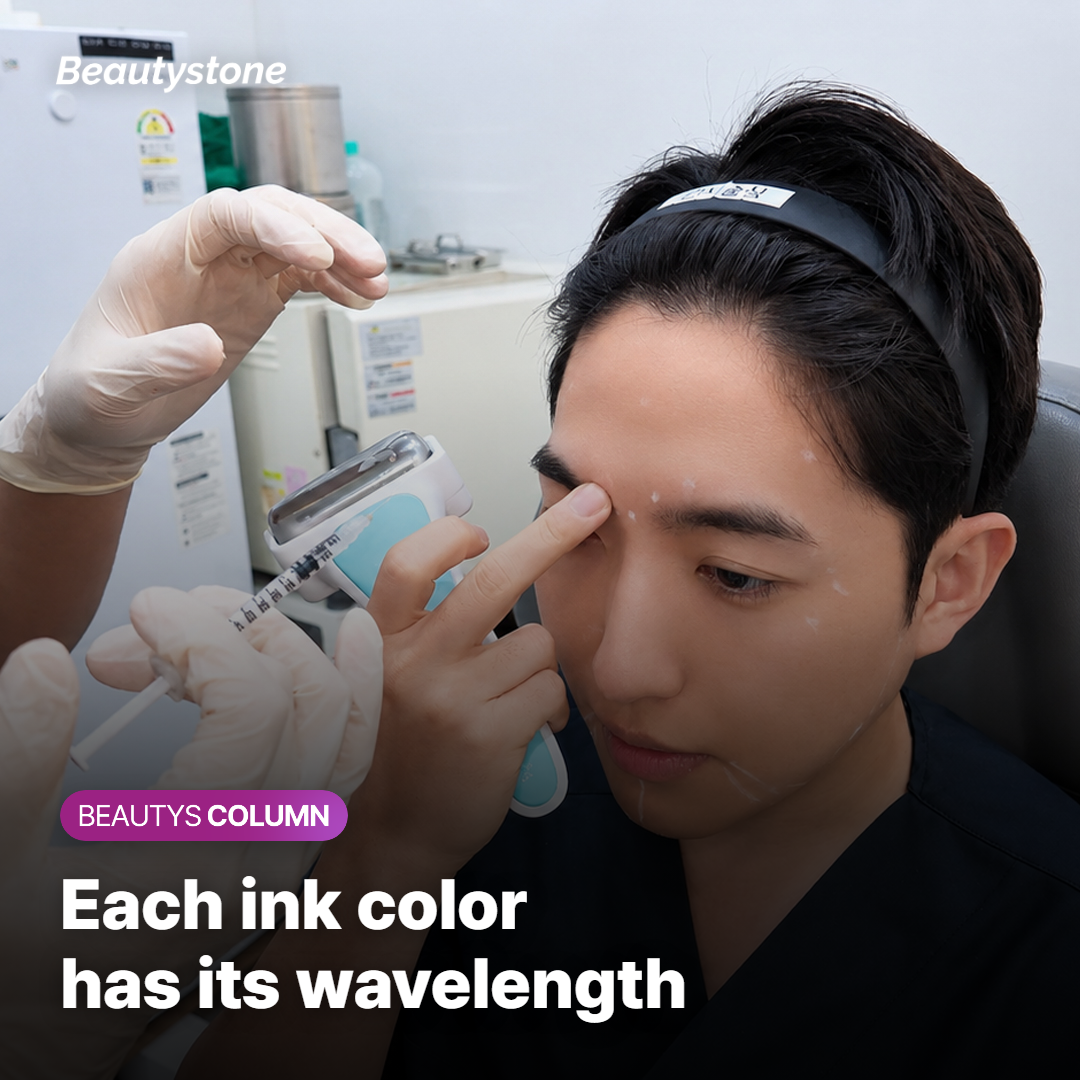
Pico Laser Side Effects: Is a Blister After Treatment Normal?
No, a blister isn't part of normal healing, but swelling and redness are, and they usually settle within a day. In 36 people treated with 755nm pico for deep pigment, swelling and redness were gone within 24 hours. Temporary darkening of the treated area showed up in 5.56% of them and didn't last.
Don't wait for your follow-up date. Get seen right away if you notice any of these:
- A blister where you were treated
- A scab that gets inflamed or looks like it may leave a scar
- The treated area turning lighter than the skin around it
- A darkened patch that hasn't changed after several months
Never pick at scabs. If your skin is on the darker side, darkening after a laser is more likely, so mention it before treatment. Messaging the clinic doesn't replace being seen in person, so get care first.

What Should You Check in a PicoWay or PicoSure Quote?
Line up the wavelength and the session plan before the device name. That's what puts two quotes on the same footing. Tattoo removal is spread over several sessions, so the number of sessions planned changes the total more than the cost of any one visit.
- Which wavelength (1,064nm, 755nm, 532nm, 730nm or 785nm) will be used on your pigment or ink color
- How many sessions are planned, and how many weeks apart
- Whether sun protection or a lightening cream is part of the plan
A useful first question is: “Which wavelength will you use on my pigment (or ink color), and how many weeks apart will the sessions be?” With that answer in hand, a PicoWay quote and a PicoSure quote become much easier to compare.
PicoWay or PicoSure Within Your Travel Itinerary in Korea
Unless you had sedation that day, there's no reason to postpone your flight home because of a pico laser session. Redness and swelling from the session itself usually settle within a day.
It also helps to know what one visit can do. Some treatments, like fillers, change your shape the same day. Most others don't transform your skin in one go and bring it gradually closer to how it used to look. Tattoo removal and pigment treatment are planned over several sessions, so a single visit doesn't replace the rest of the course.
Once you're back home, you can send photos through the consultation button on this page if you have questions about how the area is healing. If a reaction looks serious, such as a blister that's spreading, see a local doctor first rather than waiting for a reply.
The Bottom Line on PicoWay vs. PicoSure
Before you decide, ask which wavelength would be set for your pigment or ink color, since that's what actually separates these two devices. A shallow sun spot, melasma and a red-and-black tattoo can each call for a different one. Like any procedure, it comes with trade-offs, and results differ from person to person.
If you're considering PicoWay or PicoSure, a consultation is where you can find out which one fits you. Beautystone is a clinic in Seoul's Hapjeong area. When you reach out, include a photo of the area, your ink colors and how many years ago the tattoo was done, and any laser you've had recently with the date.
Sources
- Melasma in 60 people: 1,064nm pico, 755nm pico and hydroquinone cream compared, Front Med, 2023
- Sun spots in 30 people: 532nm pico versus 755nm pico, J Cosmet Dermatol, 2022
- Melasma in 20 people, split-face comparison with 2-year relapse, Lasers Surg Med, 2024
- 37 tattoos in Asian adults: pico versus nanosecond lasers by ink color, Laser Ther, 2020
- 12 blue and green tattoos treated with a 755nm pico laser, Arch Dermatol, 2012
- 31 multicolor tattoos treated with a 1,064nm and 532nm pico laser, Lasers Surg Med, 2015
- Eyeliner tattoos in 72 people: alexandrite pico versus nanosecond laser, J Cosmet Laser Ther, 2018
- Pigment in 42 people with darker skin: pico versus older lasers, Lasers Surg Med, 2016
- Nevus of Ota in 16 people treated with a 1,064nm pico laser, Dermatol Ther, 2021
- Deep pigment in 36 people treated with a 755nm pico laser, Lasers Med Sci, 2020
- Hori's nevus in 15 people: 730nm versus 1,064nm pico, split-face, J Cosmet Dermatol, 2024
- Hori's nevus: 6 studies of 755nm pico pooled together, Australas J Dermatol, 2026
- Pico laser wavelengths, uses and side effects, DermNet
- What each Nd:YAG wavelength is used for, DermNet
- Treating nevus of Ota and Hori's nevus, and relapse, DermNet
Frequently Asked Questions
Q. Does PicoWay laser hurt?
A. Pain from PicoWay and other pico lasers depends on the wavelength and settings. In a split-face melasma comparison, the 755nm pico side (with a diffractive lens) hurt more than an older Q-switched 1,064nm laser. The numbing method, such as numbing cream, is decided at the visit based on the area and how sensitive you are, and cooling may also be used for tattoo removal.
Q. How many sessions does PicoWay tattoo removal take?
A. PicoWay-type tattoo removal took an average of 6.5 sessions for about 79% clearance in 31 multicolor tattoos. In another group of 11 Asian adults with 37 tattoos, 4 sessions were given 4 weeks apart: black ink cleared best with 1,064nm pico, and red and green with 532nm pico. The number you need depends on how much ink there is and how deep it sits.
Q. What's the usual interval between pico laser sessions?
A. Pico laser intervals ranged from 4 weeks to 12 months, depending on what was being treated. Melasma and tattoo plans used 4 weeks between sessions, while nevus of Ota treatments were spaced 3 to 12 months apart. The interval is set for your pigment at the consultation.
Q. Can a tattoo get darker after a pico laser?
A. A tattoo turning darker after a pico laser is rare but has been reported. Among 37 tattoos in Asian adults, 5.4% darkened this way, and it happened with every laser tested, with no scarring. Tell the clinic all your ink colors before treatment so the settings can take that into account.
Q. Is a pico laser always better than an older laser?
A. A pico laser hasn't always beaten an older laser. In 72 people with blue-black eyeliner tattoos more than 10 years old, alexandrite pico and an older nanosecond laser cleared about the same amount. In 42 people with darker skin, results in photos were similar, but satisfaction was 84% with the older Q-switched lasers and 50% with pico.
Q. Can I get a pico laser if I have darker skin?
A. With darker skin, a pico laser can still be used, but pigment darkening afterward is more likely, so the settings are chosen with care. Pico lasers are a relative caution for skin types IV to VI (medium brown to dark skin). For PicoWay, 532nm is cleared for skin types I to III, while 1,064nm tattoo treatment covers all skin types.
Q. Can a pico laser lighten nevus of Ota?
A. Nevus of Ota often lightens with a pico laser over several sessions. In 16 people treated with 1,064nm pico, improvement scores rose from the first session to the second and third, with sessions 3 to 12 months apart. Nevus of Ota can come back after laser treatment, so follow-up continues after it fades.
Q. Which wavelength works for Hori's nevus on both cheeks?
A. Hori's nevus, a deep pigment that shows up on both cheeks, rarely clears in one session. Pooling 6 studies of 755nm pico (318 people), 8.8% had near-complete clearance after the first session, and temporary darkening appeared in 21.1%. In a 15-person split-face comparison, the 730nm side had lightened more than the 1,064nm side at 24 weeks.