

Makeup Too Soon After a Procedure? 3 Risks to Know
The first question after almost any skin procedure is the same: when can makeup go back on? The answer depends on how much your skin's surface was disrupted.

If you've ever left an appointment wondering when you can put your makeup back on, you're not alone. It's often the very first question people ask before they've even left the treatment chair — will you look presentable for work tomorrow, or do you need to clear your calendar for a week?
The honest answer: it depends entirely on what you had done. A quick injectable appointment might let you touch up your concealer within hours, while a deeper resurfacing treatment can mean waiting up to two weeks before your foundation goes back on. In this article, we'll cover why your skin needs time before makeup returns, how the wait differs by procedure, and how to ease back into your routine without setting your recovery back.
Why Your Skin Needs a Breather Before Makeup Goes Back On
Right after a procedure, your skin's barrier — the outermost layer that locks in moisture and keeps irritants out — is temporarily more fragile than usual. Makeup pigments, preservatives, and even the friction of applying and removing product can add stress to skin that's still working to repair itself. That's especially true for treatments that intentionally disrupt the surface, like peels or resurfacing lasers.
General dermatology guidance on chemical peels tends to recommend protecting healing skin from sun exposure and waiting until the surface has recovered before resuming a normal makeup routine — which explains why rushing back in isn't worth the risk.
There's also the temptation to cover up redness or mild swelling with a heavier hand than usual. It's an understandable instinct, but piling on product to hide normal healing can actually slow things down. Giving your skin room to calm on its own tends to get you to "camera-ready" faster than trying to mask it early.
How Long You Should Wait, By Procedure Type
The single biggest factor in your makeup timeline is how much the procedure disturbed your skin's surface. Injections barely touch it, while resurfacing treatments strip a layer away on purpose. Here's a general breakdown — think of it as a starting point, not a hard rule, since your provider's specific instructions always take priority.
| Procedure Type | Surface Disruption | Typical Makeup Timeline |
|---|---|---|
| Injectables (Botox, filler, skin boosters) | Minimal | Same day to the next day |
| RF and Ultrasound Lifting (Thermage, Ultherapy) | Minimal to moderate | Around the next day |
| Light Peels and Pigment Lasers | Moderate | After flaking or scabs clear |
| Deep Resurfacing Peels | High | Roughly one to two weeks |
Notice the pattern: the less your skin's surface was touched, the sooner makeup can go back on. If you're not sure which bucket your treatment falls into, the safest move is to ask directly — your provider knows exactly what was done and can give you a timeline tailored to your skin.
Easing Back Into Your Routine Without Irritating Healing Skin
When it's time to reintroduce makeup, resist the urge to go straight back to your full routine. Starting light and building up gradually puts far less stress on skin that's still settling. Begin with a gentle, fragrance-free moisturizer, then add color only where you actually need it — a thin layer goes a lot further than a full face right now.
How you take makeup off matters just as much as how you put it on. Swap scrubbing or wiping for a gentle cleansing balm or micellar water that melts product away without dragging on the skin. Your face has been through enough — it doesn't need friction on top of it.
Side Effects and Risks of Reapplying Makeup Too Soon
Some redness and mild swelling are common after most procedures and usually settle within a few days on their own. If those symptoms worsen, spread, or come with fever or pus, seek medical care right away — that's not typical healing anymore.
Piling on makeup before your skin is ready can trap bacteria against a still-healing surface, add friction that reopens delicate areas, and in some cases contribute to lingering discoloration. This is especially true if there's any scabbing involved — picking at or covering a scab to hide it can leave a mark that lasts far longer than the original healing would have.
Sunscreen: Non-Negotiable During Recovery
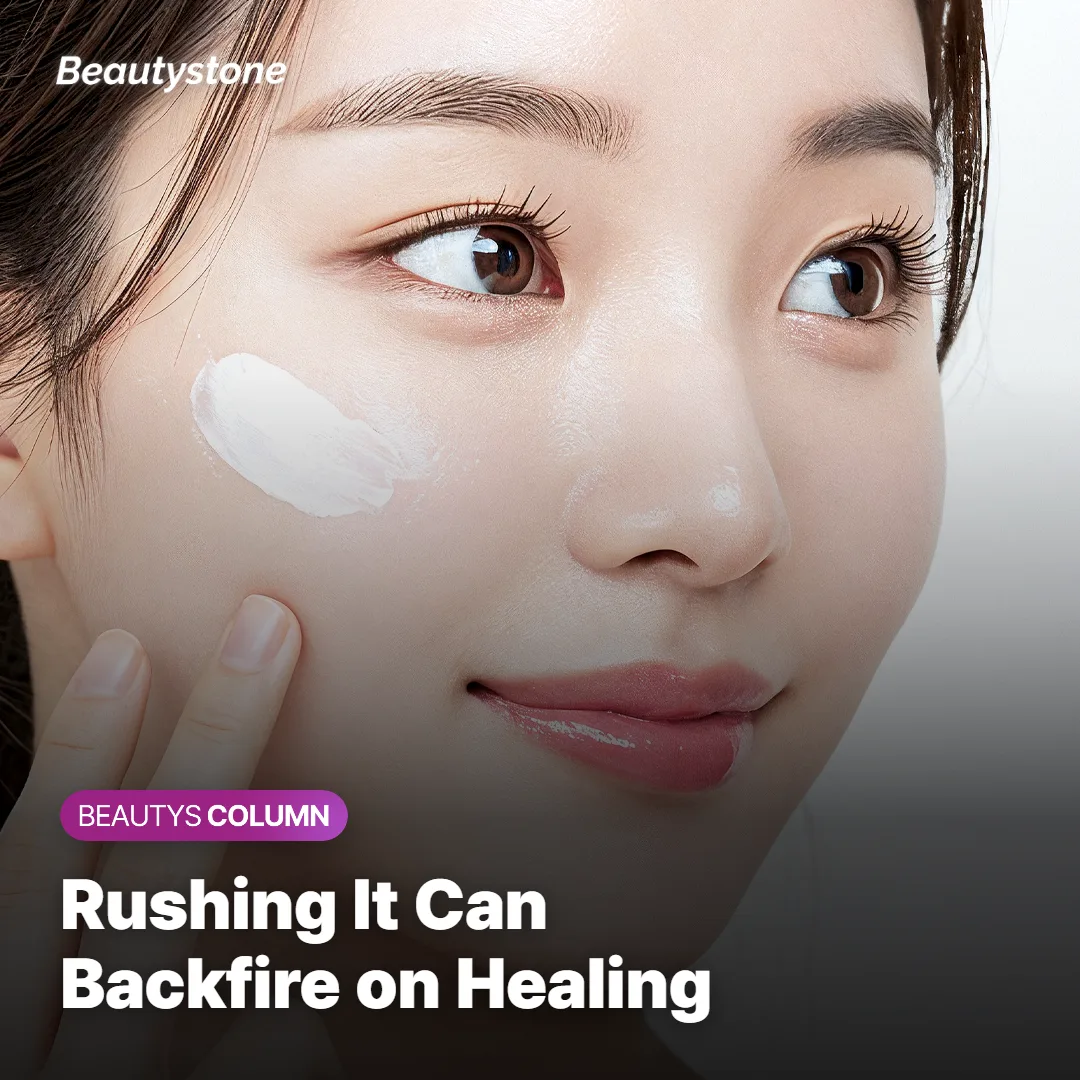
Sun protection matters more than usual while your skin is healing. Freshly treated skin is more reactive to UV exposure, and that can trigger pigment changes that are annoying to reverse. Apply a broad-spectrum sunscreen before you head out, and reapply if you're spending real time outdoors.
This also isn't the moment to experiment with a new serum, foundation, or trending product you just saw online. Save the new purchases for after your skin has fully calmed down, and lean on gentle, familiar formulas you already know play nicely with your skin in the meantime.
What to Check Before You Reach for Your Makeup Bag
A short checklist can take a lot of the guesswork out of getting back to your routine safely:
- How much surface disruption your procedure caused — the deeper it went, the longer you wait
- Whether any scabbing or flaking has fully resolved — makeup shouldn't go over active scabs
- Redness levels — waiting until it's faded to a light pink is usually a safer bet than covering bright redness
- Product choice — start with gentle, fragrance-free formulas before reaching for anything new
- Sunscreen — non-negotiable any time you're stepping outside during recovery
This is general information, and it's not a substitute for what your own provider tells you. The exact timeline for your specific treatment is something worth confirming directly with whoever performed it.
The Bottom Line
Here's the short version: the more your skin's surface was disrupted, the longer you should wait before makeup goes back on. Injectables and lighter energy-based treatments usually allow a quick return, while peels and resurfacing lasers call for real patience — sometimes a week or two.
Like any recovery process, there's some trade-off between convenience and giving your skin what it needs. Ultimately, the choice depends on your skin, the procedure you had, and how your individual healing is going — everyone's timeline looks a little different.
If you're weighing a procedure and want a clearer sense of what recovery and makeup timing would look like for you specifically, a consultation is the best way to find out what fits you. Beautystone is a dermatology clinic in Seoul's Hapjeong area — see current offers at /en/promotion.
Frequently Asked Questions
Q1. Can I wear makeup the day after Botox or filler?
In most cases, yes. Injectables barely disturb the skin's surface, so light makeup is often fine within a few hours to the next day. It's still smart to avoid rubbing directly over injection points and to check with your provider if you notice any bruising or swelling you'd rather let settle first.
Q2. How long should I wait after a laser peel to apply makeup?
It depends on the strength of the peel or laser. Lighter treatments may only need a day or two, while deeper resurfacing can call for roughly one to two weeks — generally until flaking or scabbing has fully resolved. Your provider's specific aftercare instructions should always take priority over a general rule.
Q3. Can I use concealer to cover redness or scabbing?
It's best to avoid it, especially over active scabs. Covering a scab can trap bacteria, add friction, and increase the chance of lingering discoloration once it heals. Letting redness fade naturally, or checking with your provider about safe options, tends to give better results than concealing it early.
Q4. Do I need sunscreen before makeup during recovery?
Yes — sunscreen matters more than usual while your skin is healing, since freshly treated skin reacts more easily to UV exposure and can develop pigment changes. Apply a broad-spectrum sunscreen underneath your makeup any time you're heading outside during recovery.