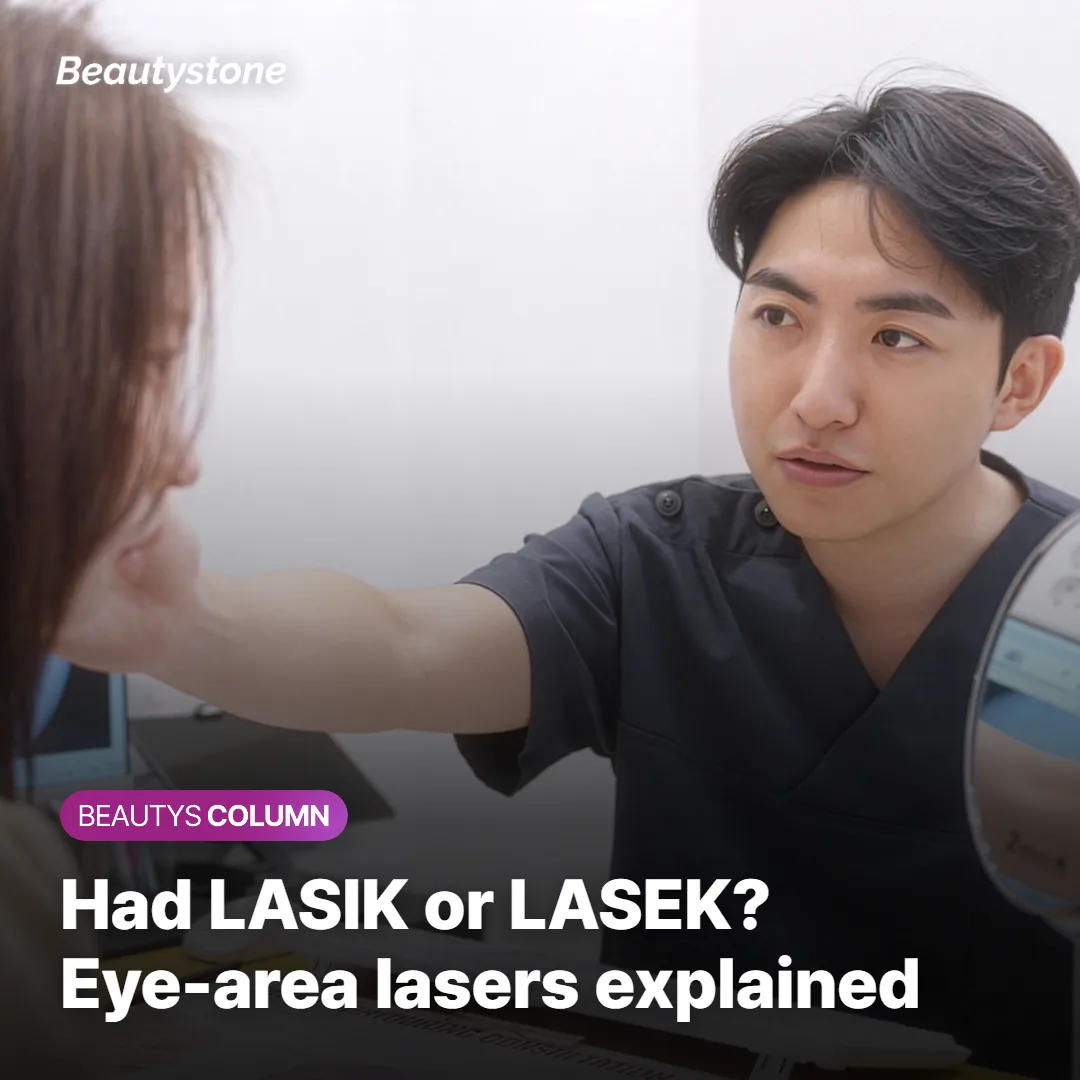
After LASIK or LASEK, are eye-area lasers safe?
If you've had LASIK or LASEK, the real question isn't whether a facial laser reaches your cornea — it's how your eyes are shielded and where you are in your healing. Here's how that gets decided.

One of the more common questions we hear from patients who've had vision correction is some version of: "I had LASIK — is it safe to get eye-area lifting or a facial laser?" The worry usually has two layers. One is the cornea: if a laser reshaped it, could another laser undo that work? The other is timing — how long after eye surgery is it reasonable to have anything done near the eyes at all?
It's a fair question, and part of why it lands so hard is that the word "laser" is doing double duty. LASIK and LASEK use an excimer laser aimed directly at the cornea. A facial laser, or an RF or ultrasound lifting device, is aimed at skin and soft tissue with the eye deliberately shielded out of the beam path. Once you see how eye protection is handled — and what your healing timeline has to do with it — the question shifts from "will this damage my eyes?" to something far more answerable: am I at the right point in my recovery, and does my provider know my history?
Why lasers near the eyes worry LASIK patients more
If you've had refractive surgery, you were already told to protect your eyes — no rubbing, no swimming, drops on a schedule. That vigilance doesn't switch off afterward, and it shouldn't. But it can attach itself to the wrong risk. Here's what people commonly assume, next to what actually drives the decision:
- "The laser light will reach my cornea." Energy-based work inside the bony eye socket is done with the eye physically shielded, and work further out on the face is done with wavelength-appropriate protective eyewear. Blocking the path to the eye is step one, not an afterthought.
- "My eye surgery isn't relevant here." It's one of the more relevant things you can mention. It shapes the protection used, the treatment margins, and the settings.
- "Gritty eyes afterward mean something went wrong." Often it means post-LASIK dryness was already present and a treatment layered mild, temporary irritation on top of it.
How eye protection actually works during a facial laser
This is the part that tends to settle the worry fastest, because none of it is left to improvisation. A 2025 expert consensus panel of dermatologic laser surgeons and ophthalmologists states that eye shields are mandatory for any laser procedure within the bony orbit, on the grounds that all laser wavelengths pose some danger to ocular structures.
The shield is a physical barrier, not eyewear. That same consensus specifies stainless steel shields — 1 mm thick, autoclavable, and sized to fit the patient — and notes that properly fitted stainless steel shields reduce the risk of ocular injuries to near zero. For treatment areas further out on the face, the standard shifts to wavelength-specific protective eyewear rather than an internal shield.
Protection is checked during the treatment, not only before it. The consensus also advises that if a patient reports heat or eye pain, the procedure should be stopped immediately, the shields removed, and vision reassessed — and that significant concerns such as vision changes should prompt referral to an emergency department. The practical version: if something feels wrong at the eye mid-treatment, say so in the moment rather than waiting to see whether it passes.
Notice what none of this depends on: whether you've had LASIK. The protection standard is the same either way, and the scenario you're picturing — beam meeting cornea — is the specific thing the protocol is built to block first.

What LASIK recovery means for your treatment timing
With protection accounted for, timing is what's left — and early on, it's the real constraint. The American Academy of Ophthalmology notes that almost everyone who has LASIK will have dry eyes and changing vision during the day, and that these symptoms usually fade within a month. That is a description of an eye still settling.
During that window, elective work around the eyes — anything that presses, pulls, retracts the lid, or delivers heat near the orbital rim — is commonly deferred. Not because the treatment is uniquely hazardous, but because there's no upside to layering it onto a cornea that is still healing, and a settling eye makes any new symptom harder to interpret.
We're not going to hand you a month count. LASIK and LASEK heal along different curves, the amount of correction matters, and individual recovery varies enough that a number pulled from an article would be worth little to you. The workable standard is clearance from the surgeon who performed your procedure. One question does most of the work: "Am I healed enough for a treatment that applies heat or ultrasound energy near the eye area?" Bring that answer to your consultation and scheduling becomes straightforward.
Dry eye: the factor most people overlook
Even with good timing, one thing tends to linger longer than people expect. An observational study of dry eye disease after refractive surgery reports that about 95% of patients experience some dry eye symptoms immediately after refractive laser surgery, and about 60% still do at one month. The same study found dry eye scores significantly higher six months after LASIK than after PRK or LASEK. Symptoms are generally most pronounced early and ease gradually — but gradually is the operative word, and individual variation is wide.
That matters for a straightforward reason. Mild, temporary dryness or a gritty feeling is an ordinary short-term note after eye-area treatment. On an eye already running dry after refractive surgery, the same sensation registers as considerably stronger — usually reflecting the baseline you brought in rather than an injury the treatment caused. Having lubricating drops on hand before your appointment, rather than hunting for them after, tends to change how the first couple of days feel.
Where that stops being routine: dryness that isn't easing after a few days, vision that turns blurry, or pain that persists or worsens belongs in a different category. Contact the clinic that treated you and your eye doctor — and with sudden vision change or severe eye pain, seek urgent care rather than waiting for a scheduled appointment. An eye with a surgical history earns a lower threshold for getting checked, not a higher one.
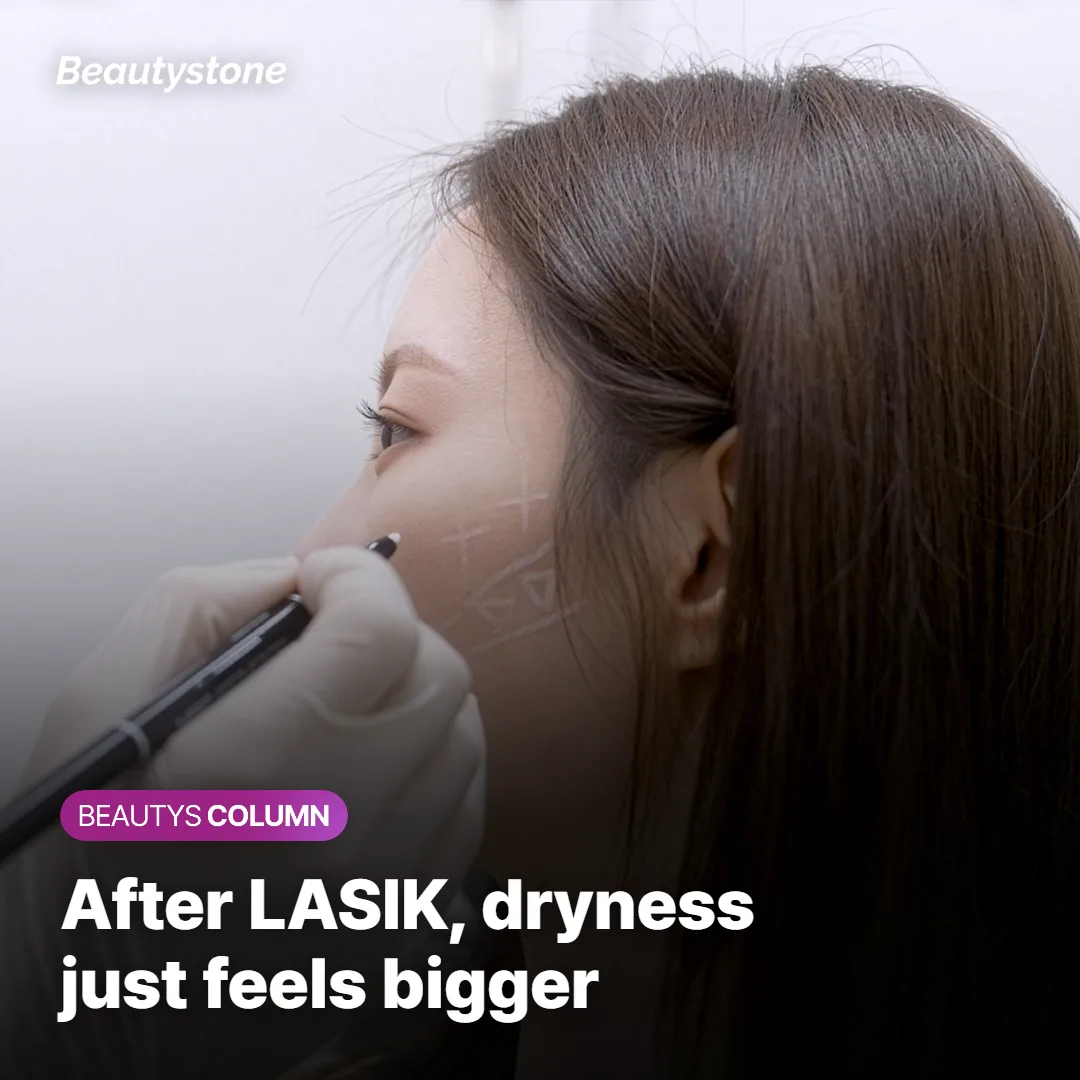
Does a LASIK history rule you out permanently?
Not once healing has settled. A refractive surgery history isn't generally handled as a permanent contraindication to eye-area treatment. What it changes is the planning.
The decisive factor becomes disclosure. When you had the surgery, which procedure it was, whether dryness or fluctuating vision is still present, and what your ophthalmologist has said most recently — that set of facts determines what protection is used, how far the treatment field extends, and what settings are appropriate. A provider who doesn't know can't adjust for it. Even a surgery from several years back is worth mentioning: saying it costs nothing, and leaving it out means the plan gets built on incomplete information.
It's also worth knowing that eye-area RF and ultrasound lifting protocols are already designed to stay outside the orbital rim — the bony border of the eye socket — rather than treating over the globe or inside the lid margin. A refractive surgery history typically tightens those margins and the energy settings further rather than introducing a new category of risk.
What to tell your provider (and what to ask your eye surgeon)
A vague worry shrinks considerably once it's converted into specific questions. Bring your surgery date, the procedure you had, and your current eye status. Four questions make the conversation concrete:
- Ask your eye surgeon: "Am I healed enough for energy-based treatment near my eyes?" This is the one question a facial provider can't answer for you, and every other decision rests on it.
- Ask your provider: "How does my LASIK history change your plan?" Listen for a specific answer about protection, margins, and settings — not general reassurance.
- Ask: "What eye protection do you use here?" A shield inside the orbit versus wavelength-specific eyewear further out, and how close to the eye the treatment field comes.
- Ask: "Is this the right time, or should I wait?" If the answer is wait, ask what exactly you're waiting for. A reason you can act on beats a date you can't verify.
The Bottom Line
Here's the short version of everything above:
- Eye shields are treated as mandatory for laser work inside the bony orbit, with fitted stainless steel the specified standard — and that applies whether or not you've had LASIK.
- The early weeks after LASIK or LASEK are a healing window, so elective eye-area treatment is commonly deferred — judged by your eye surgeon's clearance rather than a month count from an article.
- Dryness after refractive surgery is close to universal early on and frequently persists at one month, so ordinary post-treatment dryness can feel amplified. Persistent pain or blurred vision is a different matter and should be checked.
- Once you're healed, a LASIK history isn't generally a permanent contraindication. Telling your provider about it is the step that changes your plan.
Individual healing varies a great deal, and none of this replaces an examination of your own eyes. If you've had LASIK or LASEK and you're weighing eye-area lifting or a facial laser, the sequence is simple: get your eye surgeon's clearance first, then sit down for a consultation where your full surgical history is on the table. Beautystone is a dermatology clinic in Seoul's Hapjeong area — you can explore current offers at /en/promotion.