Juvelook Side Effects: What's Normal in Week 1?
Juvelook doesn't fill instantly. It triggers your own skin to build collagen over several weeks, with results typically peaking around two months and lasting well beyond that with the right care.

Wi Young-jin
Chief Director & CEO, Myeongdong
If you got Juvelook a week ago and you're still checking the mirror wondering when the volume is supposed to show up, you're not alone. Juvelook isn't a filler that plumps things up on the spot — it's a biostimulator, which means the real change happens gradually as your own skin builds new collagen. That gap between treatment day and visible results is exactly where most of the confusion, and impatience, comes from. In this article, we'll cover how Juvelook actually builds collagen under the skin, the realistic timeline from injection day to peak results, how long those results tend to last, and what to watch for along the way.
What Is Juvelook, and Why Doesn't It Work Instantly?
Juvelook is a PDLLA (poly-D,L-lactic acid) collagen biostimulator, not a dermal filler. That one distinction explains almost everything about its timeline. A filler works by physically occupying space under the skin, so you see volume the moment it's injected. Juvelook works differently: the PDLLA microparticles break down slowly in the dermis, and it's your skin's own healing response to that breakdown that produces new collagen. You're not being filled in; you're being prompted to rebuild.
That's also why the days right after treatment can be a little misleading. Some patients notice a bit of immediate puffiness from the injection fluid itself, and that temporary volume typically settles within a few days, well before the real collagen response has even started.
How Juvelook Builds Collagen Under the Skin
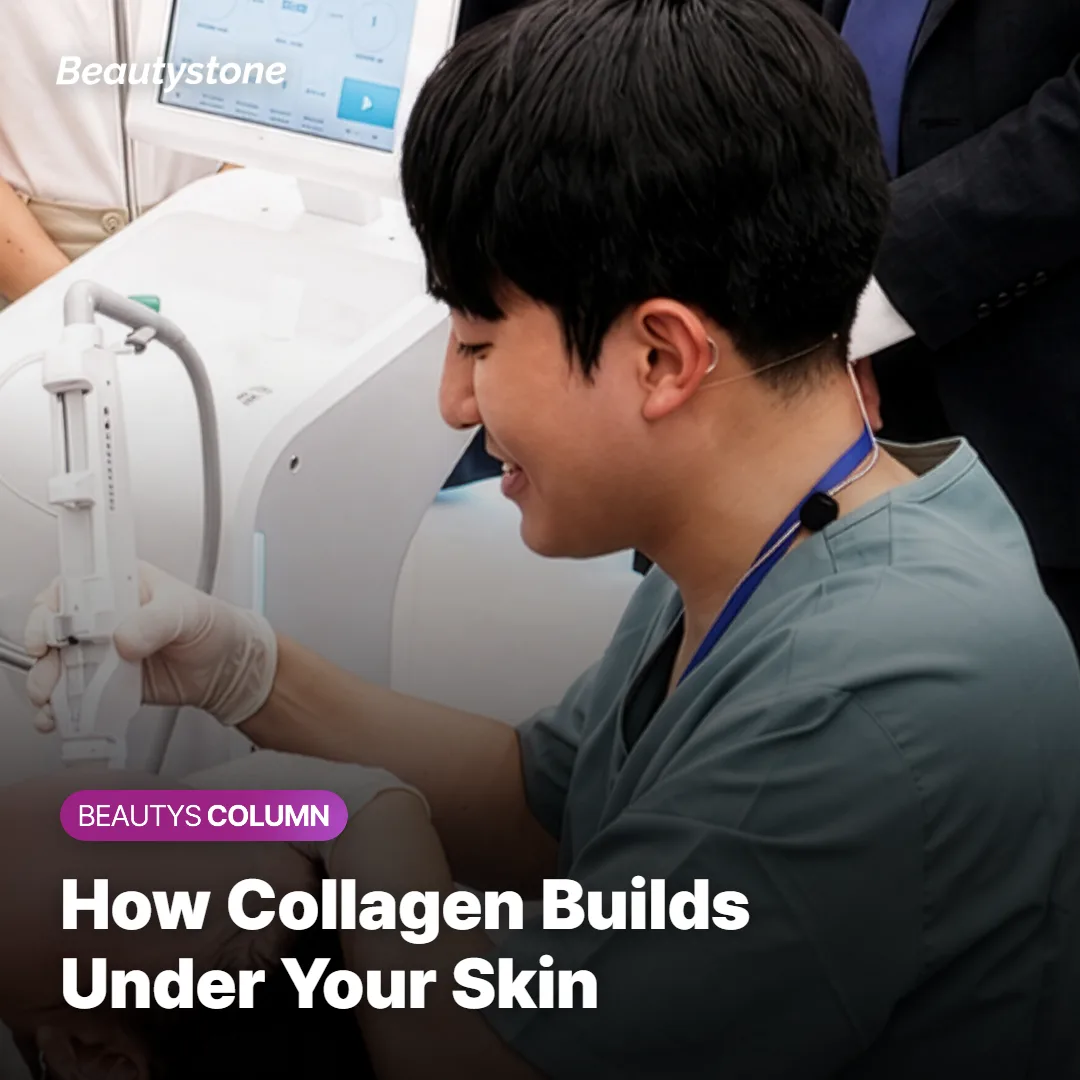
Here's the mechanism, in plain terms. Once PDLLA particles are placed in the dermis, they act as a slow-release signal to fibroblasts, the cells responsible for producing collagen. As the particles gradually break down, fibroblasts ramp up collagen synthesis in response, and that new collagen is what eventually shows up as firmer, more supported-looking skin.
Research on PLLA-family biostimulators backs up this timeline: one study found that collagen synthesis increases starting around two to four weeks after injection, peaking at roughly eight weeks. That gives a useful anchor for expectations — it's the biological reason Juvelook results build in over weeks rather than appearing overnight.
So if you're a few days out and not seeing much change yet, that's expected, not a sign that anything went wrong.
The Juvelook Timeline: From Injection Day to Peak Results
Volume looks different at every stage, and knowing what to expect at each point makes the whole process easier to sit with.
| Timeline | What You'll Notice | Note |
|---|---|---|
| Day of treatment | Slight puffiness from the injection fluid | Temporary, usually fades within a few days |
| 1–2 weeks | Skin looks close to normal again | Collagen production hasn't really kicked in yet |
| 2–4 weeks | Subtle firmness and texture changes begin | This is when fibroblasts start ramping up |
| Around 2 months | Volume looks most noticeable | The stage most patients are happiest with |
| 6+ months | Results settle into a steady maintenance phase | How long they hold varies by person and lifestyle |
Most people see the clearest improvement around the two-month mark, which lines up with when collagen synthesis tends to peak. That's also why providers usually suggest waiting a couple of months before judging whether a follow-up session is needed — reacting too early to a still-developing result can lead to unnecessary re-treatment.
Treatment area and skin condition both affect the pace, so your own timeline might run a little faster or slower than someone else's. Tracking your own progress, rather than comparing week by week with someone else's results, tends to be the more useful approach.
How Long Do Juvelook Results Last?
Once results peak, the next question is how long they stick around, and that's less about the treatment itself and more about how you support it afterward. A few habits make a real difference:
- Timing your next session around your own fade curve: collagen naturally breaks down over time, so watching how your own results shift, rather than following a fixed calendar, tends to work better for deciding when to go back.
- Sunscreen, daily, no exceptions: UV exposure is one of the fastest ways to break down collagen, which makes sunscreen the single most important habit for holding onto your results.
- Staying hydrated and keeping your skin barrier in good shape: a stable skin barrier supports whatever collagen you've built, while a compromised one tends to show volume loss sooner.
- Cutting back on smoking and heavy drinking: both are linked to slower collagen production and faster breakdown, so reducing them helps results last.
- Keeping your weight relatively stable: significant weight swings can affect how volume looks, independent of how much collagen is actually there.
None of this is about one dramatic fix. It's the accumulation of ordinary habits that determines whether your results fade on schedule or stick around a little longer than expected.
Side Effects and What's Normal After Treatment
Juvelook is generally well tolerated, and recovery tends to be minor compared to more invasive procedures. Still, it helps to know what's typical and what isn't.
- Redness and mild swelling at injection sites: common in the first few days and usually settles on its own.
- Light bruising: some patients notice this; it typically fades within one to two weeks.
- A faint, small bump under the skin: often resolves on its own over time, but it's worth mentioning at a follow-up if it lingers.
- Escalating pain or a firm, growing lump: this isn't part of the typical pattern — contact your provider right away if you notice it.
Because the visible results take time to build, it's worth giving the process a few weeks before drawing conclusions about how things are going. That said, this article is general information, not a substitute for medical advice. Whether Juvelook is right for you, and how your recovery should be handled, is something to work out directly with your provider.
How Much Does Juvelook Cost?
Juvelook pricing varies quite a bit depending on the clinic, the treatment area, and whether you're booking a single session or a multi-session package — there isn't one number that applies across the board. Package pricing is common, since many providers recommend more than one session to build a fuller collagen response.
Rather than guessing at a figure here, a consultation is really the only reliable way to get pricing that reflects your specific treatment area and goals. You can see current offers at /en/promotion.
The Bottom Line
Here's the recap:
- Juvelook works gradually, not instantly. The early puffiness you see on day one is temporary; the real volume comes from collagen your skin builds over the following weeks.
- The timeline follows a pattern. Expect subtle change around two to four weeks, with results typically peaking around the two-month mark.
- How long results last depends on you. Sunscreen, hydration, cutting back on smoking, and a stable weight all help stretch out how long your results hold.
- Mild redness, swelling, and light bruising are normal; escalating pain or a growing lump is not, so flag that with your provider.
Like any procedure, Juvelook comes with trade-offs, and results vary from person to person. Ultimately, the choice of when to treat, and how many sessions to commit to, depends on your skin, your goals, and your budget. If you're considering Juvelook, a consultation is the best way to find out what fits you. Beautystone is a dermatology clinic in Seoul's Hapjeong area — see current offers at /en/promotion.
Frequently Asked Questions
Q1. Does Juvelook Work Right Away?
No, and that's by design. Juvelook is a biostimulator, not a filler, so it triggers your own skin to build collagen over time rather than adding volume on the spot. Any puffiness you notice on treatment day is mostly from the injection fluid itself and usually settles within a few days, well before the real collagen response has started.
Q2. How Long Until Juvelook Results Show Up?
Most people start noticing subtle firmness and texture changes around two to four weeks after treatment, with results typically peaking around the two-month mark. That timing lines up with when collagen synthesis tends to be most active. Your own pace may run a little faster or slower depending on the treatment area and your skin.
Q3. How Long Do Juvelook Results Last?
Once results peak around two months, they typically settle into a maintenance phase that can extend well beyond six months, though the exact length varies by person. Habits like daily sunscreen, staying hydrated, cutting back on smoking, and keeping your weight stable all play a role in how long the effect holds.
Q4. What Can I Do to Make Juvelook Results Last Longer?
Daily sunscreen is the single biggest factor, since UV exposure breaks down collagen faster than almost anything else. Beyond that, staying hydrated, avoiding smoking and heavy drinking, and keeping your weight relatively stable all help protect the collagen you've built. Timing a follow-up session around your own fade curve, rather than a fixed calendar, also helps keep results consistent.