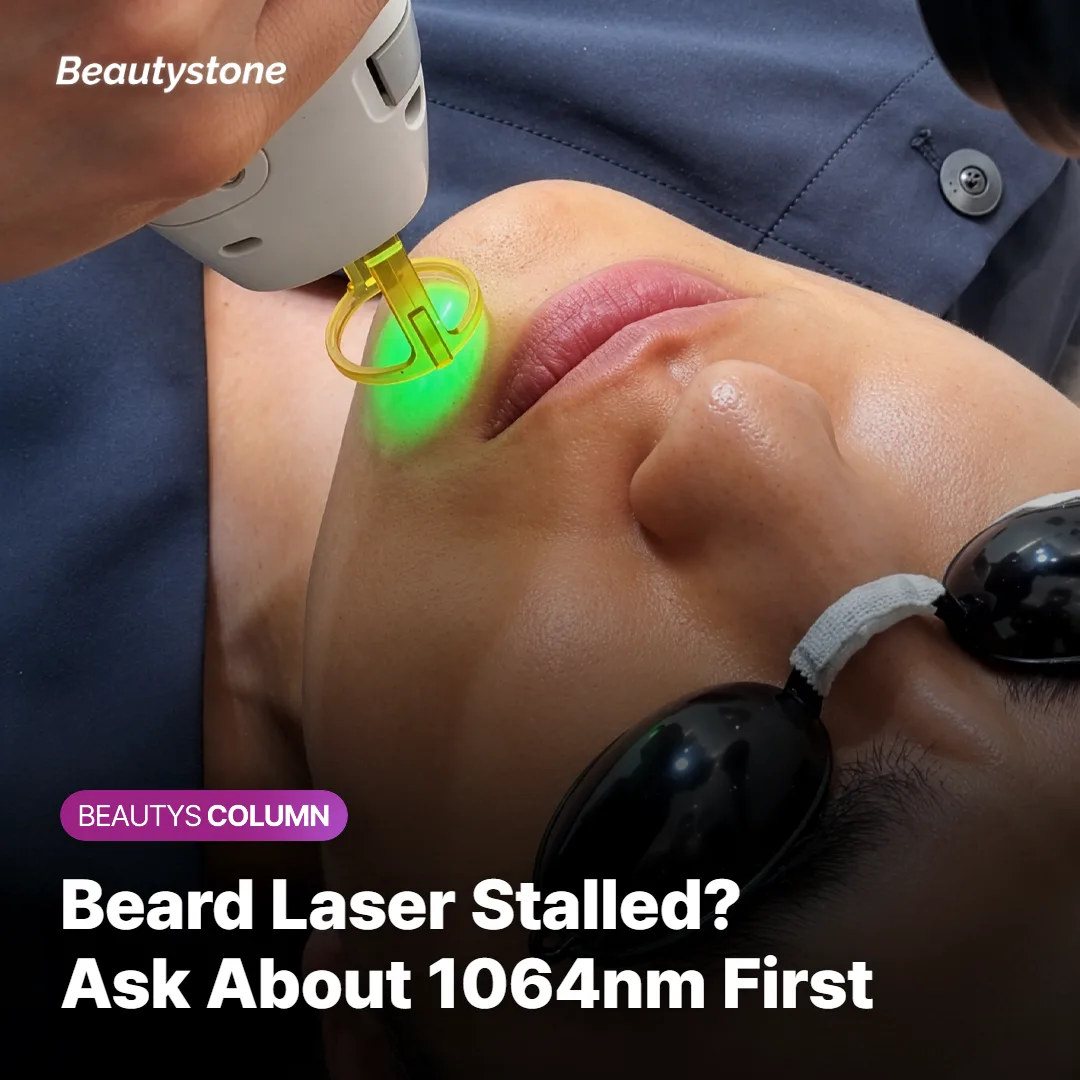
Who's a Good Candidate for InMode FX?
InMode FX doesn't work the same magic on every face. Skin thickness, the degree of sagging, and even your skin's texture concerns all shape how much change you'll actually see.

Scroll through InMode FX reviews and you’ll notice a split: some people rave about tighter, smoother skin, while others say the change was underwhelming. Same treatment, wildly different opinions — and it’s enough to make anyone wonder if their own face and skin type are even a good match for it.
Here’s the honest answer: InMode FX isn’t a one-size-fits-all treatment. It tends to shine on certain skin types and face concerns, and it tends to underdeliver on others. Knowing which camp you fall into before you book can save you from paying for a result you were never likely to get.
In this article, we’ll cover how InMode FX actually works beneath the surface, which face shapes and skin types respond best, what the collagen timeline really looks like, and when a different treatment might genuinely serve you better. Read on.
What Is InMode FX?
InMode FX is a radiofrequency (RF) microneedling treatment. Fine needles create tiny, controlled channels down into the dermis — the deeper, structural layer of your skin — and deliver RF energy directly at the tip, rather than heating the surface first. That’s the whole point of the design: the top layer of skin stays relatively undisturbed while the heat does its work underneath.
Because the energy is delivered at depth instead of radiating in from the surface, providers can dial in more heat where it actually matters — the collagen-rich dermis — without over-stressing the outer skin. That’s the theory behind why it can tighten and refine skin texture at the same time.
How Does InMode FX Work?
Two things happen when RF heat hits the dermis. First, existing collagen fibers contract almost immediately, which is why some people notice a subtle firming sensation right after treatment. Second — and this is the part that actually matters long-term — the controlled heat injury triggers your skin to rebuild collagen over the following months.
Research on radiofrequency skin tightening backs this up in broad strokes: heat delivered to the dermis prompts new collagen production that continues for roughly six months after a session, which is why results build gradually instead of showing up overnight.
Dermis*: the deeper, structural layer of skin beneath the surface. It’s where collagen lives, and it’s the target for RF microneedling.
Radiofrequency (RF)*: energy that generates heat inside the skin rather than on it. It’s used to stimulate collagen at depth without over-treating the surface.

Who’s a Good Candidate? Face Shapes and Skin Types That Respond Best
The short answer? InMode FX tends to work best on skin that still has some thickness and structure to work with. Since the treatment rebuilds collagen in the dermis, there needs to be enough dermal tissue there to respond — which is why people in their mid-30s through 50s, with early to moderate sagging, are usually the happiest with their results.
In terms of face shape, it tends to make the biggest visible difference when the jawline has started to soften or the cheeks have begun to droop just enough to blur your natural contour — not full-on jowls, but the early stage of it. Oily, thicker skin with visible pores or old acne scarring is another sweet spot: the RF heat that rebuilds collagen also tends to refine texture along the way, so you’re addressing two concerns in one pass. Very thin skin or skin that has already lost significant volume is where results tend to be more limited.
| Factor | Good Fit | Worth a Second Look |
|---|---|---|
| Skin thickness | Thicker, still fairly elastic | Thin or noticeably dry |
| Sagging stage | Early to moderate | Advanced sagging or lost volume |
| Texture concerns | Enlarged pores, acne scarring | Minimal texture concerns |
| Age range | Mid-30s to 50s | Very little laxity yet |
Think of this as a general pattern rather than a rulebook — plenty of people fall somewhere in between. The only way to know where you actually land is to have a provider look at your skin in person.
What to Expect: The Collagen Timeline
InMode FX isn’t a dramatic, walk-out-different treatment. You might notice a light tightening sensation in the first day or two as the heated collagen contracts, but the real transformation happens slowly, as your skin rebuilds collagen over the following weeks and months.
- Day 1–2: Mild redness or pinpoint marks from the microneedles — usually settles within a day or two.
- Week 2–4: Early collagen contraction starts to show as subtle firmness.
- Month 2–3: New collagen production ramps up; texture and tone often look more even.
- Month 4–6: Results typically peak as collagen remodeling finishes.
Most people do a series of one to three sessions rather than a single treatment, building change gradually instead of expecting one appointment to do everything. That pace can vary depending on your skin and age, so treat any timeline as a rough guide rather than a guarantee.

When a Different Treatment Might Serve You Better
InMode FX isn’t the answer for every concern, and a good provider should tell you that upfront. Here’s where another treatment usually makes more sense:
- Deep sagging or significant laxity: a treatment that lifts a deeper layer, like Ultherapy, tends to make more of a visible difference than RF microneedling alone.
- Lost volume flattening your contour: volumizing options such as Juvelook or dermal filler address the shortfall more directly than a collagen-stimulating treatment can.
- Fine lines or a dull, dehydrated texture as the main complaint: a skin-quality treatment like Rejuran is more targeted at hydration and fine texture than RF microneedling.
- Expression lines are the dominant issue: reducing muscle movement with Botox may be the more direct fix.
The starting point really depends on what’s driving the concern — lost elasticity and lost volume don’t respond to the same fix, even when the visible result looks similar. This is general information, not a diagnosis, so the right call for your face is one to make with a provider who’s actually examined your skin.
Side Effects and Risks
Because InMode FX uses fine needles, some redness, mild swelling, or pinpoint marks at the treatment site are common in the first day or two, and they usually settle on their own. Downtime tends to be short — most people are back to their normal routine quickly.
Skip the sauna and hard workouts on treatment day, and lean on gentle moisturizing plus sun protection while your skin recovers. If redness, swelling, or discomfort seems to be getting worse instead of better, or spreads beyond the treated area, contact your provider right away rather than waiting it out.
Individual results vary, and how your skin responds — and how it heals — depends on your skin type, your provider’s technique, and how closely you follow aftercare instructions.
The Bottom Line
InMode FX tends to work best on thicker, still-elastic skin with early to moderate sagging, and it can double as a texture treatment for enlarged pores or old acne scarring. Thinner skin or significant volume loss is where it tends to underdeliver. Results build gradually over months, not days, and most people need more than one session to see the full picture.
Like any procedure, it comes with trade-offs, and it isn’t the right fix for every kind of aging skin. Ultimately, the choice depends on your skin, your goals, and your budget.
If you’re weighing InMode FX against another option, a consultation is the best way to find out what actually fits your face. Beautystone is a dermatology clinic in Seoul’s Hapjeong neighborhood — you can see current offers at /en/promotion.
Frequently Asked Questions
Q1. Do I need more than one InMode FX session to see results?
Most people do. A single session can trigger some early tightening, but the more noticeable change comes from a series of one to three sessions spaced apart, since new collagen takes months to fully form. How many you need depends on your skin and how much sagging you’re starting with.
Q2. Is my skin too thin for InMode FX?
Thin skin doesn’t automatically rule it out, but it does mean there’s less dermal tissue to respond to the treatment, so results may be more modest than you’re hoping for. A provider can check your skin thickness in person and tell you whether a different approach would serve you better.
Q3. How long is recovery after InMode FX?
Downtime is typically short. You might see some redness or faint pinpoint marks for a day or two, but most people return to their normal routine right away. Just skip the sauna and intense workouts on treatment day and keep up with sunscreen while your skin heals.
Q4. InMode FX vs. Ultherapy: how do I know which one I need?
It comes down to what your skin is doing. InMode FX works on the dermis and skin texture, while Ultherapy reaches a deeper layer to lift more advanced sagging. If your concern is early firmness and texture, InMode FX may be enough; if sagging is more pronounced, Ultherapy is usually the better starting point. A provider can help you sort out which one matches your face.