Will Sofwave Leave You With Hollow Cheeks?
Some ultrasound lifting treatments can leave thinner faces looking hollow instead of lifted, since they heat deep enough to affect the fat layer. Sofwave was designed to stay shallower, which is why it's become a go-to option for people who want lifting without that particular risk.

Last updated: July 2026
Ask someone who's on the fence about facial ultrasound lifting what's holding them back, and a lot of them will land on the same worry: ending up with sunken, hollow cheeks instead of a lifted face. That fear isn't baseless — some deeper energy-based treatments really can leave thinner faces looking gaunt rather than tighter, and it's enough to keep plenty of people away from lifting altogether. Sofwave has been getting attention specifically because it's built around avoiding that exact risk. In this article, we'll cover why hollowing happens in the first place, how Sofwave's depth sidesteps it, what its SUPERB technology actually does, who tends to be the best candidate, what a session and the results timeline look like, and how it fits alongside other treatments.
What Is Sofwave, and Why Do People Worry About Hollow Cheeks?
Sofwave is an FDA-cleared ultrasound device used for non-surgical skin tightening, and it's been showing up in more dermatology clinics as a lifting option that doesn't require any downtime. Like other ultrasound-based treatments, it works by heating a targeted layer of skin to trigger new collagen production.
The hollowing concern usually comes from a different category of ultrasound device — the kind engineered to reach deep enough to affect the SMAS layer and the fat sitting just above it. That depth is exactly what gives those treatments their strong lifting effect, but on a face that's already low in fat, heating that layer can sometimes leave cheeks looking a touch sunken rather than lifted. It's not a universal outcome, but it's common enough that providers bring it up before recommending a deep treatment to someone with a leaner face.
Sofwave was designed around a narrower, shallower target specifically to sidestep that trade-off, which is why it tends to come up so often for people who want a lift without worrying about their face thinning out further.
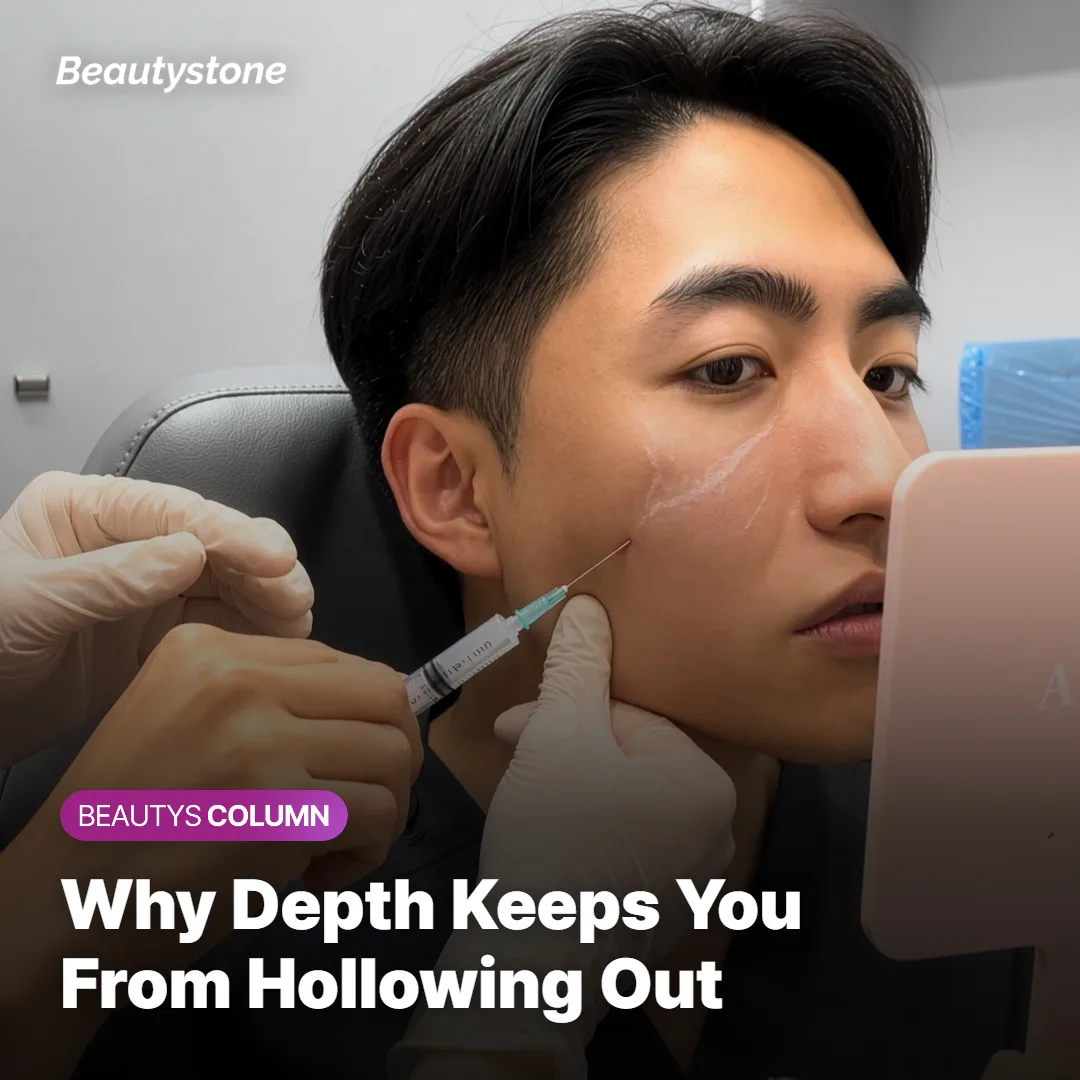
How Depth Keeps Sofwave From Hollowing Out Your Face
Skin isn't one uniform layer — it's stacked, from the epidermis on the surface, down through the dermis, into a layer of fat, and finally the SMAS, a fibrous sheet that supports your facial structure. Where an ultrasound device's energy lands determines what it changes, and whether the fat layer gets touched at all.
A typical deep ultrasound lift reaches roughly 3.0 to 4.5mm, delivering energy through the dermis and down to the SMAS itself — including the fat layer in between. That's a big part of why it can hollow out a thin face: heating tissue right around the fat pad can accelerate how much of it thins over time.
Sofwave, by contrast, targets around 1.5mm, staying inside the mid-dermis and stopping well above the fat layer and the SMAS. It never touches the tissue that a hollowing effect actually depends on, which is the core reason it's considered a safer option for people with less facial fat to begin with.
| Factor | Sofwave | Deeper Ultrasound Lifts |
|---|---|---|
| Typical depth | ~1.5mm (mid-dermis only) | 3.0mm-4.5mm (dermis through SMAS) |
| Touches the fat layer? | No | Yes, at deeper settings |
| Best suited for | Fine lines, thin or sensitive skin | Visible sagging, more facial fat |
| Hollowing risk on thin faces | Minimal | Something to discuss with your provider |
What Makes Sofwave's SUPERB Technology Different?
Sofwave's mechanism goes by the name SUPERB, short for Synchronized Ultrasound Parallel Beam. It sounds technical, but the idea behind it is fairly simple: instead of concentrating energy at one small, deep focal point the way some older ultrasound devices do, Sofwave fires multiple beams — seven, typically — that form parallel cylindrical zones of heat running horizontally through the mid-dermis.
That horizontal, distributed pattern spreads the energy evenly across a wider surface area rather than stacking it into a single deep point. Instead of one small area getting a strong, concentrated hit, the treated area gets a broader, more even dose. That's part of why Sofwave tends to feel milder overall, and why it's considered a reasonably comfortable option even for thin, sensitive skin.
Who's the Best Candidate for Sofwave?
Sofwave tends to suit a fairly specific profile, and figuring out whether you fit it is the most useful thing to sort out before booking.
- Lower facial fat: If you're already worried about hollowing, or you simply don't have much facial fat to spare, Sofwave's shallow depth means you can pursue lifting without that particular risk.
- Thin, sensitive areas: Skin around the eyes, mouth, brows, and neck tends to be thinner and more reactive, and Sofwave's gentler, evenly distributed energy is generally considered appropriate for those zones.
- Fine lines over deep sagging: Sofwave is built to refine texture and soften fine lines rather than physically hoist heavier, drooping tissue back into place.
If your main concern is visible jowls or significant sagging rather than fine lines and texture, a provider may point you toward a deeper treatment instead, or suggest combining approaches — more on that a bit further down.

What Happens During a Sofwave Session, and How Long Until You See Results?
A typical session follows three simple steps: numbing cream goes on first, the treatment itself takes place, and you finish with some basic moisturizing. Topical numbing alone is usually enough to keep things comfortable throughout.
How long the session runs — and how many pulses it involves — depends on the area. A smaller zone might start around 50 pulses, a full face typically runs closer to 200, and adding the neck can bring the total to around 300. Because sessions tend to be relatively quick, plenty of people fit one in over a lunch break.
- Right after treatment: Many people notice a subtle tightening sensation almost right away, even before any collagen rebuilding has started.
- Around 1 month: This is usually when the first real changes in firmness start becoming noticeable.
- Around 3 months: Results tend to peak here, as new collagen and elastin production reaches its high point.
- Around 6 months: Most people see results hold steady through roughly this point before gradually settling back toward baseline.
Individual results vary depending on your skin's starting condition and how your body responds to the collagen-building process, so these timelines are general guidance rather than a guarantee for any one person.
Side Effects and Downtime: What's Normal, What's Not
Sofwave is generally considered a low-downtime treatment, but low downtime doesn't mean zero downtime, so it's worth knowing what a typical recovery looks like.
- Redness and mild swelling: Common right after treatment and usually settles within 20 to 30 minutes.
- Makeup and daily activities: Most people can apply makeup and return to their normal routine the same day.
- When to check in with your provider: If swelling or redness gets noticeably worse instead of better, spreads beyond the treated area, or you develop a fever, contact your provider right away rather than waiting it out.
Even with a treatment considered this well tolerated, results and side effects can differ from person to person, which is exactly why a proper consultation before treatment matters as much as the technology itself.
Can Sofwave Be Combined With Other Treatments?
Yes, and it's actually a common pairing strategy rather than an exception. Because Sofwave stays shallow, it's often combined with treatments that work at other depths or through other mechanisms, rather than competing with them.
One common pairing is Ultherapy PRIME for sagging along the jawline or deeper lines, alongside Sofwave for overall firmness and texture — addressing the deeper structural layer and the mid-dermis at the same time. Skin boosters like Juvelook are another frequent pairing, since they focus on hydration and skin quality rather than lifting, which complements what Sofwave does rather than overlapping with it.
Whether combining treatments makes sense for you — and in what order — is something a provider needs to assess in person, since it depends on your skin, your goals, and how much you're comfortable doing in one visit.
The Bottom Line
Sofwave's appeal comes down to one core trade-off: it stays shallow enough to avoid the fat layer entirely, which is exactly what keeps hollowing off the table, even though it means it's not built for heavier, structural sagging.
- Sofwave targets around 1.5mm in the mid-dermis, never reaching the fat layer or SMAS.
- It tends to suit people with lower facial fat, thin or sensitive skin, and fine lines over deep sagging.
- Results build gradually, typically peaking around 3 months and holding for roughly 6.
- Like any procedure, it comes with trade-offs, including temporary redness and swelling that usually settle within half an hour.
Because Sofwave depends on precise depth control, the provider's skill matters as much as the device — it's worth asking whether a clinic uses genuine equipment and tips, offers a treatment plan tailored to your face, and gives you enough time to ask questions before booking. Ultimately, the choice depends on your skin, your goals, and your budget. If you're considering Sofwave, a consultation is the best way to find out what fits you. Beautystone is a dermatology clinic in Seoul's Hapjeong neighborhood — you can see current offers at /en/promotion.
Frequently Asked Questions
Q1. Does Sofwave cause hollow cheeks like some deeper ultrasound treatments can?
It's very unlikely. Sofwave stays around 1.5mm deep, well above the fat layer that deeper treatments can affect, so it doesn't carry the same hollowing risk that comes up with treatments reaching down to the SMAS.
Q2. How long do Sofwave results last?
Most people see results build gradually, peaking around the three-month mark and holding for roughly six months before gradually fading. Individual timelines vary based on your skin and how your body responds.
Q3. How much does Sofwave cost?
Pricing depends on the treatment area, how many pulses your provider recommends, and the clinic you choose, so there's no single number that fits everyone. A consultation is the most reliable way to get an accurate quote, and you can also check current offers at /en/promotion.
Q4. Can I wear makeup right after Sofwave?
Yes, in most cases. Downtime is minimal, and any redness or swelling typically settles within 20 to 30 minutes, so most people can apply makeup and return to their normal routine the same day.