

Ellanse Bruising & Swelling: Recovery Timeline
Bruising and swelling after Ellanse are a normal part of recovery, usually settling within one to two weeks. Here's the day-by-day timeline and the care steps that make it easier.


Planning a trip to Seoul?
If you're looking in the mirror a day or two after Ellanse and seeing more bruising and puffiness than you expected, you're not alone.
Ellanse works by gradually rebuilding your own collagen, so the actual results show up slowly over the following months — but the bruising and swelling from the injection itself tend to show up first, days before you'd notice any real change. That mismatch is what throws most people off.
In this article, we'll cover why bruising and swelling happen after Ellanse, how the recovery timeline typically unfolds day by day, the habits that make it easier, and the signs that mean it's time to call your provider.
What Is Ellanse, and Why Do Bruising and Swelling Happen?
Ellanse is a collagen-stimulating filler built around PCL* microspheres suspended in a carboxymethylcellulose gel carrier. The gel adds some volume right away, and over the following months those microspheres encourage your own body to lay down new collagen around them — which is why the full effect takes time to show up rather than appearing overnight.
PCL*: Polycaprolactone, a biodegradable, biocompatible compound used in dermal fillers. It slowly breaks down in the skin while triggering new collagen formation around the microparticles, which is why results build gradually.
A review of PCL-based fillers describes this same two-phase pattern — an immediate volumizing effect from the gel carrier, followed by a slower buildup of the patient's own collagen around the microspheres that continues for months.
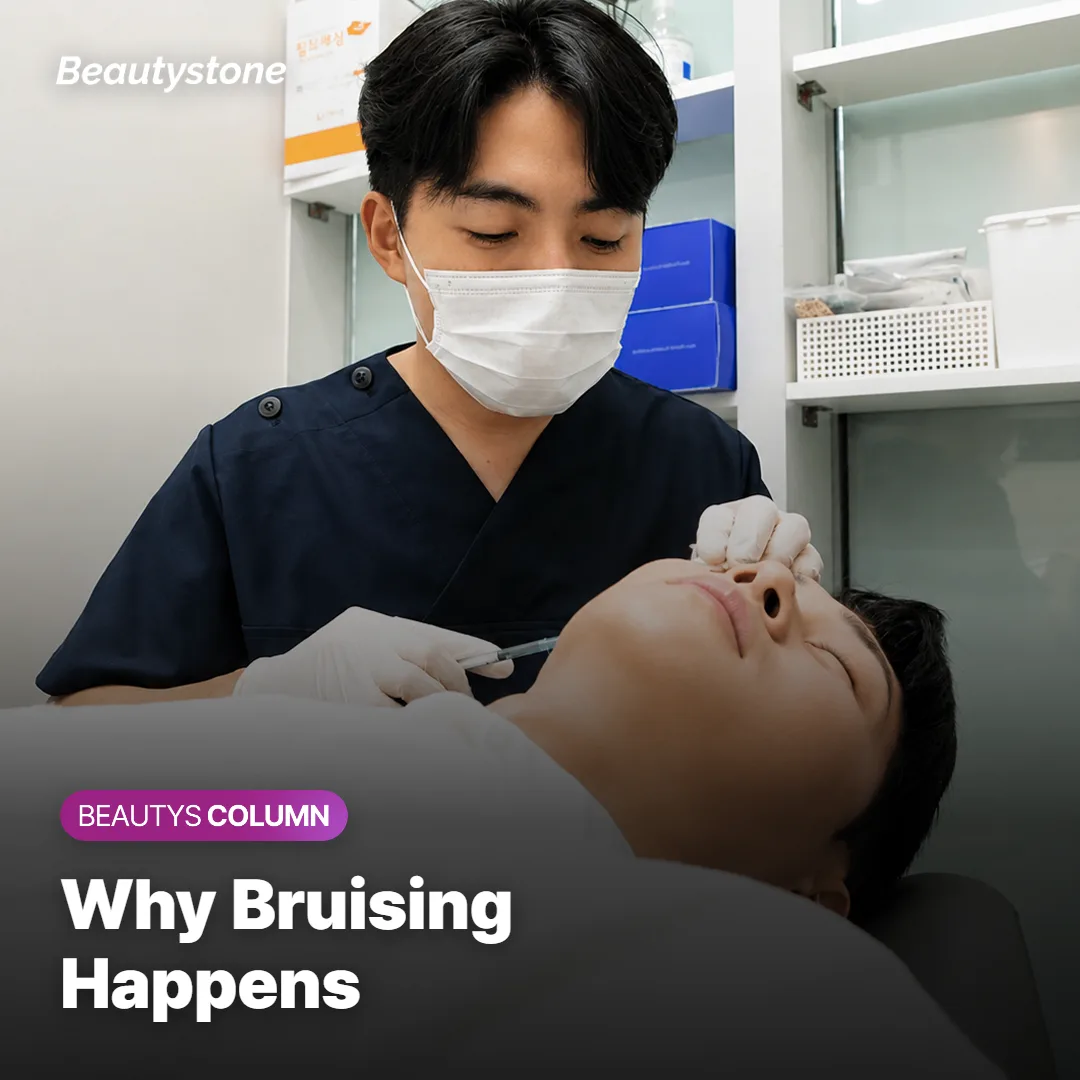
The bruising and swelling themselves have nothing to do with that collagen-building process. They come from the needle or cannula passing through the skin and, occasionally, nicking a small blood vessel along the way — a normal byproduct of the injection itself, not a sign that anything went wrong.
How Long Do Bruising and Swelling Really Last?
Both tend to follow a fairly predictable pattern as your body reabsorbs fluid and pooled blood beneath the skin. Here's a rough timeline of what to expect:
| Timing | Swelling | Bruising | Makeup |
|---|---|---|---|
| Day 1–2 | Most noticeable | Darkest, red to purple | Wait until the next day |
| Day 3–5 | Down by about half | Fading to green-yellow | Usually fine |
| Week 1–2 | Mostly resolved | Nearly gone | Back to normal |
Put simply, swelling usually peaks the day after treatment and is down by roughly half within three to five days, while bruising moves through red, purple, and yellow-green tones before it fades — most people see it mostly gone within one to two weeks. Where it is and how your own skin heals can shift that timeline a little in either direction.
How to Care for Bruising and Swelling in the First Few Days
You can't rush either one, but a few simple habits in the first several days can make recovery more comfortable and, for some people, a bit faster.
- Cold compress on day one: A cloth-wrapped cold pack held gently on the area for short stretches can help keep swelling down right after treatment.
- Watch your blood thinners: Aspirin, ibuprofen, and other NSAIDs can thin the blood and make bruising worse — check with your prescribing doctor before skipping a regular medication.
- Skip the alcohol for a couple of days: Alcohol widens blood vessels, which can make both bruising and swelling more noticeable.
- Sleep with your head slightly elevated: An extra pillow for the first few nights can help keep fluid from pooling in your face overnight.
A review of dermal filler injection technique notes that bruising and swelling at the injection site are expected reactions, and that anticoagulant use and alcohol can make bruising more pronounced — which lines up with why cutting back on both around your appointment tends to help.

What to Avoid While You Recover
A little extra caution in the days right after treatment goes a long way toward keeping swelling and bruising from lingering.
- Ease off intense workouts, saunas, and hot baths: Anything that spikes your heart rate or body temperature can push more blood flow to the area — hold off for several days.
- Don't rub, press, or massage the area: Let it settle undisturbed unless your provider tells you otherwise.
- Hold off on other treatments nearby: Layering a new procedure on top of fresh injection sites tends to prolong swelling.
- Build in buffer before big events: If you have something on the calendar, schedule your appointment with at least two weeks of runway, just in case.
When Does Ellanse Actually Start Working?
Because the bruising and swelling show up first, it's easy to judge your results too early — and be disappointed by what's really just a normal, temporary reaction. The actual lift from Ellanse builds in gradually as new collagen forms around the PCL microspheres, typically becoming noticeable over the weeks after the bruising and swelling have settled, and continuing to develop over the following months.
A more useful way to think about it: the first one to two weeks are about your skin healing from the injection, not about evaluating the treatment itself. Individual results vary, and your provider can give you a more specific sense of what to expect based on the amount used and your own skin.
Side Effects, Risks and When to Call Your Provider
Mild swelling, bruising, and a feeling of pressure or tightness are common and expected after Ellanse, and most people are back to their normal routine within a few days to a week.
That said, a few signs are worth a call to your provider rather than waiting it out:
- Pain that keeps getting worse, or skin that looks unusually pale or dark: this isn't typical of ordinary bruising and is worth flagging.
- Noticeable asymmetry or a firm lump under the skin: your provider can take a look and let you know if it needs anything.
- Fever, spreading redness, or increasing warmth around the area: these can be signs of infection — seek medical care right away.
- Swelling or bruising that hasn't improved after about two weeks: most cases resolve well before this point, so it's worth getting checked.
This article is general information, not a substitute for medical advice — talk to the provider who treated you about your specific recovery.
The Bottom Line: What to Expect and Do Next
- Bruising and swelling after Ellanse are common, expected reactions to the injection — not a sign anything went wrong.
- Swelling typically peaks within a day or two and is down by about half within a week; bruising fades through red, purple, and yellow-green tones before clearing within one to two weeks.
- A cold compress early on, skipping alcohol and blood thinners, and sleeping with your head elevated can make the first few days more comfortable.
- The real results build in gradually over the following months, well after the bruising and swelling are gone — so it's worth being patient before judging the outcome.
Like any injectable treatment, Ellanse comes with a short adjustment period, and bruising and swelling are the most visible — if temporary — parts of it. Ultimately, how smoothly that first week or two goes comes down to your skin, your schedule, and how closely you follow your provider's aftercare guidance.
If you're considering Ellanse or have questions about bruising or swelling after a recent treatment, a consultation is the best way to get answers specific to your skin. Beautystone is a dermatology clinic in Seoul's Hapjeong neighborhood — you can see current offers at /en/promotion.
Frequently Asked Questions
Q1. How long do bruising and swelling last after Ellanse?
Both tend to follow a fairly predictable pattern. Swelling is usually most noticeable in the first day or two and down by about half by day 3–5, while bruising is darkest and most red-to-purple early on before fading to green-yellow over the following days.
Q2. Why does Ellanse cause bruising and swelling in the first place?
The bruising and swelling come from the needle or cannula passing through the skin and occasionally nicking a small blood vessel — a normal byproduct of the injection itself, not a sign anything went wrong. They're unrelated to the collagen-building process that creates Ellanse's actual results.
Q3. What can I do to help bruising and swelling heal faster?
Following your provider's specific aftercare steps for the first few days — like waiting before applying makeup over fresh bruising — tends to help. Avoiding anything that increases blood flow to the area early on is generally recommended too.
Q4. When does Ellanse actually start working?
Since Ellanse is a collagen-stimulating filler, the gel carrier provides some volume right away, but the fuller effect builds gradually over the following months as your body forms new collagen around the microspheres. That's separate from the bruising and swelling, which resolves much sooner.