Botox for Teeth Grinding: Will It Stop?
In overnight sleep studies, jaw Botox reduced the force of grinding for 12 weeks without clearly cutting how often it happened. Here’s what that means for morning jaw tightness and your teeth.

Botox for teeth grinding mostly works on how hard your jaw clenches, not on how often you grind. In a sleep-lab study that recorded jaw muscle activity through the night, people grinding their teeth did it about as often after the injection as before, but each episode was weaker, and that drop in force held for 12 weeks.
So the change worth expecting is lighter morning jaw tightness and less load on your teeth. If your goal is for the grinding noise to disappear, you’re likely to be disappointed, and your teeth still need their own protection. In this article, we’ll walk through what the research actually measured, why a night guard still matters, when to judge the result, and what to bring to a consultation at Beautystone, a dermatology clinic in the Hongdae–Hapjeong area of Seoul.
What Happens in Your Jaw While You Sleep?
Short answer: your jaw muscles keep firing with real force while you’re asleep, and nothing stops them the way pain would during the day.
Sleep bruxism means repeatedly grinding or clenching your teeth during sleep. It’s more common than most people think. One study notes that it affects about 7.4% of adults, and the force during grinding averages 66% of a person’s maximum clenching power. That load lands on your teeth, dental work, and jaw joints every night.
Two muscles do most of the work. The masseter* sits in front of your ear at the corner of the jaw, and the temporalis fans out over your temple. The urge to grind starts with sleep-related activity, not in the jaw muscle itself. Botox reduces the signal passing from nerve to muscle, so the number of signals stays about the same, while the muscle’s response to each one gets smaller.
*Masseter: the thick muscle at the back corner of the jaw that you can feel harden when you bite down on your back teeth.

What Botox Changed in the Studies, and What It Didn’t
Short answer: the force of each grinding episode went down, while the number of episodes didn’t clearly change.
In a randomized trial that compared masseter Botox with saline injections and tracked participants with overnight polysomnography*, a single injection didn’t reduce how often grinding happened, but it reduced the intensity of the masseter muscle for 12 weeks. Frequency and duration of episodes looked similar in both groups. The only measure that separated them was the height of the muscle signal during grinding.
*Polysomnography: an overnight sleep test that records brain waves, breathing, and muscle activity together.
An earlier study of 20 people without a placebo group asked how they felt four weeks after treatment. Eighteen reported less morning jaw stiffness, and nine reported less tooth grinding. Because the group was small and there was no comparison group, those numbers describe how people felt rather than how big the effect is.
There’s evidence pointing the other way, too. An older review pooled studies reporting fewer grinding events and less pain, but it could include only four studies. Whether the number of episodes drops is still an open question. The drop in force is what the overnight recordings showed again and again.
Do You Still Need a Night Guard?
Short answer: yes, if your dentist has recommended one. Botox and a night guard don’t do the same job.
Even with weaker muscles, your teeth still meet and slide against each other. The U.S. National Library of Medicine’s MedlinePlus explains that a splint can help protect teeth from the pressure of grinding, and that Botox in the jaw muscles has shown some success in controlling clenching and grinding.
| Approach | What it does | What it doesn’t do |
|---|---|---|
| Jaw muscle Botox | Lowers the force the muscle produces while you grind | Doesn’t stop the grinding movement itself |
| Dental splint (night guard) | Covers the teeth so they don’t wear against each other | Doesn’t change muscle strength |
| Sleep and habit check | Cuts back on triggers such as alcohol, caffeine, or smoking before bed | Works slowly |
If you also snore heavily or someone has noticed you stop breathing in your sleep, check your sleep before focusing on your jaw. Cleveland Clinic notes that research has found a link between sleep apnea and teeth grinding, and that many people have both, though it isn’t clear which one causes the other.
Side Effects and Risks: Chewing, Timing, and When to Call
Short answer: a weaker bite while chewing tough food is common and usually fades, while weakness outside the jaw or trouble swallowing needs a call right away.
In the 20-person study, 14 people noticed a weaker chewing force, and three of them found chewing uncomfortable. The other jaw muscles usually compensate. If that feeling fades over a few weeks, it’s fine to keep an eye on it. If you notice weakness somewhere other than your jaw, or swallowing or speaking feels difficult, don’t wait. Contact the clinic that treated you.
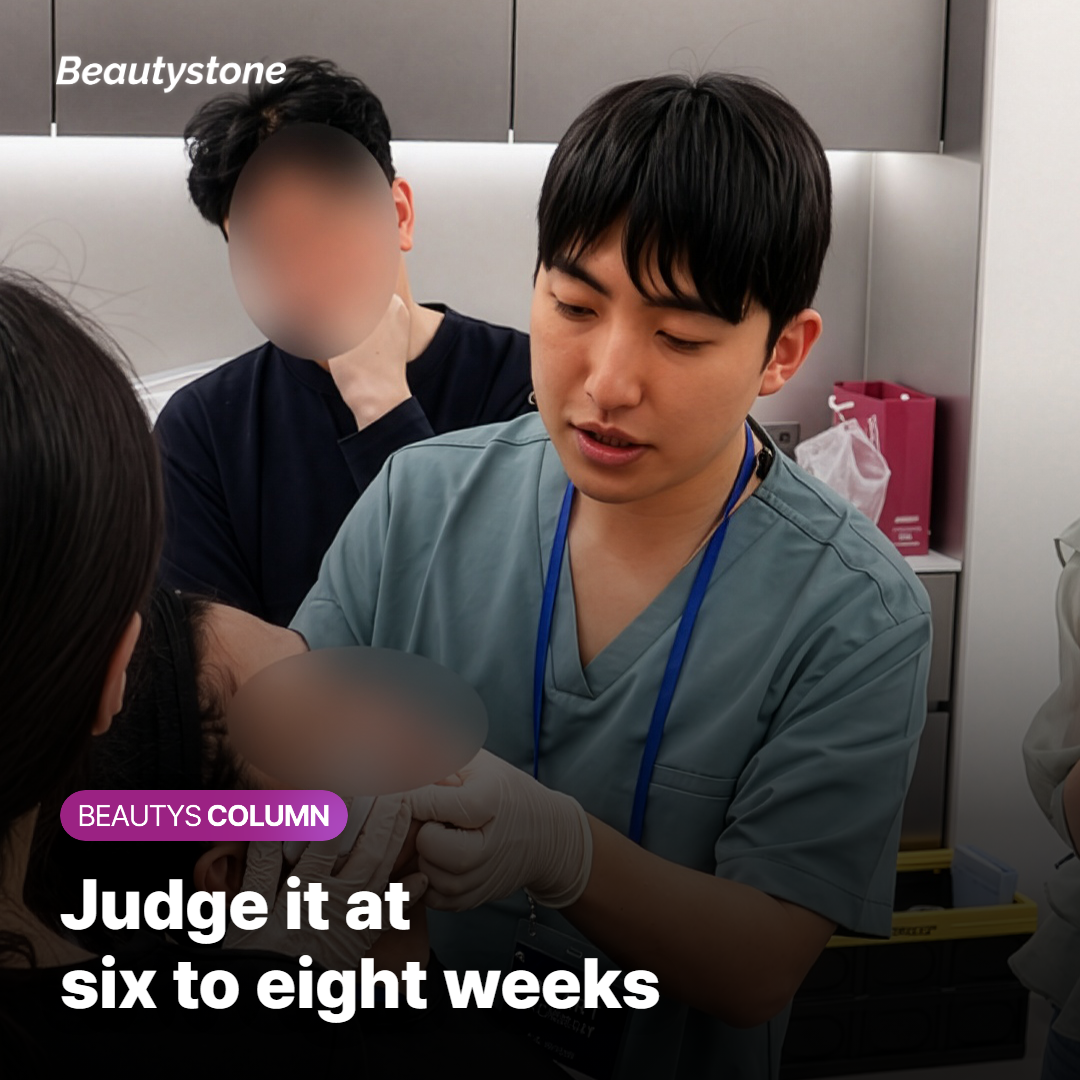
Timing matters for judging the result. Changes in jaw muscle size and strength are judged at around six to eight weeks, which is later than for expression lines. Since the reduced force lasted 12 weeks in the trial, watching whether morning tightness creeps back around three months is a practical way to plan the next session.
At Beautystone, the next interval is set by how you’re doing rather than by a fixed date. If the relief holds, the gap gets longer. If tightness returns quickly, it’s brought forward.
Before Your Consultation: What to Note Down
Short answer: a short log of your symptoms makes the first visit much faster.
- Morning symptoms: how many days a week your jaw or temples feel tight when you wake up
- Teeth: whether a dentist has mentioned wear, and whether you use a night guard
- Sleep: whether you snore or someone has noticed pauses in your breathing
- History: the date of any previous jaw-slimming Botox
If your jaw clicks and hurts when you open your mouth, or it won’t open fully, the problem may be the jaw joint rather than the muscle, so a dentist’s joint assessment should come first. If the tightness is only there in the morning and eases during the day, muscle load is the more likely cause.

The Bottom Line
- In overnight sleep studies, jaw Botox lowered the force of grinding without clearly reducing how often it happened.
- The change people noticed most was less morning jaw stiffness.
- A night guard protects your teeth and works alongside Botox rather than being replaced by it.
- Judge the result at six to eight weeks, and set the next session by when symptoms return.
How much relief you get depends on your muscles, your teeth, and your sleep. If you’re not sure whether your jaw tightness comes from the muscle or the joint, send a note to Beautystone in Hongdae–Hapjeong with how many mornings a week it bothers you, and the doctor will start there.
Frequently Asked Questions
Q. Does it help with clenching during the day?
A. The studies here recorded grinding during sleep, so their results don’t carry over directly to daytime clenching. Because you can notice daytime clenching, it’s worth practicing keeping your lips closed and your teeth apart first.
Q. Is it the same injection as jaw-slimming Botox?
A. Both go into the masseter. When the goal is grinding, the temporalis may be considered as well, and the next interval is based on how your morning symptoms change rather than on face shape.
Q. Can I build up a resistance if I keep getting it?
A. Frequent, high-dose injections at short intervals are discussed as a possible reason the response fades. That’s why the interval is usually stretched out, waiting until symptoms come back before the next session.
Q. Can I get it if I have braces or implants?
A. Because the aim is to reduce the load on your teeth, it’s sometimes considered alongside dental treatment. Your dentist knows the state of your braces or dental work best, so share any ongoing treatment and coordinate timing with them.