Ultherapy at 40: 3 Things to Check Before You Book
A closer look at why Ultherapy is particularly well-suited for your 40s — the decade when SMAS Layer laxity begins
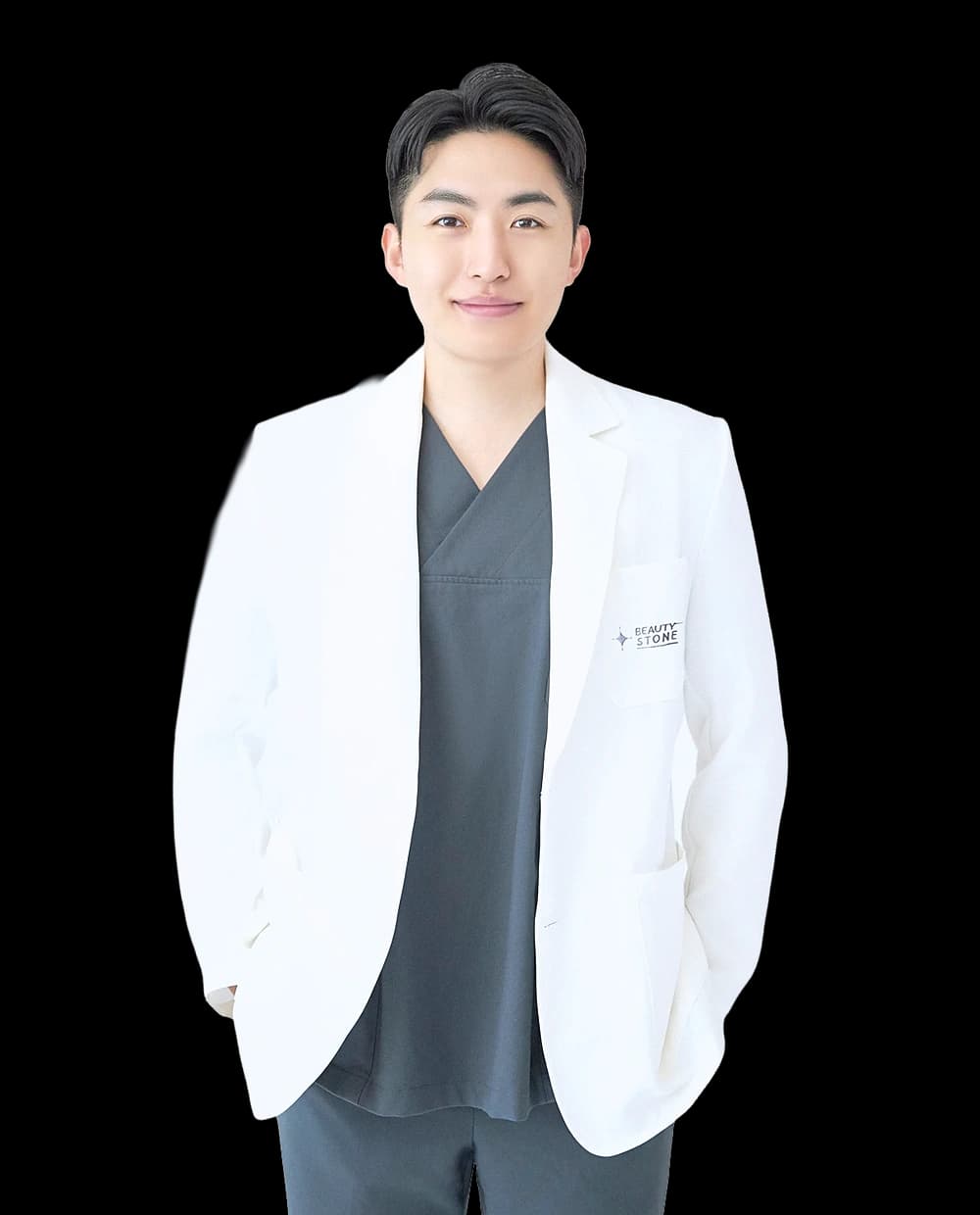
Wi Young-jin
Chief Director, Myeongdong
Is Your Jawline Fading in Your 40s? Here's Why It Might Be Time for Ultherapy
Before You Read — Quick Answers to Common Questions
Q. Isn't your 40s either too early or too late for Ultherapy?
A. Actually, your 40s are the ideal window to experience the most noticeable results. The SMAS Layer is just beginning to loosen at this stage, which means the anchoring Lifting effect takes hold particularly well.
Q. My cheeks are starting to sag — why Ultherapy instead of a Thread lift or Filler?
A. Sagging in your 40s originates not from the skin itself, but from the fascial layer beneath it. Surface-level procedures simply cannot address the root cause.

Lately, I've been seeing a noticeable increase in patients in their early-to-mid 40s coming into my clinic.
They all share one thing in common.
"One day I looked in the mirror,
and my jawline had just... blurred."
A line that was clearly defined through their late 30s
had somehow become soft and undefined.
This isn't your imagination —
it's an actual anatomical change
that happens during this period of life.
Ultherapy vs. Shrink: Where They Diverge for Patients in Their 40s
Ultherapy is a Lifting device that uses high-intensity focused ultrasound (HIFU)
to deliver thermal energy deep into the SMAS Layer,
contracting and tightening the lax fascia beneath the skin.
Unlike Shrink, Ultherapy targets the SMAS Layer directly.
Shrink is also a HIFU-based device,
but the difference lies in energy density and focal precision —
when it comes to the concept of "anchored Lifting,"
Ultherapy delivers a noticeably more substantial hold.
Of course, every case is different,
but this is exactly why I recommend Ultherapy more frequently
to patients in their 40s who are beginning to experience sagging.
The Real Reason Your Jawline Seems to Collapse Suddenly in Your 40s
This is a point many patients misunderstand —
sagging in your 40s is not caused by "the skin stretching out."
To be precise,
the supportive structure of the SMAS Layer (superficial musculoaponeurotic system) beneath the skin weakens,
and the fat pads resting on top of it
begin to slide downward under the pull of gravity.
This SMAS Layer laxity tends to become pronounced
in the early 40s.
Last month, a 47-year-old female patient came in —
a classic example of this.
She told me herself,
"When I compared photos from last year to this year,
I could clearly see that the area around my mouth had dropped."
She had already undergone two Lifting laser sessions at another clinic
with little noticeable change.
That's entirely expected.
Surface lasers can only reach the Dermis.
Ultherapy focuses at a depth of 4.5mm
to create Thermal Coagulation Points directly within the SMAS Layer.
3.0mm targets the deep Dermis,
and 1.5mm addresses the mid-Dermis.
By combining all three depths,
the procedure induces controlled contraction at each layer.
That same patient came back at the three-month mark
and told me her jawline had become noticeably more defined.

There's one important thing to understand here, though.
Ultherapy is not a procedure that "pulls skin upward."
More precisely, it uses thermal energy to contract and remodel the lax fascia,
repositioning it back into place.
That's why it works best
not for those with significant existing sagging,
but for those whose sagging is just beginning.
Your early-to-mid 40s is exactly that window.

Your 40s are when the SMAS Layer connections are just beginning to weaken.
Addressing the fascia with Ultherapy at this stage can meaningfully slow the rate of future sagging.
Acting at the onset — rather than after significant descent has already occurred — is a far more efficient approach.
Ultherapy in Your 40s: Breaking It Down by Age and Degree of Sagging
In my clinic, I generally categorize patients like this.
Every case is different,
but most people tend to fall somewhere within this framework.
That said, Ultherapy isn't automatically the right answer for everyone.
There's one thing I always make sure to mention:
Ultherapy does involve a fair amount of Pain during the procedure,
and for patients with very little facial fat,
it can sometimes make the face appear more hollowed out.
For patients with low facial volume, I adjust the shot count accordingly
or incorporate volume restoration into the overall plan.
That said, for patients in their 40s whose SMAS Layer laxity is underway,
it remains a strong option worth considering.

Three Things to Check Before Your Ultherapy Consultation in Your 40s
Q1. How long do results from a single Ultherapy session last?
A. Results vary by individual, but typically last around 12 to 18 months.
That said, it's less about the effect "running out"
and more about periodic maintenance to keep pace
with ongoing natural aging.
For patients in their 40s, I generally recommend intervals of one to one-and-a-half years.
Q2. Wouldn't multiple Shrink sessions be more effective?
A. Quite a few patients came in last month who had been getting Shrink regularly
and felt that "it just doesn't lift the way it used to."
While the effects on the Dermis do accumulate over time,
Shrink doesn't address the SMAS Layer itself.
For patients in their 40s and beyond, a single Ultherapy session
tends to feel substantially more impactful
than multiple Shrink sessions combined.
Q3. I'm concerned about side effects — what about nerve damage?
A. To be candid,
because Ultherapy works at deeper tissue layers,
the practitioner's anatomical expertise plays a significant role in determining outcomes.
Careful shot placement to avoid the nerve pathways around the mandibular border is essential,
and any temporary numbness or mild muscle weakness
typically resolves within 2 to 4 weeks.
For your safety, I strongly recommend choosing a clinic where the physician takes time
to thoroughly assess your individual facial structure during the consultation.
I'll continue with a deeper dive in my next post. This has been Dr. Wi Young-jin.